
Inua: The Animating Spirit in All Things
In Inuit belief, every living thing holds an inua, an inner spirit that gives it power and identity. Learn how this ancient concept shapes the entire Inuit cosmos.
Contents
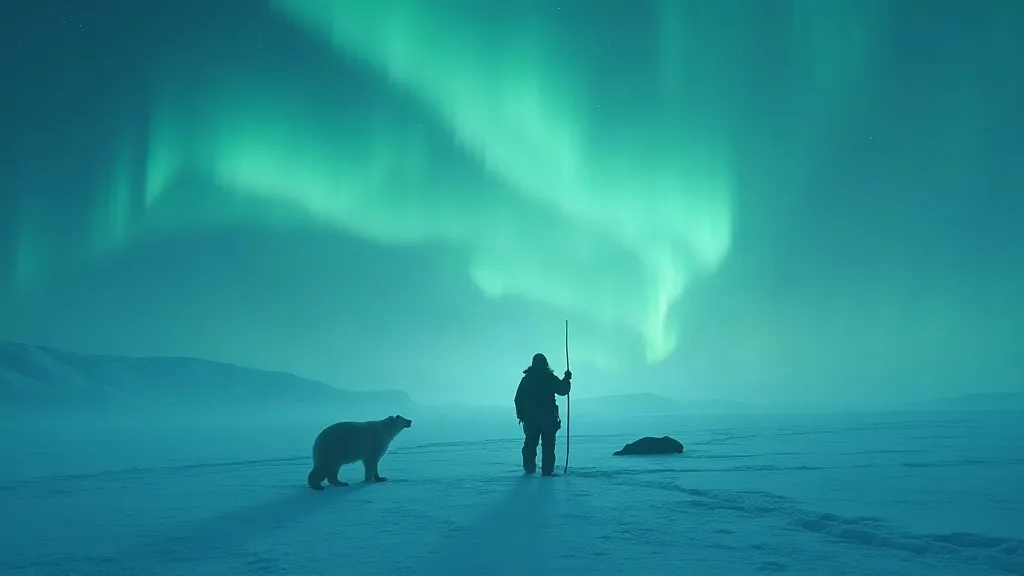
A polar bear lifts its muzzle into the Arctic wind. A hunter stands thirty paces away, harpoon balanced, breath held. In that moment, according to the belief systems that have guided Inuit life for thousands of years, something passes between them: two inuat (the plural of inua) recognizing each other across the ice. Not predator and prey. Two presences, both animated by the same invisible force, negotiating the terms of survival.
That is not metaphor. It is cosmology.
The concept of inua: the animating spirit in all things sits at the absolute center of Inuit religious and philosophical life. Remove it, and the entire architecture of Inuit ritual, shamanism, hunting ethics, and storytelling collapses. Understand it, and a cosmos that once looked austere and forbidding reveals itself as extraordinarily alive.
What "Inua" Actually Means
The word inua comes from the root inuk, meaning "person" or "human being." The suffix -a marks it as a possessive: "its person," or "the person within it." So when Inuit speakers call the spirit of the sea Sila's inua, they are saying something precise. The wind does not merely blow. The wind has a being inside it that belongs to the wind, as intimately as a person belongs to their own body.
This is an important distinction. The inua is not a god hovering over an object from the outside. It inhabits the thing completely. A walrus has an inua that is genuinely walrus: it knows walrus things, wants walrus things, and responds to treatment that respects the walrus. A river's inua has flowed through centuries of memory. A stone's inua has waited in geological silence.
Scholar Krupnik and linguist Fitzhugh, writing in the edited volume Gifts from the Ancestors (2010), note that inua concepts were documented across the entire Inuit-Yupik continuum from Siberia to Greenland, though local terminology varied. In Central Yup'ik communities, the equivalent term is yua (from yuk, "person"). In Siberian Yupik, related forms appear as yuq. The concept is not a local quirk. It is a pan-Arctic philosophical foundation shared by peoples who developed their worldviews across thousands of miles of coastline and tundra.
The Spectrum: From Pebble to Storm
One of the most striking features of Inuit animism is its sheer scope. The inua is not reserved for charismatic animals or dramatic natural events. It suffuses the ordinary.
Anthropologist Rasmussen's fieldwork in the 1920s, documented in his monumental Report of the Fifth Thule Expedition, records Iglulik Inuit elder Aua explaining to Rasmussen that everything had its owner, its inua: "the moon has its inua, the sea has its inua, the land animal has its inua." Aua listed them matter-of-factly, the way someone might list the members of a household.
The scale runs from the intimate to the cosmic:
- Sila, the spirit of air, weather, and cosmic intelligence, whose inua pervades the atmosphere itself. Sila is sometimes described not as a being who has an inua but as the inua of the entire cosmos: the person of the universe.
- Nunavut (the land), with a presence so vast it barely notices individual humans, but can be offended by sustained disrespect.
- Sedna (or Nunavummiut, Arnaqquassaaq in some dialects), the great sea mother, whose inua governs all marine life. Her myth of betrayal and transformation is the origin story for why sea creatures exist at all. Read more about Sedna
- Animals encountered in daily hunting: seal, caribou, polar bear, beluga, arctic fox. Each has an inua that watches how it is treated after death.
- Tools. A well-made harpoon, handled with care and intention over years, accumulates a kind of character that hunters recognized as real.
- Geographic features. Specific capes, river mouths, and ice formations had their own inuat, some benevolent, some dangerous, all worth acknowledging.
The practical result was that Inuit life unfolded in a world of perpetual relationship. There was no inert background. Every step across the tundra was a step across something that could notice.
The Inua and the Shaman's Work
The figure who mediated between human inuat and the inuat of everything else was the angakkuq (plural angakkuit): the shaman, the one who could see and speak with spirits directly.
The angakkuq's core competency was precisely this: the ability to perceive inuat that ordinary people could not. Where a hunter saw a walrus, the angakkuq saw the walrus's inua and could negotiate with it. Where a sick person lay feverish in a tent, the angakkuq might diagnose the illness as the patient's own inua having wandered from the body, or as the patient having offended an animal's inua, which was now withholding its goodwill.
Healing rituals often centered on retrieval. The angakkuq would journey, in trance, to wherever the lost inua had gone: into the sea, beneath the earth, to the moon. This journey was not purely internal or symbolic. In the worldview of the angakkuq and their community, the inua of the sick person was genuinely elsewhere, and genuine effort was required to bring it back.
The angakkuq was also the one who descended to Sedna's domain beneath the sea when game animals became scarce. According to accounts from Iglulik and Baffin Island communities recorded by Rasmussen, the shaman would swim down spiritually to Sedna's underwater home and comb the sea creatures out of her tangled hair. Sedna's hair tangled because humans had broken taboos: had wasted meat, had treated animal bodies carelessly, had failed to honor the inuat of what they killed. The combing was simultaneously an act of apology and repair. When the hair was smooth, the animals would return. Explore Inuit shamanism and the angakkuq tradition
Hunting Ethics as Theology
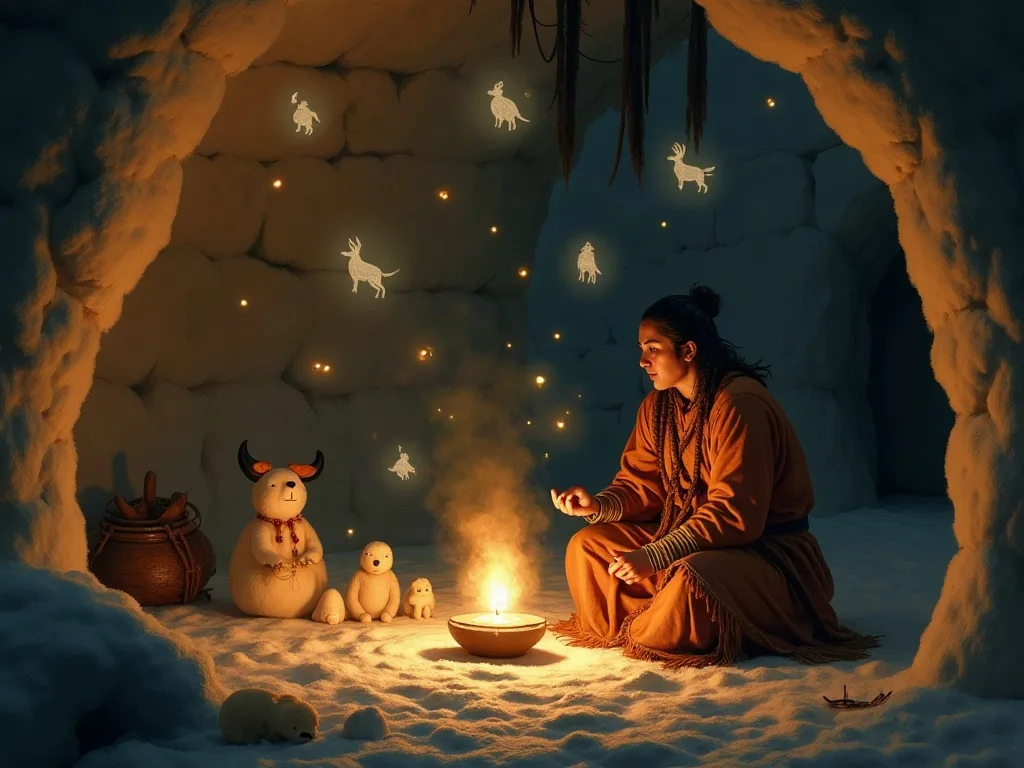
For outsiders, Inuit hunting practices sometimes appear ritualistic in ways that seem ornamental: a hunter speaking quietly to a seal he has killed, offering fresh water to a harpooned bowhead whale. These acts are not decorations on top of practical activity. They are the practical activity, understood through the lens of inua.
The logic runs as follows. An animal's inua does not die when the animal's body does. The inua observes how the body is treated. If the hunter is respectful, grateful, careful with the bones and offal (which must often be returned to the sea or handled according to specific rules), the animal's inua will be willing to be born into a new body and return to be hunted again. If the hunter is wasteful or contemptuous, the inua will remember. It will warn other animals. The hunt will fail.
This is not superstition layered over subsistence. It is a coherent ecological theology: the idea that the relationship between hunter and hunted is ongoing, reciprocal, and governed by something like moral accountability. The animal gives its body. The hunter gives respect. The inua carries both forward.
Anthropologist Ann Fienup-Riordan, one of the foremost scholars of Yup'ik cosmology, documented this logic in detail in her 1994 book Boundaries and Passages: Rule and Ritual in Yup'ik Eskimo Oral Tradition. She argues that Yup'ik rules around game animals are not "taboos" in the Western sense of irrational prohibitions. They are relational protocols: ways of maintaining the goodwill of beings who choose to give themselves.
Masks, Puppets, and the Visible Inua
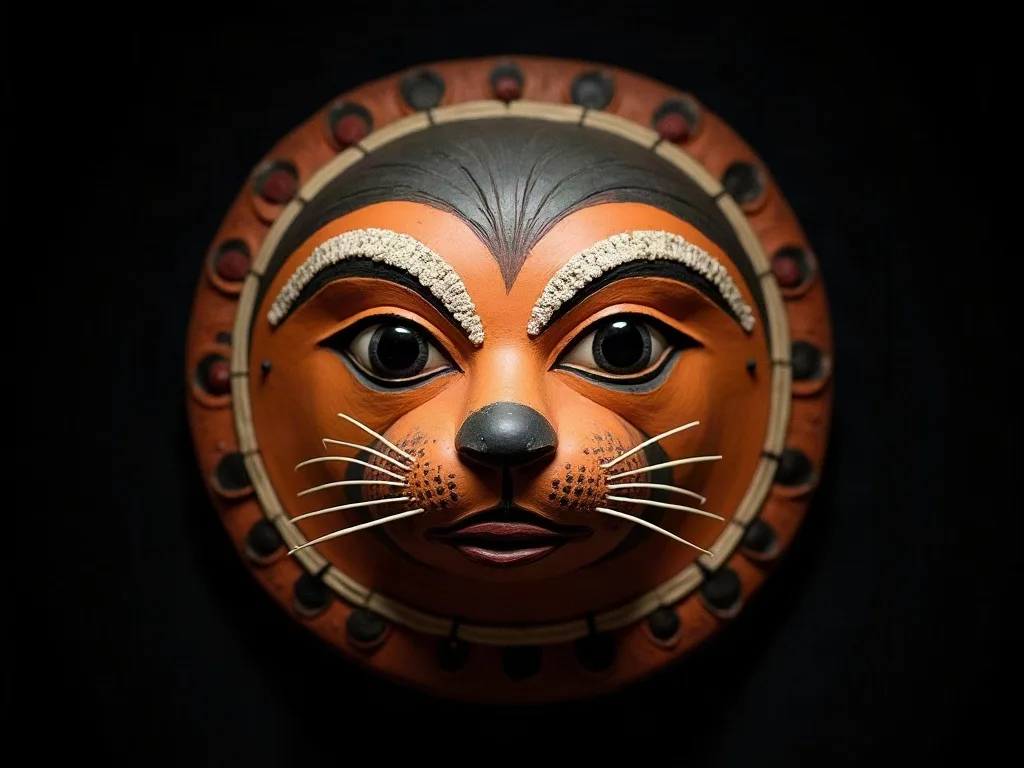
One of the most vivid expressions of inua belief is the tradition of ceremonial masks crafted by Yup'ik and Inupiaq communities across Alaska. These masks, many of them now held in museum collections worldwide, are not portraits of spirits. They are the inua made visible.
Yup'ik masks often show a central human face (the animal's inua) surrounded by the animal's physical features. A seal mask might have the human face of the seal's inner person at its center, with the seal's body, fins, and whiskers framing it. A salmon mask might show the salmon's inua peering out from within the fish. The mask says: look at what this creature really is. Beneath the scales or fur, there is a person.
These masks were used in the Bladder Festival (Nakaciuryaraq in Central Yup'ik), a ceremony in which the bladders of all seals killed during the year were inflated, honored with songs and ritual, and then pushed back through a hole in the ice to the sea below. The bladder was understood to house the seal's inua. By returning it with ceremony, the hunters were sending the inua back with the message: we were respectful, please return.
The art historian Ann Fienup-Riordan's analysis of these masks, published in Agayuliyararput: Our Way of Making Prayer (1996), shows that each mask was often made according to instructions received in a shaman's vision. The angakkuq had seen the inua, and the carver gave it form. The mask was less an artistic choice than an accurate portrait.
Inua Across the Arctic: Variations on a Theme
While the core concept is consistent, the expression of inua theology shifts as you move across the Arctic.
Among the Greenlandic Inuit (Kalaallit), early Danish missionary accounts from the 18th century, including Hans Egede's A Description of Greenland (1741), describe what Egede called "tornat" (a version of tuurngait, or spirit helpers), which interacted with shamans. These were closely tied to the inua framework: some were inuat of specific animals or places who had agreed to assist a particular shaman.
Among the Inupiaq of northern Alaska, the inua concept blended with elaborate ceremonies around whaling. The bowhead whale was the most powerful prestige hunt, and treating the whale's inua correctly was a matter that involved the entire community: the whaling captain's wife had ritual duties as significant as the captain's own. The inua of the whale was believed to be drawn to a camp where the people were clean, harmonious, and respectful.
In Siberian Yupik communities on St. Lawrence Island and the Chukchi Peninsula, the concept of yuq (the person within) was integrated with a broader framework that overlapped with Chukchi and Koryak animist traditions across the Bering Strait, pointing toward a deep, pre-migration continuity in northern animist philosophy.
The variation matters because it shows that inua is not a fixed doctrine handed down by a single authority. It is a living philosophical intuition, reworked in each place and generation to fit local conditions, local animals, local geography.
The Inua in Modern Inuit Identity
The arrival of Christian missionaries in the 18th through 20th centuries put enormous pressure on inua beliefs. Shamanism was actively suppressed in many communities. Ceremonies were banned. Children were taught that the spirits their grandparents spoke to were either illusions or dangerous entities.
Yet the concept did not disappear. It went underground in some places, merged with Christian ideas in others, and in many communities quietly persisted in the way hunters still behaved toward animals even when they no longer publicly explained why.
Since the late 20th century, particularly following the establishment of Nunavut as a Canadian territory in 1999, there has been a broad cultural reclamation across Inuit communities. Elders' knowledge is being recorded. Language revitalization programs are restoring Inuktitut and its embedded conceptual world. Young artists, filmmakers, and writers are drawing on inua ideas explicitly.
The 2019 animated short Kiviuq's Journey, produced by the Inuit Circumpolar Council, treats the hero Kiviuq (an immortal wandering figure in Inuit oral tradition) with the same cosmological seriousness that Inuit elders have always used. The inuat of animals he encounters are real, powerful, and morally demanding. Learn about the hero Kiviuq and his mythic journeys
The philosopher Sheila Watt-Cloutier, in her 2015 book The Right to Be Cold, frames the Inuit relationship to the Arctic ecosystem in terms that echo inua thinking without using the word directly: the ice is not a resource, it is a relationship. The animals are not stock, they are partners. That framing is the practical inheritance of a cosmology built on the idea that everything around you has a person inside it.
Frequently Asked Questions about Inua in Inuit Tradition
Frequently asked questions
Is the inua the same as a human soul?
Not exactly. The inua is present in all things, not just humans. It is more like an inner personhood: the quality that makes something what it is, capable of intention and relationship. Humans have an inua, but so does a boulder or a storm. Human souls in Inuit belief are often treated as a separate but related concept, with some traditions holding that a person has both a name-soul (received from an ancestor) and a life-force that must be kept intact.
Where does the word 'inua' come from linguistically?
It derives from inuk, the Inuktitut word for "person" or "human being," plus a possessive suffix meaning "its own." The literal translation is something like "its person" or "the person belonging to it." The same root gives us "Inuit" (plural of inuk: "people") and the name of the Canadian territory "Nunavut" ("our land"). Related forms appear across the Inuit-Yupik language family: yua in Central Yup'ik, yuq in Siberian Yupik.
How did the inua concept affect how Inuit hunters treated animals?
Very directly. The inua of an animal was believed to observe how its body was treated after death. If hunters were respectful, offered thanks, followed the correct handling rules for bones and blood, the inua would be willing to return in a new body and present itself again. Disrespect could cause the inua to warn other animals away, leading to failed hunts. This created a system of hunting ethics rooted in ongoing reciprocal relationship rather than simple resource extraction.
Who first documented the inua concept for academic audiences?
Danish-Greenlandic explorer Knud Rasmussen did more than anyone else to document it systematically during his Fifth Thule Expedition (1921-1924), during which he traveled from Greenland to Siberia and recorded oral traditions across every major Inuit group. His multi-volume Report of the Fifth Thule Expedition remains a primary source. Anthropologist Ann Fienup-Riordan later deepened the scholarly understanding enormously through her decades of fieldwork with Yup'ik communities in Alaska.
Did Christian missionaries succeed in eliminating inua beliefs?
They suppressed public expression of the belief in many places, particularly shamanic practice, but the underlying cosmological intuition proved far more durable. In numerous communities, elements of inua thinking persisted in hunting behavior, in the handling of animal remains, and in oral storytelling even after formal conversion to Christianity. Since the late 20th century, Inuit cultural revitalization movements have brought inua concepts back into explicit, public discussion as a living part of Arctic Indigenous philosophy.
Is the inua concept unique to Inuit peoples?
The specific terminology and its precise cultural expressions are Inuit-Yupik, but the underlying idea of an inner spirit or personhood present in all things has parallels across many Arctic and sub-Arctic peoples, including the Chukchi and Koryak of Siberia. Broader parallels appear in animist traditions worldwide. What makes the inua tradition distinctive is its extraordinary systematic development: the careful protocols around animal inuat, the shaman's mediating role, and the mask-making tradition that made the inua literally visible.
The Ice Is Still Listening: Inua in an Age of Environmental Crisis
The inua concept has taken on a new weight in the 21st century. As the Arctic warms at roughly four times the global average rate, the inuat of sea ice, of specific migration routes, of entire species are being forced into territories they have never occupied. For communities whose entire ethical system was built on a responsive, attentive cosmos, this is not just an environmental crisis. It is a cosmological one.
Inuit climate activists and thinkers often speak of the land and sea as having something that Western discourse would call agency. Sila, the spirit of the air and cosmos, is behaving differently. The ice that has always been a negotiating partner is now unpredictable in ways the old protocols cannot fully address. Elders describe a world where the inuat seem confused, where the usual reciprocal relationship has been disrupted not by local failures of respect but by forces originating thousands of miles away.
This framing is not merely rhetorical. It is a coherent extension of the same philosophical system that told hunters to return bladders to the sea. If the inua of every thing is real, then damaging the conditions that allow those inuat to flourish is a moral act with moral consequences. The Inuit Circumpolar Council's ongoing advocacy at international climate forums, articulated in terms of rights and relationships rather than just carbon numbers, carries the fingerprints of a worldview where nothing in the world lacks a person inside it, and every person deserves to be treated accordingly.
The bear lifts its muzzle into the wind again. The hunter reads the ice with eyes trained across generations. Both of them, in the oldest grammar of the Arctic, are persons. Both are temporary expressions of something that does not end when the body does. That is the inua: not a relic of a pre-scientific past, but a philosophy of attention that the modern world has spent centuries trying, and largely failing, to reproduce.
Read the full book
Want the whole story?
The complete edition is an instant PDF download here, with a paperback on Amazon for selected titles.
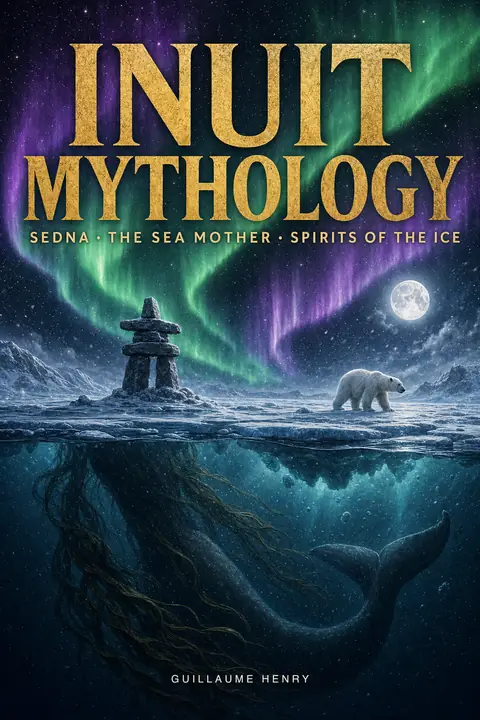
Inuit
The Inuit Mythology Book: Sedna, Sila, and the Sacred Stories of Ice, Hunger, and the Sea-Goddess at the Bottom of the World
Shamans, Spirits, and Survival in the Arctic
The mythology of the Arctic peoples: Sedna at the ocean floor, Sila in the wind, and the angakkuq shamans who flew between worlds. Drawn from primary sources.
More from Inuit
All articles
Inuit
Inuksuk: Stone Markers of the Arctic Landscape
The Inuksuk stands as a silent guardian across the Arctic: stacked stones shaped by Inuit hands to guide hunts, mark sacred places, and embody the spirit of community. Learn how these markers bridge the visible and spiritual worlds.

Inuit
The Moon Man and Sun Sister: Cosmic Pursuit Myth
In Inuit cosmology, the Moon Man chases his sister, the Sun, across the sky in an endless celestial pursuit born from darkness and shame. Discover how this myth explains the rhythm of day and night, and why it still echoes in Arctic cultures today.

Inuit
Sila: The Breath of Life and Weather Spirit
Sila is the Inuit spirit of weather, breath, and life force itself, a boundless presence that moves through air and water, sustaining hunters and demanding respect. Discover how Arctic peoples understood this invisible power that controlled their survival.

Inuit
Angakkuit: Inuit Shamans and Spirit Mediators
Angakkuit are the shamans and spirit mediators of Inuit cultures, channeling power from the animal and spirit worlds to heal, guide, and maintain balance between the human and sacred realms. Discover how these intermediaries shaped Arctic survival and cosmology.