
Caipora: The One-Legged Dwarf of the Forest
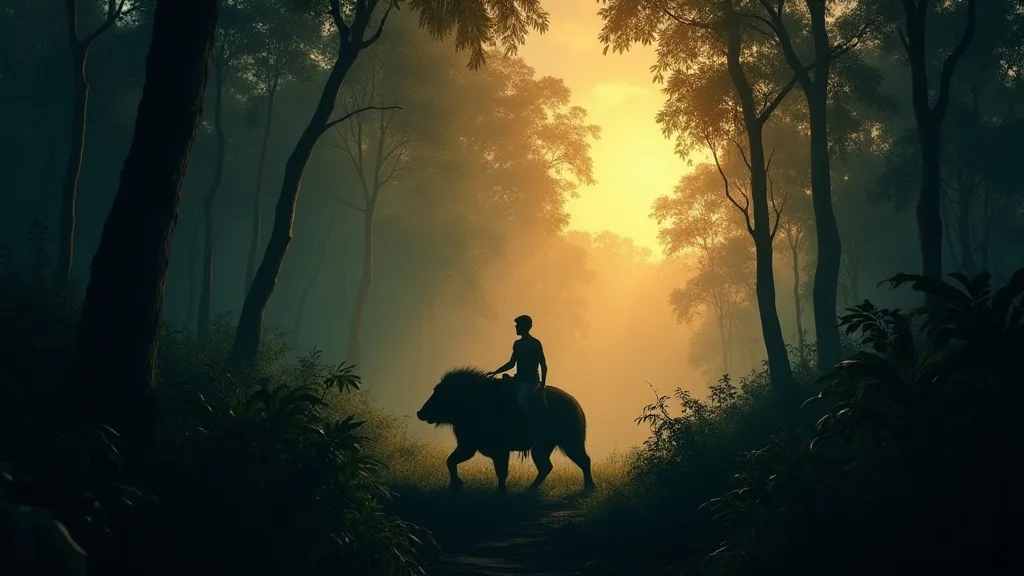
Deep in the Brazilian rainforest, a one-legged figure rides a peccary through the dark, smoking a pipe and guarding every animal that runs beneath the canopy. Meet the Caipora.
Contents
The pipe smoke rises first. Then comes the sound, a sharp whistle cutting through the understory, bouncing off cecropia trunks and vanishing into the canopy above. Hunters in the Brazilian interior have known that signal for centuries. It means turn back. Something is watching.
Caipora: The One-Legged Dwarf of the Forest is one of the most enduring figures in Tupi-Guarani oral tradition, a forest spirit so vivid and so feared that indigenous communities, colonial settlers, and their descendants all absorbed the legend into their own lives. She (or he, depending on the regional telling) is small, dark-skinned, one-legged, and absolutely sovereign over every animal in the forest. No hunter kills without Caipora's permission. Those who try pay a price that can last a lifetime.
Who Is the Caipora? Origins in Tupi-Guarani Tradition
The name Caipora (also spelled Caipor or Caaporã in older Portuguese-language documents) comes from the Tupi word combination caa (forest) and pora (inhabitant) or pura (supernatural being), making the literal meaning something close to "forest dweller" or "supernatural one of the forest." Early Jesuit missionaries encountered this figure in the sixteenth century when they began documenting indigenous beliefs along the Brazilian coast and interior. The missionary José de Anchieta, writing in the 1560s, noted indigenous references to forest spirits that punished improper hunting, though he folded them into a broader category of demonic interference that suited his evangelical framework.
The being sits inside a much older cosmological structure. Tupi-Guarani peoples across what is now Brazil, Paraguay, Bolivia, and Argentina understood the forest not as a neutral backdrop for human activity but as a populated, conscious space, full of entities with their own authority over the creatures within it. The kaagerre (forest people) concept runs through many regional variants. Caipora is perhaps its most crystallised expression.
Oral traditions from the Tupinambá, the Guaraní, and related groups describe the Caipora as having been present long before humans arrived in the forest. Some tellings place the spirit at the beginning of time itself, assigned by higher cosmic forces to keep the animal world in balance. Others describe Caipora as the first great hunter who went too far, killing more than the forest could sustain, and was transformed as punishment into its eternal warden. The second reading is ethnographically rarer but philosophically rich: the reformed transgressor becomes the strictest guardian of the law.

The Body of the Caipora: What the Spirit Looks Like
Descriptions vary across regions and centuries, but certain details appear with enough consistency to treat them as core features.
The Caipora stands short, described most often as the height of a child, with dark reddish-brown skin. One leg is fully formed; the other is missing from the knee down or replaced by a single stump, and the spirit moves through the forest by hopping at extraordinary speed. This single-legged form places Caipora inside a cross-cultural category of one-legged supernatural beings that scholars have noted in Mesoamerican and Andean traditions as well. The Aztec god Tezcatlipoca, for instance, also famously lost a foot to a primordial sea monster, associating the one-legged form with dangerous, liminal power.
The Caipora carries a long pipe, and the smell of tobacco smoke drifting through the trees is one of the spirit's calling cards. Tobacco held sacred status across many Tupi-Guarani communities, used in shamanic rituals to communicate with the spirit world. The Caipora smoking a pipe is not a quirky detail; it signals that this being occupies the liminal space between the living world and the world of spirits.
In a number of accounts, the Caipora rides a large cateto or queixada, the collared peccary, an animal that travels in tight, aggressive herds through the Brazilian cerrado and Amazonian scrubland. Riding a peccary rather than a horse or deer underlines the spirit's deep-forest nature: no domestic animal, no familiar beast of burden, but the wild pig itself, feared by hunters for its tusks and its numbers.
The Caipora is sometimes described as male, sometimes female, and sometimes as shifting between the two depending on the circumstance. Ethnographer Câmara Cascudo, whose 1952 "Dicionário do Folclore Brasileiro" (a comprehensive reference on Brazilian folk tradition) gathered regional variants from across the country, noted that the female form dominated in northeastern Brazil while the male form appeared more often in Amazonian accounts. Both forms shared the same temperament: fierce, cunning, utterly at home in the dark.

How the Caipora Guards the Forest: Rules and Punishments
The Caipora does not punish hunting. The spirit punishes excess, disrespect, and deception.
Hunters who follow the old protocols, asking permission before entering the forest, leaving a portion of the kill, avoiding the nesting seasons of certain animals, are sometimes said to receive the Caipora's quiet approval. A successful hunt with no incident is occasionally read as evidence that the spirit looked the other way or even offered protection. Some traditions describe offerings of tobacco left at the base of a large tree at the forest's edge, a transaction that acknowledges the Caipora's authority before a single arrow is notched.
Those who ignore these customs face a different experience:
- Losing their way. The Caipora is said to lead careless hunters in circles, making the familiar forest into a maze from which they cannot exit until the spirit releases them.
- Scattering the game. The spirit runs ahead through the undergrowth, warning every animal before the hunter can get close. Peccaries, deer, capybara, and tapir all vanish. The hunt yields nothing.
- Physical punishment. In darker tellings, the Caipora can cause hunters to fall, break bones, or become violently ill. Some accounts describe the spirit sitting on a sleeping hunter's chest, producing the experience of sleep paralysis.
- Madness. Prolonged exposure to the Caipora's tricks, and above all the act of looking the spirit directly in the eye, could produce a kind of forest madness. The hunter returns to the village but is never quite right again, speaking of paths that did not exist and creatures no one else saw.
The punishment scales with the offense. A man who kills more than his family needs gets lost for an afternoon. A commercial hunter who traps animals in the Caipora's territory for profit might not return at all.
Caipora and Curupira: Two Guardians, One Forest
The Caipora is frequently confused with another major Tupi-Guarani forest spirit, the Curupira. Both are small, both protect animals, and both punish hunters. The distinctions matter.
Caipora
- One-legged, moves by hopping
- Dark reddish-brown skin
- Rides a peccary
- Smokes a pipe
- Protects all forest animals indiscriminately
- Often described as female in northeastern Brazil
- More associated with the deep interior and cerrado
- Punishes both excess killing and disrespect
Curupira
- Two-legged, but feet face backwards
- Fiery red hair
- Travels on foot, leaves misleading footprints
- No pipe; uses whistles and cries
- Primarily protects young animals and newborns
- Usually described as male
- More associated with the Atlantic Forest and Amazon
- Punishes hunters who kill females and juveniles
The backwards feet of the Curupira are its signature trick: it leaves tracks that point in the direction it came from, leading hunters deeper into the forest as they follow what they think is an exit trail. The Curupira was documented in writing as early as 1560 by the Jesuit Fernão Cardim, making it one of the earliest-recorded indigenous forest spirits in the Western literary tradition.
Both figures coexist in many regional oral traditions without contradiction. The forest is large enough for more than one kind of authority.
Caipora in Shamanic Practice: The Spirit as Ally
Not every encounter with the Caipora ends in punishment. Among some Tupi-Guarani communities, the figure appears not only as an adversary but as a potential ally for those with shamanic training.
The pajé (shaman) who underwent the correct initiatory trials could, in some traditions, negotiate directly with the Caipora. The result was a working relationship: the pajé learned which parts of the forest were off-limits, which seasons favoured which hunts, and which offerings maintained peace. In exchange, the shaman gained access to deep forest knowledge, medicinal plants, the habits of rare animals, the location of water sources during the dry months. This reading transforms the Caipora from a pure threat into a gatekeeper whose favour, once earned, was enormously practical.
Tobacco offerings appear again in this shamanic context. The Caipora's pipe was not just a visual quirk; it aligned the spirit with a sacred substance that shamans also used to enter trance states. Blowing tobacco smoke in the direction of the forest before a hunt appears in ethnographic records from the nineteenth century as a protective gesture. The anthropologist Curt Nimuendajú, who lived among the Guaraní in the early twentieth century and left some of the most detailed records of their spiritual life, documented how tobacco mediated between the human world and the spirit world in dozens of ritual contexts.

Colonial Encounters and the Reshaping of the Caipora
When Portuguese colonisers pushed into the Brazilian interior from the sixteenth century onward, they brought their own interpretive framework, and the Caipora ran headlong into it. Jesuit missionaries catalogued indigenous spirits largely to argue they were demons in disguise, and the Caipora's terrifying qualities made it an easy candidate for demonisation. By the seventeenth century, Portuguese-language texts described the Caipora as a devil of the forest who led Christian souls astray.
This reframing had consequences. As indigenous communities were decimated by disease, displacement, and forced labour, their oral traditions fragmented and recombined with African and European folk elements brought by enslaved people and colonisers. The result was not a single clean syncretism but a patchwork. In some regions, the Caipora absorbed attributes of African forest spirits. In others, it softened into a figure closer to a European fairy or trickster, frightening but no longer cosmologically central.
Brazil's nineteenth-century Romantic writers picked the Caipora up again and ran with it. José de Alencar, one of the founders of Brazilian Romantic literature, wove forest spirits into his 1857 novel "O Guarani" (The Guaraní), which presented indigenous figures through a heavily idealised, European-Romantic lens. The Caipora in this tradition became something picturesque, a piece of local colour rather than a living cosmological principle. Scholars today read these Romantic treatments critically, noting how they preserved some features of the original while evacuating the indigenous epistemological context that made those features meaningful.
Caipora in the Modern Brazilian Imagination
The Caipora survived all of this. It is still very much alive, not as an academic curiosity but as a genuinely active presence in the oral traditions of rural communities across Maranhão, Bahia, Mato Grosso, and Amazônia.
Stories collected by folklorists in the late twentieth and early twenty-first centuries show remarkable continuity with older accounts. A hunter near Santarém, interviewed in the 1990s by researchers affiliated with the Museu do Índio, described hearing the Caipora's pipe whistle before a bad hunt in terms almost identical to accounts collected in the 1890s. The core structure, the warning sound, the confused trails, the animals that vanish, persisted across a century of radical social change.
In Brazilian popular culture, the Caipora appears in comic books, video games, and animated series. The creature entered the world of Brazilian animation most visibly through productions aimed at children, often softened into a mischievous but ultimately friendly forest child. Environmental advocacy groups have also adopted the Caipora as a mascot figure, leaning into its original function as an enforcer of ecological limits. This is arguably the most intellectually honest adaptation: restoring the spirit's role as a check on human appetite, in a country where deforestation has made that function more urgent than ever.
The Tupi-Guarani mythological tradition as a whole has attracted growing scholarly attention in the past three decades, driven partly by the urgency of documenting living oral traditions before they are lost to ongoing cultural disruption. The Caipora, as one of the most widely recognised figures in that tradition, has become a kind of entry point for researchers and general readers alike.
Frequently Asked Questions About Caipora: The One-Legged Dwarf of the Forest
Frequently asked questions
Is the Caipora male or female?
Both versions appear in the tradition, and this is not a contradiction but a regional difference. Northeastern Brazilian accounts, particularly those from Maranhão and Bahia, tend to describe the Caipora as female. Amazonian and south-central accounts more often use a male form. Some traditions treat the spirit as capable of shifting between forms. Luís da Câmara Cascudo's 1952 "Dicionário do Folclore Brasileiro" documents both variants across different states and treats the ambiguity as a feature of the spirit's supernatural nature rather than an error in transmission.
What is the difference between the Caipora and the Curupira?
Both are forest guardians in Tupi-Guarani tradition, but their physical forms and specific domains differ. The Caipora is one-legged, rides a peccary, and carries a pipe; the Curupira has backwards-pointing feet and specialises in protecting young animals and pregnant females. The Curupira was documented in Jesuit writing as early as 1560, making it slightly better known in early colonial records. In many regional traditions, both spirits coexist as distinct but complementary authorities over the forest.
How did indigenous communities protect themselves from the Caipora?
Prevention was the primary strategy. Hunters left tobacco offerings at the edge of the forest, asked permission aloud before entering, and avoided hunting during certain seasons. Shamans (pajés) could negotiate ongoing relationships with the Caipora that gave their communities more latitude. If a hunter believed he had already offended the spirit, the prescribed response involved returning to the village immediately, making an offering, and in some traditions undergoing a ritual purification overseen by the pajé before attempting to hunt again.
Is the Caipora connected to any other indigenous American traditions?
The one-legged forest guardian pattern appears in scattered traditions across South and Central America. The most discussed parallel is with Tezcatlipoca, the Aztec deity who lost a foot at the moment of creation, though the two figures occupy very different cosmological roles. Within South America, similar forest-guardian spirits appear in Quechua-speaking communities of the Andes. Scholars like Serge Gruzinski and Eduardo Viveiros de Castro have explored how Amerindian cosmologies across the continent share an animistic framework in which the forest is a populated political space, which explains why guardian figures recur.
What primary sources mention the Caipora?
The earliest indirect references appear in Jesuit missionary writings of the 1560s-1580s, particularly those of José de Anchieta and Fernão Cardim. More systematic documentation came in the nineteenth century with naturalists like Johann Baptist von Spix and Carl Friedrich Philipp von Martius, who traveled Brazil between 1817 and 1820 and recorded indigenous legends. The most comprehensive twentieth-century source remains Câmara Cascudo's 1952 dictionary. The anthropologist Curt Nimuendajú's fieldwork among the Guaraní in the early 1900s, published in German and later translated, remains essential for understanding the broader Tupi-Guarani cosmological frame.
Why does the Caipora smoke a pipe?
Tobacco was a sacred substance in Tupi-Guarani spiritual life, used by shamans to enter trance states and communicate with spirits. The Caipora carrying a pipe locates the spirit explicitly in the shamanic register: it belongs to the world between worlds, neither purely human nor purely animal. The smell of pipe smoke drifting from empty forest is described in many accounts as the first sign of the Caipora's presence, a sensory warning before any visual encounter. This detail has survived remarkably intact from the earliest colonial-era accounts through to oral testimonies collected in the twenty-first century.
The Caipora as Ecological Mirror: What the Spirit Tells Us About Survival
There is a reason the Caipora has lasted five centuries of colonial violence, demographic collapse, and cultural transformation. The logic at its core is not supernatural at all. It is biological.
Every ecosystem has a carrying capacity. A hunter who takes too much leaves the forest with fewer animals than it can sustain, which means fewer animals next season, and fewer hunters fed the year after that. The Caipora encodes this truth in a form that can be told around a fire, passed from grandmother to grandchild, and felt in the belly rather than calculated on a spreadsheet. The pipe smoke and the one-legged shadow riding a peccary through the dark are not decorations on top of a practical lesson. They are the lesson, made visceral enough to change behaviour.
Brazilian environmental scientists have noted this parallel explicitly. Researchers writing in the journal "Ambiente e Sociedade" in the 2000s pointed to indigenous forest-spirit traditions as evidence of what they called "embedded ecological knowledge," a system of environmental regulation built into the cosmological fabric rather than enforced by external law. The Caipora, in this reading, was doing the work of a wildlife management authority thousands of years before the concept existed.
The Tupi-Guarani cosmological view of the Land Without Evil, the Yvy Marã Ey, imagined a world in which humans lived in perfect equilibrium with the forest. The Caipora might be understood as the enforcer of that equilibrium on the near side of the boundary, the being who keeps the living world from slipping into the chaos of depletion. When the forest burns today and the animals vanish for reasons the Caipora's whistle cannot stop, the spirit does not become irrelevant. It becomes a measure of what has been lost.
Free 25-page sample
Want the whole story?
Take the first 25 pages free. If it pulls you in, the full edition is yours as an instant PDF download, with a paperback on Amazon for selected titles.
Tupi-Guarani
The Tupi-Guarani Mythology Book: The Land Without Evil, the Twin Heroes, and the Spirits of the Rainforest
Namandu, the Twin Heroes, and the Land Without Evil
The mythology of the Tupi and Guarani peoples of the Amazon and the Atlantic forest: Namandu the creator who unfolded the world out of darkness, the twin heroes raised by jaguars, Tupa of the thunder, the fire-serpent Boitata, and the long search for the Land Without Evil.
More from Tupi-Guarani
All articles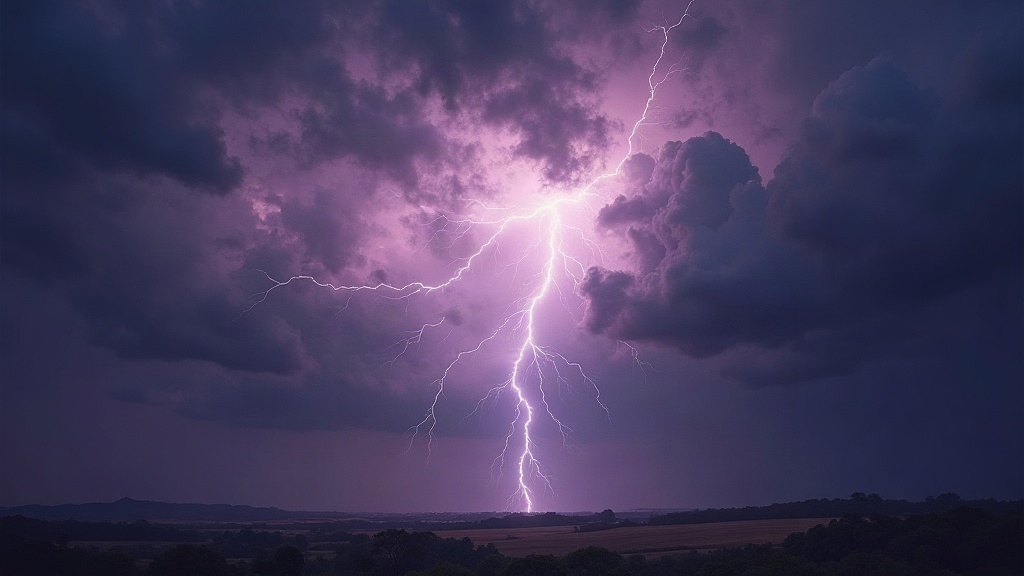
Tupi-Guarani
Tupã: The Thunder God and Supreme Creator of Tupi-Guarani Myth
Tupã commands the sky as both destroyer and creator: the Tupi-Guarani supreme god who speaks through thunder, shapes the cosmos, and rules over all lesser powers. Discover how this ancient deity shaped the worldview of millions across the Amazon and beyond.

Tupi-Guarani
The Origin of Manioc: Mani and the Gift of Cassava
In Tupi-Guarani lore, a girl named Mani died of a broken heart and transformed into the cassava root, becoming the foundation of survival for generations. Discover how a myth of grief became the story of a continent's staple crop.
Tupi-Guarani
Anhangá: The Forest Protector and Trickster Spirit
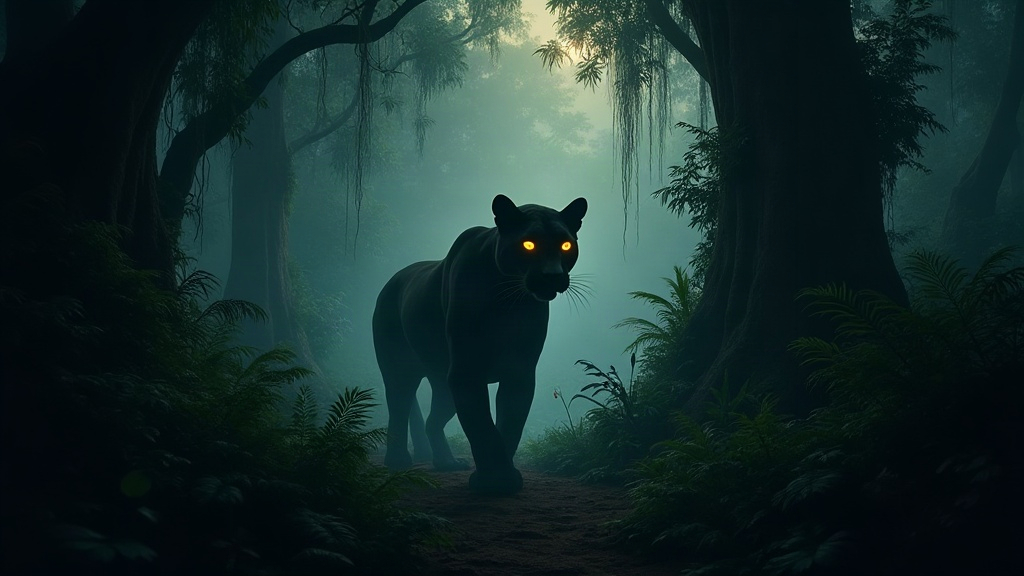
Anhangá is the shape-shifting guardian of Tupi-Guarani forests, a spirit who punishes hunters who show disrespect to animals and plants. Part protector, part deceiver, this creature embodies the deep ecology of Amazonian belief.

Tupi-Guarani
Sumé: The Culture Hero and Civilizing Prophet of the Tupi-Guarani
Sumé taught agriculture, language, and moral law to the Tupi-Guarani peoples before vanishing into the sea. This foundational culture hero bridges the sacred and the everyday in South American oral tradition.