
Tiw: God of War and Justice in Anglo-Saxon Mythology
Tiw gave his hand to bind a monster and his name to Tuesday. Discover the Anglo-Saxon god of war and justice whose courage still marks our calendar.
Contents
The wolf's jaws closed around his wrist, and Tiw did not flinch. Every other god had stepped back from the chain. Only Tiw had the nerve to keep his hand inside the great wolf's mouth as a pledge of good faith, knowing he would lose it. That moment, somewhere between sacrifice and duty, is the image at the heart of his mythology.
Tiw: God of War and Justice is one of the oldest divine figures in the Germanic world. He predates the Viking Age, predates the Anglo-Saxon settlement of Britain, and may stretch back to a Proto-Indo-European sky-father worshipped across Eurasia thousands of years before the first rune was carved. His name survives in Tuesday, spoken by millions of people every week who have no idea they are honouring a one-handed god.
He is rarely the loudest voice in the pantheon. He has no hammer, no ravens, no ship made of dead men's nails. What he has is something older and, in its way, more demanding: the absolute commitment to law and its cost.
The Name That Outlived the God
The Anglo-Saxon form of his name is Tiw (sometimes written Tīw). In Old Norse the same figure is called Tyr. In Old High German he appears as Ziu or Zio. All of these names trace back to the Proto-Indo-European root *Dyeus, meaning "sky" or "shining sky."
That root also produced the Greek Zeus, the Latin Deus (god), the Sanskrit Dyaus Pita (sky father), and the Roman Jupiter, itself a contraction of Diespiter, "sky father." This is not coincidence. It is a thread of inheritance running unbroken from the Bronze Age steppe to the Roman Forum to an Anglo-Saxon farmstead in seventh-century Kent.
In Old English, the third day of the week was called Tiwesdæg, "Tiw's day." The Romans had named it dies Martis, "Mars's day." When Germanic peoples translated the Roman week into their own language, they mapped Tiw onto Mars as the closest equivalent. That translation survives in French (mardi), Spanish (martes), and in the English "Tuesday," which carries Tiw's name directly.
The survival is remarkable. Tiw had largely faded from active Anglo-Saxon worship by the time the first written records were made. Yet his name persisted in the calendar, in place names, and in the runic alphabet.
Tiw and the Sky-Father: What He Used to Be
The oldest evidence suggests that Tiw, or his Germanic ancestor Tiwaz, was once the chief god of the pantheon. He was the sky-father, the upholder of oaths, the one who guaranteed agreements between human communities. That is the role *Dyeus played across the Proto-Indo-European world.
By the time the Anglo-Saxons wrote anything down, however, his position had shifted dramatically. Woden had taken the leading role. Thor (called Thunor in Old English) commanded thunder and popular devotion. Tiw had become something more specialised: still a god of battle, still the guarantor of legal order, but no longer the sovereign sky-father.
Scholars have debated why. The French mythologist Georges Dumézil, in his comparative studies of Indo-European religion, argued that the Germanic pantheon underwent a kind of divine restructuring. The sovereign function that Tiwaz had held was split, with Woden absorbing the magical and royal aspects of sovereignty while Tiw retained the judicial and sacrificial ones. The warrior Thor then took the third function in Dumézil's tripartite scheme.
Whether or not Dumézil's tripartite model maps perfectly onto the Germanic evidence, something clearly happened. Tiw is invoked in contexts of law, assembly, and battle, never in contexts of wisdom, sorcery, or cosmic order, which had become Woden's domain.
Tiw in the Runes: The Arrow That Points Up
One of the clearest signs of Tiw's importance is his place in the runic alphabets. The Elder Futhark, the oldest runic script (used roughly from the 2nd to 8th centuries AD), contains a rune called Tiwaz, written as an upward-pointing arrow or spear.
The Anglo-Saxon Futhorc, the runic alphabet used in England, retained this rune and named it Tir. The rune poems that survive from the medieval period describe the meaning of each rune, and the Old English Rune Poem gives this for Tir:
"Tir is a sign; it keeps faith well with princes; it is always on its course through the mists of night; it never fails."
The astronomical reference is important. Tir was associated with a star or constellation that navigators used to steer by at night. Some scholars identify it with the Pole Star, which holds its position absolutely while everything else rotates around it. That fixed constancy, never wavering, never failing, is exactly what Tiw represents as the god of justice and sworn oaths.
Warriors carved or painted the Tiwaz rune on weapons and shields before battle. They also incised it on healing charms for wounds. The link between Tiw, the martial world, and the maintenance of right order was direct, practical, and embodied in the physical act of mark-making.

The Binding of Fenrir: Tiw's Defining Myth
The fullest surviving account of Tiw comes from Old Norse sources, primarily the Prose Edda compiled by the Icelandic scholar Snorri Sturluson around 1220 AD. The Anglo-Saxon record is fragmentary, but the myth of the wolf-binding almost certainly circulated widely across the Germanic world, not just in Scandinavia.
The story runs like this. The wolf Fenrir was the son of Loki and the giantess Angrboda. As a pup he was brought to Asgard, where only Tiw had the courage to feed him. Fenrir grew at a terrifying rate. The gods, who had read the prophecies about what Fenrir would do at Ragnarok, decided the wolf had to be bound.
Two ordinary chains snapped. The gods then commissioned the dwarves of Svartalfheim to forge something unbreakable. The dwarves produced Gleipnir, a ribbon as soft and smooth as silk, made from six impossible things: the sound of a cat's footstep, the beard of a woman, the roots of a mountain, the sinews of a bear, the breath of a fish, and the spittle of a bird. Because none of these things exist, Gleipnir could not be broken.
Fenrir was suspicious. A ribbon that could not be broken had to be magical. He would only submit to being bound if one of the gods placed a hand in his jaws as a pledge that the whole thing was a game, not a trap. Every god refused. Tiw alone stepped forward. He placed his right hand in Fenrir's mouth.
When Fenrir strained against Gleipnir and found he could not break it, he bit down. Tiw lost his hand at the wrist. The wolf was bound. The world was, for a time, safe.
Snorri notes in the Prose Edda that Tiw is "not called a reconciler of men," precisely because he sacrificed one hand to bind the wolf: the act guaranteed cosmic order at the cost of breaking faith with Fenrir. Justice, in this reading, sometimes demands a wound.
Tiw as God of the Thing: Law Before the Courts
Beyond the battlefield, Tiw presided over the Thing, the Germanic assembly where free men gathered to settle disputes, pass judgements, and make collective decisions. The Thing was not just a political institution. It was a sacred space, protected by divine authority.
In the Proto-Germanic world, assemblies took place at fixed times and places, and violence during a Thing was a profound religious violation, not just a civil one. The god whose name underpinned the oath-making and the verdict-giving was Tiw. To break an oath sworn in his name was to invite his punishment.
This judicial role explains the apparent paradox of a god who is simultaneously connected to war and to law. For the Germanic peoples, these were not opposites. Battle and law were both regulated contests, governed by rules, decided by outcome. The duel was a legal proceeding. The assembly could declare war. Tiw guaranteed the integrity of both.
The Roman writer Tacitus, in his first-century ethnographic work Germania, describes Germanic tribes worshipping a god he calls Mars with special fervour, and offering him human sacrifices captured in battle. Most modern scholars read this as a reference to Tiwaz, the ancestor of Tiw. If Tacitus is accurate (and he is always read with caution, since he was as much moralist as reporter), then Tiwaz received the most solemn sacrificial offerings in the early Germanic world.
Tiw and Mars: A Calculated Translation
When the Anglo-Saxons inherited the Roman seven-day week and translated its divine associations into their own pantheon, they matched Tiw to Mars with considerable deliberateness.
Mars in the Roman tradition was far more than a god of war. He was also a protector of fields and boundaries, a guardian of ordered civic life, and one of the three supreme Roman gods alongside Jupiter and Quirinus. His importance to Roman religious identity was second only to Jupiter himself.
Tiw shared those qualities. Both gods protected the boundaries between communities. Both oversaw regulated violence. Both carried a spear as their primary attribute.
The match was so natural that it persisted across all the Germanic languages. The Norse preserved it in Tý's day (Tuesday), the High German in Zinstag (a form of Ziutag, Ziu's day), and the English in Tuesday. Wherever Germanic peoples adopted the Roman calendar, Tiw was their Mars.
Thor, by contrast, was mapped to Jupiter in one context (both were sky gods associated with thunder) but mostly displaced to Thursday, Thor's day. The divine mapping reveals how Germanic theologians, if we can call them that, understood their own gods: Tiw was judicial, martial, principled; Thor was elemental, powerful, popular.
Tiw in Anglo-Saxon England: Place Names and Traces
Written sources for Tiw in Anglo-Saxon England are sparse. The Christianisation of the Anglo-Saxon kingdoms, beginning in 597 AD with Augustine's mission and largely complete by the eighth century, meant that native religious traditions were either suppressed or absorbed without documentation.
But place names survive. Several English place names preserve the element Tiw or Tig (an alternative form):
- Tuesley in Surrey: Tiwes leah, "Tiw's woodland clearing." This was almost certainly a sacred site dedicated to the god.
- Tyesmere in Worcestershire: Tiwes mere, "Tiw's pool" or "Tiw's lake."
- Tislea (now lost, recorded in charters): another probable Tiw's clearing.
The pattern of woodland clearings and water features is consistent with what we know about Germanic sacred sites, called haergas in Old English, which were often natural spaces marked by particular landscape features rather than constructed temples.
The Old English runic manuscripts also invoke Tiw through the Tir rune in battle charms and in the famous charm against a "sudden stitch" (a chest pain, perhaps pleurisy, attributed to elf-shot), preserved in the 10th-century medical collection known as Bald's Leechbook. The wider tradition of sacred runic inscription kept Tiw's name alive in practical, everyday magic long after formal worship had ceased.
Tiw Across the Germanic World: From Scandinavia to the Rhine
The Norse Tyr is the same god with more surviving material. In the Prose Edda, Snorri describes him as the boldest of the Aesir (the main family of Norse gods) and the wisest in the conduct of lawsuits. He says that men who are brave in battle are called "Tyr-valiant." The god's courage in the Fenrir episode is the standard against which mortal bravery is measured.
The Eddic poem Hymiskvida names Tyr as the son of the giant Hymir, which contradicts Snorri's claim that he is the son of Odin. This inconsistency reflects the way Germanic mythology was a living tradition, not a fixed canon. Different regions, periods, and poets held different versions.
In the Rhine Valley, there is inscriptional evidence from the Roman period for a god called Mars Thingsus, which combines the Roman war god's name with the Germanic word for the assembly (thing). This inscription, found at Housesteads on Hadrian's Wall in northern Britain (dated to the third century AD), was erected by Germanic auxiliary soldiers serving in the Roman army. Mars Thingsus is almost certainly another name for Tiwaz, confirming that the god's dual role as war-patron and assembly-guarantor was not a later development but an early, pan-Germanic characteristic.
Tiw at the End of Time: Ragnarok
At Ragnarok, the final battle in Norse cosmology, Tyr meets the hound Garm (a wolf-like creature who guards the realm of the dead, Hel). The Prose Edda records the outcome briefly: Tyr and Garm kill each other.
The parallel with the Fenrir episode is precise. Tiw spent his divine career binding and controlling wolf-like chaos. At the end of time, that chaos comes for him directly, and he meets it the same way he always has: without retreating.
His is not the most dramatic death at Ragnarok. Odin is swallowed by Fenrir. Thor kills the World Serpent and dies from its venom nine steps later. Freyr fights without his sword and falls to the fire giant Surt. Tyr's death is quieter, more fitting: two adversaries who cancel each other out.
It is also theologically important. Tiw does not die because the forces of chaos overpower justice. He dies because justice and chaos destroy each other simultaneously, which is a very different thing. The world after Ragnarok, in the Norse telling, is reborn. The implication is that something of what Tiw represented survives even the end of the world.
Frequently Asked Questions About Tiw: God of War and Justice
Frequently asked questions
Is Tiw the same as the Norse god Tyr?
Yes. Tiw is the Old English form of the same deity known in Old Norse as Tyr and in Old High German as Ziu or Zio. All three names descend from the Proto-Germanic Tiwaz and ultimately from the Proto-Indo-European root *Dyeus, meaning shining sky. The myths, attributes, and runic associations are consistent across the Germanic language area, though the surviving narrative detail is much richer in the Norse sources.
Where does the name Tuesday come from?
Tuesday derives from Old English Tiwesdæg, meaning "Tiw's day." When Anglo-Saxon peoples adopted the Roman seven-day week, they translated each Roman divine name into the closest Germanic equivalent. The Romans had named the third day dies Martis (Mars's day). Since Tiw and Mars shared roles as gods of war, law, and civic order, Tiw took that day. The name survived the Christianisation of England unchanged, which says something about how deeply the calendar was embedded in everyday life.
Why does Tiw only have one hand?
According to the myth recorded in Snorri Sturluson's Prose Edda (written around 1220 AD), Tiw lost his right hand when the wolf Fenrir bit it off. The gods needed to bind Fenrir with a magical chain called Gleipnir, but the wolf would only submit if a god placed a hand in his jaws as a guarantee of good faith. Tiw volunteered, knowing the binding was real and that he would lose the hand. The sacrifice secured the safety of the world, at least until Ragnarok.
What is the Tiwaz rune and what was it used for?
The Tiwaz rune is named directly after Tiw. It looks like an upward-pointing arrow or spear. In the Elder Futhark (the oldest runic alphabet, used from roughly the 2nd to 8th centuries AD) it was the seventeenth rune. In the Anglo-Saxon Futhorc it was called Tir. Warriors carved it on weapons and shields before battle to invoke Tiw's power. The Old English Rune Poem describes it as a star or fixed celestial point that never fails navigators at night, linking Tiw to constancy and trustworthiness.
Was Tiw originally the chief god of the Germanic pantheon?
The linguistic evidence strongly suggests he was. His name (Tiwaz) is cognate with the chief sky-father gods of other Indo-European traditions, including Zeus, Jupiter, and the Vedic Dyaus Pita. The comparative mythologist Georges Dumézil argued that Tiwaz was displaced as chief deity by Woden (Odin) at some point in the early Germanic period. By the time written records appear, Woden held the sovereign role and Tiw had become the more specialised god of battle, oaths, and legal assembly.
What evidence exists for Tiw being worshipped in Anglo-Saxon England?
Directly documented worship is rare because the written record begins after Christianisation. The clearest evidence comes from place names: Tuesley in Surrey (Tiwes leah, Tiw's woodland clearing) and Tyesmere in Worcestershire (Tiwes mere, Tiw's pool) almost certainly mark former sacred sites. The Tir rune appears in Old English battle charms and medical texts. The Roman-period inscription to Mars Thingsus found at Housesteads on Hadrian's Wall, though erected by Germanic soldiers rather than Anglo-Saxons specifically, confirms the god's pan-Germanic dual role as war-patron and assembly-protector.
Tiw's Afterlife: Law, Language, and the Debt We Still Owe Him
Tiw never became a figure of popular modern mythology the way Odin or Thor have. There is no Marvel character named Tiw. No fantasy video game franchise has built a lore around him. He is, in that sense, the most forgotten of the great Germanic gods.
And yet his legacy is arguably the most durable of all of them.
Every Tuesday, the English language remembers him. The Tiwaz rune became the model for the Latin letter T, carried forward through centuries of alphabetic transmission. The concept of the Thing, the sacred assembly where free people argued their cases under the protection of a divine guarantee, fed into the development of Germanic legal culture, which in turn shaped the common law systems of England and, through them, much of the modern English-speaking world.
The specific Anglo-Saxon Thing tradition, known in Old English as the gemot (assembly), informed the structure of the early English hundred courts, the shire moots, and eventually the roots of parliamentary procedure. When a British court opens with ritual formality and oaths spoken aloud, something of the ancient compact Tiw guaranteed is still in the room.
There is also a philosophical point that the myth keeps making. Tiw's sacrifice is not heroic in a comfortable sense. He does not slay the monster. He does not trick it. He holds his hand in its mouth, breaks his own pledge, and accepts the wound. Justice, the myth insists, is not clean. It costs something specific from whoever upholds it. The one-handed god is not a cautionary tale about trusting wolves. He is an argument that the maintenance of order is always, in some measure, a sacrifice.
That is a harder idea than thunder. It is also a more enduring one.
Read the full book
Want the whole story?
The complete edition is an instant PDF download here, with a paperback on Amazon for selected titles.
Anglo-Saxon
The Anglo-Saxon Mythology Book: Woden, Thunor, Beowulf, and the Lost Gods of Pre-Christian England
The Sacred Stories Before Christianity Buried Them
The mythology of pre-Christian England: Woden's ravens, Thunor's thunder, Beowulf's monsters, and the Wyrd sisters who wove fate. Recovered from Beowulf, royal genealogies, and the grave goods.
More from Anglo-Saxon
All articles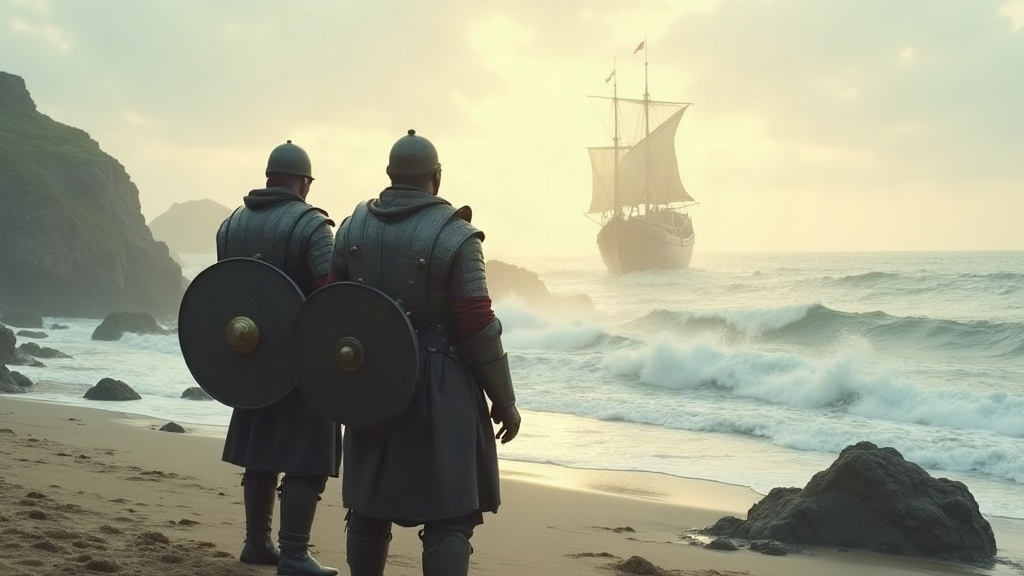
Anglo-Saxon
Hengist and Horsa: Legendary Founders of Anglo-Saxon England
Two brothers from Germanic lands, Hengist and Horsa led the first English settlers across the North Sea. Their arrival around 449 CE marks the beginning of Anglo-Saxon England, though history and legend now blur beyond recognition.
Anglo-Saxon
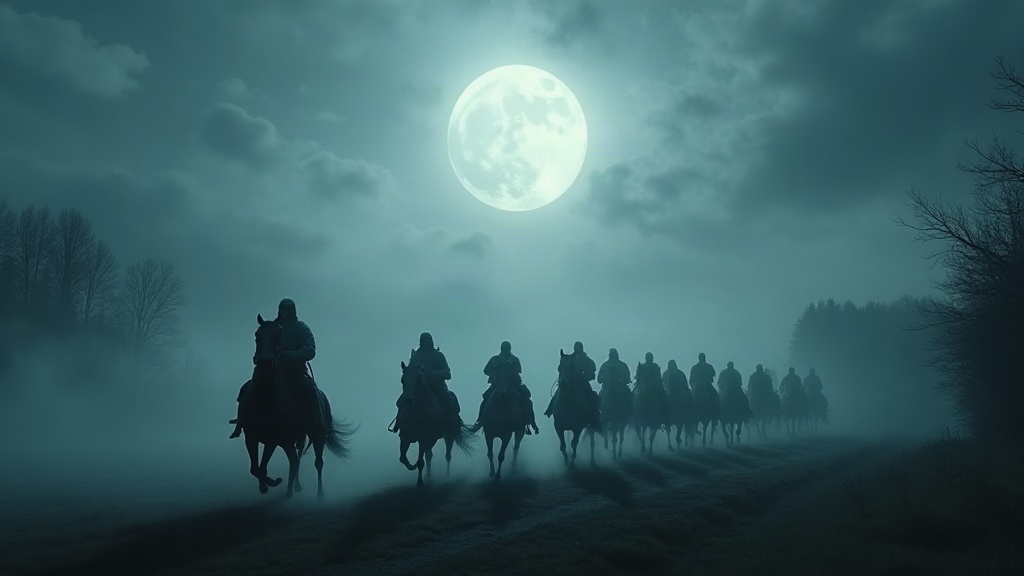
The Wild Hunt in Anglo-Saxon Belief: Spectral Riders and the Hunt for Souls
The Wild Hunt in Anglo-Saxon belief was a ghostly procession across the night sky, led by divine or demonic riders who hunted both the living and the dead. Discover how this ancient vision shaped English folklore for over a thousand years.

Anglo-Saxon
The Sutton Hoo Ship Burial: Archaeology and Myth
In 1939, archaeologists uncovered a 27-meter ship buried in Suffolk, England, holding treasures and weapons from the 6th century. The Sutton Hoo ship burial bridges Anglo-Saxon reality and the epic worlds of Beowulf, revealing how real kings were sent to their gods.

Anglo-Saxon
Eostre: Goddess of Spring and Dawn
Eostre is the Anglo-Saxon goddess of spring, dawn, and fertility, known through a single historical mention by the Venerable Bede. Discover how this shadowy deity shaped the season of renewal and inspired the modern holiday of Easter.