

Žemyna: Mother Earth Goddess of the Baltic Lands
Žemyna stands at the heart of Baltic spirituality as the life-giving earth mother who nurtures crops, heals the sick, and guards the sacred bond between humans and land. Discover how this ancient goddess shaped Lithuanian and Latvian culture for centuries.
Contents
The ground beneath your feet, warm in summer and frozen in winter, holds a presence in Baltic belief. When a Lithuanian farmer needed healing, he placed his hand on bare earth and whispered to Žemyna. When a woman gave birth, earth was brought into the room as a witness. When someone swore an oath, they spoke to the soil itself, knowing the goddess heard every word. Žemyna: Mother Earth Goddess was not a distant, mythological figure but a tangible, breathing force woven into daily life.
This is not the earth as a featureless stage, but the earth as a living being, a mother who feeds, protects, and judges. She is one of the last great earth deities whose worship survived into the modern era among Baltic peoples, and her legacy remains etched into the language, ritual, and moral code of Lithuania and Latvia.
Origins and the Baltic Sacred Cosmos
The Baltic peoples inhabited the forests and wetlands of what is now Lithuania, Latvia, and parts of eastern Prussia for millennia. They developed a spiritual system distinct from their Indo-European neighbors, one centered not on a sky-god hierarchy but on the marriage of earth and sky, sun and moon, water and fire.
Žemyna emerged in this cosmos as the fundamental mother. Her name comes from the Baltic root zem-, meaning earth. In Old Lithuanian texts and folklore collected by scholars in the 19th and early 20th centuries, she appears as a being older than the Dievas (the sky god) himself, a primordial force from which all life flows. She is not carved from the sky or born in thunder; she simply is, eternal, patient, and all-encompassing.
The Baltic cosmology, preserved in fragmentary form in folk songs called dainos and in the surviving pagan calendar, placed Žemyna at the center of a living web. Above her stood Laima (goddess of fate and women), Vėlinas (god of death and the underworld), and Dievas (the sky father). Around her spiraled countless lesser spirits of fields, forests, and water. But Žemyna herself held the foundation. Everything grew from her. Everything returned to her.
Unlike the Greek Gaia, who receded into myth and abstraction, Žemyna remained active in the lived religious practice of Baltic peoples well into the 20th century. Peasants invoked her directly, swore by her, and left offerings at her shrines, even as Christian churches rose across the landscape.
The Goddess of Life, Fertility, and Oath-Keeping
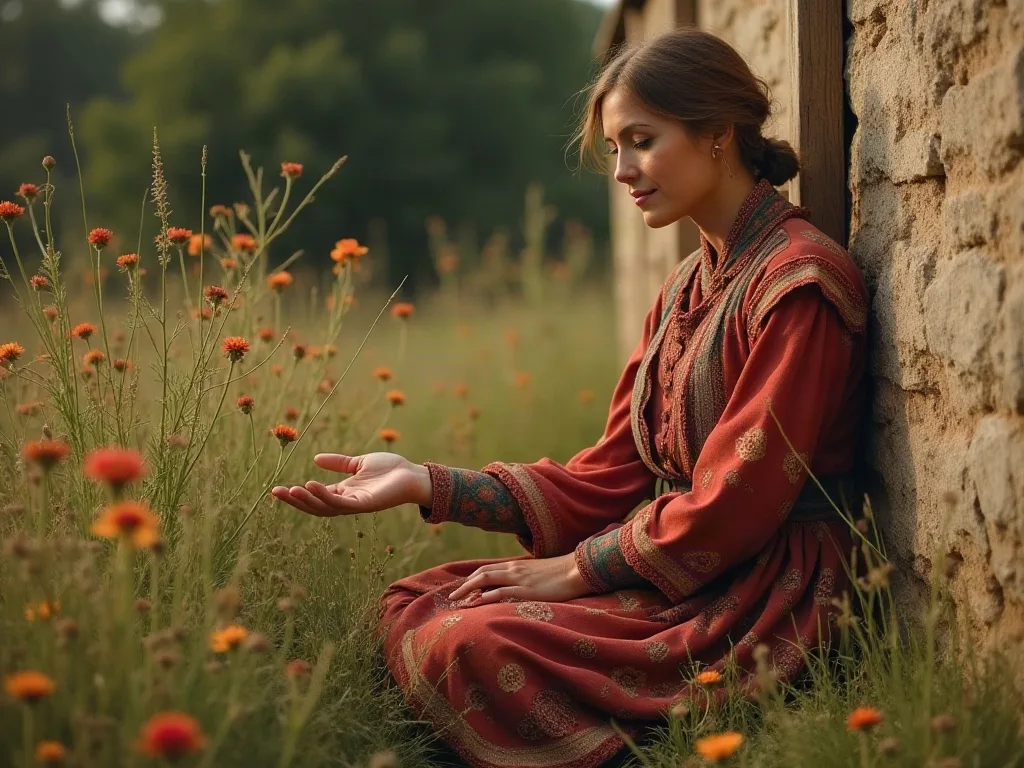
Žemyna's dominion covered the whole arc of human existence, from conception to burial. She was the goddess of fertility, not in the wild, ecstatic sense, but in the steady, nurturing sense of grain ripening in fields and children born healthy. A woman seeking to conceive might go alone to a sacred place and press her body to the earth, calling on Žemyna. A mother would lay her newborn on the ground as a formal act of blessing and recognition.
But she was far more than a fertility symbol. She was a healer. The ill would be brought to her sacred groves or to special earth considered her dwelling place. The sick would lie on the ground and wait for recovery. Cuts and wounds were treated with earth itself, pressed into the wound. This was not superstition born of ignorance; the Baltic peoples understood, at some level, that the soil held life-sustaining properties. They gave that knowledge a sacred name.
Most crucially, Žemyna was the guarantor of oaths and the witness to truth. A man who swore an oath upon the earth knew that Žemyna would punish him if he lied. She could not be tricked or bribed. She saw into the heart. This made her not just a nurturing mother but a stern judge. To swear falsely by earth was to invite ruin upon yourself and your house. The oath-curse was real, immediate, and supernatural.
One of the most powerful descriptions of Žemyna's judicial role comes from ethnographic accounts collected in the 19th century. A man accused of theft might be challenged to swear his innocence upon the earth. He would remove his shoes, kneel, place his hands flat on the ground, and speak the truth as he knew it. If he lied, he believed the earth would reject him. Crops would fail. Children would sicken. He would age swiftly. No amount of Christian piety could erase the older contract sealed beneath his knees.
Sacred Groves and the Places of Meeting
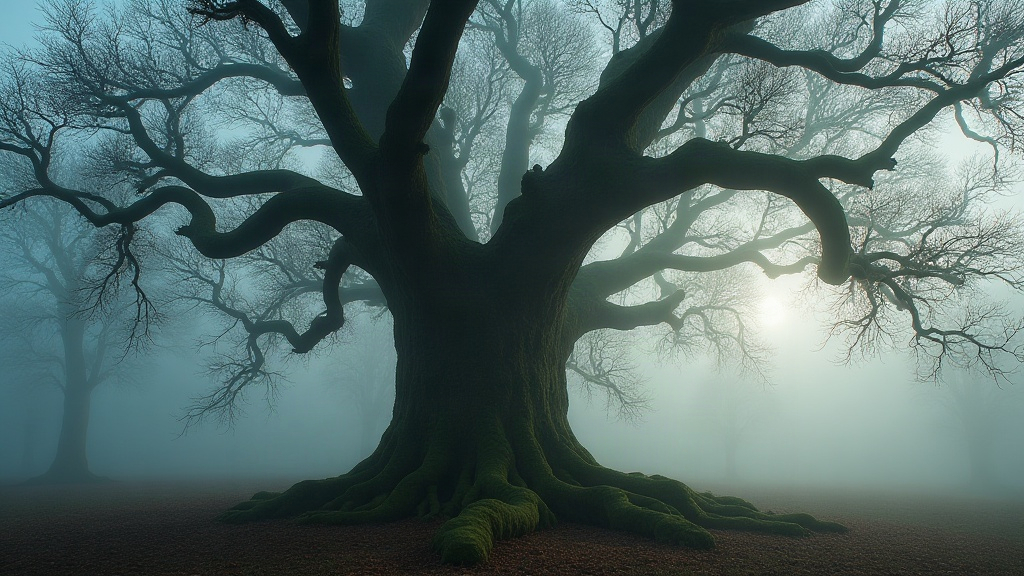
Žemyna had no temples in the classical sense. Instead, her sacred spaces were the old oak groves, the meadows, the clean places where humans and earth could meet directly. These were called laimos or kaukas shrines in some traditions, though Žemyna's own sacred ground was simply recognized by the people who lived on it.
Certain groves were forbidden to cut. Certain meadows were left unharvested in her honor. A stone, a spring, a particular field might become a place where people came to speak with the goddess. Archaeological and ethnographic evidence suggests that these open-air shrines persisted even after Christianization, hidden in forests or disguised as harmless folk custom.

The most sacred act at these places was the offering. A farmer might pour milk into the earth at spring planting. A woman might leave bread at the edge of a grove. These were not grandiose sacrifices but intimate acts of exchange, the way a child might leave a gift for a parent. The goddess received what was given, and in return, blessed the giver with good harvests, healthy children, and safe passage.
One 16th-century account describes people gathering at certain times of the year, particularly at solstices and the spring and autumn turning points, to make offerings and seek Žemyna's favor. They did this in broad daylight, without priests or elaborate ritual. The ground itself was the altar.
Žemyna and the Baltic Pantheon
While Žemyna held supreme significance in daily life, she was part of a larger sacred family. Laima, the goddess of fate, women, and childbirth, worked alongside her. Laima protected pregnant women and newborns, while Žemyna received them into the world. Dievas, the sky father, stood as her complement. Their union was understood as the fundamental creative act. Sun and moon, father and mother, sky and earth.
Below them were countless spirits. Kaukas, the household spirit, belonged to the domain of home and hearth but remained connected to earth's fertility. Velinas, the god of death, ruled the underworld but could not claim a soul without Žemyna's consent, for she was the source of life itself.
This pantheon was remarkably stable. Unlike the Greek gods, who were constantly reinterpreted and reimagined by poets and playwrights, the Baltic deities remained consistent across centuries. Žemyna was always the mother. She was always the earth. She was always the oath-keeper. The role did not shift with literary fashion.
Survival Through Christianization and Folk Memory
The Christianization of Lithuania and Latvia came late. Lithuania remained officially pagan until 1386, making it the last European nation to formally convert to Christianity. Latvia converted in pieces, over centuries. But even after the churches were built, Žemyna lived on.
Christian priests discovered something troubling: they could not erase her. They could not make people stop speaking to the earth. They could not stop women from leaving milk in the ground or men from swearing oaths upon it. So they adopted a strategy common across Europe: they did not kill the goddess. They transformed her.
In some regions, Žemyna merged with the Virgin Mary. In others, she became Saint George or Saint John, the Christian figures assigned dominion over earth and fertility. But in the folk memory, particularly among rural people and in the dainos (traditional folk songs) collected in the 19th century, she remained herself. The poems speak of a beautiful woman dressed in green, her hair dark as soil, her touch warm. They call her by her true name.
The ethnographer Jonas Balys and others who collected Lithuanian and Latvian folklore in the early 20th century found that Žemyna worship had never truly ceased. In villages far from urban centers, people still made offerings. They still swore oaths upon the earth. They still believed that the soil could heal or curse. These practices were not the remnants of a dead religion but the living continuation of ancient piety.

The Dainos: Žemyna in Song and Memory
The dainos are an invaluable source for understanding Žemyna as a living goddess. These folk poems, collected by scholars like Liudvikas Gira and Oskar Kolberg, capture Žemyna not as myth but as a presence in human consciousness. They were sung at harvest, at marriage, at birth, at death, during work in the fields.
One common refrain speaks of the earth as a mother who never grows tired of feeding her children. Another celebrates the moment when a woman first touches the soil after giving birth, offering gratitude. The poems describe the earth as soft, generous, and sometimes as stern. They acknowledge that Žemyna can withhold as well as give. A crop can fail. A swear-oath breaker can be struck down by hidden illness.
What emerges from these songs is a portrait of a goddess understood through direct experience, not theological doctrine. She is real because people lived on her and with her every day. She is trustworthy because she had never abandoned them, even when the Christian god was proclaimed. She is alive because the seasons still turn, seeds still grow, and the earth still holds the bones of ancestors.
The preservation of the dainos by 19th and 20th-century scholars was a race against modernization and forced Christianization. If these songs had not been collected and written down, Žemyna's voice would have faded entirely into silence. Instead, they stand as a record of one of Europe's last truly pagan religious systems.
Scholarly Interpretation and the Quest for Historical Truth
Modern scholars approach Baltic mythology cautiously, aware that much has been lost and that what survives is filtered through centuries of Christian overlay and Romantic-era scholarship. The work of scholars like Marija Gimbutas, who studied Indo-European mother-goddess traditions, suggested that figures like Žemyna represented a continuity from pre-Indo-European earth-mother cults. Others, including more recent Baltic specialists, argue for a more nuanced picture: Žemyna as a distinctively Baltic creation, shaped by the forests, wetlands, and seasonal cycles of the region.
The historical debate centers on a fundamental question: Was Žemyna an earth-mother goddess inherited from older pre-Indo-European peoples and preserved in the Baltic tradition? Or was she a specifically Baltic understanding of the earth, shaped by Baltic conditions and Baltic belief? The answer likely involves both. The concept of an earth mother is ancient and nearly universal. But the way the Baltic peoples understood her, the specific rituals they performed, the oath-keeping function they assigned to her, the way she coexisted with other deities, these were distinctively Baltic.
What is certain is that the literary and ethnographic record shows a coherent, stable religious system in which Žemyna held a central place, and that this system persisted in folk practice long after official conversion to Christianity.
Žemyna in Modern Baltic Consciousness and Revival
In the late 20th and early 21st centuries, as Lithuania and Latvia reasserted their independence and cultural identity, interest in pre-Christian Baltic religion revived. Žemyna emerged as a symbol of national continuity and indigenous spirituality. Neopagan movements in Lithuania have looked to her as a figure of ecological wisdom and feminine power rooted in the earth itself.
This revival must be understood carefully. It is not a perfect reconstruction of ancient practice, because too much has been lost. Instead, it is a modern reengagement with a historical tradition, using what fragments survive in folklore, ethnography, and scattered historical accounts. Some of this work is scholarly and rigorous. Some is romantic and imaginative. Both impulses honor the goddess in different ways.
For many modern Lithuanians and Latvians, Žemyna represents something deeper than nostalgia. She embodies a way of understanding humans as embedded in nature rather than set apart from it, of recognizing reciprocal obligation rather than dominion, of understanding the earth as a conscious presence deserving respect. In an era of environmental crisis, these insights from an ancient tradition speak with renewed force.
The Goddess Who Never Left
What makes Žemyna remarkable among world goddesses is not that she was worshipped in the distant past, but that she continued to be worshipped when worship was dangerous. She lived in folk memory and folk practice through centuries of imposed Christianity, buried not in temples but in the daily gestures of farmers and mothers and oath-keepers. She did not require priests or monuments. She required only bare feet on soil, a spoken word, and a heart that believed in her presence.
When you stand on Baltic earth today, in Lithuania or Latvia, you stand on ground that was sacred to Žemyna long before Christianity, during its dominance, and after its grip loosened. That continuity is unusual in European history. Most of the old gods faded into story and then into silence. But Žemyna remains woven into the landscape itself, into the language of the people, into practices so ordinary that they have become invisible.
She is the mother who does not speak in grand pronouncements but through seasons and crops and the steady nurture of life. In this quiet presence lies her power.
Frequently asked questions about Žemyna, the Baltic Mother Earth goddess
Frequently asked questions
Why did Žemyna survive Christianization when most pagan deities faded away?
Žemyna was so woven into daily agricultural life and into the swearing of oaths that uprooting her would have required uprooting Baltic culture itself. She was not confined to temples or priestly ritual but lived in the ground itself, in practices so ordinary and necessary that the Christian authorities could not effectively suppress them. Instead, the Church attempted to syncretize her with Christian figures like the Virgin Mary or saints associated with fertility and healing.
What was the relationship between Žemyna and Dievas in Baltic cosmology?
Žemyna and Dievas represented the fundamental duality of the Baltic sacred cosmos: earth and sky, mother and father, the source of physical life and the source of order and law. They were understood as complements rather than equals. Žemyna gave life; Dievas gave form and rule. Together they sustained the world. Unlike some Indo-European mythologies where the sky-father is supreme, Baltic tradition held Žemyna's role as primary and foundational.
Did Žemyna have written myths like Greek gods, or is she known only through folklore?
Žemyna is known almost exclusively through ethnographic collection, folk songs (dainos), and fragmentary historical accounts rather than through epic poetry or written mythology. This reflects the nature of Baltic religion: it was a living practice embedded in landscape and ritual rather than a literary tradition. Unlike the Eddas or the Iliad, there is no Baltic epic that preserves divine narratives. What survives instead is a rich body of folklore, proverbs, and ritual knowledge collected in the 19th and 20th centuries before it could be lost entirely.
How do modern Lithuanians and Latvians relate to Žemyna today?
Žemyna appears both in historical scholarship and in modern neopagan and cultural revival movements. For many Baltic people, she represents indigenous spiritual wisdom and continuity with pre-Christian ancestry. Environmental movements have also engaged with her as a symbol of the earth as a conscious, deserving presence. This modern engagement is neither a pure historical recreation nor a complete modern invention but rather a living reinterpretation of an ancient tradition using the fragments that have survived.
What makes Žemyna different from earth goddesses in other cultures?
While earth-mother figures appear across Indo-European and non-Indo-European traditions, Žemyna is distinctive in her association with oath-keeping and justice. She was not primarily a fertility goddess in the ecstatic, wild sense but a guardian of truth and morality. Swearing falsely by the earth brought supernatural punishment. This judicial function, combined with her role as healer and nurturer, makes her a more complex and morally engaged figure than many comparative traditions present.
Žemyna and the Unfinished Story of Baltic Spirituality
The study of Žemyna: Mother Earth Goddess cannot be closed with neat historical conclusions. Too much is lost. The scholarly sources are fragmentary. The folk tradition survives in pieces and memory. But what we have is vivid, consistent, and undeniably authentic: a portrait of a goddess who was real to millions of people, who shaped their choices and their moral sense, who lived in their language and their daily gestures, and who refused to fade when empires demanded it.
The question for modern readers is not whether Žemyna is "true" in some ancient, literal sense, but what her persistence tells us about how humans relate to the earth and to the sacred. The Baltic peoples understood themselves as embedded in nature, bound by obligation to the soil that fed them. They understood truth as something written in the earth itself, not merely in words spoken in the air. They understood the mother, both human and divine, as the source from which all life flows.
These understandings survive in the fragments we have. They survive in the dainos still sung in rural villages. They survive in the names of the land itself. And for anyone seeking to understand the deeper currents of European spirituality before modernity, before abstraction, before the sky-gods of later religions, they point toward something essential and human and still speaking.
Read the full book
Want the whole story?
The complete edition is an instant PDF download here, with a paperback on Amazon for selected titles.
Baltic
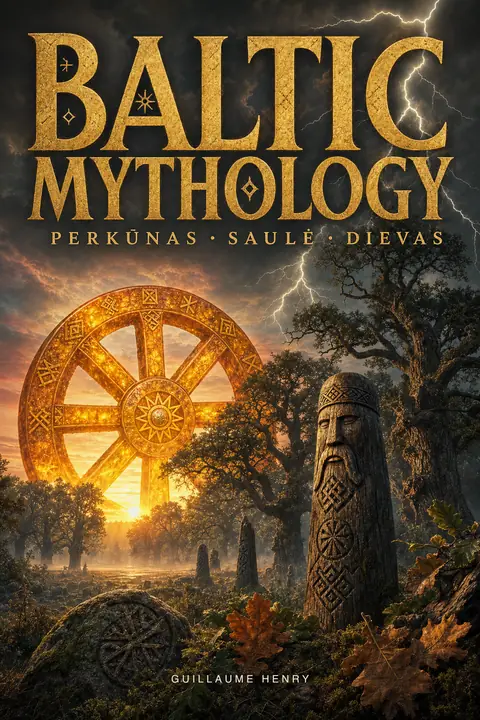
The Baltic Mythology Book: Perkūnas, Saulė, Dievas, and the Gods of Lithuania and Latvia
Perkūnas, Saulė, and Dievas
The last pagans of Europe: the Lithuanians and Latvians who kept their old gods into the 1400s. Perkūnas the thunderer, Saulė the sun, the sky-god Dievas, and a forest religion preserved in tens of thousands of folk songs.
More from Baltic
All articles
Baltic
The Grass Snake: Sacred Household Guardian of Baltic Homes
The grass snake was no mere reptile in Baltic homes, it was a household god, a protective spirit that lived in the walls and brought prosperity. Learn how this sacred creature shaped daily life and spiritual belief in Lithuania and Latvia.
Baltic
Dainas: Sacred Folk Songs as Living Mythology
Dainas are more than songs, they are Lithuania and Latvia's oldest mythology preserved in four-line verses sung for millennia. Discover how peasants encoded gods, rituals, and cosmic wisdom into folk poetry that shaped Baltic identity and survives today.
Baltic
The Sacred Oak: World Tree of Baltic Tradition
The Sacred Oak stands at the center of Baltic cosmology as the world tree connecting earth, sky, and the underworld. Discover how Lithuania and Latvia's ancient oak groves shaped a mythology that survived centuries of Christian suppression.

Baltic
The Creation of the World from the Cosmic Egg in Baltic Mythology
Baltic peoples believed the world hatched from a cosmic egg laid by a celestial waterfowl, a creation motif that bridges Bronze Age Indo-European roots and medieval folk memory. Discover how this myth shaped Baltic cosmology and echoes across global traditions.