

The Wedding of the Sun and Moon: Baltic Cosmic Union and Eternal Separation
In Baltic myth, the sun and moon were once married, locked in cosmic union before they parted. Discover how this celestial wedding shaped the rhythm of day and night, and why their separation echoes through Lithuanian and Latvian lore as both tragedy and necessity.
Contents
The Heavens Remember a Marriage
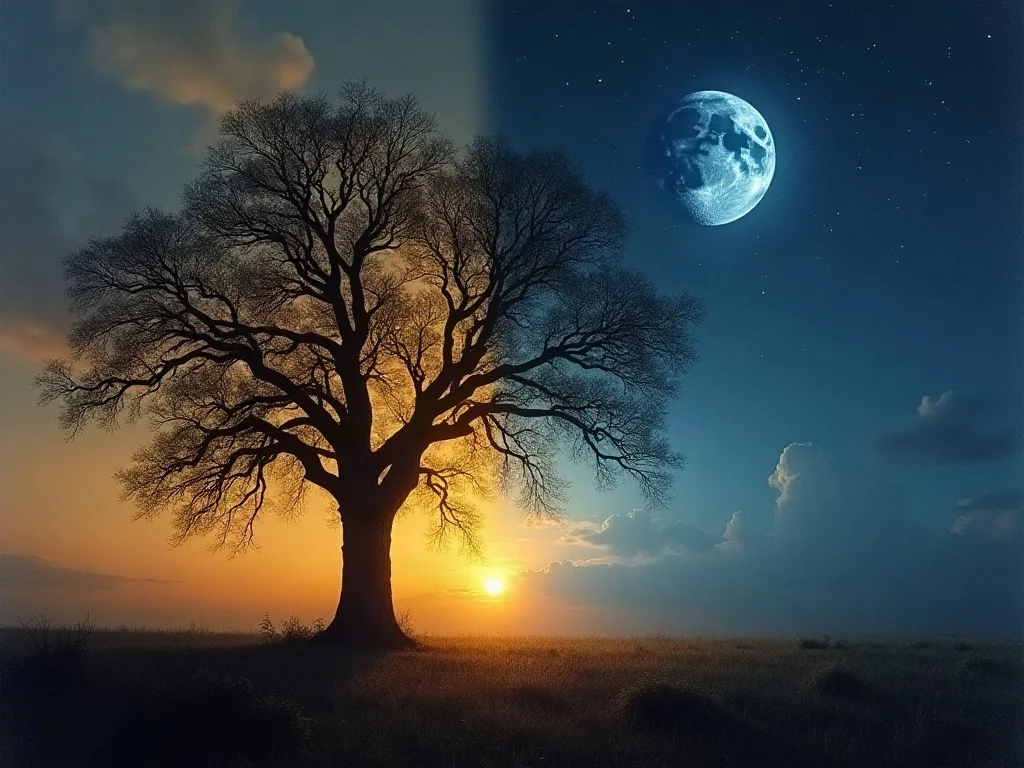
In the oldest stories of Lithuania and Latvia, the sky itself was a household. The Sun and Moon lived not as distant celestial objects but as a married couple, ruling the sky as husband and wife. Their bond shaped the rhythm of existence, the turning of seasons, the very pulse of light and darkness. Yet this marriage did not endure. What the Baltic peoples preserved in their songs and prayers was not a simple love story but a cosmic drama of union, betrayal, and eternal separation.
The Wedding of the Sun and Moon stands at the heart of Baltic cosmology. Unlike many European mythologies where celestial bodies are mechanical forces or ruled by distant gods, the Baltic traditions made the Sun and Moon themselves divine persons, with feelings, struggles, and a shared history written across the sky. Their story explains why day and night alternate, why the moon sometimes disappears, and why the universe requires both light and shadow to exist.
The Cosmic Household Before Separation
Baltic mythology preserved fragments of how the Sun and Moon once lived together. The sources here are precious but scattered. The most detailed accounts come from Lithuanian folk songs called daina, collected in the 19th and early 20th centuries by scholars like Jonas Basanavičius and Kazimierz Alchimowicz. These songs, passed mouth to mouth through centuries, carry older religious memory from the pre-Christian Baltic world.
In the beginning, the Sun (Lithuanian Saulė) and the Moon (Lithuanian Mėnulis) shared a single household in the sky. They were not distant objects but inhabitants of a cosmic home, much like a mortal family on earth. The Sun was the wife in this union, the active, bright principle. The Moon was the husband, the quieter, reflective partner. Together they maintained the order of heaven and earth, their interplay creating the rhythm that all living things depend upon.
The Baltic peoples, speaking Lithuanian and Latvian, understood time itself as the fruit of their marriage. Day came when the Sun rose to her work. Night fell when the Moon took his turn. The seasons changed as the couple's relationship shifted through warmth and cold, presence and absence. This was not abstract theology but lived observation woven into myth. A farmer watching the horizon at dawn was witnessing the Sun's eternal labor. A traveler guided by starlight was trusting the Moon's constancy.
The Betrayal and Breaking of the Bond
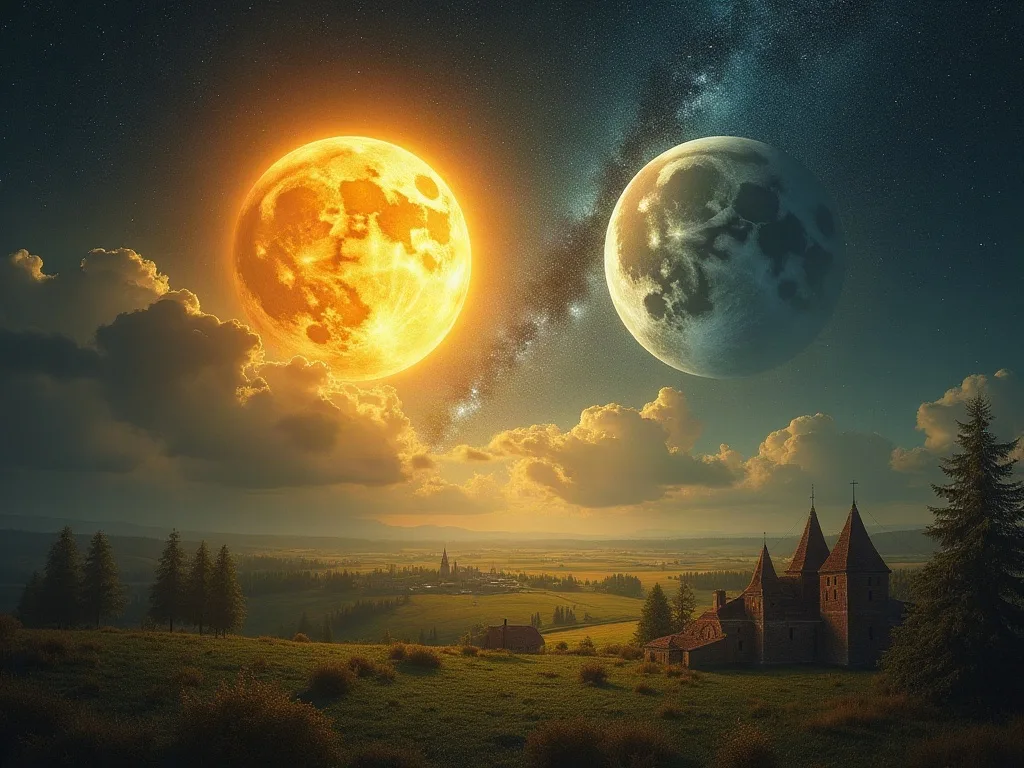
What destroyed this cosmic marriage remains somewhat veiled in the sources that survived. The most widely cited accounts suggest that the Moon committed an act of infidelity, taking another lover. In some versions, the Moon desired a star; in others, he was seduced by the beauty of a mortal woman or a goddess of the night. The exact rival varies in the folklore, but the outcome was always the same: a rupture that could not be healed.
The Sun's response, according to Lithuanian and Latvian tradition, was devastating. Outraged and betrayed, she could not remain in the same household as her unfaithful husband. The cosmic marriage dissolved. What had been a shared sky became divided: the Sun would rule the day, the Moon the night. They would never again occupy the same space. Their separation was not merely emotional but structural, woven into the fabric of creation itself.
Some versions of the myth describe the Sun pursuing the Moon across the heavens in her fury. This pursuit explains a real astronomical phenomenon familiar to the Baltic peoples: the occasions when the Moon appears in the daytime sky, as if fleeing from the Sun's anger. Other accounts suggest a more tragic reconciliation, where the two divine beings acknowledged they could not part entirely but could only meet briefly, at dawn and dusk, when their realms overlap.
The Role of Divine Mediators and Cosmic Law
The Baltic pantheon included other divine figures whose role was to maintain cosmic order in the aftermath of the Sun and Moon's rupture. The most important was Dievas (Old Prussian Dievas, Lithuanian Dievas), the sky god and supreme lawmaker of the Baltic cosmos. Dievas did not create the separation; rather, he acknowledged it as necessary and established the laws that would govern the Sun and Moon's eternal division.
In some accounts, other celestial beings intervened in the marriage crisis. The Stars (Lithuanian žvaigždės) played roles as witnesses or, in some versions, as participants in the drama. The Morning Star (Venus) was sometimes portrayed as a daughter of the Sun, loyal and protective of her mother's honor. The complex relationships between all these celestial persons created a mythology of the night sky, where every visible point of light carried narrative weight and moral significance.
The Sun's daughters, the goddesses of dawn (Aušrinė in some traditions), were said to prepare the sky for their mother's daily journey. The Moon's behavior toward these deities became a measure of his character in the folklore. Respectful, contrite, fading as dawn approached: these details in the songs suggested that the Moon never fully ceased to honor the Sun's dominion, even after the betrayal and separation.
The Cosmic Rhythm as Divine Consequence
The Wedding of the Sun and Moon, once shattered, did not disappear from the universe. Instead, their separation became the engine of time itself. This is the genius of Baltic mythological thought: not to explain day and night as the mechanical result of planetary motion, but as the ongoing consequence of a broken relationship between two divine persons.
The alternation of day and night was not punishment but necessity. The Sun needed rest. The Moon needed his time to rule. The cosmos required both their labor, and their very inability to share it became the principle that made existence possible. A world where the Sun and Moon reigned together would never experience the necessary darkness for growth, for sleep, for the fallow periods that allow renewal. Their separation, though born from betrayal, became the condition for all life on earth.
The lunar phases themselves were read as emotional states. When the Moon was full and bright, he was boldest, most alive, almost defiant in his light. As he waned, some traditions suggested he was withdrawing, ashamed or in mourning. The new moon, the complete absence of his light, was interpreted as a return to some original state of non-being or a period of deep penance. Across Lithuanian folk religion, these phases were not merely observed but experienced as the Moon's inner life made visible.
The Sun's journey showed different patterns. She rose and set with regularity; she strengthened in summer and weakened in winter. Yet even her cycle was read as responsive to the Moon's position. When the two celestial bodies came closest, at certain lunar moments, the folk traditions suggested that old sorrow stirred, or old love flickered briefly back to life, before the necessities of their separate stations pulled them apart again.
Prayers, Rituals, and the Worship of Celestial Persons
The Baltic peoples did not merely tell the story of the Wedding of the Sun and Moon as entertainment or cosmology. They wove it into their religious practice. Saulė, the Sun, was one of the most important deities in pre-Christian Lithuanian and Latvian religion. She received daily prayers from farmers, women especially, who called on her for fertility, health, and the blessing of light.
The songs and invocations preserved by 19th-century folklore collectors reveal the depth of this relationship. Worshippers addressed the Sun as a mother, a guardian, a divine woman of terrible beauty and justice. They praised her steadfastness, her refusal to abandon her duty even after betrayal. In some daina, the Sun is mourned as a figure of sacrifice, bound forever to her path, eternally separated from the one she once loved.
Prayers to Mėnulis, the Moon, were more complex. He received respect and acknowledgment, but with a subtle undertone of disappointment or even disapproval. He was the guardian of night travelers, the protector of those who worked under his light. Yet the infidelity that separated him from the Sun was remembered. Some traditions suggest that offerings to the Moon carried an element of appeasement, a wish that his sorrow over the lost marriage might not bring misfortune to those living below.
The worship of celestial deities in Baltic religion did not require temples of stone. It took place in clearings, on hilltops, near springs. The sky itself was the place of devotion. When a worshipper looked up at sunrise or moonrise, they were not gazing at inanimate matter but greeting a divine being, acknowledging their shared existence in a cosmos ordered by ancient love and ancient loss.
The Separation and the Cosmic Dance
In some of the deepest versions of the myth, the Wedding of the Sun and Moon is never fully dissolved. Instead, it becomes an eternal dance, a movement that continues infinitely but never returns to wholeness. The Sun and Moon are bound together by the very separation that destroyed their marriage. They are chained to one another through opposition.
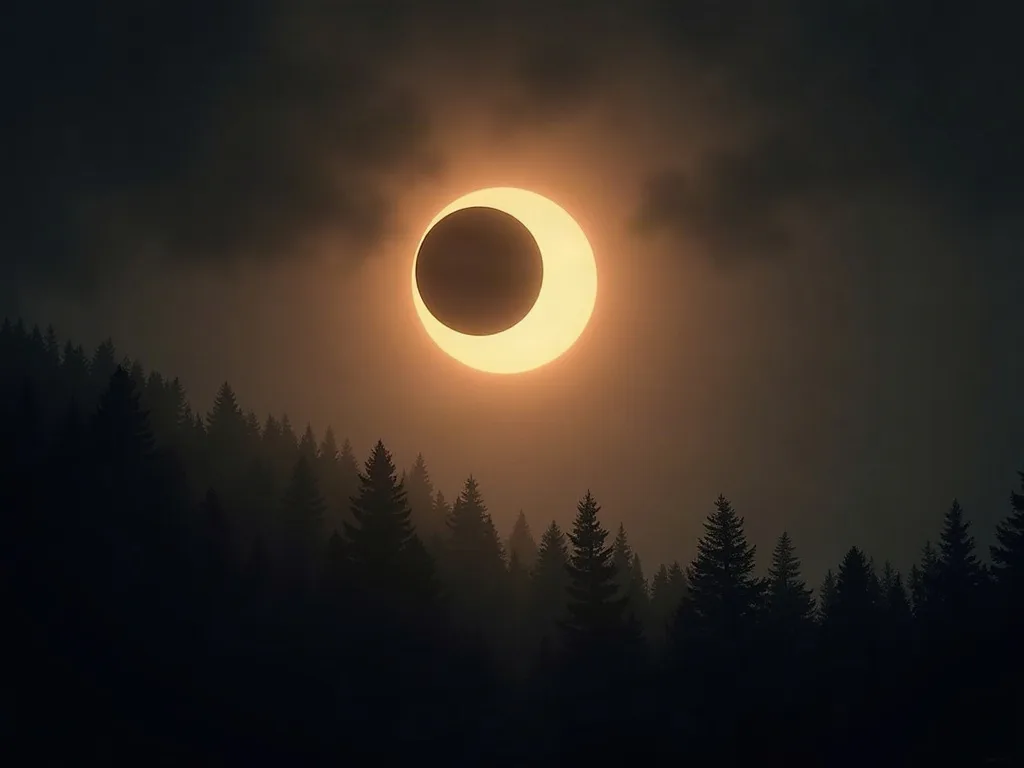
This paradox is profound: their separation requires their connection. The Sun rises and sets; the Moon rises and sets. Their paths cross the sky, always nearly intersecting but rarely if ever meeting in the same space at the same time. The eclipse, the rare moment when the Moon passes before the Sun's face, was read in Baltic tradition as a moment of terrible anguish. The old union, briefly realized, caused fear and sorrow among those who witnessed it. The light would be restored, but only after the deepest darkness.
Some scholars of Baltic mythology have noted parallels to other Indo-European traditions where cosmic forces are bound in eternal tension. The Sun and Moon in Baltic lore function similarly to pairs in other mythologies: complementary yet opposed, required yet separated, eternally seeking and eternally denied reunion. Yet the Baltic version carries a particular emotional weight. The betrayal, the choice to separate, the ongoing sorrow: these make the myth not merely a cosmological explanation but a story about the limits of love, the costs of trust broken, and the strange way that pain itself can become necessary structure.
Traces in Later Folklore and Christian Adaptation
When Christianity came to the Baltic lands in the 13th and 14th centuries, the worship of Saulė and Mėnulis did not vanish. Instead, it transformed, finding new shapes within Christian framework. The Sun became associated with Christ or with the Virgin Mary, both figures of bright redemption. The Moon retained his more ambiguous position, sometimes linked to saints, sometimes still carrying traces of the old sorrow.
The daina songs continued to be sung across centuries of Christianization. In these folk songs, the old story of the Wedding of the Sun and Moon persisted with remarkable clarity. A song collected in the 19th century might invoke the Sun in terms that echoed pagan prayer yet fit within the language of Christian devotion. The myth itself became a kind of secret, preserved in metaphor and poetry, embedded so deeply in the rhythms of language that it survived even when the temples and priests of the old religion were gone.
The 19th-century Romantic movement in Europe brought renewed interest in Baltic folklore. As scholars and collectors documented daina songs, the story of the Wedding of the Sun and Moon entered European intellectual consciousness. German, Russian, and Polish folklorists recognized the antiquity and beauty of these myths. The Baltic traditions were understood as windows into Indo-European religion as it existed before classical Greece and Rome reshaped the European imagination.
In the 20th and 21st centuries, as Lithuania and Latvia reclaimed independence and cultural autonomy, the old myths gained new respect. Modern Lithuanian and Latvian writers, artists, and scholars have drawn on the Wedding of the Sun and Moon as a symbol of cultural continuity, national identity, and the persistence of memory across centuries of suppression and change. The myth has become part of how Baltic peoples understand themselves, not as ancient artifact but as living resource.
Comparative Echoes: The Sun and Moon Across Mythologies
The Wedding of the Sun and Moon is uniquely Baltic in its emotional texture and narrative detail, yet themes of celestial marriage and separation appear across world mythology. In ancient Egyptian tradition, the Sun god Ra and other deities moved through sky and underworld in patterns that reflected divine relationships. In Hindu mythology, the Sun (Surya) and Moon (Chandra) are distinct divine persons with their own roles and stories.
Yet the Baltic version preserves something particular: the sense that the separation of the Sun and Moon is both tragic and necessary, both a breaking and a creation. The myth does not present their division as punishment from above or the result of cosmic mechanics. Instead, it frames separation as something that emerges from the flaws and desires of the divine persons themselves. Their infidelity, their betrayal, their inability to resolve conflict, become the basis for all order below.
In this way, the Wedding of the Sun and Moon reflects a mature mythological worldview, one that accepts that the best order often comes from wound and rupture, that eternal structures can be built on the foundation of loss, and that duty and love are sometimes opposed rather than aligned. The Sun continues her eternal journey not because she has healed from betrayal but because continuing is her only choice. The Moon accepts the night as his portion, not in peace but in permanent, necessary longing.
The Psychology of Celestial Beings
Modern interpretation of the Wedding of the Sun and Moon has sometimes applied psychological frameworks to the myth, reading the Sun and Moon as projections of human emotional states or aspects of the psyche. The Sun represents clarity, consciousness, active agency. The Moon represents the unconscious, emotion, passivity. Their separation would then dramatize the necessary distance between conscious and unconscious mind.
While such readings can offer insight, they risk flattening the myth into metaphor for internal states. The Baltic peoples who preserved these stories likely understood the Sun and Moon as real divine beings, not symbols of anything else. They inhabited the sky. They had relationships with humans and with each other. Their separation was not a figure for something deeper but the deepest truth of how existence is organized.
That said, the myth does carry psychological truth. The experience of love broken, of being forced to accept a new order that denies previous connection, of learning to function in a world structured around permanent loss: these are human experiences that the myth honors and reflects. The Sun's steadfast labor after betrayal, the Moon's quiet acceptance of diminishment: these offer a kind of wisdom about endurance and duty in a world that will never be as it was.
The Unhealed Wound in the Cosmos
Some scholars of Baltic religion have noted that unlike many mythologies that offer resolution or redemption, the Wedding of the Sun and Moon remains unhealed. There is no moment when the Sun and Moon are reconciled, no future prophecy of their reunion, no suggestion that their separation is temporary. The myth ends in acceptance of permanent division.
This quality gives it a particular modern resonance. Contemporary readers, skeptical of myths that promise ultimate harmony or cosmic justice, may find in this Baltic tale a more honest reckoning with loss and change. The universe does not repair itself. The Sun and Moon do not forgive and reunite. Instead, they adapt to a new order that incorporates their separation, and this adaptation becomes the basis for all subsequent existence.
Yet there remains the possibility of eclipse, that rare moment when the Moon moves before the Sun's face and the old union is briefly, terrifyingly realized. This recurrence suggests that the separation, though absolute as a structural principle, never entirely erase the memory of what was. The myth preserves both truth: the Sun and Moon are eternally divided, and eternally they remember being one.
Frequently asked questions about the Wedding of the Sun and Moon?
Frequently asked questions
Did the ancient Balts actually worship the Sun and Moon as deities?
Yes, extensively. Pre-Christian Lithuanian and Latvian peoples made daily prayers to Saulė, the Sun goddess, and observed ritual calendars tied to lunar phases. The 19th-century collection of daina folk songs confirmed the depth of this worship. Christian missionaries deliberately targeted these celestial deities as rivals to the new faith, which confirms their religious importance.
Where do we find written sources for the Sun and Moon myth?
The myth survives primarily in Lithuanian daina songs collected in the 19th century by scholars like Jonas Basanavičius. There are also references in Latvian folk traditions and in fragmentary accounts by early Christian missionaries and medieval chroniclers who recorded Baltic religious practices before they disappeared. Unlike Norse or Greek mythology, there is no single ancient epic; instead, the myth is scattered across folk memory preserved in song.
Is the Moon depicted as evil or villainous for his infidelity?
Not entirely. While his betrayal causes the separation, Baltic tradition portrays the Moon as sorrowful and bound by his own limited nature. He is diminished, not demonized. The myth is complex: the Moon's flaw leads to cosmic structure, and his melancholy becomes part of the beauty of night. He is a flawed divine being who has learned to accept consequence, much like humans.
How does this myth compare to the separation of Sky and Earth in other traditions?
Many Indo-European mythologies include separation of cosmic principles: Sky and Earth in Hesiod's Theogony, or Rangi and Papa in Polynesian myth. The Baltic version is distinctive because it frames the separation as resulting from emotional rupture within a relationship, not from conflict between opposites or from a creator's design. The myth privileges personal emotion and consequence over abstract cosmology.
Did the eclipse have special significance in Baltic religion?
Yes. The eclipse, when the Moon passes before the Sun's face, was likely understood as a rare, frightening moment when the separated pair briefly reunited. This would have caused anxiety and been interpreted as an omen. The temporary return of light after eclipse would have suggested both the power of the old bond and the pain of its inevitable break.
The Myth in Modernity: Memory and Reconstruction
In the 21st century, the Wedding of the Sun and Moon exists in a peculiar state. It is neither a living religious practice, as it was before Christianization, nor a documented ancient text, like the myths of Greece or Rome. Instead, it is a partially reconstructed tradition, pieced together from folklore, songs, and scholarly inference. This very incompleteness gives it poignancy.
Contemporary Lithuanian and Latvian artists, writers, and spiritual practitioners have begun to engage with this myth again, not as historical recreation but as living resource. Some invoke it in the context of Baltic cultural pride and independence. Others approach it with genuine religious seriousness, as part of efforts to revive Baltic polytheism. Still others engage with it as poetry or philosophical reflection on the nature of separation, time, and cosmic order.
The myth survives not because it explains anything that modernity needs explained. The Sun and Moon move according to gravitational law, not divine relationship. Day and night result from planetary rotation. Yet the myth endures because it speaks to something deeper: the human need to see the cosmos as inhabited by persons with feelings, by beings whose struggles shape the world, by a universe that remembers love and loss.
The Wedding of the Sun and Moon invites us to imagine a sky not as empty space but as a household, a stage for emotion and consequence, a realm where memory persists even in separation. It asks us to feel the Sun's steady labor as an act of dignity after betrayal, and to recognize in the Moon's absence not mere rotation but the presence of permanent sorrow, transformed into beauty. In doing so, it transforms how we experience the most basic rhythms of existence: day and night, light and darkness, presence and absence.
Read the full book
Want the whole story?
The complete edition is an instant PDF download here, with a paperback on Amazon for selected titles.
Baltic
The Baltic Mythology Book: Perkūnas, Saulė, Dievas, and the Gods of Lithuania and Latvia
Perkūnas, Saulė, and Dievas
The last pagans of Europe: the Lithuanians and Latvians who kept their old gods into the 1400s. Perkūnas the thunderer, Saulė the sun, the sky-god Dievas, and a forest religion preserved in tens of thousands of folk songs.
More from Baltic
All articles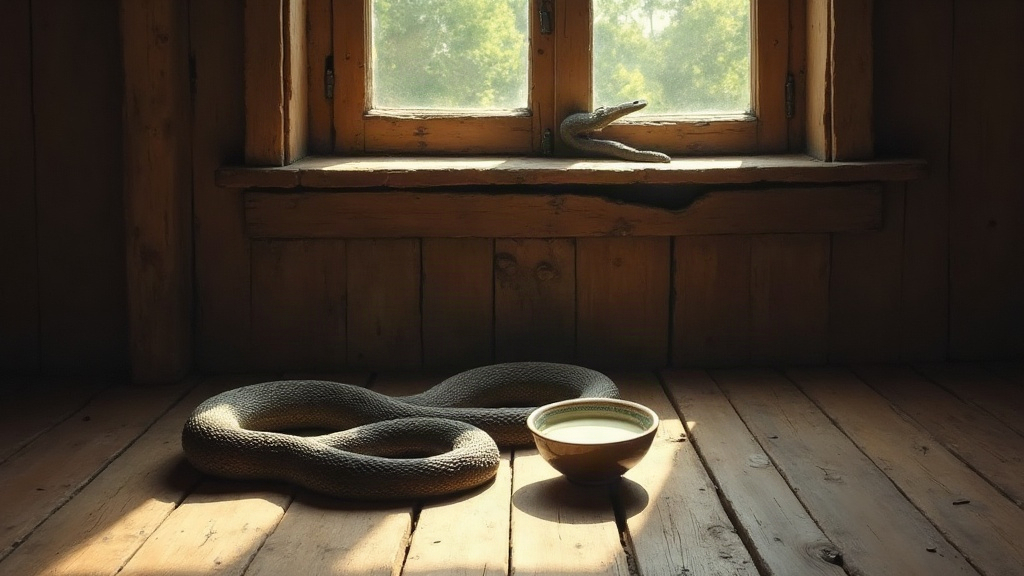
Baltic
The Grass Snake: Sacred Household Guardian of Baltic Homes
The grass snake was no mere reptile in Baltic homes, it was a household god, a protective spirit that lived in the walls and brought prosperity. Learn how this sacred creature shaped daily life and spiritual belief in Lithuania and Latvia.

Baltic
Dainas: Sacred Folk Songs as Living Mythology
Dainas are more than songs, they are Lithuania and Latvia's oldest mythology preserved in four-line verses sung for millennia. Discover how peasants encoded gods, rituals, and cosmic wisdom into folk poetry that shaped Baltic identity and survives today.

Baltic
Žemyna: Mother Earth Goddess of the Baltic Lands
Žemyna stands at the heart of Baltic spirituality as the life-giving earth mother who nurtures crops, heals the sick, and guards the sacred bond between humans and land. Discover how this ancient goddess shaped Lithuanian and Latvian culture for centuries.

Baltic
The Sacred Oak: World Tree of Baltic Tradition
The Sacred Oak stands at the center of Baltic cosmology as the world tree connecting earth, sky, and the underworld. Discover how Lithuania and Latvia's ancient oak groves shaped a mythology that survived centuries of Christian suppression.