
Romuva: The Sacred Temple and Eternal Flame of Baltic Belief
Romuva was the spiritual heart of pre-Christian Lithuania, a hilltop temple where priestesses tended an eternal flame and guarded the memory of the gods. Discover how this sanctuary shaped Baltic religion and why its secrets were nearly lost forever.
Contents
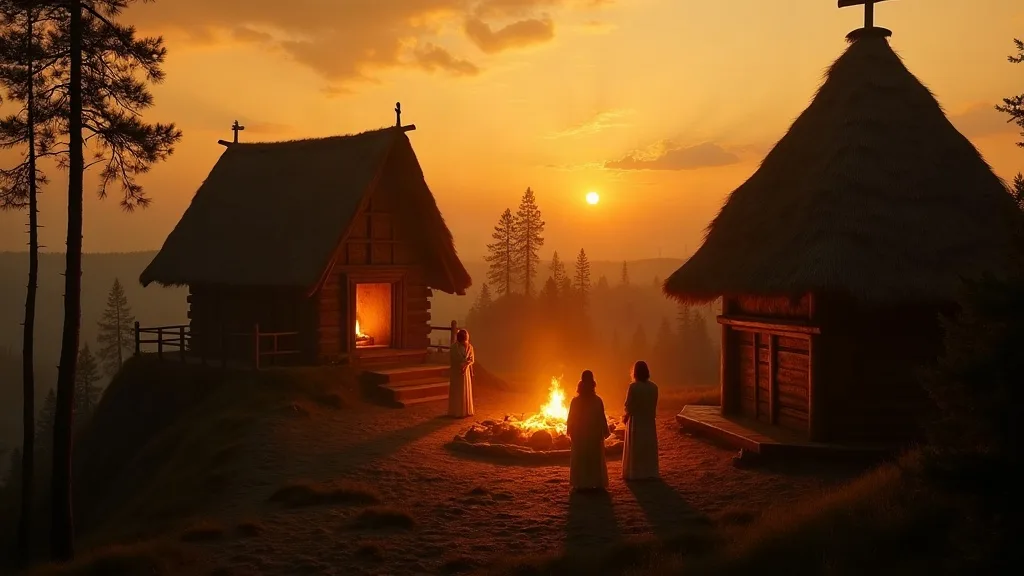
On a hill overlooking the Dubysa River in northwestern Lithuania stood a temple that held the pulse of an entire people. Romuva was not merely a building of wood and stone. It was the place where fire never died, where priestesses kept vigil through seasons of frost and harvest, where the oldest gods received their worship as the rest of Europe turned Christian. The temple burned only once, and when it did, the world it represented burned with it.
The sanctuary endured on that hilltop for centuries, yet today only earth and scattered stones remain. Its full story was nearly erased. What we know comes from fragments preserved in hostile sources, from place names that refused to disappear, and from the stubbornness of Lithuanian memory itself.
The Sacred Geography of Romuva
Romuva stood in the region of Samogitia, the last pagan holdout in medieval Europe. The temple's location near the Dubysa River placed it in the heartland of Lithuanian spiritual power. The site occupied a natural hill, a position common to Baltic sacred places. Heights held significance across Indo-European cultures. The gods were closer there. The flames rose higher.
The temple belonged to the people of Aukstaitija and Samogitia, two distinct Lithuanian tribal zones that maintained their own priesthoods yet shared sacred traditions. Romuva was neither the only sacred site nor the only flame, but it held supreme authority. When Lithuanian chieftains and common folk sought knowledge of the divine will, they traveled to Romuva. The priestesses there were oracles and healers, guardians of ritual knowledge that stretched back to the age before writing, before conquest, before the world changed.
The geography mattered deeply. Samogitia bordered the Teutonic Knights' expanding territories; this proximity to Christian military pressure made the temple's existence even more remarkable. For decades while crusaders carved their way through the Baltic lands, Romuva remained unbroken.
The Eternal Flame and Sacred Fire
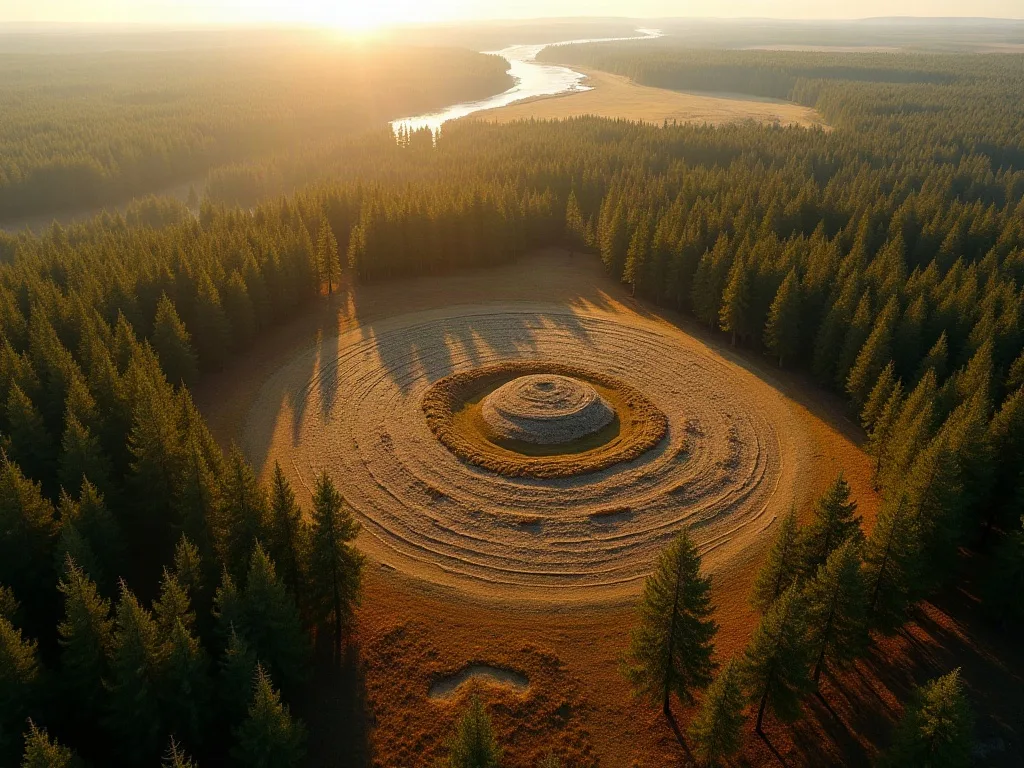
At the center of Romuva burned a fire that was never permitted to die. This was not merely practical. Sacred flame held cosmic meaning for the Baltic peoples, as it did for many ancient Indo-European cultures. The fire connected earth to sky. It transformed offerings into smoke that carried prayers to the gods. To let it perish was to sever the bond between the human world and the divine.
Priestesses, known as vaidilai in Lithuanian tradition, maintained this flame with ritual precision. They tended it through winter nights and summer days. They lived within or near the temple, devoted to this single duty. Their role was not priestly in the Christian sense; they were more oracular, intermediaries who read signs in the fire itself. Smoke patterns, the color of flames, even the way burning wood cracked and fell held prophecy for those trained to interpret them.
The eternal flame also served a practical purpose: it provided coals for ritual fires when sacrifices occurred. Fire purified offerings before they reached the gods. Water, grain, animals, and occasionally human sacrifices (as the Teutonic Knights' records suggest, likely in times of desperation) were made sacred by passage through flames.
One of the oldest surviving accounts of Romuva comes from the chronicle of Peter of Dusburg, a Teutonic Knight writing around 1326. He describes the sanctuary with unmistakable awe despite his hostility: a great oak tree at the center, three fires burning perpetually before an image of the chief god, and a chief priest called the Criwe whose authority extended across all the Baltic lands. Peter writes that the Criwe's word was so binding that "if he sent a staff or a messenger to any nation of the pagans, no matter how distant, it was obeyed with reverence as if the pope himself had spoken." Even an enemy recorded that the power here was real.
According to later chronicles, the priestesses were sworn to guard this fire with their lives. If a vaidilutė allowed the flame to die through negligence, she faced execution. This detail, whether literally true or partly shaped by Christian chroniclers, speaks to how seriously the Lithuanians valued this sacred duty.
The Gods Who Received Worship at Romuva
Romuva was the house of multiple gods, though not all traditions agree on the complete list. The primary deities honored there emerged from the earliest layers of Baltic belief, many linked to natural forces and seasonal cycles.
Dievas, the sky father, received veneration as the supreme creator. His name derives from the same Indo-European root as Zeus and Jupiter. Sacrifices ascended to Dievas through the smoke of the eternal flame. He was distant, transcendent, and rarely depicted in human form.
Velinas, the lord of the dead and underworld, was also honored at Romuva. Unlike the demonic death figures of Christian mythology, Velinas held an essential place in the cycle of existence. To respect death was to respect life itself. Funeral rites and seasonal offerings acknowledged his domain.
Laima, the goddess of fate, fertility, and childbirth, received constant devotion. Women particularly sought her blessing for safe delivery and healthy children. Laima's presence at Romuva would have been central to the temple's community function; she stood at every threshold of human life.
Veles, or Velinas in some sources, the god of cattle and wealth, represented the prosperity of herds and fields. A pastoral people dependent on livestock for survival needed this god's favor.
The temple also recognized solar deities and thunder gods whose exact names and roles remain partially obscured by the scarcity of sources. What is clear is that Romuva functioned as the single place where all these powers were acknowledged together, their relationships confirmed and their presence renewed through ritual.
Priestesses and the Vaidilai Tradition
The priestesses of Romuva held a status unlike any other women in medieval Baltic society. They were educated, autonomous, and wielded documented influence over matters of state. Chieftains consulted them before war. Families sought their counsel on marriages and births. Their interpretations of omens shaped decisions that affected hundreds of lives.
The vaidilai were not merely caretakers of the temple. They were custodians of oral tradition, repositories of genealogy, preservers of law, and singers of ritual poetry. Before writing, the priestesses' memories were the books that held Lithuanian civilization together. They memorized hundreds of charms, prayers, and sacred narratives. A young priestess entering the temple would spend years in apprenticeship, learning the seasonal cycles, the proper words for each offering, the meanings hidden in smoke and flame.
Perhaps the clearest recorded example of this authority concerns the Lithuanian Grand Duke Algirdas in the 14th century. Several chronicles, including Lithuanian annalistic notes, indicate that military campaigns eastward were timed to coincide with favorable omens declared by the sacred priesthood. The timing of Algirdas's 1362 campaign against the Mongols at the Battle of Blue Waters, one of the great Lithuanian military achievements, was preceded by consultation of omens and ritual determination of an auspicious date. The hand of the priestly oracles lay behind the calendars of war.
Female priestesses held especial prominence because the Baltic peoples, like many ancient Indo-European societies, recognized that women possessed particular connections to fertility, birth, and the forces of renewal. A priestess at Romuva embodied these powers on behalf of the community. When she spoke prophecy, it was not her individual voice but the voice of the goddess flowing through her.
Historical records, written by hostile crusaders, confirm that the priestesses also served as advisors in warfare and politics. The Teutonic Knights understood that breaking Romuva meant breaking not just a religious site but the intellectual and political authority of the priesthood itself.
The Rituals and Calendar of the Sacred Temple
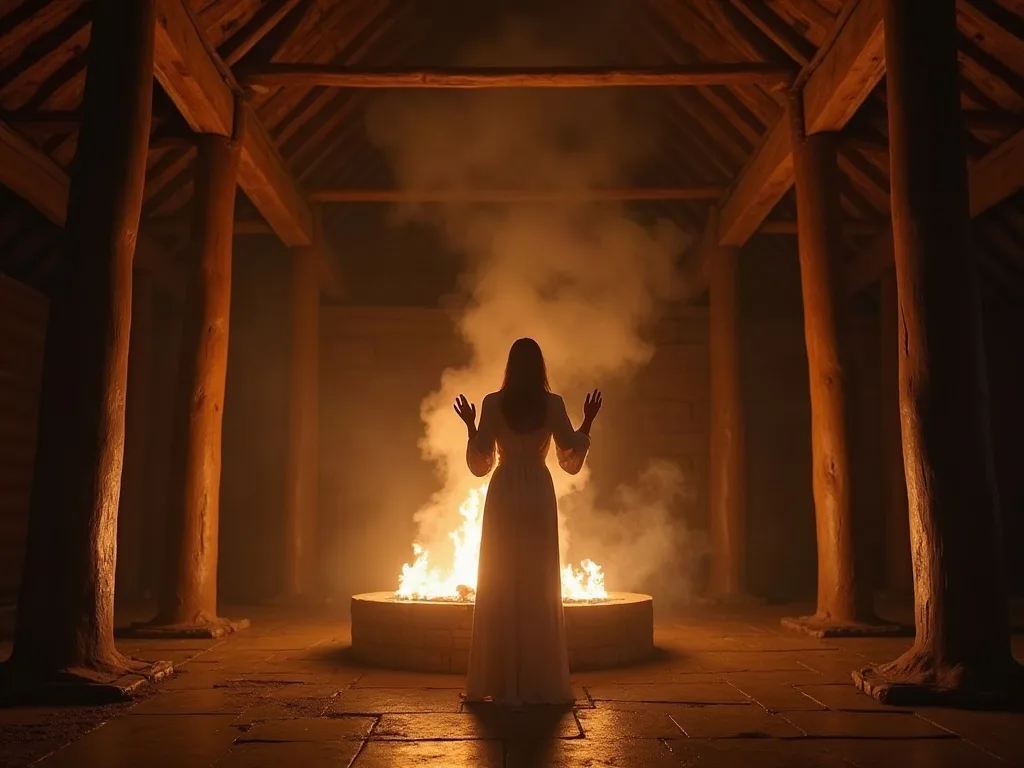
Romuva operated according to a ritual calendar tied to the seasons and the heavens. While detailed records are fragmentary, reconstructed from later Lithuanian folklore and from accounts in crusading chronicles, the temple marked crucial moments in the year.
Spring brought the festival of renewal, when the flame was ceremonially rekindled or affirmed after winter darkness. This ensured its sacred power remained fresh and vital. Summer solstice involved fire rituals and divinations about the harvest to come. The autumn gathering celebrated successful crops and sought the gods' protection for the winter months ahead.
Winter solstice held particular significance. The darkest night tested the eternal flame's resilience. Priestesses and worshippers kept vigil to ensure the fire burned bright while the sun lay low and weak. The successful passage through this threshold confirmed the order of the cosmos and the gods' ongoing commitment to sustaining the world.
Animal sacrifice occurred at these festivals and at other moments prompted by omens or necessity. A cow, sheep, or boar would be ritually killed, portions burned as offerings while others were roasted and shared in communal feasts. These were not grim affairs but celebrations of communion with the divine, a binding together of human and sacred worlds.
The priestesses also conducted private divinations for individuals who came seeking knowledge. They would read bird entrails, interpret dreams brought to them, or gaze into fire to discern the hidden will of the gods. This individualized divination work, combining shamanic and priestly elements, made Romuva a destination for people across the Lithuanian lands.
The Threat: Christian Conversion and the Crusades
By the 14th century, Romuva faced an enemy it could not contain within its flame: the relentless expansion of Christian crusaders. The Teutonic Knights, a military religious order sanctioned by Rome, had spent decades conquering the Baltic lands. They came not only as soldiers but as builders of churches, erasers of the old ways.
Lithuania held out longer than other Baltic peoples. The Prussians and Livonians fell to the crusades earlier, their sacred sites destroyed and their priesthoods scattered. But Lithuania, mountainous and fierce, resisted. Romuva became a symbol of this resistance. Every time the priestesses tended the eternal flame, they defied the cross.
The Knights understood this. They understood that Romuva was not just a temple but the living center of Lithuanian identity. As long as that flame burned, the old gods lived. As long as the priestesses prophesied, the people held a spiritual authority outside Christian hierarchy.
In 1382, the Teutonic Knights finally moved to destroy it. A military expedition targeted the temple specifically. The raid succeeded. The building was burned. The priestesses were either killed or forced to flee. The eternal flame that had burned for centuries went dark.
The destruction was a catastrophe not only for Lithuanian paganism but for the preservation of Baltic knowledge. Unlike Christian monastic libraries, Baltic sacred knowledge lived in memory, in priestesses' voices, in the smoke of ritual fires. When Romuva fell, irreplaceable tradition burned with it.
The Conversion and Survival of Memory
What followed was formal conversion. In 1387, Lithuania's ruler Jogaila was baptized, and the kingdom officially embraced Christianity. Romuva's destruction became official policy. Pagan sites were demolished. Priestesses were forbidden to practice. The old gods were declared demons and false idols.
Yet something extraordinary happened. While the priesthood was destroyed, the memory of Romuva persisted. It lived in place names. Romove, Romawa, Romuva; the location retained its name even under Christian rule. The land itself held the sacred memory. Local people, Christian on the surface, maintained fragments of older prayers and beliefs in secret. Grandmothers told children stories that sounded like folklore but carried the bones of ancient rite.
In later centuries, scholars and collectors began recording Lithuanian folklore, particularly in the 19th and 20th centuries. They found texts and oral traditions that could be traced back to pre-Christian times. The eternal flame of Romuva had been extinguished, but the light of memory had survived, hidden in songs, in seasonal customs, in the names of gods remembered in diminished forms.
Rediscovering Romuva in Modern Scholarship
Twentieth-century scholars, particularly Lithuanian historians and folklorists, began reconstructing Romuva's history from multiple fragmentary sources. The Teutonic Knights' chronicles, hostile as they were, had recorded details about the temple they sought to destroy. Place-name evidence confirmed the site's location. Archaeological surveys of the region around Vilkmergė in Samogitia provided physical evidence: burnt earth, foundations, artifacts consistent with a significant ritual center.
Marija Gimbutas, the influential archaeologist and Indo-European scholar, helped place Romuva within the broader context of Baltic religion. She drew connections between Lithuanian sacred practices and other Indo-European religions, showing how Romuva represented a living link to ancient Indo-European religious structures that had been preserved longer in the Baltic lands than almost anywhere else in Europe.
Jonas Trinkunas and other Lithuanian scholars added layers of detail by analyzing folklore collections, particularly the massive archive of Lithuanian folk songs and customs gathered by Kristijonas Donelaitis and others in the 18th and 19th centuries. In these folksongs, in wedding rituals, in seasonal observances, they found echoes of Romuva's ceremonies.
The temple never rose again. Its physical location was already marked by a later Christian monastery. But its conceptual and spiritual significance underwent a remarkable recovery. In the modern era, particularly following Lithuanian independence in 1991, Romuva became a symbol of cultural continuity and pagan heritage. New religious movements in Lithuania have sought to revive Baltic paganism, and Romuva holds an iconic place in their imagination.
Romuva in the Landscape of Sacred Baltic Sites
Romuva was never the only sacred place, though it held supreme authority. The Baltic lands contained a network of holy sites: sacred groves, springs held to possess healing power, hilltop sanctuaries dedicated to specific gods, and burial mounds where ancestors received veneration.
The oak groves held particular significance. Ancient oaks, gnarled and centuries old, were seen as dwelling places of divinity. Sacrifices were made in these groves, and priestesses sometimes conducted divinations within them. The Teutonic Knights, in their chronicles, described with horror the pagan reverence for trees and the practice of carving vows and prayers into bark.
Springs and water sources also functioned as sacred sites. Water held purifying and prophetic power. Many Lithuanian settlements maintained sacred springs where ritual cleansing and healing occurred. These sites survived longer than temples because they required no permanent structure; they were natural altars that could not be easily erased.
Yet Romuva stood apart because it combined all these elements: fire and earth, a built sanctuary with trained priestesses, a hierarchy of ritual knowledge, and a role in state affairs. It was simultaneously a temple and an oracle, a place of community gathering and elite communication with the divine. This combination made it unique and made its destruction particularly significant.
How Romuva's Loss Shaped Baltic Memory
The burning of Romuva represented more than the loss of a building. It was the breaking of an unbroken chain of priestess-to-priestess transmission that had extended back centuries. It was the end of Lithuanian paganism as an organized state religion. Yet paradoxically, this destruction made Romuva immortal in a different way.
Martyred sites acquire power in human memory. The fact that Romuva burned, that its priestesses died or were silenced, that the eternal flame was extinguished by conquerors, transformed it from a living place of worship into a symbol of resistance. In later centuries, when Lithuania chafed under foreign rule first by the Teutonic Order, then by the Russian Empire, and later by Soviet domination, Romuva came to represent an idea that could not be burned: the idea of a distinctive Lithuanian spiritual and cultural identity that predated all conquerors.
The temple became more powerful as a memory than it had been as a physical structure. Every folklore collector who recorded a prayer fragment, every scholar who published research on Baltic gods, every Lithuanian who maintained a custom that traced back to pre-Christian times, was keeping the flame of Romuva alive.
Frequently Asked Questions about Romuva and Baltic Sacred Temples
Frequently asked questions
Did human sacrifice really occur at Romuva?
The Teutonic Knights' chronicles claim that Romuva held human sacrifices, particularly in times of military danger. Modern scholars debate the extent and frequency of this practice. Some interpret the chronicles as propaganda designed to portray Baltic pagans as barbaric to justify crusading violence. However, Indo-European religious contexts including Vedic ritual suggest that occasional human sacrifice may have occurred at major temples during crises. The truth likely lies between complete denial and the Knights' exaggerated claims, but definitive evidence no longer exists.
What actually happened to the priestesses when Romuva was destroyed?
The historical record is unclear. Some accounts suggest the priestesses were killed in the raid itself. Others imply they fled and continued practicing in secret. A few may have been captured and forced to accept Christianity. What is certain is that the organized priesthood ceased to function, and their trained oral knowledge could not be fully transmitted to a new generation. This represents a genuine catastrophe in terms of cultural preservation.
Why was the eternal flame so central to Baltic religion?
Fire represented the cosmic connection between human and divine, between earth and sky. An eternal flame that never died symbolized the unbroken continuity of the world itself and the gods' ongoing commitment to sustaining creation. Ritual fire transformed offerings into sacred smoke that carried human prayers to the deities. For a pastoral people, fire also held practical importance for warmth, cooking, and protection from predators. These practical and spiritual dimensions were not separate; they were woven together in a unified worldview.
Is Romuva's exact location known today?
The site is believed to be near Vilkmergė in the Samogitia region of Lithuania, based on historical chronicles and place-name evidence. Archaeological surveys have identified remains consistent with a major ritual center, though definitive excavation has never been completed. A later Christian monastery was built in the area, which further complicated the landscape. The location is known in general terms, but no major archaeological study has yet provided complete certainty about the precise boundaries of the temple complex.
Did other Baltic peoples have temples similar to Romuva?
The Prussians and Livonians likely had comparable sacred centers, though less is known about them because they were conquered earlier by crusaders and fewer records survive. Lithuania's longer independence allowed Romuva to develop and flourish beyond the span available to other Baltic temples. The extended preservation of Romuva therefore made it the most documented example of Baltic sanctuary architecture and priesthood organization we possess.
Romuva's Echo in the Modern Baltic Spiritual Landscape
Today, Romuva exists primarily in memory and imagination, yet its influence on contemporary Baltic identity remains tangible. Since Lithuanian independence, there has been a deliberate movement to recover and revive Baltic pagan traditions. Organizations practicing Dievturiba (meaning "keeping to the old gods," the modern revival of Baltic paganism) often reference Dievturiba as a framework and Romuva as the model of authentic Lithuanian spirituality.
Modern reconstructions of Baltic religion face an inherent challenge: the sources are fragmentary and often filtered through hostile medieval chronicles. There is no continuous priesthood to pass knowledge down, no unbroken ritual tradition. Yet this incompleteness has not deterred reconstruction efforts. Instead, they draw on Lithuanian folklore, comparative Indo-European religious studies, and historical archaeology to build informed understandings of what Romuva's worship might have involved.
The site itself, now a field in rural Lithuania, has become a destination for people interested in Baltic heritage. The absence of visible ruins does not diminish its significance; instead, the emptiness holds its own power. It is a space where history and imagination meet, where the past can be contemplated without the distraction of reconstructed buildings or tourist infrastructure.
Romuva represents something rare in human history: a moment when a living spiritual tradition was violently interrupted, nearly erased, yet preserved and revived through cultural memory. Its story is not that of an ancient religion consigned to history textbooks but of a faith that survived through song, custom, and stubborn Lithuanian refusal to forget.
Read the full book
Want the whole story?
The complete edition is an instant PDF download here, with a paperback on Amazon for selected titles.
Baltic
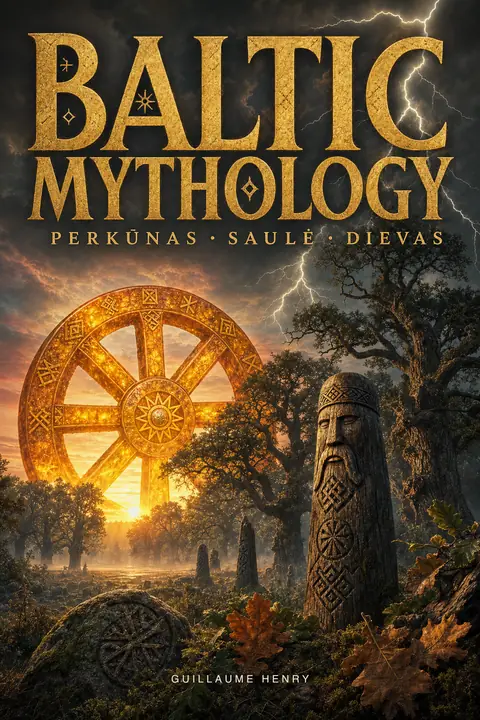
The Baltic Mythology Book: Perkūnas, Saulė, Dievas, and the Gods of Lithuania and Latvia
Perkūnas, Saulė, and Dievas
The last pagans of Europe: the Lithuanians and Latvians who kept their old gods into the 1400s. Perkūnas the thunderer, Saulė the sun, the sky-god Dievas, and a forest religion preserved in tens of thousands of folk songs.
More from Baltic
All articles
Baltic
The Grass Snake: Sacred Household Guardian of Baltic Homes
The grass snake was no mere reptile in Baltic homes, it was a household god, a protective spirit that lived in the walls and brought prosperity. Learn how this sacred creature shaped daily life and spiritual belief in Lithuania and Latvia.

Baltic
Dainas: Sacred Folk Songs as Living Mythology
Dainas are more than songs, they are Lithuania and Latvia's oldest mythology preserved in four-line verses sung for millennia. Discover how peasants encoded gods, rituals, and cosmic wisdom into folk poetry that shaped Baltic identity and survives today.

Baltic
Žemyna: Mother Earth Goddess of the Baltic Lands
Žemyna stands at the heart of Baltic spirituality as the life-giving earth mother who nurtures crops, heals the sick, and guards the sacred bond between humans and land. Discover how this ancient goddess shaped Lithuanian and Latvian culture for centuries.
Baltic
The Sacred Oak: World Tree of Baltic Tradition
The Sacred Oak stands at the center of Baltic cosmology as the world tree connecting earth, sky, and the underworld. Discover how Lithuania and Latvia's ancient oak groves shaped a mythology that survived centuries of Christian suppression.