
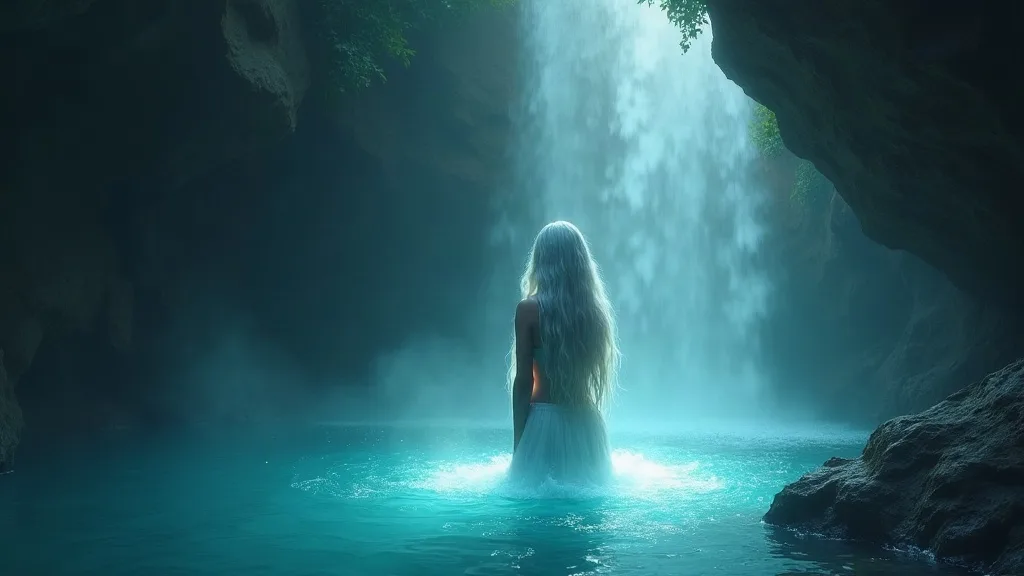
Lamiak: The Nymphs of Basque Rivers and Caves
Lamiak are the enchanting water spirits of Basque folklore, neither divine nor mortal, who dwell in rivers, caves, and waterfalls across the Pyrenees. Discover their nature, their bargains with humans, and what makes them unlike any other European water spirit.
Contents
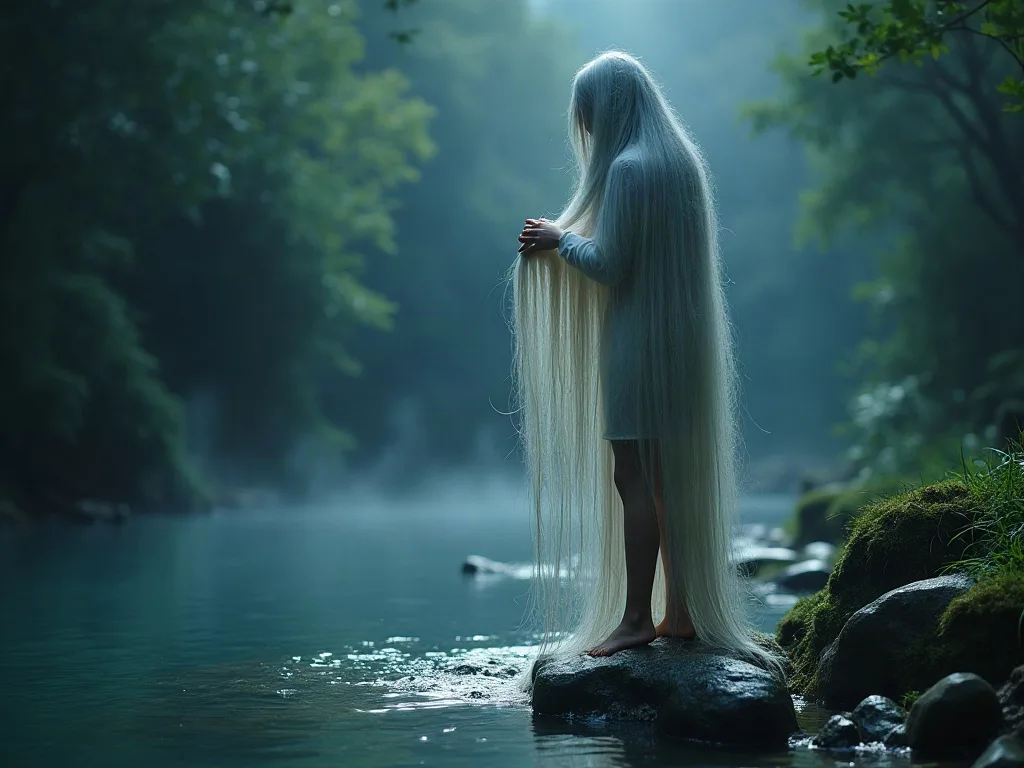
The water runs cold and clear through the Basque Pyrenees. On certain evenings, when the light turns amber and the river sounds almost like voices, a traveller might hear singing. A woman's voice, or perhaps many, echoing from the rocks. If you are very brave, or very foolish, you might glimpse them: beautiful women with long hair combing at their reflections, their feet curled beneath them on the moss-slick stones. These are the Lamiak. They are not quite gods, not quite spirits, and certainly not human. They are the threshold-dwellers of Basque country, ancient inhabitants of water and stone, and their presence still shapes how the Basque people understand the wild places on their land.
The Lamiak represent something rare in European folklore. While mermaids and water nymphs populate the mythologies of many cultures, the Lamiak occupy a singular role in Basque tradition. They are not seductresses who drown men, nor are they wholly benevolent guardians. They are liminal beings, crossing between the human world and the wild, neither fully resident in either realm. Their stories reveal how the Basque people negotiated their relationship with the untamed landscape, and how they understood the boundary between civilization and the forces beyond it.
The Nature of the Lamiak: Between Worlds
The Lamiak are female water spirits, though "spirit" captures only part of their essence. Basque folklore describes them as possessing physical form: beautiful women with long hair, typically depicted with smooth skin and features that mark them as distinctly other. Their most distinctive trait, recorded in folklore across the Basque region, is their feet. These are not human feet. Many accounts describe them as having hooved or clawed feet, sometimes goat-like, sometimes bird-like, sometimes simply inhuman in ways that defy easy description. Other sources speak of their feet turning backwards, or their legs possessing joints that bend in impossible directions. This physical ambiguity is deliberate. The feet anchor the Lamiak firmly in a realm outside human normalcy.
They dwell in specific places: the deep pools of rivers, the mouths of caves, waterfalls where the spray creates a permanent mist. Some tales locate them near mills, suggesting an association with flowing water and its labor. They are creatures of moisture, of places where the boundary between earth and water grows blurred. They appear most often at twilight, the hour when day itself becomes ambiguous. They sing, comb their long hair, dance, and occasionally interact with humans who stumble upon their hidden spaces.
The Lamiak are not immortal in the way gods are immortal. They exist outside human time, but they can suffer harm. They are vulnerable to certain iron objects, which appears in Basque folklore as it does in many European traditions. They can be killed, though accounts of this are rare and troubling. They can also be helped, and certain Basque legends record humans aiding wounded or trapped Lamiak, with consequences both strange and transformative. This vulnerability marks them as less than divine, yet their persistence across centuries and their evident agency mark them as far more than merely mortal spirits.
The Lamiak in Basque Stories: Work, Wonder, and Warning
The Lamiak appear across Basque territory in locally rooted stories, not in a single codified narrative the way Odin dominates Norse tradition. Instead, almost every valley, river, and cave system in the Basque country seems to possess its own Lamiak tale. This distribution suggests a very old tradition, one woven into the landscape itself.
The most common narratives fall into a few recurring patterns. In some stories, Lamiak arrive at a mill and offer their assistance. A miller discovers that his grain is being ground by invisible hands, the work completed perfectly and mysteriously. Other accounts describe Lamiak approaching humans with requests: help removing a splinter, aid in some task, or rescue from danger. When humans respond with kindness, they receive rewards. A woman might be given gifts of butter or grain. A man might be directed to hidden treasure, or blessed with unexpected fortune. The tone of these tales is reciprocal rather than punitive. The Lamiak are not testing human character so much as enforcing a basic ethic of mutual aid.
But the Lamiak can also withdraw their favor abruptly. If ignored, insulted, or harmed, they vanish. Some legends suggest that when humans reject the Lamiak's presence or attempt to capture them, the spirits leave their river or cave never to return. The knowledge and benefit they offered evaporates. Lands that once prospered under a benevolent Lamiak's attention may fall into difficulty and misfortune. This dynamic reveals something important: the Lamiak are not rulers or judges imposing punishment from on high. Rather, they are neighbors in the landscape whose presence is beneficial, whose absence is deeply felt.
A recurring motif appears in stories of Lamiak combing their hair. A human observer, enchanted by the sight, watches for hours. Time behaves strangely during these encounters. What feels like minutes might be years; the observer returns to find loved ones aged, villages transformed, their own clothing tattered with impossible age. This speaks to the Lamiak's fundamental otherness: they do not inhabit the same temporal dimension as humans. To touch their world too directly is to risk being unmade by time itself.
Lamiak and the Christianization of Basque Country
The presence of Lamiak in Basque folklore becomes more complex when set against the history of Christianization. Unlike many pagan creatures of European tradition, who were demonized or transformed beyond recognition by the Church, the Lamiak retained much of their original character and regional reverence even as Christianity took root in the Basque country.
Some Church-influenced retellings attempted to paint the Lamiak as demons or witches, or as souls in purgatory trapped in the water, working off spiritual debt through labor. These reframings never quite took hold across Basque society. The tradition remained more stubborn and layered: the Lamiak could coexist with Christian belief without being fully subordinated to Christian moral categories. They were accepted as simply part of the Basque landscape, as natural as the rivers themselves.
This coexistence created a unique situation. The Lamiak were not, as in many European regions, driven underground or into complete demonization. Instead, they persisted as honored inhabitants of Basque places, sometimes portrayed with ambiguous morality, sometimes as clearly benevolent, but always treated with respect and a degree of caution. Basque shepherds, millers, and villagers continued to leave offerings, to speak cautiously of the river spirits, and to explain strange occurrences in the landscape through Lamiak activity.
The survival of Lamiak belief in Basque tradition, even alongside Christianity, reflects something distinctive about Basque culture itself: a cultural identity so rooted in the land and its specific character that external religious frameworks could not erase local supernatural inhabitants. The Lamiak became part of an enduring Basque sensibility, one that understood the landscape as alive with persons and presences.

Physical Form and Symbolic Meaning
The ambiguous feet of the Lamiak merit deeper consideration. The hooved or backwards-facing feet are not random details. They signal an absolute boundary. A human foot, with its particular structure, is a mark of the human community, the path-finders, the builders of civilization. The Lamiak's impossible feet mark them as irreducibly other. They cannot become human, and humans cannot become fully like them.
This physical mark also suggests an ancient lineage. Similar foot-imagery appears in other European traditions related to water spirits, goat-demons, and threshold-creatures. The Lamiak's feet connect them to a wider complex of European folklore that predates Christianity and likely predates the consolidation of Indo-European languages across the continent. Given the Basque language's status as a language isolate (unrelated to Indo-European tongues), and given the age of Basque cultural tradition, it is plausible that the Lamiak themselves represent belief systems layered deeper into European prehistory than most surviving mythologies can reach.
The long hair, endlessly combed, is another essential image. Hair that flows and moves becomes a token of femininity, yes, but also of agency and power. The Lamiak are not passive; they are self-directed beings tending to their own mysterious purposes. The combing could represent a kind of ritual maintenance, a repetitive act that sustains their power or their presence in the world. In some traditions, such acts of perpetual grooming are associated with boundary maintenance: the Lamiak are keeping themselves intact, keeping their river or cave properly aligned with their will.
The Lamiak and the Basque Land
What makes Lamiak distinct from water nymphs in other traditions is their absolute specificity to place. A Lamiak is not a member of a generalized class of water spirits; she is the Lamia of this river, this particular waterfall, this cave. The tradition rarely speaks of migrating Lamiak or of Lamiak abandoning one place for another unless something profound has changed: the river has been dammed, the cave desecrated, the human community has explicitly rejected the spirit's presence.
This particularity reflects a Basque relationship to landscape that remains visible today. The Basque country is divided into valleys and regions, each with its own character, governance structures, and identity markers. The Lamiak map this very geography. They are part of how the Basque people understand their territory not as abstract land but as a collection of specific, inhabited places, each with its own spirit and history.
The Lamiak also represent a kind of wealth tied to landscape itself. A river with a Lamiak was understood as a fortunate river, one that would yield good fishing, mills that would run smoothly, and general prosperity to the community. The loss of a Lamiak, whether through human cruelty or environmental change, represented an actual impoverishment. This belief system encoded a practical wisdom: treat the landscape with respect, maintain reciprocal relationships with the living world, acknowledge the forces you cannot control or fully understand.
Encounters with the Lamiak: Tales from the Basque Villages
The folklore of the Basque country preserves numerous encounter narratives. One recurring type tells of a Lamiak appearing to a hunter or shepherd, asking for help with a small task: removing a thorn from her hand, freeing her from some entanglement, helping her retrieve something from a difficult place. The human who helps receives a gift, sometimes material (a purse that never empties, butter that lasts indefinitely) and sometimes immaterial (the lifting of a curse, a warning of coming danger, the blessing of fertility on flocks or lands).
Another narrative type involves the Lamiak as a worker. A miller discovers his grain ground by unseen hands. A potter finds pots made to perfect specifications though no human potter has worked. These gifts of labor suggest the Lamiak as occupants of the technological world alongside humans, yet with powers that exceed human capability. They understand craft and are willing to share their skill, but only under conditions of respect and reciprocity.
A third type portrays the Lamiak as a test of character. A lost or injured Lamiak appears to a human in disguise or distress. Those who help without complaint, without seeking reward or thanks, are blessed. Those who exploit, mock, or harm the Lamiak trigger transformations: the river floods, livestock sicken, the fortunate person falls into inexplicable misfortune.
These narratives consistently establish a moral framework that is not Christian in origin, though it can coexist with Christian ethics. The core principle is reciprocity: mutual aid, respect, and the honoring of all persons, human and other. Break this principle, and you break the relationship that sustains the community. Uphold it, and you maintain not just your own good fortune but the prosperity and well-being of all who share the landscape.
Lamiak and European Water Spirits: Comparative Perspectives
The Lamiak share certain features with water spirits across Europe: the beautiful female form, the connection to running water, the allure and danger to humans. However, their differences are instructive.
The German nixies or water-women (Wasserfrauen) of Germanic folklore share the form and the water-dwelling, but they are often portrayed as more capriciously cruel, more likely to drown or seduce humans to death. The Irish banshee and the Scottish selkie have different ecological niches and moral characters entirely. The Germanic lamiae (from which the Basque Lamiak name may derive, though this connection is debated) become demonic in Christian reinterpretation.
The Lamiak, by contrast, remain throughout Basque tradition essentially neighborly and bounded. They do not seduce to destruction. They do not wail prophecies of death. They offer labor, gifts, and aid in exchange for respect and reciprocity. When they withdraw or take revenge, it is in direct response to human transgression, not out of caprice. This suggests a Basque folkloric tradition that maintained a more stable and less demonizing relationship with the non-human inhabitants of the landscape.
One possible explanation lies in the Basque cultural context itself. The Basque people have long maintained strong ties to pastoral and agricultural lifeways. The landscape was not an abstract "nature" to be conquered but a living context within which humans operated. The Lamiak, in this worldview, are not exotic intrusions but permanent residents with whom one shares the land. Proper relationship with them is simply practical wisdom.
The Lamiak's Decline and Persistence in Modern Basque Culture
As industrialization transformed the Basque landscape, as rivers were harnessed for power, as caves became tourist destinations and archaeological sites, the Lamiak began to fade from active belief. The lived encounter with these spirits became rarer. The mills where they might have assisted human labor were replaced by factories. The isolation that once preserved local folklore began to dissolve under modern communication and cultural homogenization.
Yet the Lamiak have not vanished from Basque consciousness. They persist in literature, in regional identity, in artistic practice. Contemporary Basque writers and artists continue to invoke the Lamiak as symbols of the region's ancient inhabitance and its deep connection to landscape. They appear in modern Basque poetry, in music, in visual art. They have become icons of cultural continuity and of a particular Basque sensibility that refuses to treat the land as mere resource.
This persistence is significant. The Lamiak represent a way of thinking about human relationship to landscape and to the non-human world that remains valuable and relevant. In an era of environmental crisis and ecological disconnection, the Lamiak's insistence on reciprocity with the land, on respect for forces and inhabitants beyond human control, speaks across centuries.
The Question of Origins: Basque Substrates and Pre-Indo-European Belief
Scholars have long puzzled over the origins of Basque mythology. The Basque language is a language isolate, unrelated to Indo-European tongues. This linguistic uniqueness has led some researchers to hypothesize that Basque culture preserves elements of pre-Indo-European European belief systems, layered beneath and distinct from the mythologies that arrived with Indo-European speakers.
The Lamiak may belong to this stratum. The emphasis on water spirits tied to specific places, the resistance to systematic mythological narratives, the compatibility with both polytheistic and monotheistic frameworks, and the particular ecological focus all suggest antiquity. Some scholars have traced possible connections between the Lamiak and ancient Mediterranean water deities, though these connections remain speculative.
What seems clear is that the Lamiak represent a very old tradition, one that has shown remarkable staying power. They are not borrowed wholesale from neighboring cultures but integrated into a distinctively Basque constellation of beliefs. Whether they preserve traces of prehistoric European religion or represent an independent Basque development, they remain one of Europe's most distinctive supernatural traditions.
Frequently Asked Questions About Lamiak
Frequently asked questions
Are Lamiak the same as mermaids or sirens?
No. Lamiak are freshwater river and cave spirits, while mermaids and sirens are primarily saltwater beings associated with coastal mythology. Lamiak are usually depicted as having legs and sometimes hooved or impossible feet, whereas mermaids have fish tails. Lamiak engage in reciprocal relationships with humans rather than seducing them to death. Their moral character is more ambiguous and less uniformly dangerous.
What is the source for Lamiak folklore?
Lamiak appear across the oral traditions of the Basque country, transmitted through stories told in villages, recorded later in folk collections during the 19th and 20th centuries. There is no single primary text like the Eddas or the Mahabharata. Instead, the tradition exists as distributed regional narratives, each valley or river having its own related stories. Ethnographers and folklorists like Julio Caro Baroja documented these traditions in the mid-20th century.
Can Lamiak be harmed or killed?
Yes, according to folklore. Iron is particularly dangerous to them, as it is in many European magical traditions. Some accounts describe Lamiak being killed by humans, though these stories often carry heavy consequences for the perpetrator. The deaths are portrayed as tragic losses, suggesting that killing a Lamiak is a violation that triggers misfortune or curse. This stands in contrast to traditions where such creatures are portrayed as purely demonic and deserving destruction.
Do people still encounter Lamiak in Basque country?
Direct encounters are rare in the modern era, reflecting broader changes in landscape and lifestyle. Rivers have been dammed, caves enclosed, and the pace of life has accelerated. However, the Lamiak remain culturally significant in Basque identity and continue to appear in contemporary literature, music, and art. They are invoked as symbols of Basque heritage and of a particular relationship to the land.
What do Lamiak want from humans?
The folklore is remarkably consistent: the Lamiak want respect and reciprocity. They offer labor, gifts, and aid to those who treat them well. They withdraw their favor from those who ignore or insult them. They also appear to value direct assistance with small tasks or injuries. The implicit moral is that maintaining good relationships with all inhabitants of the landscape, human and other, creates conditions for mutual flourishing.
Are there male Lamiak?
The folklore overwhelmingly depicts Lamiak as female. Some regional variations mention male water spirits or river lords, but these are distinct from the Lamiak proper. Why the Lamiak tradition is exclusively or nearly exclusively feminine is not entirely clear, though it may reflect the association of water and fertility with the feminine across many cultures, or particular historical developments in Basque society.
The Lamiak as Living Tradition: What Their Stories Teach
The Lamiak endure because they embody truths about human relationship to landscape and to the non-human world. They represent the possibility of coexistence, of reciprocal benefit between humans and other-than-human inhabitants of shared spaces. They insist that the wild world is not empty of persons, not waiting to be filled with human meaning and use, but already inhabited by beings with their own purposes and claims.
This is not romantic fantasy. It is an expression of ecological knowledge encoded in narrative form. A river that floods unpredictably, a cave that collapses, a mill that succeeds when others fail, a sickness that strikes inexplicably: the Lamiak narrative provides a way of understanding these events as results of relationship. Treat the river with care, respect its currents and moods, and you prosper. Neglect it, dam it carelessly, defile it, and it will withdraw its benefits.
The Lamiak also embody a kind of power that belongs neither to gods nor to humans but to the specific places themselves. They are not universal principles or cosmic forces. They are intensely local, intensely rooted in particular waters, particular stones, particular valleys. This localism has made them resilient. They cannot be conquered by abstract monotheism or swept away by modernization quite as easily as larger mythological systems can be. They are always already embedded in place, waiting in the specific river for those attentive enough to notice.
To encounter a lamia in Basque tradition is not to meet a god or a demon, but to recognize that you are sharing a landscape with another person, one who has been there longer than you, who has claims and gifts and powers. It is to be reminded that civilization is always built upon coexistence with forces and inhabitants that exceed human understanding and control. It is to be invited into a reciprocal relationship with the world.
This remains the Lamiak's enduring gift to those who take their stories seriously.
Read the full book
Want the whole story?
The complete edition is an instant PDF download here, with a paperback on Amazon for selected titles.
Basque
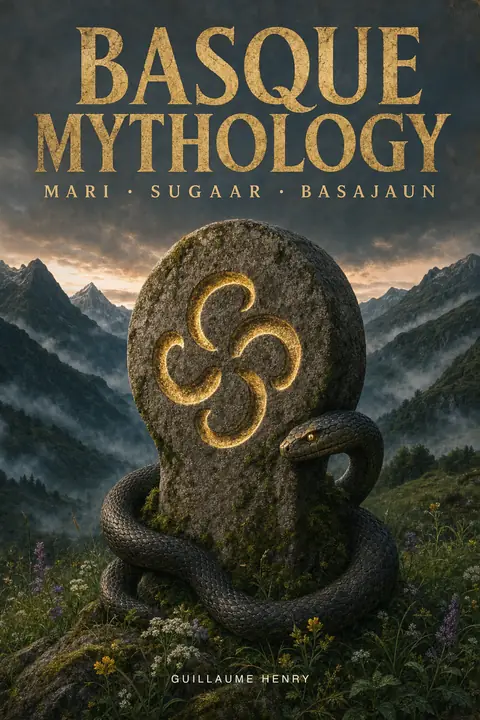
The Basque Mythology Book: Mari, Sugaar, Basajaun, and the Oldest Gods of Europe
Mari, Sugaar, and Basajaun
The mythology of Europe’s oldest people, who speak a language related to no other on earth. Mari the goddess of the mountains, her serpent-consort Sugaar, the wild lord of the woods Basajaun, and a pre-Indo-European world that survived in the Pyrenees.
More from Basque
All articles
Basque
The Lauburu: Basque Cross and Solar Symbol
The Lauburu is a four-pointed cross with curved arms that has protected Basque homes and souls for centuries. This ancient symbol weaves solar magic, Christian faith, and pre-Christian cosmology into a single rotating form.

Basque
Eguzkilore: The Sun Flower Symbol of Basque Protection and Renewal
The Eguzkilore is the sacred sun flower of Basque culture, hung above doorways for protection and blessing. Rooted in ancient sun worship and Christianised into a mark of spiritual abundance, this eight-petalled symbol endures as a living emblem of Basque identity and resilience.
Basque
Anbotoko Mari: The Cave Sanctuaries of the Goddess
High in the Basque mountains, deep inside caves that pierce the earth, Mari dwells. The Anbotoko Mari tradition reveals how a people carved sacred space into rock itself, honoring a goddess whose storms feed the valleys below. Enter the caves where Basque faith shaped the land.
Basque
Gaueko: The Spirit of the Night
Gaueko haunts the Basque night as a shadowy, restless spirit who protects livestock and travelers but demands respect. Learn how this being embodies the Basques' relationship with darkness in the mountains of northern Spain and France.