
Gaueko: The Spirit of the Night
Gaueko haunts the Basque night as a shadowy, restless spirit who protects livestock and travelers but demands respect. Learn how this being embodies the Basques' relationship with darkness in the mountains of northern Spain and France.
Contents
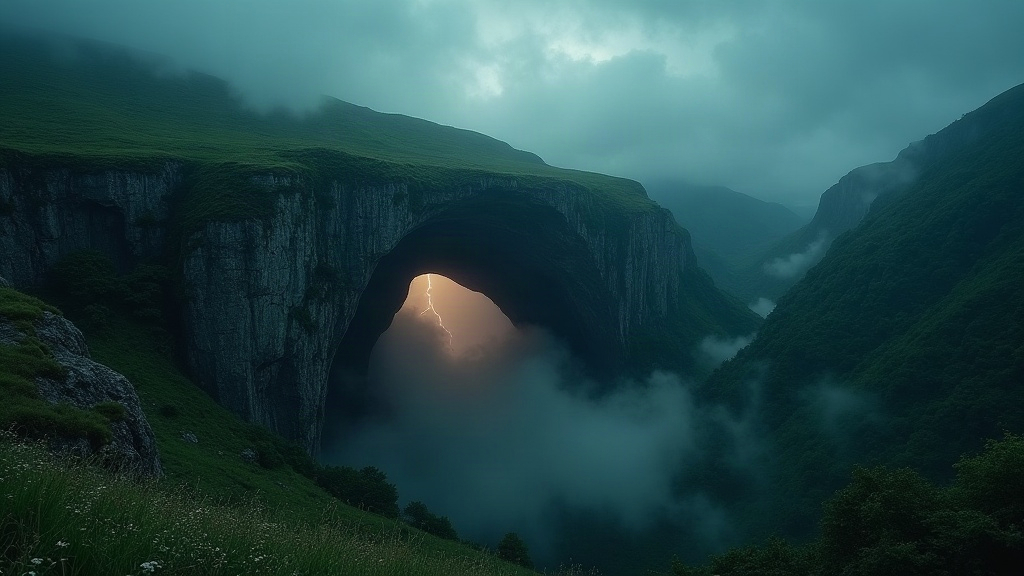
Out of the Basque mountains comes a figure neither fully good nor evil, a presence felt in the dark rather than seen. Gaueko, whose name simply means "the night" in Euskera (the Basque language), wanders the hills and valleys after sundown, a spirit caught between worlds. No temple was ever built for this being. No priest ever chanted prayers. Yet for centuries, Basque herders, travelers, and villagers spoke of Gaueko with a mixture of caution and respect, the way you might speak of a powerful neighbor whose moods you cannot quite predict.
What makes Gaueko different from the gods of other traditions is this: Gaueko does not demand worship, only acknowledgment. This spirit moves through the darkness protecting the flocks that graze on Basque hillsides by day. Travelers who left offerings of bread or milk at crossroads believed Gaueko would guide them safely through the night. Yet those who showed disrespect, who wandered the darkness with arrogance or cruelty in their hearts, learned quickly that the night spirit's protection could just as easily become punishment.
The figure of Gaueko reveals something essential about Basque spirituality: a respect for forces that cannot be fully controlled or understood, and a pragmatic faith in the power of darkness itself.
The Euskera Tradition and the Sources of Gaueko
The Basques possess one of Europe's oldest languages, spoken in the Pyrenees region between modern Spain and France. Euskera belongs to no Indo-European family; scholars still puzzle over its origins. This linguistic isolation meant that Basque religion developed almost entirely independently from the Christian traditions that reshaped the rest of Europe. When Roman and Christian forces rolled through the region, the Basques preserved their spiritual world in oral tradition, in folk practice, in the names given to places and spirits.
Gaueko emerges from this oral reservoir, recorded most carefully by folklorists in the 19th and early 20th centuries, long after Christianity had formally colonized the region. The spirit appears in the fieldwork of scholars like Julio Caro Baroja and José Migel Barandiarán, who interviewed Basque elders and documented the stories still alive in villages. These sources are not ancient texts carved in stone, like the myths of Greece or Rome. They are living memory, passed hand to hand, mouth to mouth, across generations of shepherds and farmers.
What we know of Gaueko comes chiefly from these collected folk testimonies. The spirit has no written mythology of the kind that surrounds Ares or Shiva. Instead, Gaueko lives in anecdote, in the ritual practices of protection, in the small ceremonies that Basque families performed to keep themselves safe through the hours of darkness.
Gaueko's Nature: Not Evil, But Untamed
One of the greatest misconceptions about Gaueko stems from modern retellings that paint the spirit as a demon or a malevolent force. This misses the essential character of the being. Gaueko is not evil; Gaueko is indifferent to human morality altogether. The spirit is wild, unpredictable, and ultimately aligned with the forces of night itself rather than with human categories of good and bad.
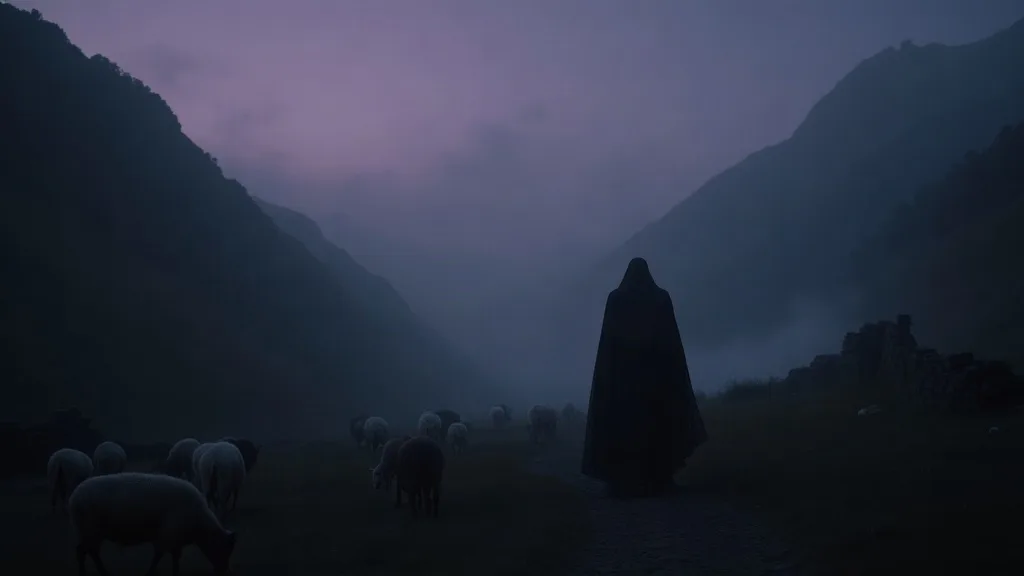
In Basque oral tradition, Gaueko appears as a tall, dark figure, sometimes described with a humanlike shape but often simply as a presence, a shadow that moves with intention through the darkness. Some accounts describe the spirit as having a long, stringy form, or as manifesting with glowing eyes. But the physical appearance matters less than the behavior. Gaueko travels the night protecting livestock from predators and thieves. Shepherds who tended their flocks under the protection of this spirit reported fewer losses. Travelers who left an offering at a crossroads and spoke respectfully to the darkness found themselves guided safely through the pass.
But Gaueko's protection was always conditional. It could be withdrawn. A herder who grew greedy, who stole from neighbors under cover of darkness, might find Gaueko's favor removed. A traveler who mocked the night or the spirit might discover themselves lost, circled, or brought to the edge of a cliff. The spirit punished not through malice but through a kind of cosmic justice: those who respected the boundaries of the night remained safe; those who did not answered to consequences.
This makes Gaueko fundamentally different from many gods in world mythology. Unlike Zeus, who punishes humans for offending him, or Ares, who revels in violence, Gaueko operates on a principle of reciprocal respect. The spirit is not vengeful by nature. The spirit is transactional. Respect yields protection. Disrespect yields hazard.
The Rituals of Protection and Offering
How did Basque families live alongside this nocturnal spirit? Through small, consistent rituals that acknowledged Gaueko's presence and negotiated a kind of social contract with the darkness itself.
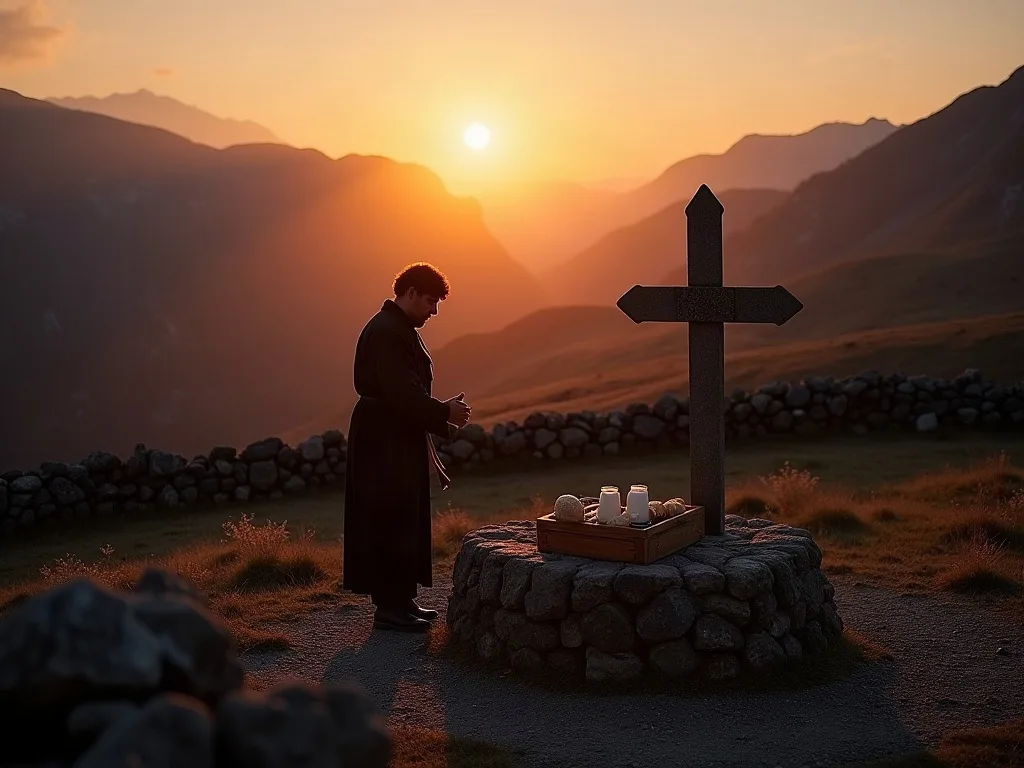
The most common practice involved leaving offerings at the threshold between day and night: at crossroads, at the edges of villages, at the boundaries of fields. A shepherd might leave bread, milk, or salt at a fork in the road before sunset, speaking quietly to Gaueko, requesting safe passage for the flocks through the night. These offerings were not prayers in the Christian sense. They were not pleas directed upward to a distant deity. They were transactions with a neighbor, a spirit whose territory overlapped with human space and whose cooperation made the dangerous hours manageable.
Some families performed these rituals daily. Others reserved them for particular seasons: the spring when young lambs were most vulnerable to wolves, or winter when the darkness seemed to last forever and the night grew colder and more hostile. The specificity of each family's practice varied, but the underlying logic remained constant. You acknowledged Gaueko. You left something of value. You asked, with respect, for the protection you needed. And Gaueko, in most accounts, delivered.
There is a profound pragmatism in this spirituality. The Basques lived in mountains where darkness was real, where predators roamed, where a traveler could genuinely lose their way. The night was not metaphorical danger; it was actual peril. Rather than deny this danger through wishful thinking or magical thinking alone, Basque tradition incorporated the threat into a framework of coexistence. Gaueko embodied the power of darkness itself. By acknowledging that power and offering it respect, a person could transform an enemy into an ally.
Gaueko and the Basque Pantheon
The question of whether Gaueko was part of a larger Basque pantheon, and if so, what other spirits inhabited that world, remains contested among scholars. Unlike Greek mythology, which presents an elaborate, hierarchical family of gods, or Norse mythology with its Aesir and Vanir, Basque mythology as it survives is fragmentary and local. Different regions preserved different beings; some spirits appear to be local to a single valley or village.
Gaueko stands as one of the most widely attested spirits across Basque territory, suggesting a figure of genuine significance. Other beings from Basque tradition include the Lamiak, beautiful water nymphs sometimes helpful, sometimes dangerous; the Sorginaks, figures associated with witchcraft and nocturnal gatherings; and various basajaunak, wild men of the forests. But the relationships between these figures remain unclear. Were they all part of one interconnected cosmos? Or were they independent spirits, each with its own domain and logic?
The fragmented nature of surviving Basque mythology likely reflects the historical pressure of Christianization. As the Catholic Church spread through the region, it did not simply erase the old stories; instead, it scattered them. Spirits that were once understood as part of a unified spiritual landscape became isolated tales, told in secret or modified to fit Christian frameworks. A spirit like Gaueko survived precisely because it could be reinterpreted as a kind of supernatural test, a being that punished wickedness and rewarded virtue, qualities the Church could tolerate (if not endorse).
The Night and the Sacred
To understand Gaueko fully, it helps to understand how the Basques conceptualized darkness itself. In many Indo-European mythologies, night is presented as the opposite of day, a realm of chaos that the gods must continually defend against or subdue. But in Basque tradition, the night is not the enemy of day; it is its complement, its own territory with its own governance.
Gaueko is not a creature that fights against the daylight or resents the sun's rising. The spirit is simply the authority of darkness, the one who holds dominion over those hours when humans cannot see, when the normal rules of daylight society do not apply. This is why offerings to Gaueko were made at specific times: at dusk, when light was failing; at night, when darkness was complete; sometimes at dawn, as a farewell and a request for safe passage until the next night.
The spiritual world of the Basques included not warfare between opposing forces but a kind of seasonal balance, a rhythm that humans had to learn to navigate. Just as Hades ruled the underworld in Greek tradition without being portrayed as evil, Gaueko ruled the night without being evil. The realms were simply different. They required different knowledge, different respect, different offerings.

Gaueko in Modernity: Memory and Reinvention
What happened to Gaueko in the modern era? The spirit did not vanish, but the context of belief changed dramatically. As industrialization reached the Basque country, as electricity pushed back the darkness, as rural life transformed into urban reality, the practical need for a protective night spirit diminished. A person living in an apartment building with electric lights did not face the same nocturnal dangers as a medieval shepherd alone with a flock in the mountains.
Yet Gaueko did not disappear. Instead, the spirit shifted into a new register: from practical protector to cultural symbol, from a being to negotiate with to a being to remember. In the 20th and 21st centuries, Gaueko has appeared in poetry, in novels, in art, and in academic study. Contemporary Basque writers have returned to the figure as a way of reconnecting with pre-Christian identity and asserting Basque cultural distinctiveness.
This is not unusual. Many cultures facing rapid modernization have experienced a revival of interest in pre-modern mythology. What is interesting about Gaueko's case is how the spirit's essential ambiguity, its refusal to fit neatly into Christian categories of good and evil, made it valuable precisely as a symbol of Basque difference. While Christianity insists on clear moral boundaries, Gaueko operates in a zone of pragmatic relationship, of negotiated coexistence with forces that are neither good nor bad but simply powerful and real.
The figure also appears in contemporary Basque discussions of animism and indigenous spirituality. Some modern practitioners have taken the old folk practices around Gaueko and developed them into a coherent spiritual path, one that honors the land, the night, and the non-human forces that shape existence. These are not necessarily attempts to recreate historical practice (which would be impossible; too much is lost). Rather, they are creative engagements with a tradition that survived in memory, adapted for a world that has changed enormously but where the basic human need to negotiate with darkness remains.
Gaueko and the Broader Pattern of Night Spirits
To see Gaueko clearly, it helps to step back and ask: did other cultures have night spirits? How does Gaueko compare?
Many traditions include figures associated with darkness or the night. In Celtic tradition, the Morrigan moves through the darkness, though she is primarily a goddess of war and sovereignty. In Hindu mythology, Kali embodies the fierce, chaotic energy of night and destruction, though she is also a figure of liberation. In Japanese tradition, yōkai (supernatural beings) often emerge after dark, representing forces neither entirely malevolent nor benevolent.
But Gaueko has a particular character. The spirit is not a god demanding worship, not a demon requiring exorcism, not a test sent by a higher deity to try human virtue. Gaueko simply is: a presence in the night that can be negotiated with, respected, and, if you are foolish, offended. The spirit operates according to principles of reciprocal relationship rather than hierarchy or absolute morality.
This makes Gaueko unique among European spirits. Most European folklore, by the time it was recorded in writing, had already been filtered through Christianity. Even spirits that predated Christianity were often reframed in Christian terms: as demons, as saints, as angels, or as tests of faith. Gaueko's survival in a form that resists such reframing speaks to the remarkable resilience of Basque tradition and the degree to which the Basques maintained a kind of cultural independence within Christian Europe.
Frequently Asked Questions About Gaueko
Frequently asked questions
Is Gaueko the same as Satan or a Christian demon?
No. While Christian missionaries may have tried to map Gaueko onto demonic categories, the spirit does not fit that framework. Gaueko is not opposed to a Christian God; the spirit is simply an older being with its own logic and domain. Gaueko is amoral rather than evil, operating according to principles of respect and reciprocity rather than rebellion against divine authority.
Did Gaueko protect people or harm them?
Both, depending on how people behaved. Gaueko protected those who showed respect, who made offerings, and who did not presume to disrespect the darkness. The spirit punished those who were greedy, cruel, or arrogant under cover of night. This was not punishment from a moral authority but consequences flowing from a broken agreement.
What language does Gaueko's name come from?
Euskera, the Basque language. "Gaueko" means "of the night" or "the night one." Euskera is not related to Spanish, French, or any other European language, and it likely dates back thousands of years. The name itself reflects how deeply Gaueko was woven into Basque identity.
Did scholars study Gaueko before the 19th century?
Not systematically. Most records of Gaueko come from 19th and 20th century folklore collection by scholars like José Miguel Barandiarán. Earlier written sources are sparse because the Basques transmitted their mythology orally, and Christian authorities had little interest in recording pre-Christian beliefs in detail. What survived was what people continued to practice and tell, even in secret.
Do Basque people still believe in Gaueko today?
Belief varies widely. Some Basques see Gaueko as a cultural symbol of pre-Christian identity rather than a being they personally negotiate with. Others, particularly those interested in animism or indigenous spirituality, have adapted the old practices for contemporary life. In rural regions, echoes of the old protective rituals sometimes persist, though often transformed and reinterpreted over time.
The Persistence of Shadow
Gaueko: The Spirit of the Night endures not because the Basques worship the spirit in temples or because scholars have compiled a definitive mythology. Gaueko endures because the figure embodies a relationship with darkness that remains fundamentally human. We still fear the unknown. We still need to negotiate with forces we cannot fully control. We still benefit from practices that acknowledge the power of what lies beyond our understanding.
The spirit represents a kind of spiritual pragmatism that many modern people, drowning in abstract religion and scientific rationalism, find oddly compelling. Gaueko does not ask you to believe. The spirit asks only that you respect the night, that you leave something of value if you need something in return, that you do not mistake darkness for emptiness or danger for malice.
In an age when electric light has pushed physical darkness to the margins of human experience, Gaueko has taken on a new role: as a guardian of psychological and cultural darkness, the parts of ourselves and our traditions that resist easy comprehension or control. The spirit survives because every human culture needs such a figure, even if the form changes and the literal practice transforms. The night remains. The unknown persists. And in the Basque tradition, there is still a spirit that holds dominion over both, asking only for the respect that any powerful presence deserves.
Read the full book
Want the whole story?
The complete edition is an instant PDF download here, with a paperback on Amazon for selected titles.
Basque
The Basque Mythology Book: Mari, Sugaar, Basajaun, and the Oldest Gods of Europe
Mari, Sugaar, and Basajaun
The mythology of Europe’s oldest people, who speak a language related to no other on earth. Mari the goddess of the mountains, her serpent-consort Sugaar, the wild lord of the woods Basajaun, and a pre-Indo-European world that survived in the Pyrenees.
More from Basque
All articles
Basque
The Lauburu: Basque Cross and Solar Symbol
The Lauburu is a four-pointed cross with curved arms that has protected Basque homes and souls for centuries. This ancient symbol weaves solar magic, Christian faith, and pre-Christian cosmology into a single rotating form.

Basque
Eguzkilore: The Sun Flower Symbol of Basque Protection and Renewal
The Eguzkilore is the sacred sun flower of Basque culture, hung above doorways for protection and blessing. Rooted in ancient sun worship and Christianised into a mark of spiritual abundance, this eight-petalled symbol endures as a living emblem of Basque identity and resilience.
Basque
Anbotoko Mari: The Cave Sanctuaries of the Goddess
High in the Basque mountains, deep inside caves that pierce the earth, Mari dwells. The Anbotoko Mari tradition reveals how a people carved sacred space into rock itself, honoring a goddess whose storms feed the valleys below. Enter the caves where Basque faith shaped the land.

Basque
Lamiak: The Nymphs of Basque Rivers and Caves
Lamiak are the enchanting water spirits of Basque folklore, neither divine nor mortal, who dwell in rivers, caves, and waterfalls across the Pyrenees. Discover their nature, their bargains with humans, and what makes them unlike any other European water spirit.