
Anbotoko Mari: The Cave Sanctuaries of the Goddess
High in the Basque mountains, deep inside caves that pierce the earth, Mari dwells. The Anbotoko Mari tradition reveals how a people carved sacred space into rock itself, honoring a goddess whose storms feed the valleys below. Enter the caves where Basque faith shaped the land.
Contents
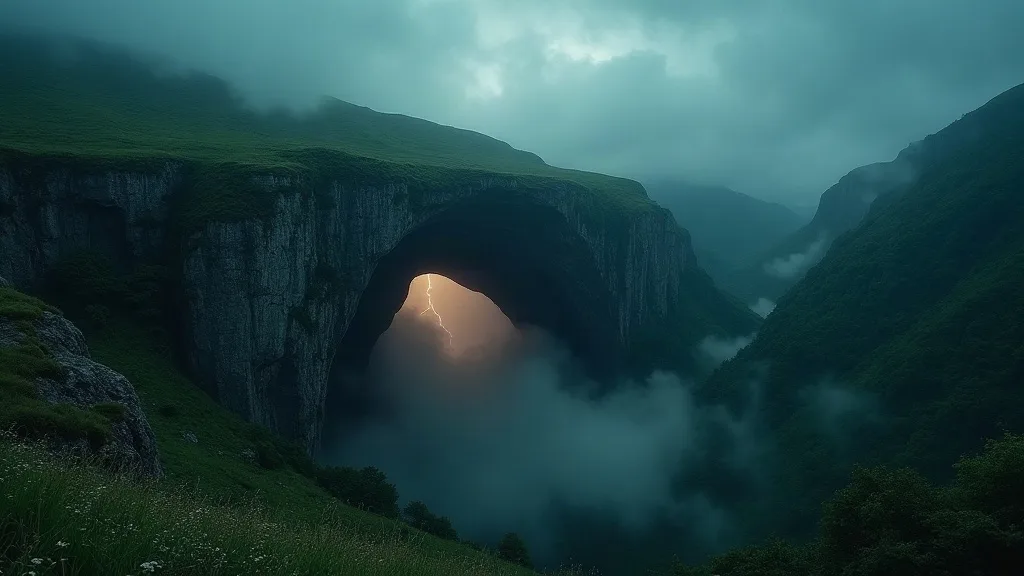
In the limestone cliffs of the Basque country, where mist clings to green slopes and the Pyrenees rise like broken teeth, a sound echoes from inside the mountain. Thunder. A bright light flickers in the cave mouth. The Basque people know this voice. It is Mari, the great goddess, announcing herself from her stone throne in the depths of the earth.
Anbotoko Mari is not a single goddess frozen in one location. She is a tradition, a living geography of sacred caves where the Basque peoples honoured a powerful female being who controlled weather, fertility, and the hidden wealth of the earth. The name itself carries weight: Anboto refers to the mountain or the cave sanctuary; Mari is the goddess. Together they name both a place and a deity, because in Basque belief, they were inseparable.
The tradition survives in oral memory, documented fragments from the 16th century onward, and the landscape itself. No temple stands. No statue carved by ancient hands has been unearthed. Instead, the evidence is geological and cultural: named caves, seasonal ritual routes, stories that bind communities to stone.
The Geography of Mari's Sanctuaries
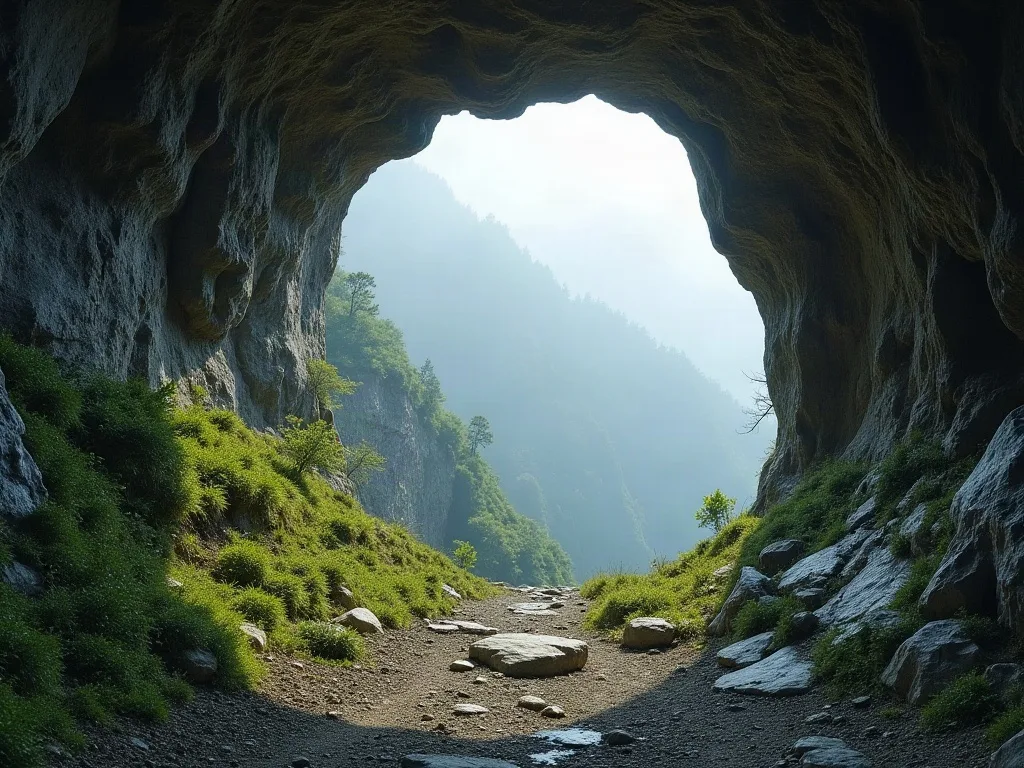
The primary sanctuary associated with Mari was the cave of Anboto, located in Geieru, in the region of Gipuzkoa. But Mari was not confined to one mountain. Across Basque country, from Navarre to the French side of the Pyrenees, communities identified caves as dwelling places of the goddess. Each cave was a doorway to her underground realm.
The most celebrated was Anboto itself. A limestone cave on a steep slope, it commanded views across valleys and was accessible only to those willing to climb, to risk loose stone and mist. The Basques believed Mari occupied a crystal palace beneath the earth, visible sometimes when lightning split the clouds. From this subterranean court she sent storms, granted harvests, and received offerings from the surface world.
Other caves held equal weight in local belief. The cave of Aketegi in Tolosa, the cave of Otsagabia in Aezkoa, the cave system of Zugarramurdi in Navarre: each was marked as a point where the goddess touched the human realm. The distribution was not random. Many lay on ancient drove roads, pastoral routes where shepherds moved flocks through seasons. Others sat near good water sources. The Basque people read geography as testimony; where abundance gathered, Mari surely dwelt.
Storm, Fertility, and Underground Wealth
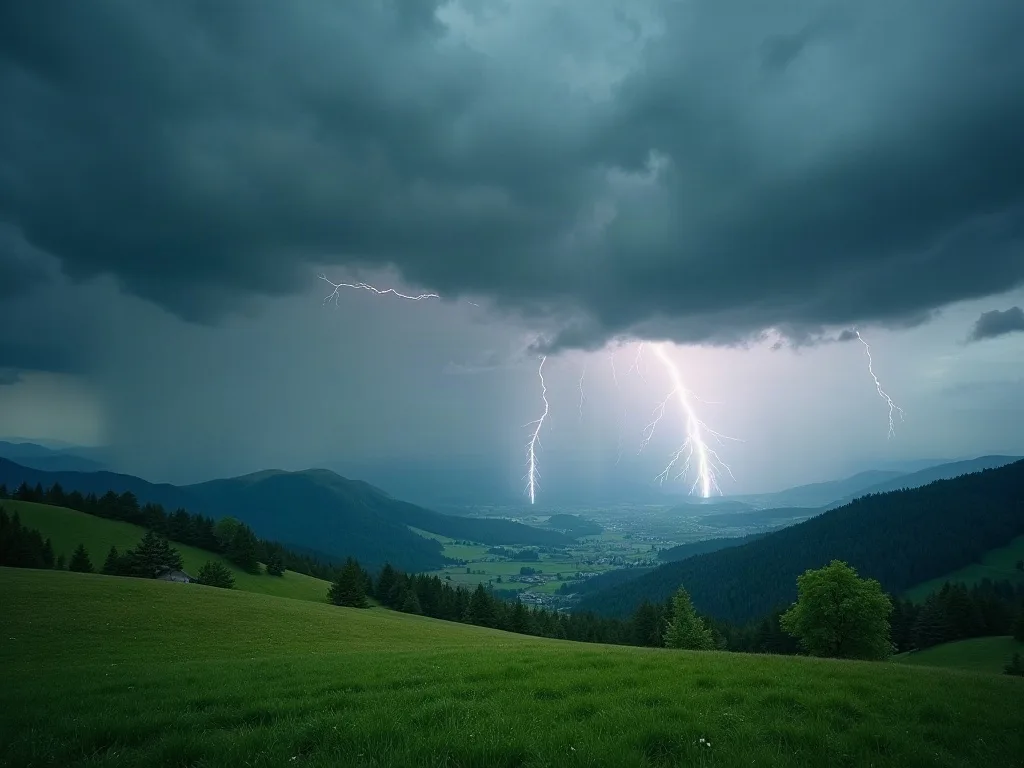
Mari commanded the weather. When storms gathered over the Basque mountains, when lightning split the sky and hail fell on crops, the Basque people understood this not as blind natural force but as the goddess announcing herself, or expressing anger, or moving between her sacred caves.
The tradition held that Mari travelled underground through passages connecting her cave sanctuaries. When a storm raged in one valley and clear skies blessed another, she was in transit beneath the earth, carrying power from one shrine to the next. Thunder was her voice. Lightning was her light flashing through stone. The Basque term eguzkia (sun), stands opposite to Mari's realm of shadow and storm, yet both were necessary. Mari's rain fed the pastures; without her fury, the valleys would wither.
Fertility followed from this power. Harvests depended on her will. The herds grew fat or thin by her grace. The Basques made offerings at her caves: milk poured into stone basins, loaves of bread left on rock ledges, sometimes sacrificed animals. These were not blood-soaked rites but quiet transactions. A community left what they had. The goddess received. Both understood the terms.
Underground, Mari was also keeper of treasure. The Basque imagination populated her subterranean palace with gold, silver, and jewels. These were not fairy-tale abstractions. They represented the mineral wealth of the mountains themselves. In an economy where transhumance (seasonal herding) and pastoral life were central, a goddess controlling both weather and hidden metals embodied power over survival and prosperity alike.
The Basque Cosmology of Sacred Space
The cave sanctuaries of Mari reveal a cosmology strikingly different from Mediterranean religions that would later dominate. There was no priesthood maintaining temples. No written scripture was inscribed on wood or parchment describing her mythology. Instead, belief lived in three forms: in the landscape itself, in the seasonal cycle of offerings and observance, and in stories told and retold around fires and at community gatherings.
The Basques saw the world divided into layers. Above lay the seen world, the surface where humans worked and lived. Below, accessible through caves, lay the goddess's realm. The cave was not a barrier but a threshold. During times of need, a trusted member of the community might approach the cave mouth, make an offering, and call down the goddess's favour. During storms, the Basques would not flee indoors in fear but might gather to acknowledge her presence. Some sources suggest ritual gatherings at the cave sanctuaries, especially at seasonal turning points: the spring equinox when herds were turned to summer pastures, the autumn when flocks returned to the valleys.
This was not abstract theology but embedded in practical life. A shepherd knowing that his flocks depended on the goddess's goodwill, that her anger could drown the pastures or her favour could bless them, carried belief not as doctrine but as daily awareness. The landscape became sacred not through the designation of priests but through lived experience and family transmission.
The Persistence of Mari Belief
The Christianisation of the Basque country, intensifying from the late medieval period onward, did not erase Mari. Instead, something more complex happened. In some localities, Mari was recast as a demonic figure, something to be feared or appeased in the old pagan way, now condemned by the Church. In others, the goddess quietly merged with the Virgin Mary, creating a syncretic figure of female power that satisfied both new doctrine and old memory. The saint cults that took root across Basque country, often honouring female saints with attributes of fertility or weather control, may have partially captured spaces Mari once occupied.
Yet Mari endured, particularly in oral tradition. In the 16th and 17th centuries, Basque sources record beliefs about Mari with enough specificity to suggest they were still living, not merely antiquarian. By the 19th and 20th centuries, folklorists and cultural historians recorded Basque informants who knew the traditions, who could name the caves, who remembered stories their grandmothers had told.
The physical caves themselves remained. Some were visited by hunters or shepherds. Some became pilgrimage sites for local Catholic veneration overlaid on older practice. Some were simply forgotten until modern archaeologists and anthropologists began the work of recovering Basque religious history.
Mari and the Basque Question
In the 20th and 21st centuries, Mari and the cave sanctuaries became more than archaeological curiosities. They became symbols of Basque cultural identity. As the Basque language, Euskara, faced pressure from Spanish and French, and as Basque political autonomy became a contested question, the recovery of pre-Christian Basque religion became an act of cultural assertion. Mari was not the property of Madrid or Paris. She was indigenous, local, rooted in the mountains where the Basque people had lived for millennia.
This recovery was complex and sometimes contested. Some modern Basque spiritual practitioners sought to revive or reconstruct Mary's worship, drawing on historical sources and oral tradition. Academic historians worked to separate demonstrable fact from modern invention, to understand what the sources actually said rather than what contemporary needs wished them to say. The caves themselves became tourist sites, cultural landmarks, points of pilgrimage for those seeking connection to a deeper Basque past.
The scholarship on Mari remains active. Researchers continue to examine how the goddess figure relates to other Indo-European goddess traditions, whether her name or attributes show influence from Iberian or pre-Indo-European religions, and how Christian sources and folklore collectors shaped what we now know about her. Each new reading of old sources yields fresh questions.
Sacred Caves and the Wider European Pattern
The Anbotoko Mari sanctuaries are not unique in European religious history, though they are exceptionally well-preserved in cultural memory. Across the Mediterranean, from ancient Greece to the Roman world, sacred caves held similar significance. The Oracle of Delphi spoke from a chasm in the earth. Nymphs were said to dwell in grottoes. Mithras was worshipped in caves, and the symbolism of entering stone to meet the divine appears in mystery religions across the classical world.
What distinguishes the Basque tradition is its persistence outside the framework of literacy and institutional religion. The Greek oracle was consulted by states and generals; priestesses were appointed and trained. The Basque cave sanctuaries operated through oral transmission and family practice. When Christian institutions arrived, they possessed literacy, hierarchy, and state backing. The fact that Mari survived, even in altered form, speaks to the depth at which the goddess was woven into Basque life.
The comparison also illuminates what was distinctive about Basque religion itself: its focus on a single dominant female figure; its integration with pastoral economy and weather dependence; its landscape theology, where sacred space was recognized through natural forms rather than constructed; and the absence of any narrative mythology equivalent to the Greek or Norse cosmologies. The Basques did not, so far as the evidence shows, develop elaborate god-genealogies or hero-quests. They honoured a goddess tied to the land, and that sufficed.
Reconstructing Mari from Fragments
The historical sources are slim. No Basque creation myth or divine genealogy survives from before the modern era. What we have are scattered references in Spanish and French documents, sometimes condemning her as a demon, sometimes describing her as she appeared in folk belief. Nineteenth and twentieth-century folklorists recorded oral testimony. Linguists examined place-names and the persistence of Mari as a proper noun across Basque geography. Archaeologists surveyed the caves themselves, looking for material evidence of use or occupation.
From these fragments, scholars have constructed a picture, always acknowledging what remains uncertain. It seems probable that Mari was honoured across a wide area of Basque country, that the cave sanctuaries were focal points for community veneration, that seasonal gatherings occurred, and that offerings were made. Beyond this, interpretation becomes hazier. Was there a single unified cult, or did each locality develop its own relationship to a goddess figure known by the same name? Did the mythology we glimpse in late sources reflect beliefs that stretched back centuries, or had it shifted significantly under Christian influence?
These questions remain open, and that openness is part of what makes the study of Mari rewarding. Unlike the well-documented religions of Rome or Greece, the Basque tradition invites scholars and interested readers into an active process of historical reconstruction, always aware that the picture may shift as new sources emerge or existing ones are reread with fresh eyes.
Frequently asked questions about Anbotoko Mari and Basque cave sanctuaries?
Frequently asked questions
Did the Basques perform sacrifices at the cave sanctuaries of Mari?
The historical and archaeological evidence is inconclusive. Late sources describe animal offerings and the pouring of milk or food at cave entrances; some accounts mention slaughtered animals. However, the scale, regularity, and precise nature of such practices remain unclear. The Basque tradition appears to have emphasised propitiatory offerings of food and valued goods rather than elaborate sacrificial ritual as it existed in Mediterranean religions. The caves themselves have not yielded large quantities of animal bone that would suggest sustained sacrificial practice.
How do scholars know Mari existed if so few written sources survive?
The evidence comes from multiple sources layered together: place-names across the Basque country that preserve Mari's name and are associated with caves; oral traditions recorded by folklorists from the 19th century onward; passing references in Spanish and French documents from the 16th-18th centuries; and the landscape archaeology of the caves themselves. Taken together, this evidence is sufficient to establish that a goddess named Mari was honoured in Basque communities and that her sanctuaries were focused on cave sites. Individual details remain harder to verify.
Is modern Basque spirituality a genuine revival of Mari worship or a modern invention?
Both. Some modern practitioners have drawn on historical sources and oral tradition to reconstruct or reimagine Mari veneration, creating something genuinely rooted in Basque history. Others have created entirely new spiritual systems inspired by Mari but not claiming historical continuity. The boundary between recovery and invention is real but often blurred. What matters is that communities are consciously engaging with their pre-Christian heritage and, through that engagement, asking questions about identity, land, and belonging.
Did Mari have a myth of origin or a coherent mythology like Greek or Norse gods?
Not so far as surviving sources indicate. Unlike the detailed mythologies preserved in texts like Hesiod's Theogony or the Norse Eddas, the Basque tradition seems to have focused on Mari as a present, active force rather than recounting her origins or genealogy. She was known through her effects (storms, fertility) and her dwelling places (the caves), not through narrative myth. This reflects a different mode of religious thinking, one less concerned with explaining the cosmos through story and more focused on maintaining relationship with sacred power embedded in landscape.
What happened to Mari worship after Christianity arrived in the Basque country?
Mari beliefs did not disappear but transformed. In some places, she was demonised by Church authorities as a pagan threat to be resisted. In others, she merged syncretistically with the Virgin Mary or with female saints, particularly those associated with fertility or weather. Pilgrimage to her caves continued, sometimes openly, sometimes in forms that mimicked Catholic devotion. By the early modern period, belief in Mari as an active supernatural being persisted in rural areas, documented in inquisitorial records and folklore. She never regained institutional status but remained embedded in family memory and local practice.
The Goddess in the Stone: Mari's Afterlife in Basque Culture
Today, the caves of Anboto and the other Mari sanctuaries draw visitors: tourists seeking connection to heritage, scholars researching, spiritual seekers hoping to sense something of the ancient presence. The caves themselves are testimony. Stone holds memory in a way that no other medium can. A human enters a cave where her ancestors gathered centuries ago, where the same rock walls witnessed the same storms, and something passes between past and present that writing cannot quite capture.
The goddess Mari endures in Basque cultural consciousness in part because she was never fully erased. The Christian churches that dominated Basque society never succeeded in completely rewriting the landscape or displacing the deep association between the goddess and the mountains, the valleys, the weather that sustains life. In the 20th century, as Basque nationalism emerged and sought to recover indigenous heritage as a counterweight to Spanish and French dominance, Mari became a symbol: of female power, of indigenous spirituality, of a way of knowing the sacred that predated and survived empire.
The cave sanctuaries of Mari remind us that religion is not only about doctrine or sacred text. It lives in landscape, in seasonal practice, in the transmission of story across generations, in the willingness to stand at a threshold between the human world and the divine and make an offering in hope. The Anbotoko Mari tradition preserves, in fragmentary but vivid form, one such way of being religious, rooted in a particular land, inseparable from the people who called that land home.
Read the full book
Want the whole story?
The complete edition is an instant PDF download here, with a paperback on Amazon for selected titles.
Basque
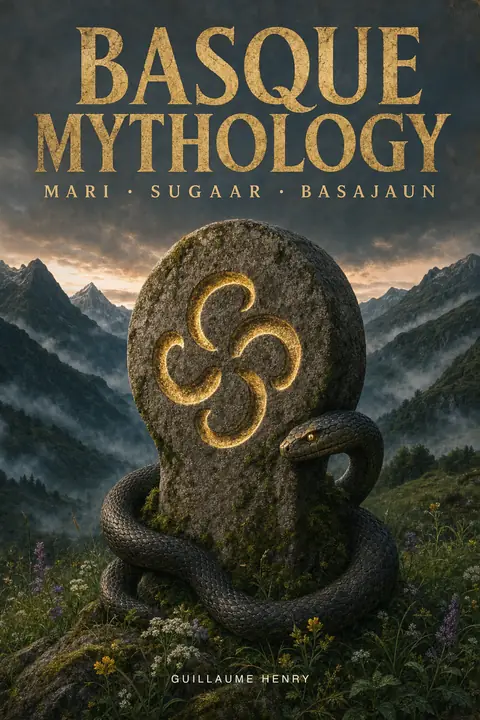
The Basque Mythology Book: Mari, Sugaar, Basajaun, and the Oldest Gods of Europe
Mari, Sugaar, and Basajaun
The mythology of Europe’s oldest people, who speak a language related to no other on earth. Mari the goddess of the mountains, her serpent-consort Sugaar, the wild lord of the woods Basajaun, and a pre-Indo-European world that survived in the Pyrenees.
More from Basque
All articles
Basque
The Lauburu: Basque Cross and Solar Symbol
The Lauburu is a four-pointed cross with curved arms that has protected Basque homes and souls for centuries. This ancient symbol weaves solar magic, Christian faith, and pre-Christian cosmology into a single rotating form.

Basque
Eguzkilore: The Sun Flower Symbol of Basque Protection and Renewal
The Eguzkilore is the sacred sun flower of Basque culture, hung above doorways for protection and blessing. Rooted in ancient sun worship and Christianised into a mark of spiritual abundance, this eight-petalled symbol endures as a living emblem of Basque identity and resilience.
Basque
Gaueko: The Spirit of the Night
Gaueko haunts the Basque night as a shadowy, restless spirit who protects livestock and travelers but demands respect. Learn how this being embodies the Basques' relationship with darkness in the mountains of northern Spain and France.
Basque
Lamiak: The Nymphs of Basque Rivers and Caves
Lamiak are the enchanting water spirits of Basque folklore, neither divine nor mortal, who dwell in rivers, caves, and waterfalls across the Pyrenees. Discover their nature, their bargains with humans, and what makes them unlike any other European water spirit.