
The Tree of Life in Armenian Cosmology
Armenia's sacred tree stands at the center of creation, connecting sky, earth, and underworld. Uncover the myths, rituals, and living symbols behind this ancient cosmic axis.
Contents
Somewhere in the highlands above Lake Van, a carver pressed a chisel into basalt and cut the image of a tree. Its roots anchored in the underworld. Its crown touched the sky. Two serpents coiled around its trunk, facing each other across a single, perfect apple. The stone is thousands of years old. The symbol is older still.
The Tree of Life in Armenian cosmology is not a decorative motif. It is a map of the universe. It marks the point where the three layers of existence, the heavens, the earth, and the realm below, meet in a single axis. It was carved into temples, embroidered onto bridal garments, cast in silver as pendants, and woven into carpets that covered the floors of mountain villages for centuries after Christianity replaced the old faith. The symbol survived because it answered a question every culture asks: what holds everything together?
Armenia sits at a geographic crossroads where the ancient Iranian plateau meets the Anatolian highlands and the Caucasus. That position made it a meeting point for mythological currents from Mesopotamia, Persia, and the early Indo-European world. The Armenian Tree of Life absorbed all of them, yet kept a shape that is distinctly its own.
The Cosmic Structure the Tree Holds Together
Armenian traditional cosmology, reconstructed from oral epics, early medieval texts, and pre-Christian ritual fragments, pictured the universe in three stacked layers. Scholars like Martirosyan and Petrosyan, who have spent decades cataloguing Armenian folk belief, call this structure the tripartite Armenian cosmos.
At the top sat Aramazd (the chief deity, an Armenian adaptation of the Zoroastrian Ahura Mazda), whose hall was in the heavens along with the solar god Mihr and the goddess Anahit. In the middle layer lived humans, animals, and the land. Below the earth, the underworld housed the dead and the great serpent Vishap, a dragonlike water-deity borrowed from very ancient Caucasian tradition.
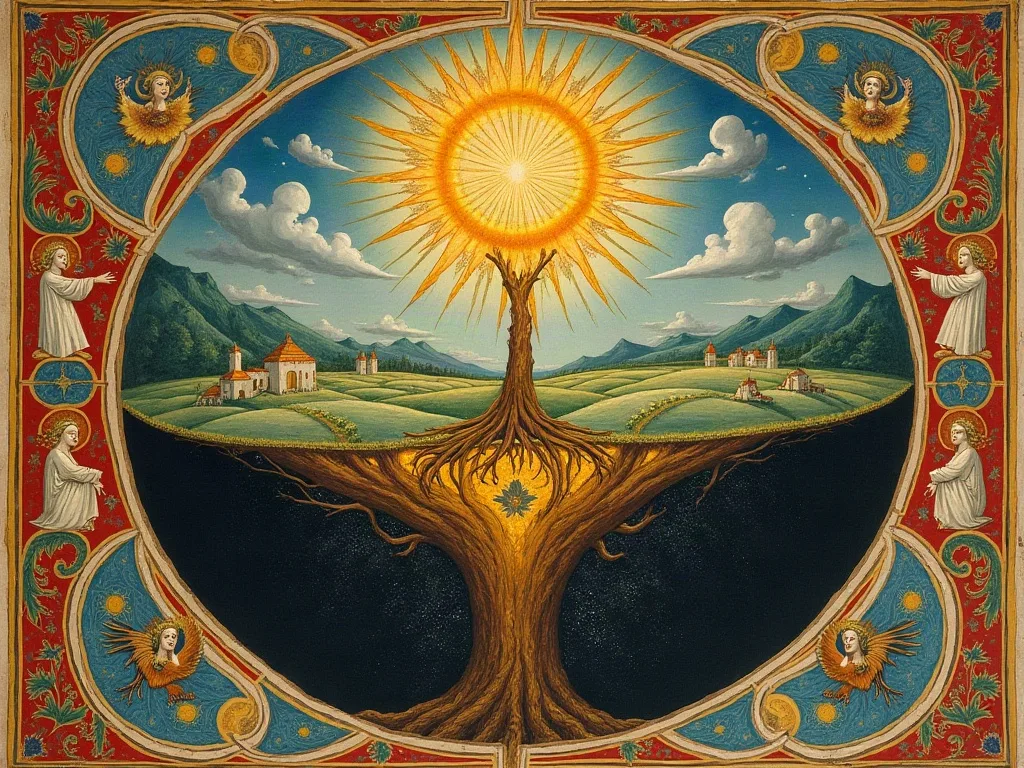
The Tree of Life stood at the center of the middle world, but its roots fed on the waters of the underworld and its highest branch scraped the divine floor of heaven. In this sense it was not merely a symbol but a functional structure, a column that kept the sky from crushing the earth, a channel through which divine energy flowed downward to nourish crops and humans, and a ladder along which souls or spirits could move between realms.
This structure closely parallels Yggdrasil, the Norse world-tree, though the Armenian tradition reached its form independently and far earlier. The parallel is one of the most debated questions in comparative Indo-European mythology.
Vishap, the Serpent, and the Roots Below
No account of the Armenian Tree of Life is complete without its guardians: the serpents. In the oldest strata of Armenian belief, long before Greek or Zoroastrian influence arrived in the highlands, serpents were ambivalent cosmic beings. They were destroyers and guardians both.
The Vishap, whose name likely derives from an Old Iranian root meaning "evil spirit" but was used in Armenian to describe great water-dragons, was associated with the roots of the cosmic tree. Rock carvings in the Lake Sevan area, some dated to the second millennium BC, show serpentine forms coiled around the base of a stylised tree. These are among the earliest visual confirmations of the myth in Armenian territory.
By the time the Urartian kingdom flourished in the region (around 860-590 BC), the Vishap tradition had been partially absorbed into temple iconography. Vishap stones, large basalt stelae carved in the shape of fish-serpents, were placed near water sources, which the Armenians connected to the roots of the great tree. Water, in this cosmology, was the medium of the underworld, and whoever controlled the water source held a link to the cosmic roots.
This is a critical distinction between the Armenian and the Mesopotamian versions of the world-tree myth. In the Akkadian and Sumerian traditions, the tree (sometimes identified with the kiskanu tree of Eridu) was primarily a marker of divine kingship. In Armenian tradition, it was a living hydraulic system: the serpent-water connection at the roots kept the tree alive, and the tree kept the world alive.
The Apple, the Pomegranate, and What the Tree Bears
Ask an Armenian grandmother today what grows on the Tree of Life, and she will most likely name two fruits: the apple and the pomegranate. Both appear with remarkable frequency in Armenian embroidery patterns, carpet borders, and manuscript illuminations.
The apple had specific cosmological weight. In the Armenian folk epic Sasna Tsrer (sometimes called "Daredevils of Sassoun"), passed orally for at least a thousand years before it was first written down in the 19th century, magical apples are given by divine or semi-divine figures to confer fertility, strength, or destiny. The tree that bears these apples is never quite earthly. It grows somewhere between the human world and the divine, accessible only through a quest.
The pomegranate carried a parallel meaning: each seed was a soul, and the whole fruit was a compressed image of the world-tree's generative power. When Armenian brides were dressed before a wedding, pomegranate motifs embroidered onto their sleeves were not decorative choices. They announced that the bride was aligned with the cosmic order, that she was a vessel of the same life-giving force the tree embodied.
This dual symbolism, apple for strength and fate, pomegranate for fertility and community, kept the Tree of Life relevant across different social contexts. A warrior invoked one fruit; a bride, the other. The tree accommodated both without contradiction.
The Tree in Armenian Christian Art: A Symbol That Refused to Disappear
When Armenia adopted Christianity in 301 AD, becoming the first nation to do so officially, the old cosmological framework did not simply vanish. It went underground, then gradually reappeared wearing new clothes.
Armenian manuscript illumination, especially in the great scriptoria of Gladzor and Tatev between the 12th and 14th centuries, shows trees of extraordinary symbolic density. The carpet pages of the Gladzor Gospels (produced around 1300-1307) feature interlocking vine-and-tree borders that art historians, including Thomas F. Mathews and Roger S. Wieck in their studies of Armenian illumination, have identified as carrying pre-Christian cosmological meaning inside a Christian visual frame.
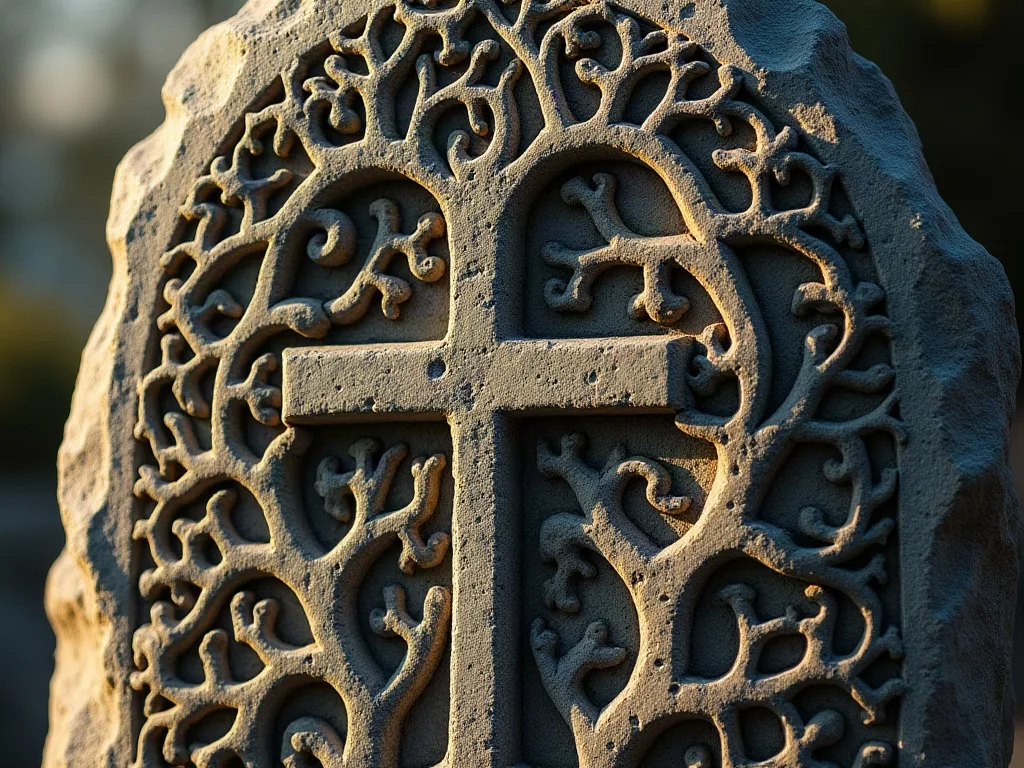
The khachkar, the Armenian cross-stone carved from the early medieval period onward, is perhaps the most visible example. A khachkar is not simply a cross. Its design places the cross inside a field of interlocking vegetal tracery: vines, leaves, and branching forms that reference the cosmic tree directly. The cross becomes the vertical axis; the surrounding branches become the tree. Heaven and earth are still linked at a single point. The theology changed; the geometry did not.
Khachkar cross-stone symbolism is one of the most documented cases of pre-Christian cosmology surviving inside a new religious art form anywhere in the world.
Anahit and the Goddess at the Tree's Heart
Behind the Tree of Life stands a feminine presence. In Armenian pre-Christian belief, Anahit (from the Iranian Anahita, though the Armenian version developed her own distinct character) was the goddess of fertility, motherhood, and the moon. She was called Mair Astvatsatsin, "Mother of the Gods," in some sources. She sat at the heart of the Tree's generative meaning.
The connection is structural. If the tree produces life, and life comes through birth, then the deity who governs birth governs the tree. Anahit's temples, the most famous of which stood at Astisat and Yeriza, were often surrounded by sacred groves. These groves were not incidental. They were the earthly manifestation of the cosmic tree, a forest that stood in for the single great axis of the universe.
When Armenian folk songs describe a woman standing under a blossoming tree, waiting for a hero or singing a lament, the image carries this older resonance. The woman is Anahit, or her echo. The tree is the cosmos. The blossoms are either births or deaths, which in this mythological framework are the same event: a movement between layers of existence.
Comparative mythology connects this pattern to similar goddess-and-tree relationships across the ancient world. Inanna's sacred huluppu tree in Sumerian myth, the goddess Asherah represented by a sacred pole in Canaanite religion, the Norse Frigg whose threads of fate pass through Yggdrasil: the pattern is old, and Armenia holds one of its most complete surviving forms.
Carpet, Embroidery, and the Living Geometry of the Symbol
Armenia's greatest visual contribution to world art may be its carpet tradition. Armenian carpets, some of the oldest surviving pile-woven textiles in the world, use the Tree of Life motif as a primary organizing principle. The carpet is itself a cosmological diagram: the central field is the middle world, the border is the horizon, and the Tree, rising through the center, marks the axis.
Specific regional patterns carry specific meanings. The Ararat style, from the plains around Mount Ararat (the mountain that Armenians have called Masis for millennia and that carries its own cosmological weight as a dwelling-place of gods), typically shows the tree rising from a diamond-shaped base that represents the earth. The Karabakh style, from the mountainous southeast, winds the tree's branches into geometric arabesques that fill the entire field, so the whole carpet becomes a tree.
Embroidery scholars like Gohar Muradyan have noted that Armenian needlework preserves mythological information that was lost from other sources. A stitch pattern in a 17th-century bridal apron from Mush, for example, shows the tree flanked by two birds, which connect to the old cosmological role of birds as messengers between the upper and lower worlds. These are not aesthetic decisions. They are records.
Cross-Cultural Parallels and What Makes the Armenian Version Distinct
Scholars of comparative religion have catalogued world-tree traditions from Siberia to Mesoamerica. The Armenian version sits within the Indo-European family, alongside Norse, Vedic, and Iranian traditions, but it has specific features that set it apart.
Armenian Tree of Life
Rooted in the connection between water-serpents (Vishap) and the underworld. Flanked by a goddess (Anahit) rather than by three Norns. Bears fruit (apple, pomegranate) as the primary image of cosmic generativity. Survived most vividly in craft traditions: carpets, embroidery, khachkars. Associated with Armenia's mountain geography, especially Ararat and the Lake Van basin.
Norse Yggdrasil
Rooted in three wells beneath its roots, including the well of the Norns. Flanked by three female fate-weavers. Shelters animals (eagle, squirrel, serpent Nidhogg) rather than producing specific fruits. Survived most fully in written Eddic poetry (composed around 900-1300 AD). Associated with Norse cosmic geography, especially Asgard and Midgard.
The most striking distinction is the Armenian tree's survival route. Norse cosmology is known primarily through texts: Snorri Sturluson's Prose Edda, written around 1220 AD, and the older Poetic Edda. Armenian cosmology, because the old faith was suppressed early and thoroughly by Christian authorities, survived not in texts but in objects. The carpet IS the text. The khachkar IS the scripture. This makes Armenian material culture one of the most important archaeological records of an ancient cosmological system.
The Living Symbol: How the Tree Still Moves Through Armenian Culture
The Tree of Life did not stop when the Soviet Union tried to eradicate religious symbolism in the 20th century, nor when the Seljuk invasions of the 11th-13th centuries scattered Armenian populations across Anatolia and Cilicia. It moved with the people.
In the Armenian diaspora communities of Beirut, Los Angeles, and Paris, the tree appears on church interiors, on family crests, on the covers of literary journals. The Armenian Genocide Memorial in Yerevan, completed in 1967, incorporates a 44-meter needle-shaped spire that many Armenian scholars and public commentators have described as a modern khachkar, which is itself a modern Tree of Life. The vertical axis, connecting earth to sky, endures.
Contemporary Armenian artists like Sona Manukyan and textile collectives in Gyumri continue to produce work that centers the tree motif, not as nostalgia but as active cosmological argument: the world has three layers, this is the center, and nothing has changed.
Frequently Asked Questions About the Tree of Life in Armenian Mythology
Frequently asked questions
What is the oldest known depiction of the Tree of Life in Armenia?
The oldest confirmed depictions are the Vishap stones and rock carvings near Lake Sevan and in the Lake Van basin, some of which date to the second millennium BC. These show serpentine figures coiled around tree-like vertical forms, and scholars like Varduhi Tevosyan have interpreted them as early expressions of the cosmic-axis myth. The bronze-age petroglyph sites at Ughtasar in the Armenian Highlands also contain tree-with-serpent motifs, though dating these precisely remains a scholarly challenge.
How did the tree symbol survive Armenia's conversion to Christianity in 301 AD?
It survived primarily through craft traditions rather than official religious texts. Christian authorities replaced the old mythology in written culture, but embroiderers, carpet weavers, and stone carvers continued using the tree's geometry inside the new faith's visual vocabulary. The khachkar cross-stone is the clearest example: the cross occupies the vertical axis of what was formerly the cosmic tree, surrounded by vegetal tracery that preserves the tree's branching form. Art historians like Thomas F. Mathews have documented this process in detail in the context of Armenian manuscript illumination.
What role does Mount Ararat play in relation to the Tree of Life myth?
Ararat, called Masis in Armenian, occupied a cosmological position similar to the tree itself: a vertical axis connecting earth to the divine realm. In Armenian folk belief, the gods dwelt on or above its summit. Some scholars, including Hrach Martirosyan, argue that Ararat and the cosmic tree functioned as parallel symbols of the same idea, the world's center-point, with the mountain serving this role in geographic myth and the tree serving it in ritual and craft traditions. The two images are often found together in Armenian decorative arts.
Is there a connection between the Armenian Tree of Life and Mesopotamian tree myths?
Yes, and it is well documented. The Akkadian kiskanu tree of Eridu, planted at the center of the world in Sumerian cosmology, shares structural features with the Armenian version, particularly the idea of a sacred tree standing at the junction of cosmic layers. Given Armenia's position directly north of Mesopotamia, and the active trade and cultural exchange between Urartian Armenia and Assyria from the 9th century BC onward, this influence is geographically plausible. However, the Armenian tree diverges from the Mesopotamian version in its strong association with serpent-water guardians (the Vishap) and with a feminine deity (Anahit), features that appear to come from the indigenous Caucasian tradition rather than from Mesopotamian import.
Do Armenian carpets really encode mythological meaning, or is this interpretive overreach?
The question is legitimate and debated. Scholars like Gohar Muradyan and Vahe Baladouni argue that specific motifs, particularly the flanking birds, the diamond-base, and the serpent-border patterns, carry traceable symbolic meaning that pre-dates the carpet-weaving tradition as a commercial enterprise. The counter-argument is that much of the "encoding" happened unconsciously, that weavers reproduced patterns without knowing their original meaning. The consensus today leans toward a middle position: some motifs were consciously symbolic for at least part of the tradition's history; others became purely formal over time. The tree itself, however, appears too consistently and too centrally to be accidental.
What Modern Scholarship Still Cannot Fully Explain
The Armenian Tree of Life sits at the edge of several unresolved scholarly debates. The most persistent concerns the direction of influence: did the Armenian version borrow from Mesopotamia, from early Indo-Iranian sources, or did it develop independently and then exchange features with its neighbors?
The evidence, as of 2026, supports a synthetic origin. The tree-as-cosmic-axis is probably a very old shared inheritance of peoples across the Eurasian landmass, but the specific Armenian features, the Vishap at the roots, the goddess at the heart, the fruit as a medium of fate, and the craft tradition as the survival mechanism, are genuinely Armenian contributions to a universal idea.
A second open question concerns the Kenaats Tsar, a specific tree mentioned in several Armenian folk lament-songs (Vipasanutiwn texts) as the tree from which the first man was made. This is a creation-myth role quite distinct from the cosmic-axis role, and no one has yet definitively reconciled the two. Were they always the same tree, or did separate myths converge over time?
These are not small academic puzzles. They point toward a larger question about how ancient Armenia understood the relationship between the individual human life and the structure of the cosmos. If the first human was made from the tree, and the tree holds the cosmos together, then every human body is a miniature world-axis. That is a profound idea, and it is still waiting for the full scholarly attention it deserves.
Free 25-page sample
Want the whole story?
Take the first 25 pages free. If it pulls you in, the full edition is yours as an instant PDF download, with a paperback on Amazon for selected titles.
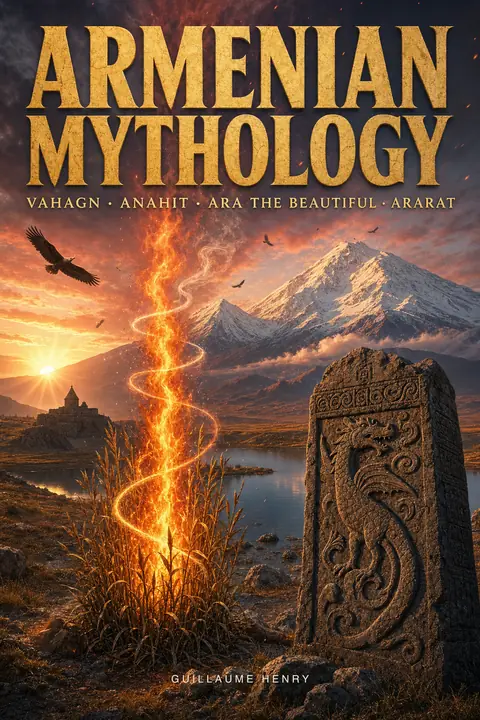
Armenian
The Armenian Mythology Book: Vahagn, Anahit, Aramazd and the Sacred Stories of the Caucasus Before Christ
Gods of Fire, Bronze, and the Forgotten Kingdom of Urartu
The pre-Christian gods of Armenia: Vahagn the dragon-slayer, Anahit the mother goddess, and the syncretic pantheon that merged Urartian, Persian, and Greek traditions before vanishing in 301 CE.
More from Armenian
All articles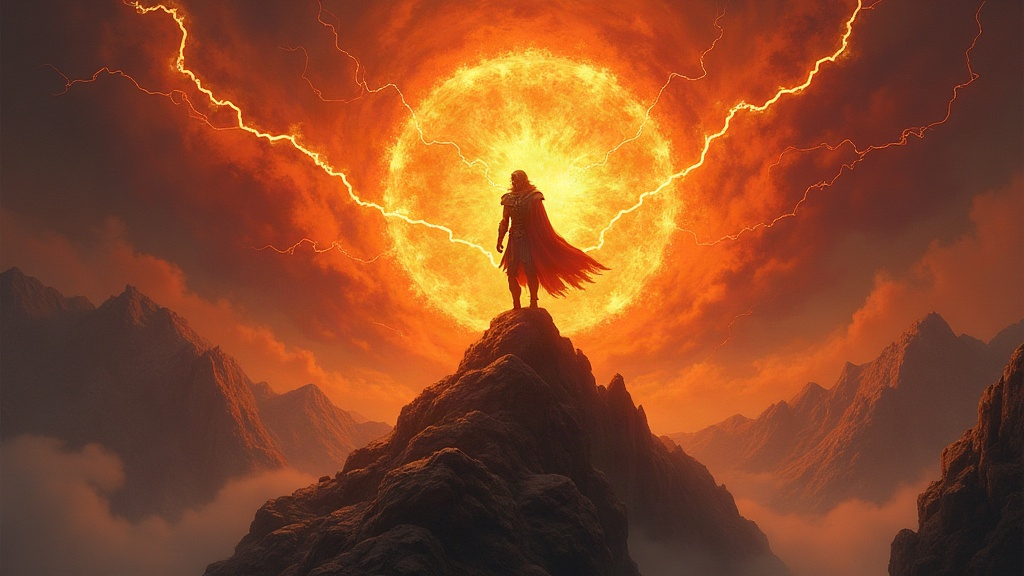
Armenian
Vahagn: Armenian God of Fire, Thunder, and War
Vahagn roars through the red dawn, the Armenian god of fire, thunder, and war whose bronze-voiced hymns echo in the oldest Christian prayers. Discover the warrior deity who conquered chaos, shaped Armenia's spiritual identity, and survived conquest itself.
Armenian
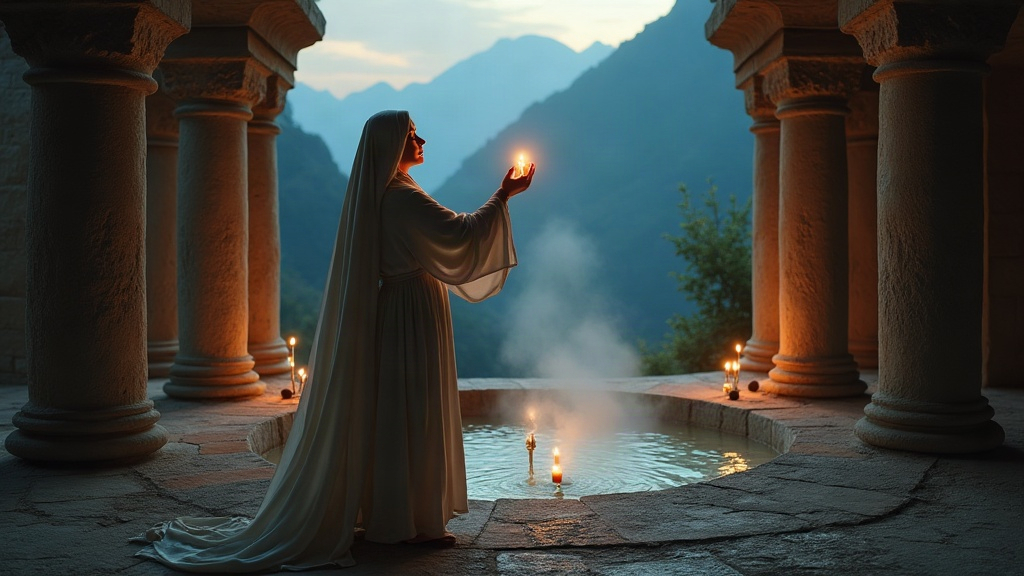
Anahit: The Great Mother Goddess of Armenia
Anahit ruled Armenia's spiritual world for millennia as the Great Mother, keeper of waters, fertility, and wisdom. Discover how she shaped an entire civilization's understanding of divine power.

Armenian
Aramazd: The Creator God and Father of All
Aramazd stands at the foundation of Armenian myth as the supreme creator, the father from whom all life and divinity flow. Discover how this ancient god shaped the cosmos and why he vanished from Armenia's religious life after the conversion to Christianity.

Armenian
Hayk and Bel: The Founding Myth of Armenia
The story of Hayk's rebellion against the tyrant Bel explains how Armenia was born. A warrior's defiance, a nation's origin, and a line of kings that would rule for centuries.