
Anzar: Berber Rain God and Fertility Deity
Anzar is the ancient Berber rain god whose tears fed the fields of North Africa. Learn who he is, how his myth survives in living ritual, and why the Amazigh still call on him today.
Contents
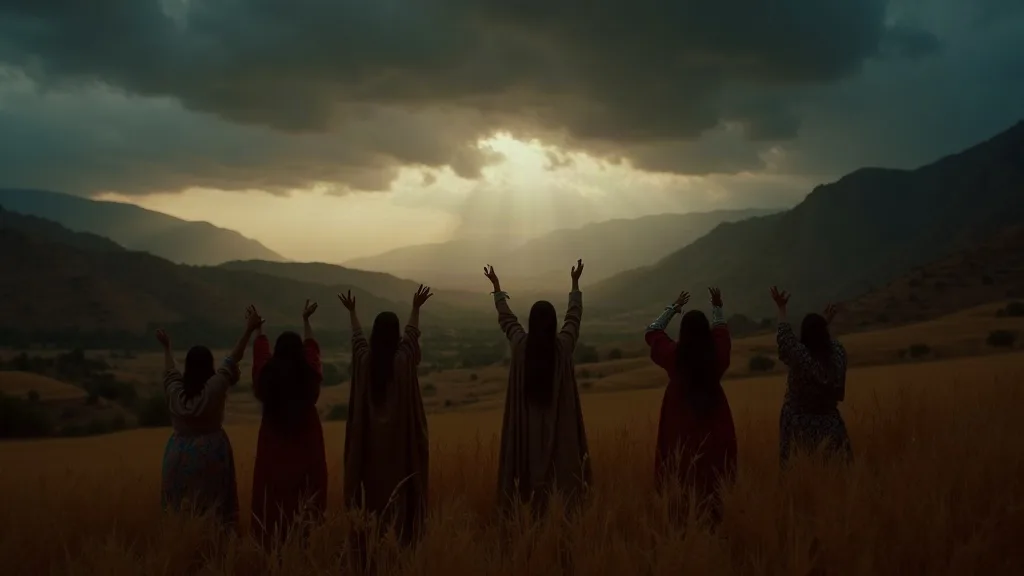
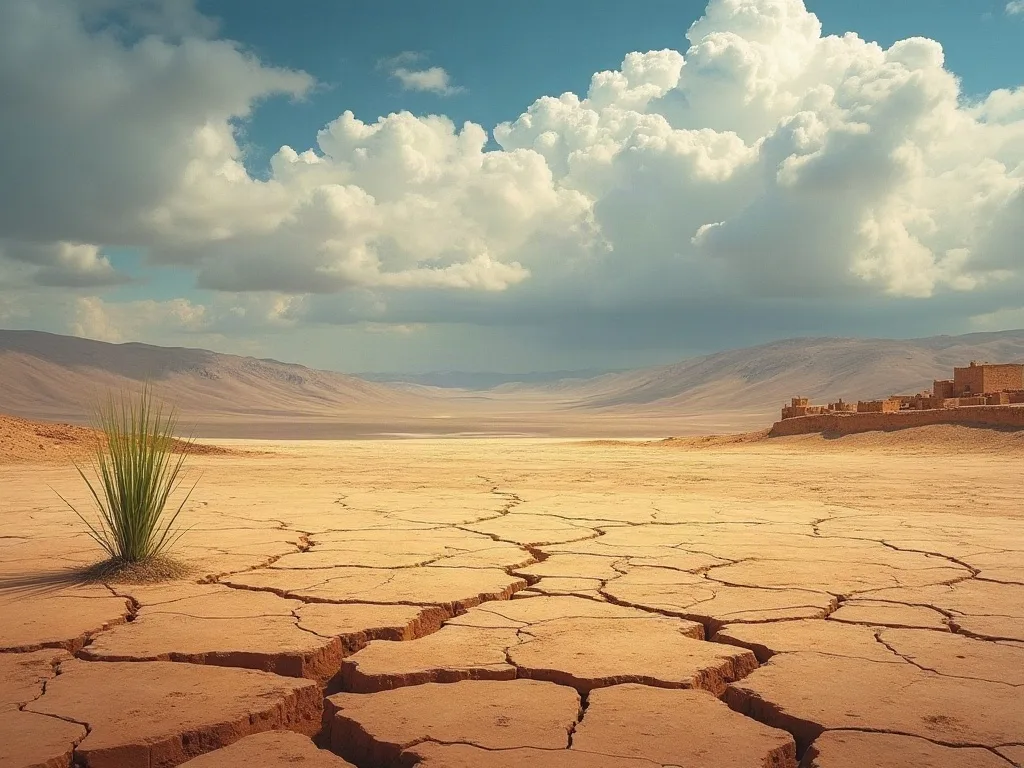
The sky goes white and still. The soil cracks open like old leather. Women climb to the highest roof in the village, raise their hands above their heads, and sing. They are not singing to rain; they are singing to a person. His name is Anzar, and if they please him, he will weep.
That image is not a distant one. Across the Rif mountains of northern Morocco, the Kabyle highlands of Algeria, and the Aurès range that stretches toward Tunisia, versions of that ceremony survived well into the twentieth century and, in some places, still run today. Anzar: Berber Rain God and Fertility Deity sits at the intersection of ancient Amazigh cosmology, pre-Islamic North African religion, and a living oral tradition that never fully surrendered its old gods to new arrivals. He is one of the most vividly documented deities the Berber world preserved outside stone inscriptions, and his story rewards careful reading.
The Amazigh (the Berber people's name for themselves, meaning roughly "free people") had no single canonical scripture the way ancient Greeks had Hesiod's Theogony or Hindus had the Rig Veda. Their theology travelled by mouth, by ceremony, by the rhythm of agricultural seasons. That makes Anzar harder to pin down than Zeus or Indra, but it does not make him vague. On the contrary, the details that survived are specific, sensory, and deeply human.
Anzar in Amazigh Cosmology: Sky, Water, and the Land
The ancient Berbers divided the cosmos along lines that would feel familiar to any agrarian people of the ancient Mediterranean rim. Sky above, earth below, and between them a constant negotiation carried by rain. But the Amazigh framing had its own logic. The sky was not simply a ceiling; it was a living domain populated by spirits called igellawen (singular: agellid), royal or sovereign beings who governed the forces that shaped crops and seasons.
Anzar held a position among these sky spirits that was functionally supreme when it came to rainfall and agricultural fertility. His name carries a root connected to water and flow in several Tamazight dialects; the Kabyle form Anzar and the Rif Berber variants point to the same figure across a wide geographic spread, which tells us the cult predates the medieval fragmentation of Berber communities.
The Roman-era writer Tertullian, writing from Carthage around 200 AD, noted that the peoples of North Africa made ritual supplications for rain using collective ceremonies. He did not name Anzar specifically, but the practice he described matches later ethnographic accounts of Anzar rituals closely enough to suggest continuity across almost two millennia. The colonial-era French ethnographer Edmond Doutté documented Kabyle rain ceremonies in Algeria in the early 1900s that still centered on a named sky spirit receiving offerings and songs, the same structure that persists in oral accounts collected by Amazigh scholars like Salem Chaker in the late twentieth century.
Within this cosmological frame, Anzar was not a creator god. He did not make the world, birth the first humans, or wage wars against chaos monsters. His domain was narrower and more intimate: the relationship between cloud and seed, between the longing of the sky and the readiness of the earth.
The Love Myth: How Anzar's Grief Became Rain
The most poetically distinctive thing about Anzar is his backstory, the narrative that explains why he cries and why his tears are rain. The myth exists in several versions across different Amazigh communities, but the core architecture holds.
Anzar fell in love with a mortal woman of extraordinary beauty, sometimes described as a young Amazigh girl found alone near a spring or on a high mountain pasture. He wished to marry her and brought gifts: heavy clouds, cool winds, the promise of abundance. She agreed, and for a time the union was fruitful. Rain came in proper seasons. Fields turned green. The people celebrated.
Then something broke the bond. In different regional versions the cause varies: the woman died young, she was separated from Anzar by a rival or by her own family's refusal, or she ascended to the sky only to be kept apart from him by other sky spirits. In the Kabyle versions collected by French administrator Auguste Mouliéras in the 1890s, the separation is caused by the woman's death, and Anzar's grief is essentially permanent. He weeps across eternity. Each tear is a raindrop. Each heavy storm is a heavier grief.
This frames rain not as force or violence but as longing. There is no thunder-king hurling bolts to punish humans. There is instead a bereft husband crying above the fields. The moral logic that follows is significant: if Anzar weeps too little, crops die and the people suffer. If he weeps too much, floods drown the harvest. The right amount of rain requires the right emotional balance in the sky, which means humans have a role to play. They must comfort Anzar. They must perform his grief with him.
That is the core purpose of the Anzar rain ceremony: not a plea for mercy from a powerful force, but a collective act of emotional solidarity with a mourning god.
The Rain Ceremony: Tafaska n Wanzar
The ritual known in Kabyle as Tafaska n Wanzar (the feast of Anzar, or sometimes simply "Anzar's celebration") is among the most detailed and best-documented indigenous North African ceremonies to reach modern scholarship. Its structure was recorded repeatedly between the 1880s and the 1970s by ethnographers working across Morocco and Algeria, and contemporary Amazigh cultural organizations have continued to document surviving versions.
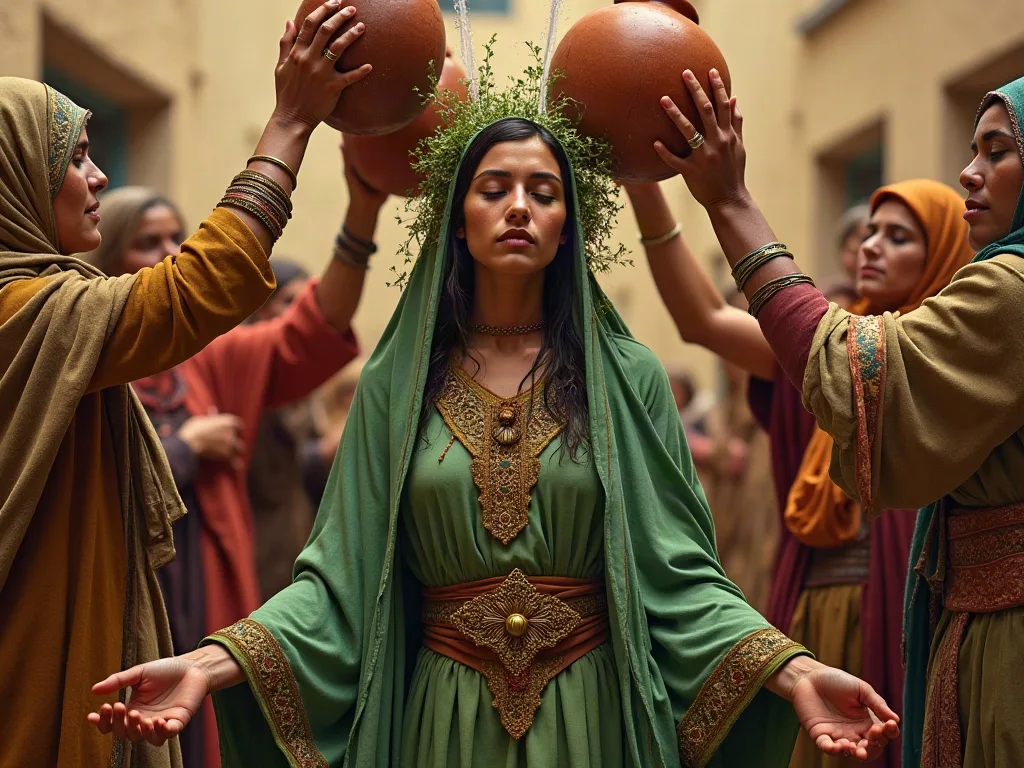
The ceremony required drought as its trigger. When rain failed for long enough to threaten the harvest, village women (men were generally excluded from the ritual's central acts) organized collectively. A girl or young woman was selected to embody a figure called Tislit n Wanzar, the "Bride of Anzar." She was dressed in green vegetation: leaves, herbs, flowering branches. In some Moroccan Rif communities the Bride wore a wooden spoon as a headdress, a symbol of domestic abundance and the wish to fill pots again.
The women carried the Bride through the village in procession, singing specific songs addressed directly to Anzar. The lyrics that survived in ethnographic collections are remarkable for their directness. One Kabyle version, translated by Berber scholar Mouloud Mammeri in the 1970s, addresses Anzar as a living, present being: "Anzar, Anzar, come to us, your bride is waiting, pour your love on us." Each household the procession reached was expected to pour water over the Bride from above, a ritual simulation of rain. Households also offered flour, oil, or couscous. At the end of the procession the offerings were cooked communally, and the entire village shared the meal.
The act of pouring water onto the Bride was simultaneously sympathetic magic (mimicking rain to invite it) and a symbolic reunion of Anzar with his beloved. The village women were, in a sense, playing both roles: they were the human community calling to a divine spouse, and they were also the divine bride drawing the weeping sky toward earth.
Anzar and Agricultural Fertility: The Economics of Rain in Arid Lands
To understand why Anzar commanded such devotion, it helps to know the landscape. The Maghreb is not uniformly desert. The Atlas Mountains, the Rif, the Kabyle highlands: these are places of real rainfall and fertile valleys. But they are surrounded by semi-arid zones where the difference between a good rain year and a drought year was literally the difference between eating and going hungry. The ancient Romans recognized this; North Africa, especially the region around Carthage and the Numidian kingdom, was the breadbasket of the Roman Empire, supplying an estimated third of Rome's grain needs at the empire's height.
That agricultural abundance was never guaranteed. It depended on rainfall patterns that swung unpredictably across the region. A sky spirit who controlled precipitation was not a theological abstraction; he was an economic reality. The Berber rain god and fertility deity Anzar governed the mechanism on which entire communities ran.
This explains several features of the Anzar cult that might otherwise seem puzzling. The offerings given during the ceremony were not luxury items; they were food staples, the very things the rain was meant to produce. The ritual logic was almost contractual: give the god what his fields should provide when healthy, and encourage him to produce the conditions for that health. It is a theology of reciprocity, not supplication to arbitrary power.
Anzar's fertility dimension also extended beyond crops. In some regional traditions, young married couples who had not yet conceived children participated in the Anzar ceremony with particular intensity, and water poured during the ritual was considered beneficial for human fertility as well as agricultural. The rain god's tears, in this reading, carried generative power broadly: for seed, for womb, for the continuity of community.
Tafnout, the Egyptian lion-headed rain goddess, presents an interesting parallel here, as does Tlaloc, the Aztec rain deity, both of whom governed rain as a simultaneously terrifying and necessary force tied directly to food security. Anzar's distinctly emotional character, his grief-rain rather than storm-command, stands apart from both.

Anzar Across Regions: Variants and Local Names
One of the complexities any scholar of Berber religion faces is the absence of a single Amazigh state or canon. The Amazigh world stretched across several thousand kilometers of North Africa, from the Moroccan Atlantic coast to the Siwa Oasis in Egypt, and each region developed its own emphases while sharing a common cultural and linguistic root.
Anzar as a named figure is documented most clearly in three zones:
-
Kabyle region (northern Algeria): The fullest ethnographic records come from here, collected by Mouliéras, Doutté, Mammeri, and later Chaker. The Kabyle Anzar is a sky king, a weeping lover, and the focus of the Tafaska ceremony as described above.
-
Rif region (northern Morocco): The Rif Berbers preserved similar rain ceremonies, sometimes using the name Anzar directly and sometimes using variant forms. The wooden-spoon headdress of the Bride figure is documented most consistently in Rif accounts.
-
Chaoui and Aurès highlands (eastern Algeria): Less extensively documented, but Aurès ethnographic surveys from the French colonial period note rain-calling ceremonies structurally similar to the Kabyle Tafaska, suggesting a shared underlying figure even where the name varies.
Outside these three zones, rain spirits with different local names but analogous roles appear in Tuareg traditions of the Sahara (where rain is even more critical and therefore even more sacred) and among the Shilha Berbers of the High Atlas. Whether all of these represent local variants of a single ancient deity or a family of related spirits with a common ancestor is a question scholars have not fully resolved. The linguist Lionel Galand argued in the 1970s that the name Anzar itself was ancient enough to predate the Arab conquest of the Maghreb (which began in earnest in the 7th century AD), placing the cult's roots firmly in pre-Islamic Berber religion.
Survival After Islam: How Anzar Persisted
The Arab conquest of North Africa brought Islam to a region that already had complex religious layers: indigenous Amazigh belief, Punic religious traditions from Carthage, Roman imperial cults, and a significant Christian presence (Saint Augustine of Hippo was himself a Berber, born in what is now Algeria in 354 AD). Islam swept through relatively quickly in political terms, but the deeper conversion of rural populations was a slower process that lasted centuries.
Anzar survived by doing what useful gods often do: he became partially acceptable. The ceremonies associated with him were reframed in some communities as prayers for rain permitted under Islamic jurisprudence (the Arabic salat al-istisqa, the prayer for rain, gave local ceremony an Islamic wrapper). The specific songs and the Bride figure survived beneath that wrapper in many places, recognized by participants as something older than the official prayer, but not directly opposed to it.
This kind of layering is common across religious history. The Kabyle communities that maintained Anzar ceremonies into the twentieth century were also practicing Muslims. They did not experience the two things as contradictory. Anzar was addressed privately, collectively, in female space. The mosque was public, male, orthodox. The two operated in different registers of the same social world.
French colonial policy in Algeria, which ran from 1830 to 1962, had complex effects on this balance. The French administration documented Berber customs partly out of genuine ethnographic interest and partly to drive a political wedge between Berbers and Arabs. That documentation, however motivated, produced the detailed records scholars now rely on for understanding the Anzar cult. Post-independence Algeria's nation-building project sometimes complicated the acknowledgment of pre-Islamic indigenous religion. But the Amazigh cultural revival that gained strength from the 1980s onward, and became legally recognized in Algeria with the 2002 constitutional recognition of Tamazight as a national language, brought renewed interest in figures like Anzar as markers of Amazigh identity and heritage.
Anzar in Oral Poetry and Song
The Amazigh oral tradition is one of the richest in the ancient Mediterranean world, and Anzar left clear marks on it. The songs sung during the Tafaska n Wanzar ceremony were not improvised; they were composed texts passed from woman to woman across generations, with strict rhythmic patterns and conventional imagery.
Mouloud Mammeri, the Kabyle novelist and ethnologist who became one of the key figures of the Amazigh cultural revival before his death in 1989, collected and analyzed several of these songs. He noted that the language in the Anzar songs was distinctly archaic, using vocabulary and grammatical forms that had fallen out of everyday Kabyle speech. This linguistic archaism is a strong indicator of antiquity: the songs were maintained formulaically because their words were considered efficacious, not merely pretty. Changing the words might change the result.
The imagery in these songs is consistent: the sky as a husband, the earth as a wife, rain as the consummation of that marriage. The village women who sing are mediators, bringing the estranged couple back together. There is a tenderness to this imagery that sets the Amazigh rain tradition apart from the more thunderous rain mythologies of the ancient Near East or the Greek world.
One surviving song fragment, recorded in Mammeri's fieldwork and later anthologized in collections of Tamazight oral poetry, translates roughly as: "Come, Anzar, your earth is thirsty, your wife has her arms open, do not make her wait longer." The pronoun shifts in that song are deliberate: the singing women are the earth, and Anzar is being called to them directly. The ceremony was not just about rain; it was about the restoration of right relationship between sky and ground, between the divine and the human, between what is above and what is below.
Frequently Asked Questions About Anzar
Frequently asked questions
Is Anzar still worshipped today?
Active worship in the theological sense is rare, but ceremonial memory of Anzar persists in parts of the Kabyle region of Algeria and the Rif mountains of Morocco. Some communities revived the Tafaska n Wanzar ceremony during droughts in the late twentieth century, more as cultural affirmation than strict religious practice. Amazigh cultural associations in both countries have documented and sometimes publicly staged versions of the ceremony to preserve it as living heritage.
How old is the cult of Anzar?
A definite founding date is impossible to fix. Linguist Lionel Galand placed the name's roots before the Arab conquest of the Maghreb in the 7th century AD, and Roman-era accounts of North African rain ceremonies suggest continuity going back at least to the 2nd century AD. The agricultural conditions that made a rain deity central to Berber life go back to the Neolithic period in North Africa, roughly 6000-4000 BC, though we cannot directly connect that era to the named figure of Anzar.
What is the Bride of Anzar, and who played her role?
The Tislit n Wanzar (Bride of Anzar) was a girl or young woman selected by the village community during a rain ceremony. She was dressed in green vegetation to embody the fertile earth awaiting rain. As the procession moved through the village, neighbors poured water on her from above, simulating rain and symbolically reuniting her with the sky god. The role was considered important and, in some accounts, the Bride was chosen for qualities of good character as much as appearance.
How does Anzar compare to other ancient rain gods like Tlaloc or Indra?
Tlaloc, the Aztec rain god, was a figure of terror as much as blessing, associated with child sacrifice and the fear of drought as divine punishment. Indra, the Vedic sky-king, wielded the thunderbolt as a warrior. Anzar is neither punisher nor warrior. His rain comes from grief and love, not power. That emotional framing is distinctive in the global history of rain deities: Anzar's tears nourish rather than his commands compel.
Are there written ancient texts about Anzar?
No surviving ancient Amazigh written text specifically names Anzar. The Tifinagh script used by the Tuareg and ancient Berbers was primarily used for short inscriptions, not extended religious narratives. What we know about Anzar comes from oral tradition preserved in ethnographic records made from the late 19th century onward, from the fieldwork of researchers like Edmond Doutté, Auguste Mouliéras, and Mouloud Mammeri, and from continuing documentation by Amazigh cultural scholars.
Is Anzar connected to the Roman god Neptune or the Greek Poseidon?
There is no direct mythological connection. Neptune and Poseidon governed oceans; Anzar governed rain and agricultural water, a functionally different domain. During the Roman occupation of North Africa, Roman and indigenous Berber cults sometimes coexisted and occasionally blended, but there is no evidence of Anzar being absorbed into or equated with Neptune. Anzar's emotional character (a grieving lover rather than a sea lord) suggests he developed independently from the Greco-Roman tradition.
Anzar and the Future of Amazigh Sacred Memory
The twentieth century was not kind to indigenous North African religion. Colonial disruption, post-independence nationalism, and religious conservatism all pushed figures like Anzar toward the margins. Yet he kept appearing, in fieldwork notebooks, in Kabyle poetry collections, in the songs that older women still knew. That persistence is itself a kind of argument.
The Amazigh cultural renaissance that accelerated after 2000, with Tamazight gaining constitutional status first in Algeria and then in Morocco (2011), brought scholars, artists, and activists back to the question of pre-Islamic Berber spiritual heritage. Anzar became a figure of that recovery, not just a rain deity in the technical sense but a symbol of continuity, proof that the Amazigh world had its own deep sacred history that did not begin with outside arrivals.
Contemporary Kabyle singer Lounès Matoub, assassinated in 1998 and still venerated as a symbol of Amazigh identity, referenced the imagery of rain, sky, and earth in his songs in ways that carried clear echoes of the Anzar tradition even without naming him. That kind of underground persistence, the way a mythological pattern survives in cultural form long after its explicit ritual context fades, is one of the most remarkable things about the Amazigh sacred world.
The question of what Anzar means now is genuinely open. For some communities he remains a spirit worth addressing during drought, in private and communally. For others he is an ancestor of the imagination, a proof of cultural depth and indigenous sophistication. For scholars of comparative religion he is a case study in how emotional framing, the rain-as-grief motif, can produce a strikingly distinct theology from the standard storm-god template that dominates ancient Mediterranean and Near Eastern pantheons.
What is not open is whether he matters. Across North Africa, every spring when the rains come late and the soil stays cracked and pale, the old impulse stirs: to look up, to sing, to ask the sky to remember the earth it loves.
Free 25-page sample
Want the whole story?
Take the first 25 pages free. If it pulls you in, the full edition is yours as an instant PDF download, with a paperback on Amazon for selected titles.
Berber
The Berber Mythology Book: The Gods, Spirits, and Sacred World of the Amazigh
The Amazigh: Gods, Spirits, and North Africa
The beliefs of North Africa’s first people, the Amazigh, who were old when Carthage was young: the sun and the moon, the jnun of the wild places, the cult of the ancestors and the caves, the goddess the Greeks called Athena, and a tradition that outlived every empire.
More from Berber
All articles
Berber
The Azru Oak: Sacred Tree Cult and Ritual Sites in Berber Tradition
The Azru Oak stands as the living spine of Berber sacred geography, where tribal councils, healing rites, and offerings to ancestral spirits converged for millennia. Discover how this revered tree shaped Berber law, spirituality, and community bonds across North Africa.
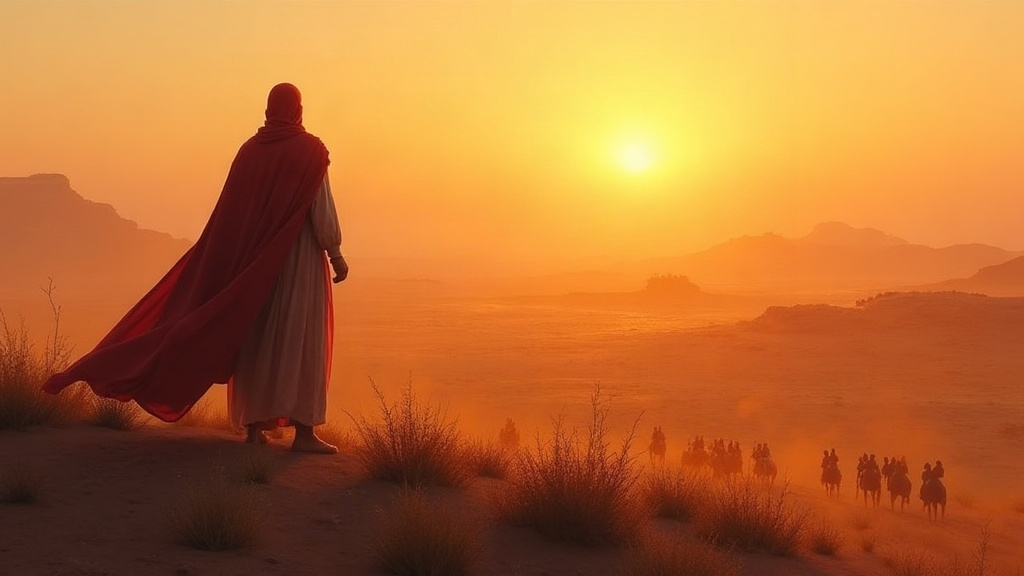
Berber
Masinissa: King and Cultural Hero of Numidia
Masinissa united Numidia and shaped the destiny of North Africa by walking between Carthage and Rome. His reign (202-148 BCE) transformed a fragmented kingdom into a civilized power that wrote its own laws.
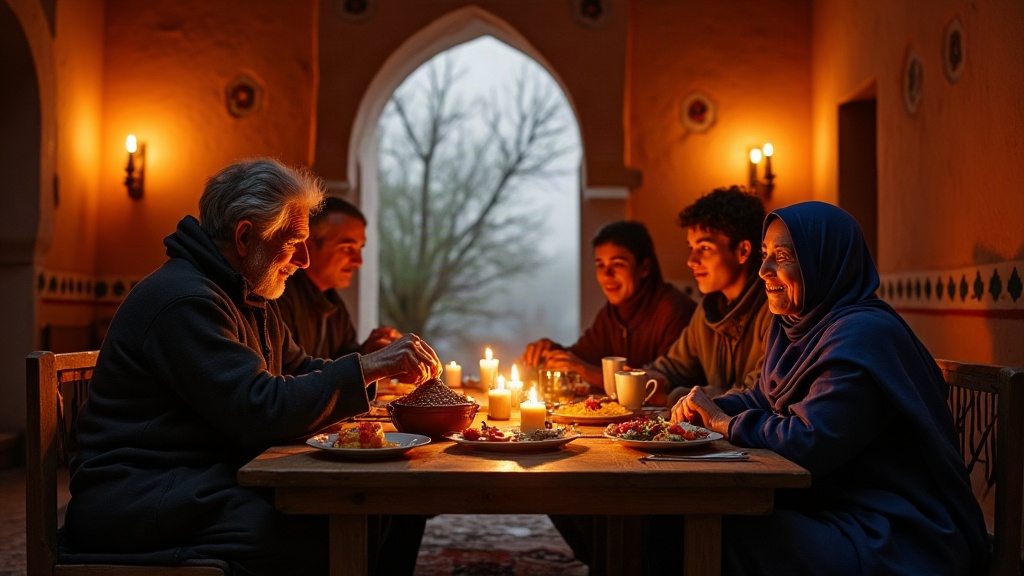
Berber
Yennayer: Berber New Year and Agricultural Festival
Yennayer marks the Berber New Year on January 14, celebrating the spring planting season and ancestral connection to the land. Discover how this 2,944-year-old festival blends agricultural ritual, family tradition, and cultural identity across North Africa.
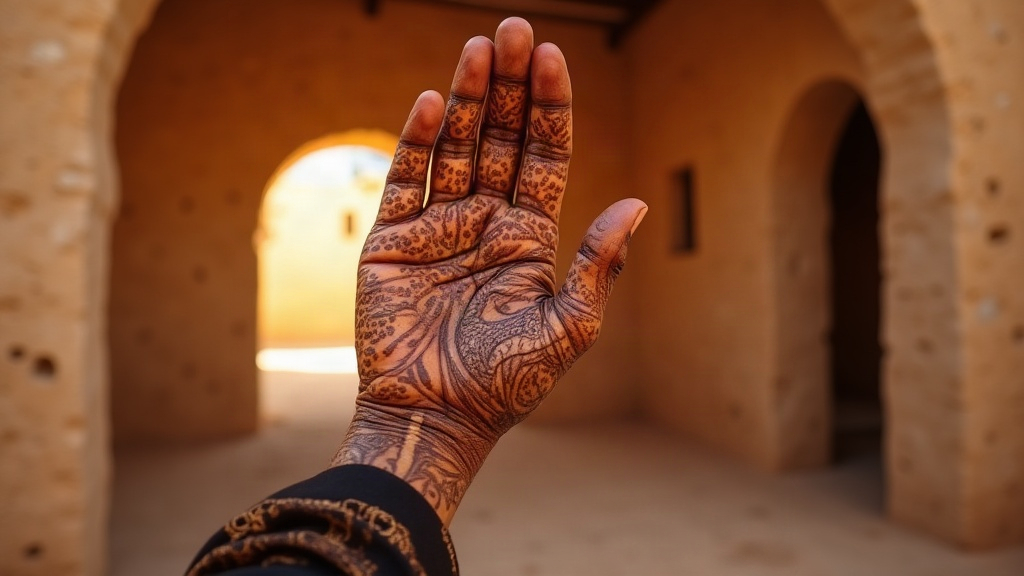
Berber
The Hand of Fatima in Berber Symbolism: Protection, Blessing, and Identity Across North Africa
The Hand of Fatima, or Khamsa, is far more than Islamic decoration in Berber culture. It carries layers of pre-Islamic protection magic, women's agency, and ancestral wisdom. Discover how Amazigh communities wove this symbol into identity, ritual, and everyday life across Morocco, Algeria, and Tunisia.