
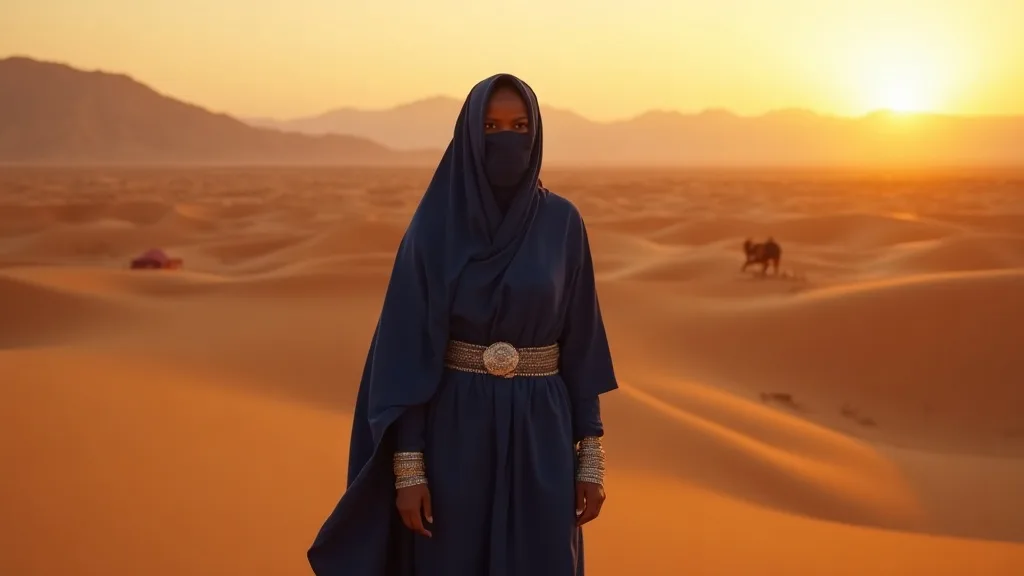
Tin Hinan: Legendary Queen and Ancestral Mother of the Tuareg
Tin Hinan rode out of the Tafilalt oasis and became the founding mother of a desert civilization. Her tomb still stands in the Sahara, and the Tuareg still trace their lineage back to her name.
Contents
She left with a single companion and a handful of millet. The Sahara swallowed them, and something extraordinary came out the other side.
Tin Hinan, whose name means roughly "She of the Tents" or "Mistress of the Camps" in Tamasheq, the Tuareg language, is the founding queen of one of the oldest matrilineal civilizations in the Saharan world. She is not a minor figure dusted off for academic curiosity. She is the ancestral mother from whom the Tuareg nobles, the Kel Ahaggar, claim direct descent. Her legend is embedded in oral tradition, in archaeological bedrock, and in the living identity of a people who have crossed this desert for more than a thousand years.
The story of Tin Hinan: Legendary Queen and Ancestral Mother sits at the crossing point between myth and history. That is exactly the territory worth examining closely.
From the Tafilalt Oasis: Where the Journey Begins
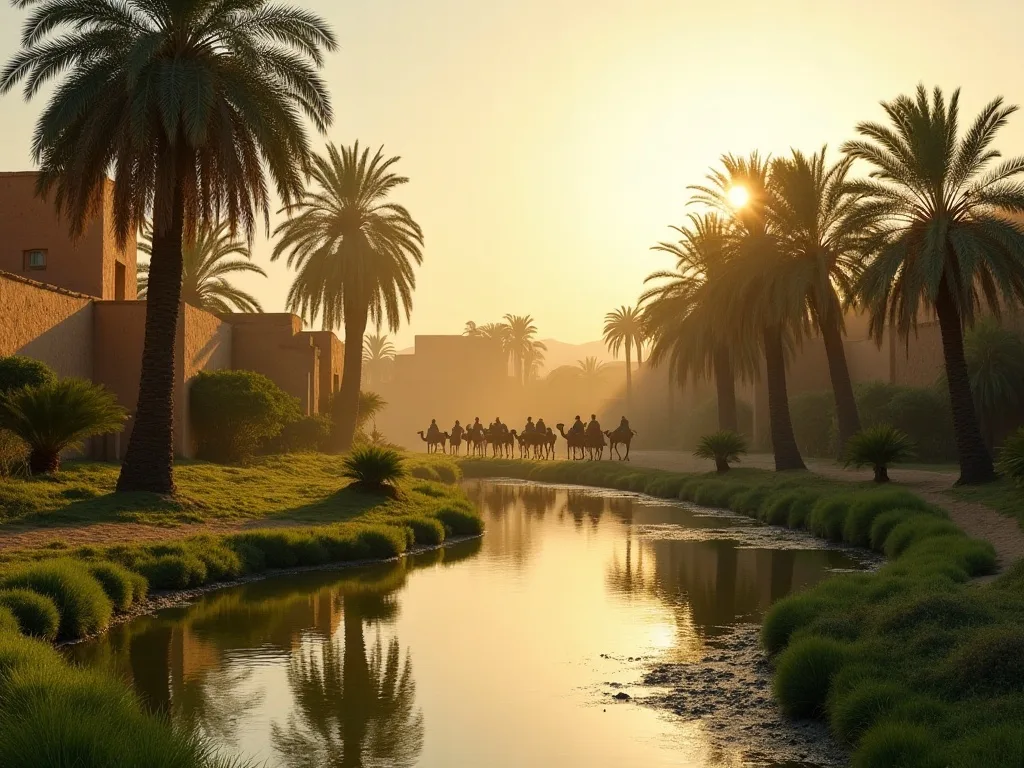
Every version of the legend begins in Tafilalt, an ancient oasis region in what is now southeastern Morocco. The oral histories recorded by French ethnographers in the early 20th century, and later systematized by Tuareg scholars, agree on the basic shape: Tin Hinan was a woman of noble birth, possibly a princess of a Berber tribe from the north. Something forced her to leave. Some accounts speak of a family conflict. Others are quieter, saying simply that she chose to go.
She set out with her servant Takamat, and it is worth pausing on that detail. Two women, crossing the central Sahara. No army. No caravan of merchants. The Hoggar mountains, their destination, rise nearly three thousand meters above sea level in the middle of the Algerian Sahara, and the journey from Tafilalt across the Tanezrouft plains is one of the most hostile crossings on earth. The oral tradition doesn't dramatize the hardship. It states the journey as a fact: they went, and they arrived.
What they carried was less than what they needed. The story says Takamat found an anthill along the way and took grain from it, sharing it with her mistress so that neither would starve. This image recurs across multiple retellings. It is the kind of vivid, specific detail that oral traditions preserve when the core of a story is real. A single anthill. A few grains of millet. The margin between death and founding a dynasty.
When Tin Hinan reached the Hoggar plateau, she did not merely survive. She settled, gathered people around her, and became the mother of a lineage. The Tuareg imajaghan, the noble caste of the Kel Ahaggar confederation, trace their bloodline directly to her. Her servant Takamat is credited as the ancestor of a second, allied lineage called the Iddas.
The Matrilineal Heart: What Her Legacy Built
The Tuareg social structure is one of the rare matrilineal systems to survive intact into the modern era. Inheritance, noble status, and clan identity pass through the mother's line, not the father's. A Tuareg man's most important male relative is not his father but his maternal uncle. Property, tents, and herds belong to women.
This is not coincidence layered over a myth. Tin Hinan is the structural reason the Tuareg give for why their society works this way. She came first. She was the mother. Everything descends from her. The entire architecture of Tuareg kinship is a monument to the logic her legend encodes.
Ibn Battuta, the great 14th-century Moroccan traveler who passed through the Saharan edges of the Tuareg world, noted with some surprise that Tuareg women went unveiled, moved freely, and commanded real authority in ways that struck him as unusual. He was observing a society built on Tin Hinan's template, even if he did not know her name.
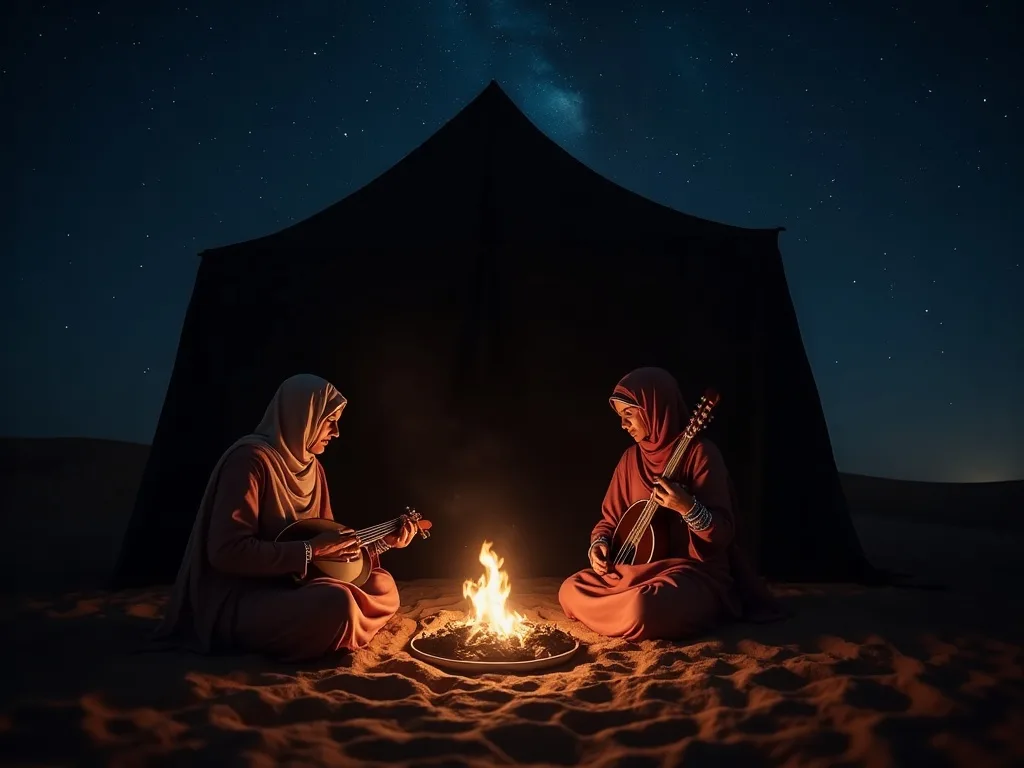
The oral poems of the Tuareg, called tisiway, keep her memory vivid. These are not academic recitations. They are performed at gatherings called ahal, social evenings where young men and women compose and exchange poetry while playing the imzad, a single-stringed fiddle whose sound is often described as the voice of the desert itself. Tin Hinan appears in these poems as both a real ancestor and something slightly larger: a prototype of the ideal Tuareg woman, mobile, self-sufficient, noble in bearing without needing to announce it.
The Tomb at Abalessa: Archaeology Meets Myth
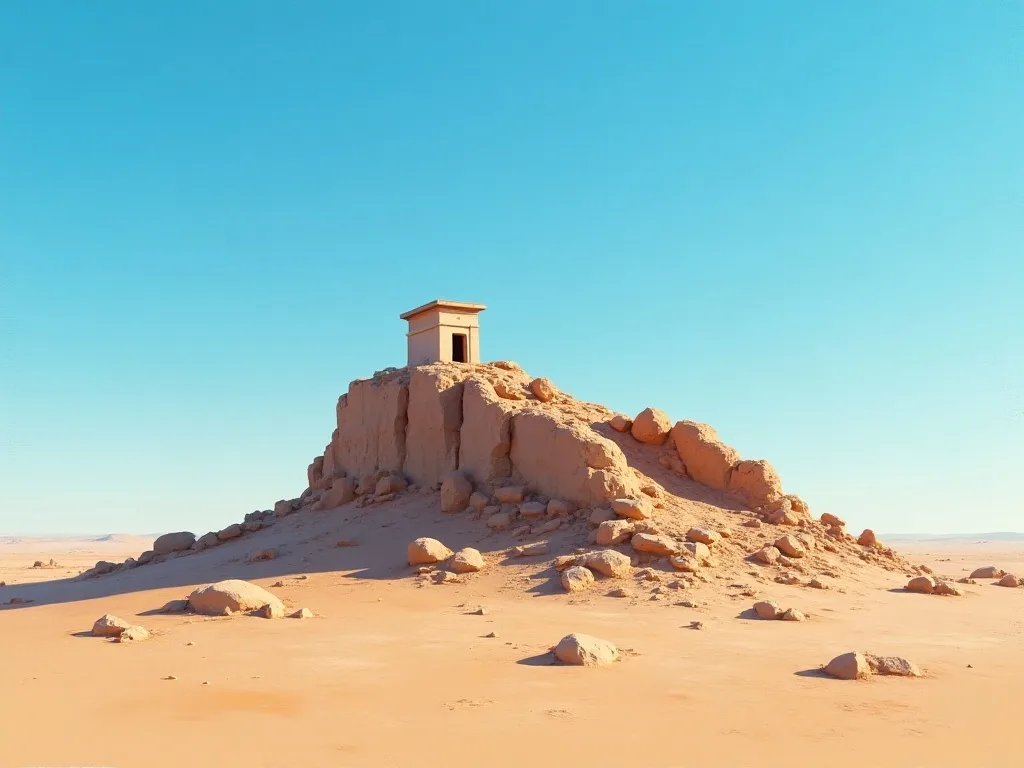
In 1925, a French military officer and amateur archaeologist named Lieutenant Byron Khun de Prorok led an excavation at Abalessa, a cluster of ruins sitting on a rocky outcrop above the In Ifar plain in the Hoggar region of Algeria. What he found inside a large stone monument stopped the team.
The interior contained a burial chamber. On a raised wooden platform lay a human skeleton, the bones of a tall woman, lying on her back. Around her were extraordinary grave goods: seven silver bracelets on her right arm, a gold bracelet, fragments of what appeared to be a leather pouch, beads of glass and cornelian, and several Roman gold coins. The coins were later dated to the reign of Emperor Constantine I, placing the burial roughly in the 4th century AD, possibly extending into the 5th.
The local Tuareg who accompanied the excavation had no doubt about what had been found. This was the tomb of Tin Hinan. They were correct, in the sense that the site is called Ti-n-Hinan in Tamasheq to this day, and oral tradition had always located her grave somewhere in this terrain.
The Roman coins deserve particular attention. They do not mean the queen was Roman or had Roman allegiances. They suggest she lived in a world connected to the late Roman trade networks that reached deep into the Saharan interior through routes passing by the Fezzan in Libya and the trading cities of the Maghreb. Gold moved. So did silk, glass, and cornelian beads that trace back as far as India. Tin Hinan's tomb is evidence that the Sahara in late antiquity was not a blank between civilizations but a corridor along which wealth, goods, and ideas circulated constantly.
The skeleton was removed to the Bardo National Museum in Algiers, where it remains today. The empty tomb at Abalessa became, and remains, a place of pilgrimage. Tuareg visitors leave offerings near the ruins. The site is protected under Algerian law.
Tin Hinan in the Berber World: Roots and Relatives
To understand Tin Hinan fully, it helps to place her inside the broader Berber world. The Berbers, or Imazighen (the free people, in their own language), are the indigenous population of North Africa, present long before the Phoenician founding of Carthage, long before Rome, long before the Arab conquests of the 7th century. Their languages form the Berber branch of the Afroasiatic family, and their cultures stretch from the Canary Islands in the west to the Siwa Oasis in Egypt in the east.
The Tuareg are one branch of this Berber world, distinguished by their adaptation to the deep Sahara and by their preservation of an ancient script called Tifinagh, which descends from the ancient Libyco-Berber alphabet used across North Africa more than two thousand years ago. When Tuareg women teach their children to write, they use Tifinagh, not Arabic. This is one of the most remarkable instances of script preservation anywhere on earth.
Within this broader tradition, Tin Hinan occupies a role comparable to figures like Dido of Carthage or Cleopatra in other North African traditions: a woman who founds or defines a political order, whose gender is not incidental but central to the authority she carries. The Berber queen Dihya, known in Arabic sources as al-Kahina, led armed resistance against the Arab invasions of the late 7th century AD and fits a similar template of the powerful Berber woman whose lineage and land are inseparable.
Tin Hinan predates Dihya by at least two centuries. She is the earlier prototype, the one who planted the seed.
Her Companion Takamat: The Story Behind the Story
No account of Tin Hinan is complete without Takamat, and it would be wrong to treat her simply as a supporting character. The oral tradition is explicit: without Takamat, Tin Hinan dies in the desert. The grain from the anthill is Takamat's discovery. The survival is shared.
The genealogical importance of Takamat matches this. She is not forgotten once Tin Hinan arrives in the Hoggar. She becomes the founder of a second lineage, the Iddas, which intermarries and co-exists with Tin Hinan's descendants. Some versions of the legend say the two women were of equal social standing at the start of the journey. The words "mistress" and "servant" are perhaps too rigid for the relationship; the Tamasheq terms are more nuanced, suggesting companionship and mutual obligation rather than strict hierarchy.
This detail matters because it reveals something about the ethical logic encoded in the myth. The Tuareg tradition does not efface the companion who made the hero's survival possible. It enshrines her in a parallel lineage of comparable dignity. That is a choice, and choices in myth are always meaningful.
Tin Hinan as Living Symbol: From Oral Tradition to the Modern World
The 20th century pulled Tin Hinan into new contexts. The Algerian writer Taos Amrouche, one of the first Kabyle women to publish literary work in French, drew on Berber women's oral traditions that carry the imprint of Tin Hinan's archetype. The legendary queen appeared more explicitly in the fiction of Tuareg writer Ibrahim al-Koni, whose sprawling Saharan novels treat the desert as a spiritual environment and ancient Tuareg figures as half-mythic presences.
Most directly, the Tuareg-founded transnational organization Tinariwen, the band that brought desert blues to international audiences in the 2000s, takes its name from a Tamasheq word meaning "deserts." The music circulates the same oral landscape that produced Tin Hinan's story. When Tinariwen perform at Abalessa for the Festival in the Desert, they are performing in the shadow of her tomb.
The question of political identity adds another layer. The Tuareg have fought four major armed conflicts since Algerian independence in 1962, and several more in Mali and Niger, seeking recognition of their cultural and territorial rights across borders drawn by European colonial powers that took no account of Tuareg lands. In these contexts, Tin Hinan functions as more than a founding ancestor. She is an argument. Her story says: we were here first, we came from somewhere specific, we built something real, and we owe that continuity to a woman who crossed the desert with nothing.
The name itself has been given to a luxury desert camp in the Hoggar, to a Algerian navy frigate, and to a perfume brand. None of these uses exhaust the original. They confirm, in their scattered commercial and national way, that her name carries a weight that people keep reaching for, even when they cannot fully articulate why.
Cross-Cultural Echoes: Founding Mothers in World Mythology
Tin Hinan is not alone in the category of "woman who founds a lineage by crossing hostile terrain." The pattern appears across several traditions and deserves to be named rather than left implicit.
In Irish mythology, the goddess Brigid presides over smithcraft, poetry, and healing, and her festival Imbolc marks the first stirring of spring, a moment of creative beginning not unlike Tin Hinan's arrival in the Hoggar. The founding and the renewal, carried by a woman.
In Hindu tradition, Saraswati is the river-goddess who became the goddess of knowledge, language, and creative arts, her own movement through the landscape tied to the prosperity of those who settle near her waters. The connection between a woman's journey and a civilization's founding is ancient and widespread.
Closer to the Saharan world, the Egyptian goddess Isis travels through the Delta marshes with her infant son Horus, protecting and sustaining the heir of a kingdom under siege. The topos of the fugitive woman who preserves royal continuity by enduring a difficult crossing recurs from the Nile to the Niger Bend.
What makes Tin Hinan distinctive is that she is not protecting someone else's lineage. She is starting her own. She is not the guardian of a male heir. She is the founder. That specific combination, a woman who crosses the desert not to preserve the past but to create the future, may be the most original element of the legend and the one that has proved most durable.
What Scholars Debate: History, Legend, and the Limits of the Evidence
Scholarship on Tin Hinan is genuinely divided on several questions, and intellectual honesty requires laying them out plainly.
The identification of the Abalessa tomb occupant with the legendary queen relies on continuous oral tradition and on the place-name. There is no inscription, no written document from late antiquity, no contemporary source that names the woman buried there. The Roman coins date the burial but say nothing about who she was. Scholars like Gabriel Camps, the French prehistorian who made a career-long study of Berber archaeology, treated the identification as plausible but not proven. He documented the site thoroughly in his 1965 survey Aux origines de la Berberie: Massinissa ou les debuts de l'histoire and in later work, noting that the monument's architecture, scale, and grave goods all point to a person of exceptional status.
The question of whether Tin Hinan was a historical individual or a mythological construct misses the point slightly. Founding figures in oral cultures are usually both. They represent a real historical process, the migration and settlement of a group, compressed into the biography of a single person. Whether one real woman named Tin Hinan led a migration from the Tafilalt region in the 4th century AD, or whether the legend condenses a generation of movement into one figure, the social reality encoded is real: the Kel Ahaggar Tuareg did arrive in the Hoggar, they did establish a matrilineal nobility, and they did orient their identity around a founding maternal ancestor.
The removal of the skeleton from Abalessa in 1925 remains a sore point. Tuareg community members have called for its repatriation. The debate over who has the right to the physical remains of founding ancestors is one the Tuareg share with Indigenous communities on every continent.
Frequently Asked Questions About Tin Hinan
Frequently asked questions
Is Tin Hinan a historical person or a mythological figure?
Most likely she is both. The oral traditions of the Tuareg Kel Ahaggar have consistently identified her as a real ancestor who migrated from the Tafilalt region of Morocco to the Hoggar mountains of Algeria around the 4th or 5th century AD. The tomb at Abalessa, excavated in 1925, contains the remains of a high-status woman buried with Roman-era gold coins consistent with that date, strongly suggesting that a historical figure underlies the legend. French prehistorian Gabriel Camps treated the identification as archaeologically plausible. Whether every detail of her story is literal is a separate question; the historical core appears genuine.
What does the name Tin Hinan mean?
In Tamasheq, the Tuareg language, Tin Hinan is most commonly translated as "She of the Tents" or "Mistress of the Camps." The prefix tin is a feminine marker. Hinan relates to a root connected to tents, camps, or encampments. The name suits a nomadic founding ancestor perfectly: she is not queen of a palace but of the mobile dwelling that defines Tuareg life.
Why is the Tuareg society matrilineal, and does Tin Hinan explain it?
The Tuareg pass noble status, clan identity, and inheritance through the mother's line, not the father's. This is one of the most fully developed matrilineal systems surviving in the world today. The legend of Tin Hinan is the Tuareg's own explanation for this structure: she came first, she founded the lineage, and the logic of descent follows from that fact. Scholars note that matrilineal systems often preserve the memory of a founding female ancestor in exactly this way, but whether Tin Hinan's legend created the matrilineal structure or the structure created her legend as its symbolic justification is genuinely debated.
Where is the tomb of Tin Hinan and can it be visited?
The tomb, a large stone funerary monument, stands at Abalessa in the Tamanrasset Province of southern Algeria, inside the Hoggar (Ahaggar) National Park. The site is protected under Algerian law and carries the name Ti-n-Hinan in local Tamasheq. The skeleton found inside in 1925 was transferred to the Bardo National Museum in Algiers. Visiting the site requires traveling to one of the most remote regions on earth, a journey that typically involves flying into Tamanrasset and then crossing significant desert terrain.
Who was Takamat, and why does she matter in the legend?
Takamat was Tin Hinan's companion on the crossing from Tafilalt to the Hoggar. The legend credits her with saving both their lives by finding grain in an anthill during the journey. She is not a secondary figure: Tuareg genealogy recognizes her as the founding ancestor of the Iddas lineage, a parallel noble line that has coexisted with Tin Hinan's descendants for centuries. Her inclusion in the foundational story reflects a Tuareg ethical principle that the person who makes survival possible cannot be forgotten.
How is Tin Hinan remembered in contemporary Tuareg culture?
She is remembered through oral poetry (tisiway), recited and sung at evening gatherings (ahal) with the accompaniment of the imzad fiddle. Her name appears in Tuareg political discourse as evidence of prior territorial claim and cultural legitimacy. The site of her tomb at Abalessa receives informal pilgrimage visits. Tuareg musicians, artists, and writers continue to invoke her as both historical ancestor and symbolic touchstone for Tuareg identity across Algeria, Mali, Niger, and Libya.
Tin Hinan and the Question of Who Gets to Tell the Story
The 1925 excavation placed Tin Hinan's physical remains in a national museum in a country that did not yet exist when she was born. Her story was first written down in French, by French scholars, working from oral accounts given to them by Tuareg informants whose names rarely appear in the published texts. The bones that may be hers sit in Algiers, and her tomb is an Algerian national monument, while the Kel Ahaggar Tuareg who claim her as their ancestor live across borders that cut through the Sahara like lines drawn on water.
This is not just a political problem. It is a problem of narrative ownership that runs through every ancient tradition that was first "documented" by colonial powers. The Tuareg are not passive in the face of it. Scholars like Hélène Claudot-Hawad, a French researcher who has spent decades working alongside Tuareg communities, have insisted that Tuareg voices must be centered in any serious account of Tuareg history and tradition. Writers in Tamasheq and Tuareg-language radio stations have begun producing their own accounts of Tin Hinan's story, in the language in which it was always told.
The legend survives all of this because it was never stored in a book. It lives in the mouths of people who still cross the Hoggar, still play the imzad, and still know that a woman once rode out of Tafilalt with a single companion and made something permanent in the middle of the world's largest desert. That is a kind of durability no archive can fully replicate, and no colonial catalogue can confiscate.
Tin Hinan is the ancestral mother of a civilization that is still alive. Her story is still being told by the people she founded. That, in the end, is the truest measure of a legend.
Free 25-page sample
Want the whole story?
Take the first 25 pages free. If it pulls you in, the full edition is yours as an instant PDF download, with a paperback on Amazon for selected titles.
Berber
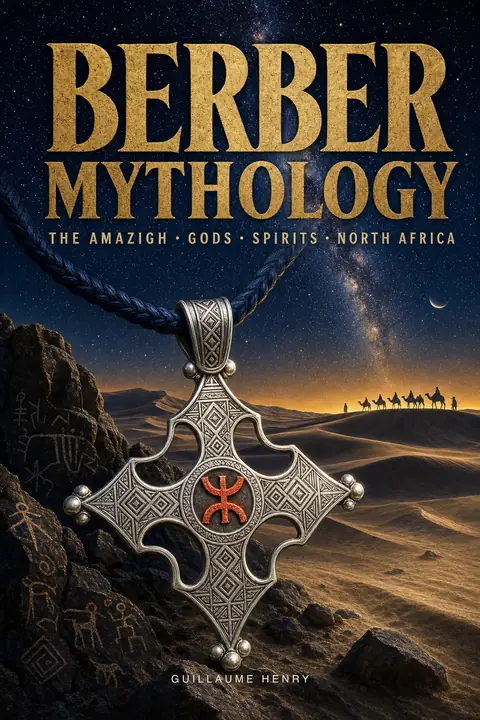
The Berber Mythology Book: The Gods, Spirits, and Sacred World of the Amazigh
The Amazigh: Gods, Spirits, and North Africa
The beliefs of North Africa’s first people, the Amazigh, who were old when Carthage was young: the sun and the moon, the jnun of the wild places, the cult of the ancestors and the caves, the goddess the Greeks called Athena, and a tradition that outlived every empire.
More from Berber
All articles
Berber
The Azru Oak: Sacred Tree Cult and Ritual Sites in Berber Tradition
The Azru Oak stands as the living spine of Berber sacred geography, where tribal councils, healing rites, and offerings to ancestral spirits converged for millennia. Discover how this revered tree shaped Berber law, spirituality, and community bonds across North Africa.
Berber
Masinissa: King and Cultural Hero of Numidia
Masinissa united Numidia and shaped the destiny of North Africa by walking between Carthage and Rome. His reign (202-148 BCE) transformed a fragmented kingdom into a civilized power that wrote its own laws.
Berber
Yennayer: Berber New Year and Agricultural Festival
Yennayer marks the Berber New Year on January 14, celebrating the spring planting season and ancestral connection to the land. Discover how this 2,944-year-old festival blends agricultural ritual, family tradition, and cultural identity across North Africa.
Berber
The Hand of Fatima in Berber Symbolism: Protection, Blessing, and Identity Across North Africa
The Hand of Fatima, or Khamsa, is far more than Islamic decoration in Berber culture. It carries layers of pre-Islamic protection magic, women's agency, and ancestral wisdom. Discover how Amazigh communities wove this symbol into identity, ritual, and everyday life across Morocco, Algeria, and Tunisia.