
Blot: The Heathen Sacrificial Ritual
Blot was the sacred offering rite at the heart of Norse and Germanic religion. Learn how the Heathen world fed its gods, sealed its oaths, and kept cosmic order alive through blood, fire, and shared feasting.
Contents
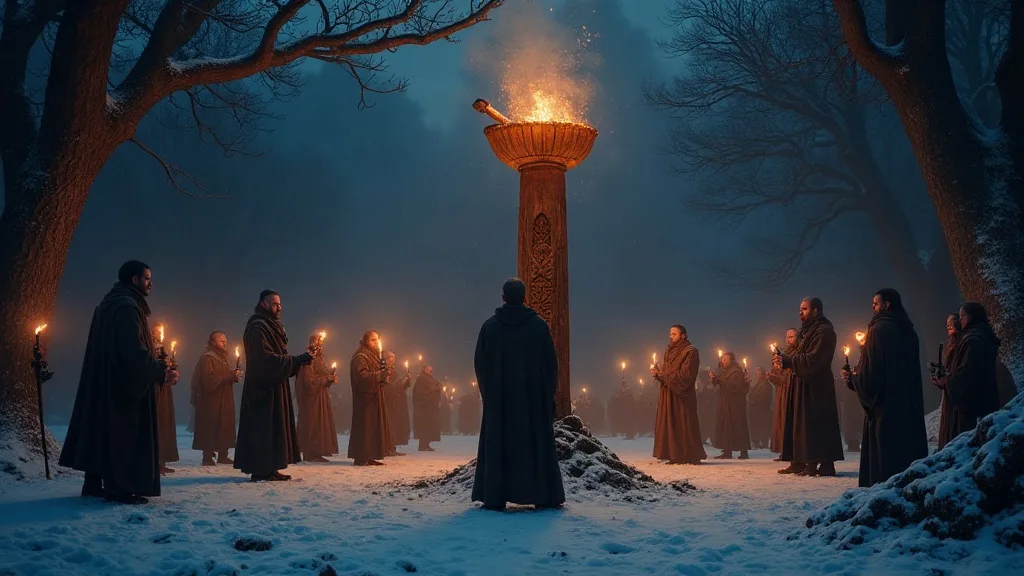
The fire is already lit when the chieftain carries the carved wooden bowl toward the altar. Inside the bowl, warm blood from a slaughtered boar catches the orange light. Around the post where the animal hung, men and women stand in the cold, breath visible, waiting. No one speaks yet. The blot has begun.
Blot: the Heathen sacrificial ritual sits at the center of everything the old Norse and Germanic peoples believed about the relationship between humans and the divine. It was not simply killing an animal. It was a formal exchange: the community offered life, and the gods offered back abundance, victory, or good weather. The word blot (pronounced roughly "bloat") comes from Proto-Germanic blōþą, meaning blood, and it names both the act and the sacred occasion that organized the entire ritual calendar.
The Roman historian Tacitus wrote in Germania (98 AD) that the Germanic tribes conducted regular communal rites tied to specific seasons and needs, involving animal offerings and shared feasting. Centuries later, the Old Norse sources confirm the same pattern: the blot was still there, still recognizable, still binding the community together through shared sacrifice.
What Blot Actually Was: Sacrifice as Sacred Economy
The word "sacrifice" in English carries connotations of loss, of giving something up. In the Norse framework, blot worked differently. The offering was understood as a gift sent into the divine world, with a gift expected in return. This reciprocal logic runs through the Hávamál, a collection of wisdom verses preserved in the Codex Regius (a 13th-century Icelandic manuscript that is one of the most important surviving records of pre-Christian Norse belief): "Better no prayer than too much pleas; a gift always calls for a gift."
The animal most commonly offered was a horse, considered the most prestigious gift. Boars were sacred to Freyr and Freyja and appeared at the Dísablót and Yule blot. Oxen, goats, and sometimes dogs filled other ritual roles. Human sacrifice, while attested in a handful of sources, appears to have been rare and reserved for extreme circumstances, not routine practice.
Ibn Fadlan, the Arab diplomat who encountered Norse Rus traders on the Volga River in 921 AD, left one of the most detailed eyewitness accounts of Norse ritual practice. His description of a ship funeral includes sacrificial elements that align well with what the Icelandic sagas describe: the animal offering, the shared consumption of the flesh, the role of a ritual specialist overseeing the rite.
The blood itself, called blót, was collected and applied with purpose. A bundle of twigs or a branch, called a hlautteinn (blood-twig), was used to sprinkle the blood onto the altar post (the horgr), the temple walls, and often the participants themselves. This act was not decorative. The blood carried the sacred charge of the offering. Spreading it shared that charge across the sacred space and the community gathered inside it.
The Ritual Calendar: When the Blot Was Held
The blot was not a spontaneous act. It was embedded in a structured year of at least three major seasonal rites, with smaller local observances woven in between.
Dísablót opened the agricultural year, held in late winter (roughly February). It honored the dísir, female ancestor spirits who protected the family line and the fertility of the land. The Ynglinga saga, written by Snorri Sturluson around 1230 AD, describes the dísablót at Uppsala as a great public feast with sacrifices, markets, and political negotiations.
Sigrblót, the Victory-Blot, came at the start of summer. Snorri mentions kings performing it to ask Odin for victory in the coming raiding and war season. This was a blot of ambition: the community was about to move outward, and they needed divine backing.
Haustblót, the Autumn Blot, closed the harvest. It was offered to the Vanir, the fertility gods Freyr, Freyja, and Njord, in thanks for what the earth had given and as a bid for the earth's continued generosity through winter.
Yule, the midwinter feast, carried its own sacrificial component. Toasts were drunk to the gods and the dead: first to Odin for victory, then to Njord and Freyr for peace and good harvests, then to the memory of dead kin. Snorri's Heimskringla records that King Hákon the Good of Norway in the 10th century tried to shift Yule onto the Christian Christmas calendar, and that the local population resisted so fiercely that he had to permit the horse-feasting to continue.
A smaller but telling occasion was the Álfablót, the elf-blot. Conducted in autumn, it was a private household rite, not a public event. Strangers were turned away. The Austrfararvísur (a 11th-century skaldic poem) describes a Norse traveler in Sweden who cannot enter a farmhouse because the family is conducting their álfablót within. This intimacy shows the range of blot: it spanned from massive royal spectacles to a family sitting together around their fire, offering to the invisible presences that shared their home.
The Ritual Space: Hof, Horgr, and the Liminal Grove
The blot required a proper space. Three types of sacred location appear in the sources.
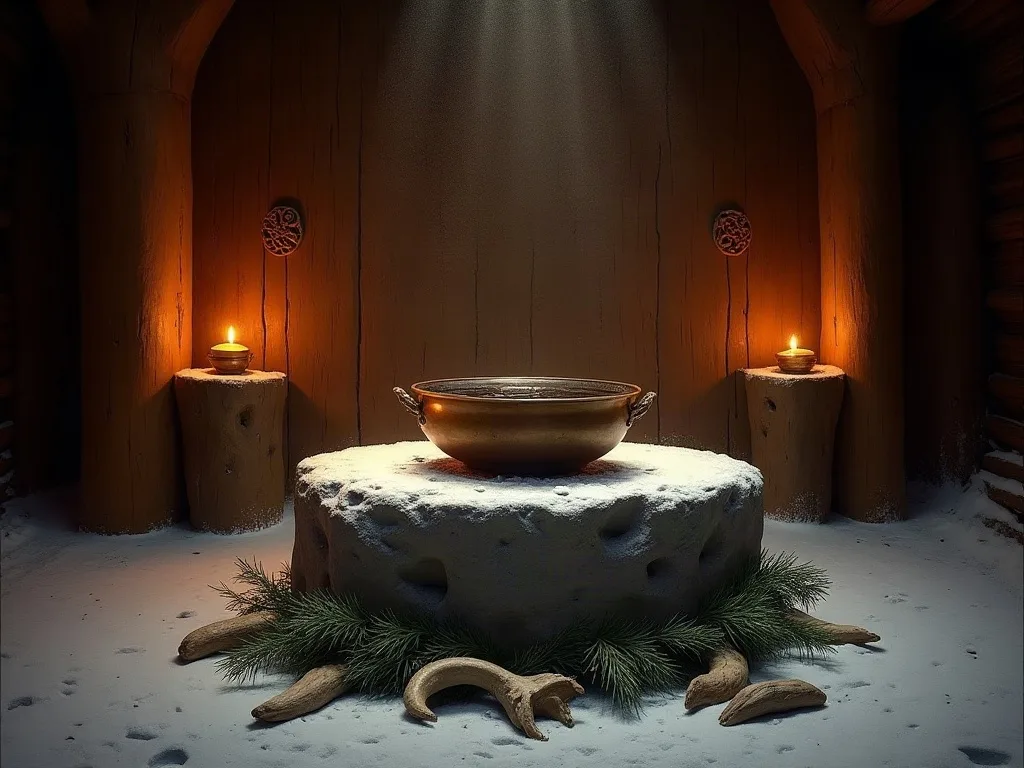
The hof was a roofed building, a temple of sorts, where the cult statues of the gods were kept and where indoor sacrificial feasting took place. The Eyrbyggja saga describes the hof at Helgafell in Iceland with notable architectural detail: a separate inner chamber for the cult images, a stone altar (stalli) where a sacred arm-ring was kept for oath-swearing, and a bowl on the altar for collecting sacrificial blood.
The horgr was simpler: an outdoor altar, often a pile of stones or a carved post. It could be set up anywhere that was set apart from everyday use. Kings and chieftains had permanent horgr structures, but a farmer conducting a small private blot might use a natural stone outcrop.
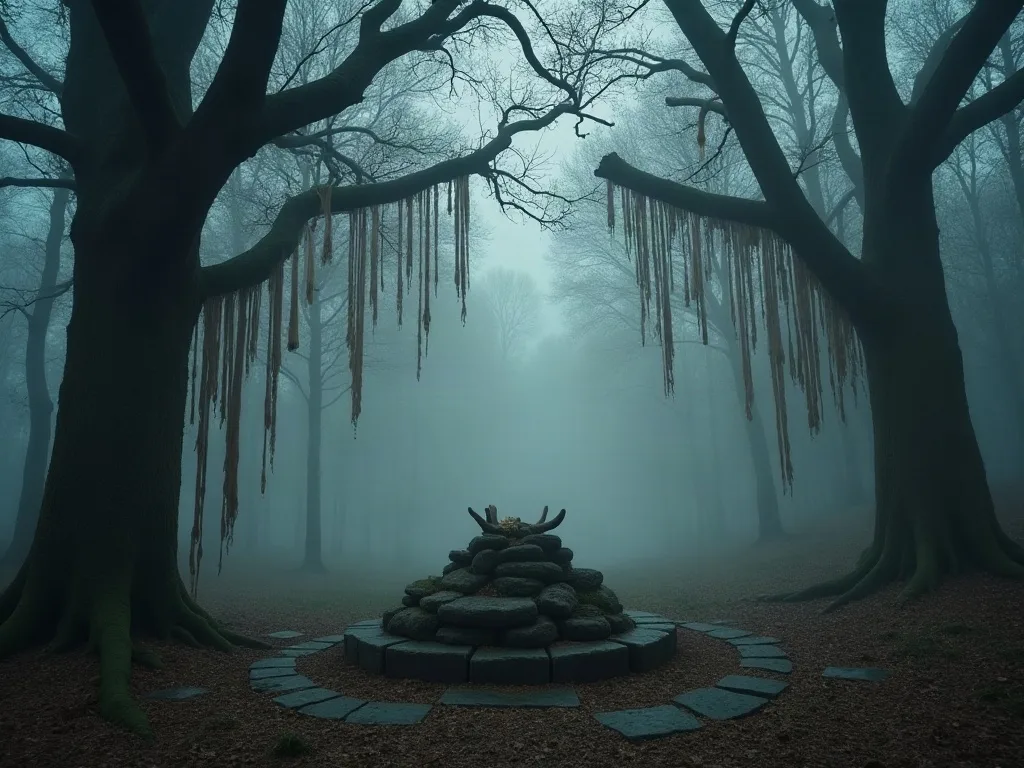
Sacred groves, called vé or lundr, appear frequently in both the sagas and in Roman-era descriptions. Tacitus himself describes Germanic sacred groves where no outsider could enter and where the tribe gathered to commune with divine forces. The grove at Uppsala in Sweden was described by Adam of Bremen around 1070 AD as containing a great tree (possibly an ash or elm), a sacred spring, and the hanging bodies of sacrificed animals and men. While Adam's account has an obvious Christian polemical angle, archaeological finds at sites like Thorsberg and Illerup Ådal confirm that bodies of water and natural formations were genuine foci for large-scale votive deposits.
The Danish bogs have returned some of the most striking physical evidence. At Thorsberg in Jutland, archaeologists recovered weapons, jewelry, animal bones, and human remains deposited in the water over several centuries, spanning the Roman Iron Age into the Migration Period. This was blot made tangible: gifts sent down into the earth and water as offering.
Who Led the Rite: Gothi, Chieftain, and the Household Head
In the pre-Christian Norse world, there was no separate priestly caste with its own hierarchy separate from political power. The goði (plural goðar), a Scandinavian term roughly meaning "priest-chieftain," combined religious and secular authority in one person.
The goði led the public blot, spoke the ritual words, wielded the hlautteinn, and hosted the feast that followed. His authority rested partly on his ability to perform the rite correctly and to have it "work" in the sense of producing the outcomes the community needed. A goði whose district suffered repeated poor harvests after his blot risked losing his standing.
Below the great public rites, the male head of a household (húsbóndi) conducted private blots for his family. He did not need ordination or special training beyond the tradition passed down within his family. The blot was, at its base level, something any family could do: choose a time, prepare an offering, speak the correct words, share the meat.
This accessibility is part of what gave the blot its resilience. When Christian missionaries targeted the goðar and the temple rites, private household blot continued for generations longer, just below the threshold of official detection.
The Feast as Sacred Act: Communal Eating and the Gods at the Table
The slaughter of the animal was only the first movement of the blot. What followed was equally sacred: the communal feast, called the blótveizla.
The meat of the sacrificed animal was cooked and shared among everyone present. The gods, in the Norse understanding, were present at this feast too, not physically seated but drawn near by the ritual itself. Toasts were drunk in sequence: to the gods first (Odin for victory, Njord and Freyr for fertility), then to the dead, then sometimes to specific heroes or ancestors.
These toasts were called minni (memory-drinks), and they were not casual. To drink the minni of a god was to call that god into the present moment of the gathering. Snorri describes this in detail in Heimskringla: at Lade in Norway, the chieftain Sigurðr held great feasts at blot time where all the ale was consecrated to the gods before it was drunk by the assembly.
The physical act of eating the flesh of the sacrificed animal completed the exchange. Humans had given the animal's life to the gods. Now they ate the animal's body, receiving back the gift in transformed form. The sacred power that had moved through the offering now entered the community directly. This is not metaphor; it was understood as a literal process by the people performing it.
Blot After Christianization: Survival, Suppression, and Reinvention
Christianity reached Scandinavia at different speeds in different places. Norway saw active royal enforcement of conversion beginning with Olaf Tryggvason (died 1000 AD) and Olaf Haraldsson (died 1030 AD). Iceland converted formally in the year 1000 by parliamentary decision, though with private practice of the old religion permitted for a period. Sweden held out longest: the temple at Uppsala continued functioning well into the 11th century.
The laws that accompanied Christianization were explicit about blot. The Gulaþing Law from western Norway forbade offering to the old gods, conducting blot feasts, or invoking Odin, Freyr, or Thor under penalty of outlawry or fines. The Grágás, Iceland's medieval law code, similarly listed pagan sacrifice among prohibited acts.
Yet the folklorists of the 19th century found echoes everywhere. Midwinter pig-slaughtering customs in Scandinavia, the Swedish julskinka (Yule ham), the English "bringing in the boar's head" at Christmas, and the widespread European custom of hanging the skull of the slaughtered animal on a post or tree: all of these carry the structural memory of the blot without the explicit religious framework. The anthropologist Hilda Ellis Davidson argued in Gods and Myths of Northern Europe (1964) that these folk survivals were not coincidental, but the last visible traces of a ritual tradition that had been practiced for more than a thousand years before Christianity.
Medieval Blot (Pre-Conversion)
Animal offering is central: horse, boar, or ox. The life of a living creature is the gift that carries weight. Blood is collected and applied to the altar, the sacred space, and the participants. The goði or chieftain leads as both political and religious authority. Participation is expected of the entire community. The feast that follows involves eating the consecrated meat and drinking consecrated ale in honor of the gods and the dead. The rite is tied to a specific agricultural or military need.
Modern Asatru Blot
Liquid offerings replace animal sacrifice in most modern practice: mead, ale, or juice poured into a bowl and then onto the earth or into fire. The gothi or gythja (female priest) leads the rite but holds no civil authority. Participation is voluntary. The feast remains: food and drink are shared, toasts (sumbel) are raised to the gods and ancestors. The rite honors the same seasonal cycle but is disconnected from subsistence farming.
Blot in Modern Asatru Practice
The modern Asatru movement, which began taking organized shape in Iceland in 1972 when Sveinbjörn Beinteinsson founded the Ásatrúarfélagið (the Asatru Fellowship), recovered the blot as its central ritual form. Today, Asatru communities on every continent hold seasonal blot rites following roughly the same calendar Snorri described: Dísablót, Sigrblót, Haustblót, and Yule.
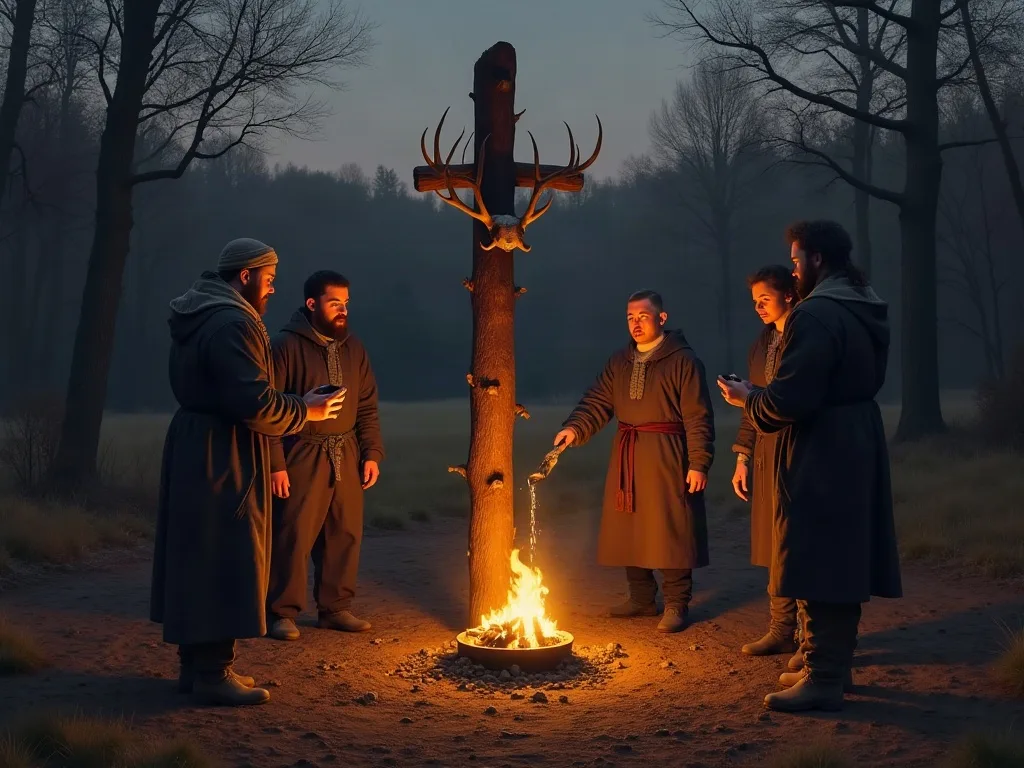
The mechanics have shifted. Animal sacrifice is not practiced by most modern Asatru groups, for legal, ethical, and practical reasons. Instead, mead or ale is poured into a horn or a bowl, blessed by the gothi or gythja, and offered first to the gods by pouring onto the ground, into a fire, or into a dedicated offering bowl. The remaining liquid circulates among participants, who speak their own words to the gods as they drink.
Some groups incorporate a sumbel (a formalized toasting ceremony) into or alongside the blot. In sumbel, three rounds of toasting move from the gods, to the ancestors, to personal oaths or boasts. This structure mirrors exactly what Snorri describes for the midwinter feast under King Hákon.
The Troth, one of the major international Asatru organizations, publishes liturgical guidance for blot that draws directly on the primary sources while adapting them for modern practitioners. The Ásatrúarfélagið in Iceland performs blot at the reconstructed hof in Reykjavik that opened in 2015, the first purpose-built Norse temple in Iceland since the Viking Age.
What the modern blot preserves, beyond the surface form, is the underlying theology: the gods are not distant. The relationship with them requires active maintenance. Gifts move in both directions. The community that gathers to offer is also the community that will receive, and the act of gathering is itself part of what makes the gift real.
Frequently Asked Questions About Blot: The Heathen Sacrificial Ritual
Frequently asked questions
What does the word 'blot' mean in Old Norse?
Blot derives from Proto-Germanic blōþą, meaning blood. In Old Norse, the word carries both the specific meaning of blood-sacrifice and the broader meaning of a sacred occasion or religious feast. The verb form blóta means to sacrifice, to honor through offering, or to worship. Some scholars also connect it to the verb blóta meaning "to strengthen" or "to reinforce," suggesting the rite was understood as strengthening the bond between humans and gods.
Did Norse blot always involve human sacrifice?
The sources mention human sacrifice rarely and in specific, extreme contexts. Adam of Bremen's 11th-century account of Uppsala describes human victims hung in the sacred grove alongside animals, and the sagas record legendary kings offered to Odin in times of disaster. However, the routine blot described across dozens of saga passages involves animals, most often horses, boars, and oxen. Archaeological evidence (bog bodies, sacrificial deposits) confirms human offering occurred, but the overwhelming pattern in the sources is animal sacrifice, not human. Scholars like Neil Price note that sensational accounts were sometimes amplified by Christian writers with an interest in depicting paganism as barbaric.
What is the difference between blot and sumbel?
Blot is a sacrificial rite: an offering made to the gods, the land-spirits, or the ancestors, usually involving an animal (in historical practice) or a liquid (in modern practice), with blood or liquid applied to sacred space. Sumbel (Old Norse sumbl) is a formalized drinking ceremony structured around three rounds of toasts: to the gods, to the ancestors, and to personal oaths or boasts. The two rites often occur together at major festivals, but they are structurally distinct. Blot moves the gift outward to the divine; sumbel binds the human community together through shared words and shared drink.
What primary sources describe blot in detail?
The richest descriptions come from Snorri Sturluson's Heimskringla (especially Ynglinga saga and the sagas of Olaf Tryggvason and Olaf Haraldsson), written around 1230 AD. The Eyrbyggja saga gives architectural detail about the Helgafell hof. The skaldic poem Austrfararvísur by Sigvatr Þórðarson (early 11th century) describes a traveler turned away from a farmhouse during álfablót. Tacitus' Germania (98 AD) and Ibn Fadlan's Risala (921 AD) provide outside eyewitness perspectives on Germanic and Norse ritual practice. The Hávamál from the Codex Regius contains verse that reflects the gift-logic underpinning all blot.
How does modern Asatru conduct a blot without animal sacrifice?
Most modern Asatru communities use mead, ale, juice, or water as the offering liquid. The gothi or gythja consecrates the liquid in a horn or bowl by speaking to the specific deity or spirit being honored. A portion is poured onto the ground, into a fire, or into a dedicated offering vessel, sending the gift into the divine realm. The rest is passed among participants, who add their own words or simply drink in acknowledgment of the rite. Some groups maintain the use of a hlautteinn (sprinkler) to distribute the consecrated liquid onto the altar or participants, preserving the form of the original blood-sprinkling even without the blood.
How does blot compare to sacrificial rites in other Indo-European traditions?
The structural parallels are striking. The Vedic yajna, described in the Rigveda (composed roughly 1500-1200 BC), involves fire sacrifice, the pouring of clarified butter (ghee) and soma juice, and communal eating of the sacrificed animal, all framed as a gift exchange with the gods. Roman supplicatio rites involved animal sacrifice, libation of wine, and communal feasting at temple sites. The Celtic nemed (sacred grove) sacrifices described by Greek and Roman sources share the liminal grove-setting with Norse practice. These parallels suggest a common Proto-Indo-European ritual grammar: gift, fire, blood or liquid, feast, reciprocity. The Norse blot is one of the most thoroughly documented expressions of that shared ancient pattern.
The Living Logic of an Ancient Rite
The blot did not disappear when the last Norwegian temple was pulled down or when the Icelandic parliament voted for baptism. It went quiet, buried in folk custom and seasonal habit, waiting for someone to recognize its shape again.
What the ritual preserved was a way of thinking about humans and the sacred that refuses the idea of a purely passive congregation receiving grace from above. In the blot framework, the relationship with the divine is active, reciprocal, and communal. You bring something real. You speak out loud. You eat together. You are changed.
Scholars like John Lindow (Norse Mythology: A Guide to the Gods, Heroes, Rituals, and Beliefs, 2001) and Hilda Ellis Davidson have argued that the blot expressed a Norse cosmological principle that runs through the Eddas: the gods themselves are not self-sufficient. Odin sacrificed his eye for wisdom; Thor spends his strength holding back the forces of chaos. The gods give, and they need to receive. The blot is the mechanism by which that exchange stays alive.
For the Asatru practitioner pouring mead onto cold ground in a November garden, or the medieval Norseman lifting a wooden bowl in a firelit hall, the act means the same thing at its core: the world holds together because people do this. Because the gifts keep moving. Because nobody breaks the chain.
That is not superstition. That is a theology of relationship, and it is one of the oldest still practiced on earth.
Read the full book
Want the whole story?
The complete edition is an instant PDF download here, with a paperback on Amazon for selected titles.
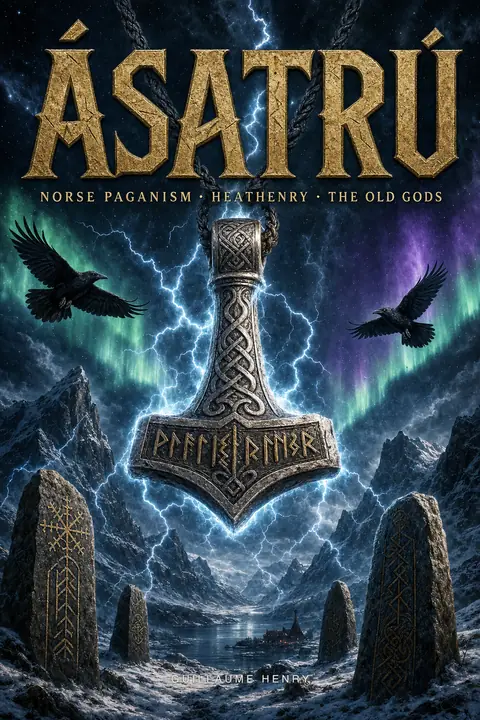
Asatru
The Asatru Book: Norse Paganism, Heathenry, and the Worship of the Old Gods
Norse Paganism, Heathenry, and the Old Gods
The living revival of Norse paganism: who the heathens worship, how the blót and the sumbel work, what the Nine Noble Virtues are, and how a faith that ended a thousand years ago came back to life in the modern world. Rooted in the Eddas, practiced today.
More from Asatru
All articles
Asatru
Mjolnir: Thor's Hammer as Symbol and Talisman
Mjolnir, Thor's legendary hammer, embodies divine power, protection, and order in Norse mythology. Discover how this symbol shaped Viking belief, ritual, and endures in modern culture.
Asatru
Winter Nights and Yule: Heathen Seasonal Festivals and Their Sacred Roots
Winter Nights and Yule are the two cornerstone heathen seasonal festivals that mark the darkest months of the year. Rooted in pre-Christian Norse and Germanic traditions, these observances honor the cycle of death and rebirth, ancestor veneration, and the sacred interplay between human and divine realms.
Asatru
Folkish versus Universalist Asatru: The Inclusion Debate
Asatru splits between two visions: one rooted in ancestry and ethnicity, one open to anyone who honors the Norse gods. We trace the ideological divide, its history, and how it shapes modern practice.
Asatru
Wyrd and Orlog: Fate and Personal Destiny in Norse Mythology
In Norse tradition, **Wyrd and Orlog** are the twin forces that shape destiny. Wyrd flows from the present moment, personal and mutable; Orlog is the ancient law laid down at creation. Together they answer the oldest question: how much of our fate is written, and how much is ours to choose?