

Sumbel: The Sacred Toasting Ceremony of the Norse
Sumbel is a solemn Norse ritual where mead or ale flows as oaths are sworn and toasts honor the gods, ancestors, and kin. Learn the structure, meanings, and role of this sacred ceremony in modern Asatru practice.
Contents
The hall grows quiet. A wooden horn passes from hand to hand, filled with mead or ale. Each person who holds it speaks, their words solemn and deliberate. They pledge loyalty to the gods. They honor those who came before. They make vows they intend to keep. When the horn is empty, the oath is sealed. This is Sumbel, the sacred toasting ceremony of the Norse.
Sumbel is not casual drinking. It is ritual action, rooted in the oldest layers of Norse culture. The ceremony binds the living to the divine, the present to the past, and individuals to their community through shared oath and reciprocal honor. In modern Asatru practice, Sumbel remains one of the most important rites, the moment when abstract faith becomes concrete commitment.
The Structure of Sumbel: How the Ceremony Unfolds
The ritual has a clear order, though practitioners adjust the details to fit their community and context.
The ceremony begins when someone, often a leader or priest figure, calls the gathering to attention. The drinking horn is filled with mead, ale, or another beverage (water or juice work in secular contexts). The first toast always honors the Aesir, the high gods of the Norse pantheon. The person holding the horn stands, raises it, and speaks their pledge. "Hail to Odin," they might say, "for wisdom and victory," and then drinks.
The horn returns to the host or passes to the next person. The second round honors the Vanir, the fertility and prosperity goddesses. Again, someone rises and speaks a personal invocation. "Hail to Freyja for love and abundance," or words chosen by the individual. The drink confirms the words.
The third round is the most serious. It honors the ancestors, the departed kin and mighty figures of the past. This is where personal and family connection deepens. A person might honor a grandparent, a historical hero like Ragnar Lothbrok, or an ancestor whose name has been lost to time. The words spoken here are promises to remember, to carry forward what those people lived and died for.
After the three main rounds, additional toasts may follow. Some call them "rounds of the oath," where participants make personal vows: to courage in the coming year, to loyalty to their kindred, to growth in skill or knowledge. These pledges bind the speaker to action.
The ceremony closes when the horn is empty and the last drink is taken. Some groups end with a shared phrase like "So it shall be," or they sit in silence to let the weight of what was spoken settle over the gathering.
The Religious Meaning Behind Sumbel
The Sumbel ceremony rests on a Norse idea that words carry power. To speak something under oath, especially in front of witnesses and gods, is to make it real. The beverage itself is the seal. It represents exchange: the speaker gives their word, and in return, they ask for the blessing or acknowledgment of the divine and the ancestors.
In the old Norse worldview, the Aesir themselves took oaths seriously. In the Poetic Edda, a collection of Old Norse poems written down in the 13th century but reflecting much older oral tradition, we see Odin and other gods swearing binding oaths. Odin hanged himself on Yggdrasil, the World Tree, to gain knowledge of the runes. The sacrifice was an oath written into his own body. The gods swore peace treaties and made pacts that shaped the cosmos.
When a Norse person held the horn and spoke, they were not asking the gods for a favor handed down from on high. They were entering into a transaction. "I honor you, I remember you, I pledge myself to live by certain values. In return, I ask your support and acknowledgment." The drink was the handshake that sealed it.
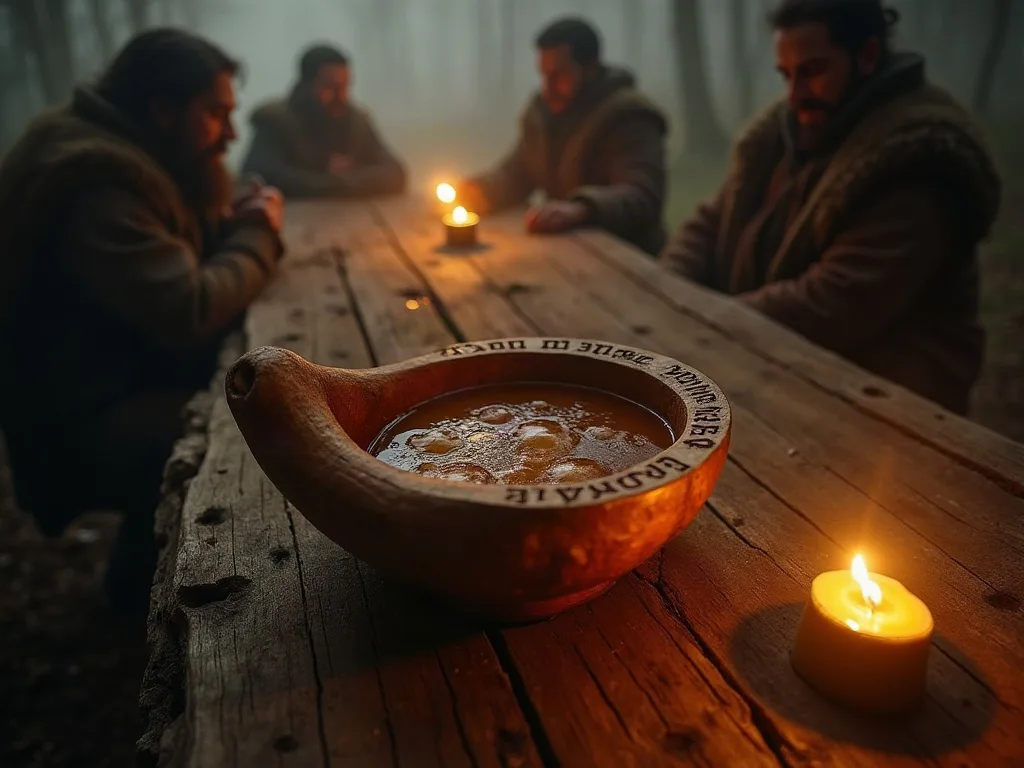
Ancestors held equal weight. The dead were not gone; they lived in memory, in bloodline, in the deeds their living descendants chose to repeat or exceed. By naming an ancestor in Sumbel and pledging to honor their memory, a person was accessing a kind of immortality. The ancestor's influence flowed forward through the words spoken and the oath sworn.
The horn itself carried symbolism. Norse culture was oral; a person's word was their bond and their reputation. The communal drinking horn meant everyone witnessed the oath together. A promise made into air might be forgotten or broken. A promise sealed with drink, spoken aloud before the community and the gods, was binding.
Sumbel in the Viking Age: Evidence and Echoes
Did the historical Norse people perform a ritual literally called "Sumbel"? The evidence is fragmentary but suggestive.
The word "sumbel" appears in Old Norse texts, including the Prose Edda, a 13th-century prose account of Norse myths written by Snorri Sturluson. In the Prose Edda, the term refers to a solemn pledge or vow. In one passage, Bragi, the god of poetry and eloquence, describes how oaths sworn into a cup or horn bind the speaker to truth. The Heimskringla, Snorri's history of Norwegian kings, mentions ritual toasts in the hall. Kings and jarls (nobles) would pledge to the gods and to one another, raising their cups and drinking to seal bargains.
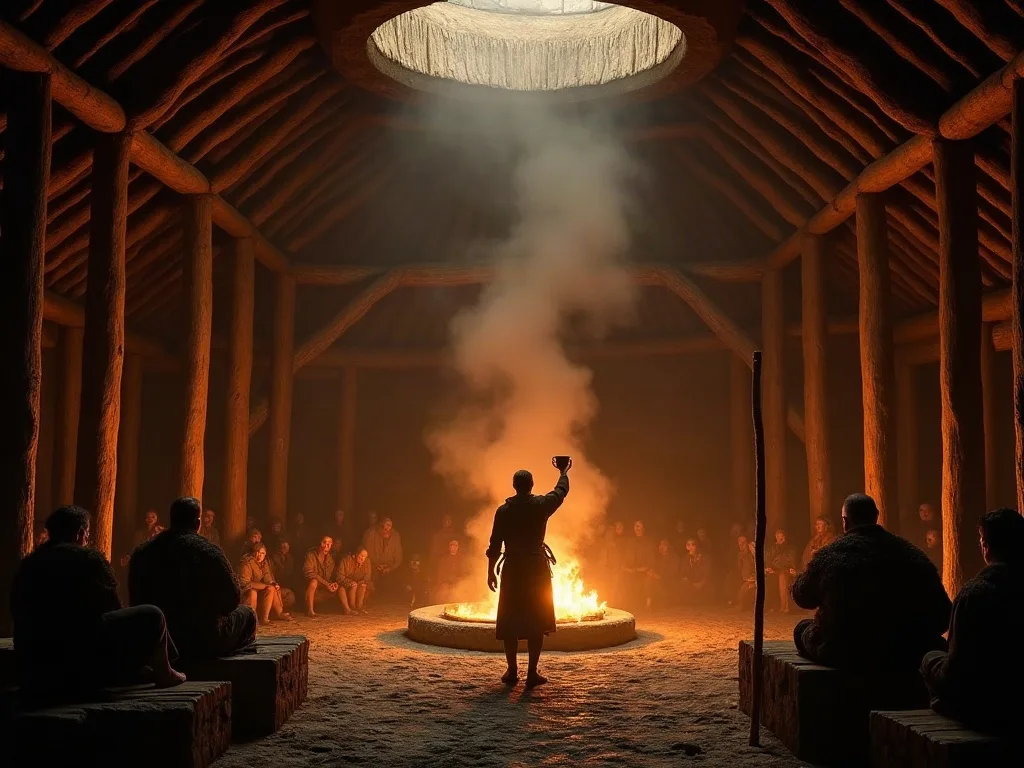
Archaeology and sagas suggest that communal drinking was central to Norse religious and political life. The great halls of Viking-age chieftains were places where the community gathered, where authority was displayed, and where bonds were affirmed. A man who refused to drink the ritual toast or who broke an oath sworn over a cup faced social ruin and possibly death.
The Volsunga Saga, an Icelandic prose narrative that recounts the deeds of the hero Sigurd, includes a scene where the hero is given a drink laced with a potion that makes him forget his true love. The drink is a magical violation of trust, a perversion of the sacred act. The fact that the saga writers saw such a violation as narratively shocking tells us how much weight toasting held in Norse culture.
The Three Rounds and Their Deeper Significance
Understanding each round of Sumbel helps clarify what the ritual accomplishes.
The first round, honoring the Aesir, roots the ceremony in cosmic order. The Aesir are the gods associated with power, wisdom, war, and kingship. Odin presides over knowledge and death; Thor commands storm and strength; Tyr governs law and justice. By toasting the Aesir first, the community affirms its place within a divinely ordered cosmos. The individual speaker, though small, stands within a chain of authority and power that reaches to the gods themselves.
The second round, to the Vanir, brings a different kind of blessing. The Vanir are goddesses and gods of fertility, sexuality, abundance, and healing. Freyja and Freyr represent the generative forces of nature and community. A toast to the Vanir is a request for peace, health, good crops, and strong families. It tempers the martial, orderly power of the Aesir with the nurturing, creative power of the Vanir.
The third round, to the ancestors, is the most personal. This is where a person claims their inheritance. A person who toasts an ancestor is saying: "Your blood runs in my veins. Your deeds echo in mine. I carry forward what you began." In cultures without written individual records, oral remembrance in ritual was the way a person achieved a kind of immortality. A forgotten ancestor was truly dead. An ancestor named in Sumbel lived on.
After these three, oaths sworn by the individual, vows to grow stronger, to keep faith with one's community, to face the coming year with courage, represent the personal commitment that ties the individual to the sacred and collective.
The Practical Reality: How Modern Asatru Performs Sumbel
Modern Asatru groups perform Sumbel with variations depending on their community, beliefs, and setting.
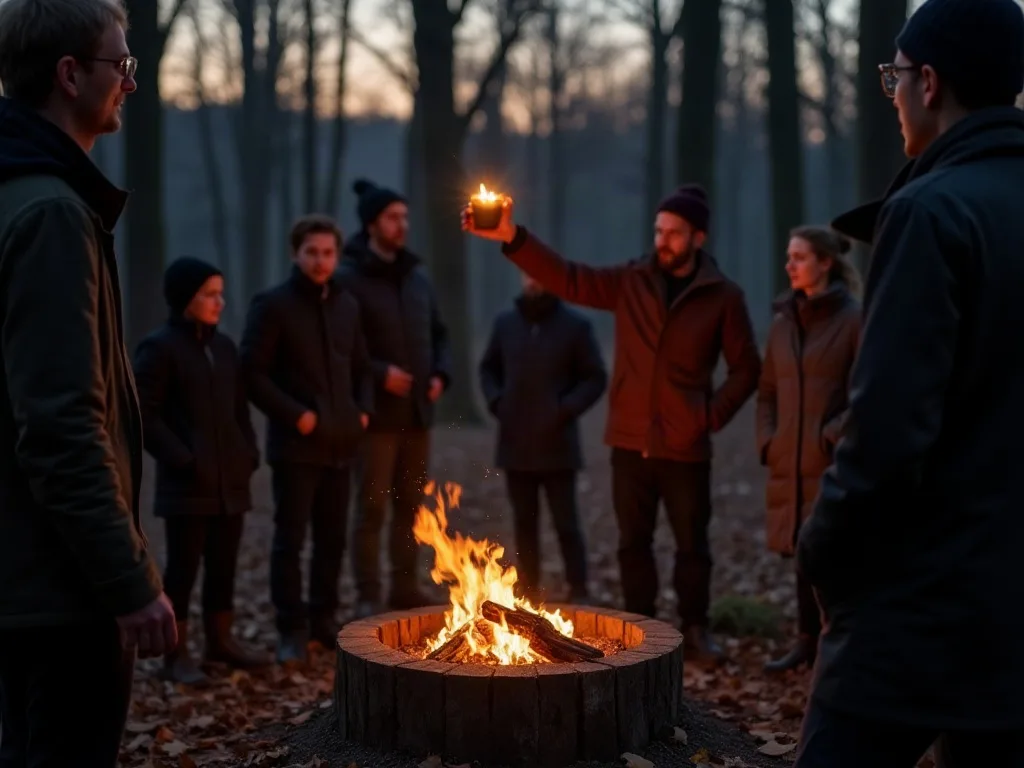
In a typical modern Sumbel, participants gather in a circle or around a table. A person designated as the ritual leader holds the horn and initiates the first round with a toast to the Aesir. They might say something formal, like "I toast the Aesir for wisdom, courage, and justice," or something more personal, reflecting their own relationship to the gods. Then they drink.
The horn passes. Each person who receives it may toast or pass silently; not everyone is required to speak. Some groups make participation mandatory to reinforce community bonds. Others allow silence as a valid choice, respecting that some people prefer to witness rather than pledge aloud.
In some circles, the beverage is mead, the traditional honey wine of the Norse. In others, it is ale or beer. In secular or interfaith settings, some groups use water, juice, or simply pass an empty cup that each person raises and speaks to. The substance matters less than the act of raising the vessel and speaking with intention.
The oaths themselves vary wildly. A person might pledge to a specific goal: "I swear to learn the runes this year." Another might honor a family member: "To my grandmother, who taught me kindness." Another might invoke a historical figure: "To Ivar the Boneless, for relentless courage." Some people pledge to abstract ideals: "To honor, to loyalty, to the ancestors."
One crucial difference between ancient and modern practice: the ancient Norse toasted in the presence of community members who all knew each other, often in the same household or settlement. A broken oath could ruin you socially and economically. Modern Asatru communities are often geographically dispersed, with members who may meet only a few times a year. The social enforcement is weaker. Modern practitioners must rely more on personal integrity to honor what they swore, rather than on immediate communal pressure.
Despite this, many modern groups treat Sumbel as one of the most serious rites. Breaking an oath sworn in Sumbel carries weight in the community's moral fabric. Groups have been known to ask members who dishonor their oaths to step back from ritual leadership or, in extreme cases, to leave the group.
Sumbel and Other Norse Rituals: Where It Fits
Sumbel is one pillar of Asatru practice, but not the only one. Other major rituals include blot, a sacrifice or offering ritual, and symbel, a variant spelling sometimes used interchangeably with Sumbel but occasionally distinguished as a less formal social drinking custom.
Blot involves making an offering to the gods, typically of food, drink, or craft. A person performing a blot might pour mead over a stone carved with a god's name, or burn bread or meat in a fire, or place a carved idol on an altar and speak a prayer. The blot emphasizes gift-giving: the community offers something valuable, hoping for blessing and abundance in return. Sumbel, by contrast, emphasizes oath and witness. Both are sacred, but they activate different relationships with the divine.
Some communities perform Sumbel and blot together, one ritual flowing into the next. Others keep them separate. A blot might occur at a major seasonal festival, while Sumbel might be performed during smaller gatherings or rites of passage.
Why Sumbel Endures: The Oath as Living Magic
The power of Sumbel: The Sacred Toasting Ceremony rests on a simple truth that transcends historical period or geography: human beings understand themselves through their commitments. A promise kept is a measure of character. A vow broken is a fracture in the self.
The Norse had no written contracts for most of their history. Law and order relied on oath. A chieftain's word was his authority. A farmer's pledge to repay a debt was his bond. A warrior's oath to his lord was his entire identity. When formal writing arrived, it did not displace the oath; it supplemented it. Even signed documents were sealed with a verbal oath and a ritual act.
Sumbel captures this awareness perfectly. The moment a person speaks an oath into the horn, in front of witnesses, and drinks to seal it, they have created something irrevocable. The words cannot be unsaid. The drink cannot be unmade. From that moment forward, the person is bound.
In modern life, where contracts are written and abstract, and where many people live without tight-knit community oversight, Sumbel offers something rare: a moment of radical accountability. You speak, you are heard, you are witnessed, and you drink. The simplicity is devastating in its honesty.
For modern Asatru practitioners, this is not superstition or nostalgia. It is an act of personal integrity performed in the presence of something larger than the individual. Whether that something is understood as the gods, the ancestors, the community, or the deepest part of one's own conscience, the effect is the same. The oath made in Sumbel becomes a touchstone. When doubt comes, or temptation, or weariness, a person can remember: I stood. I spoke. I drank. I am bound.
When and Where Sumbel Occurs Today
Sumbel is performed at specific times and in specific contexts in modern Asatru.
Some communities perform a Sumbel at each seasonal festival: Yule (winter solstice), Imbolc (early spring), Beltane (early summer), Lammas (early autumn). Others hold Sumbel only at major gatherings or initiations. Some groups perform Sumbel monthly or at significant personal milestones.
Private Sumbels also occur. A person might hold a personal Sumbel with a few close friends to mark a life transition: a divorce, a career change, a recovery from illness, a graduation. The scale is smaller, but the ritual structure remains the same. The horn is filled. Words are spoken. The oath is sealed.
Online communities sometimes hold virtual Sumbels, where participants join a video call or gather in an online chat and simultaneously raise a cup and speak their toasts. This adaptation stretches the definition of "gathering," since the witnesses are not physically present. Some practitioners accept it; others insist that true Sumbel requires physical presence. The debate reflects the tension between tradition and modern life, between the ideal Norse hall and the scattered reality of contemporary community.
Frequently asked questions about Sumbel and Norse toasting ritual
Frequently asked questions
What is the difference between Sumbel and a regular toast?
A regular toast is a casual acknowledgment: "Here's to good health." Sumbel is a solemn ritual act, performed in a formal setting, with witnesses, where the speaker is making a binding oath or pledge. The horn is held deliberately, the words are chosen with care, and the drink seals the commitment. Sumbel carries weight; a regular toast does not.
What happens if someone breaks an oath sworn in Sumbel?
In modern Asatru communities, social consequences vary. Some groups view a broken oath as a serious breach that can result in loss of ritual leadership or exclusion from the group. Others take a more lenient view, framing the breaking of an oath as a personal failing that the individual must work to repair. In the ancient Viking age, a broken oath could result in outlawry, exile, or death. Modern practice is gentler but still takes the breach seriously.
Can women participate in Sumbel?
Yes. Modern Asatru includes women fully in Sumbel. In the Viking age, the role of women in ritual varied by region and time, but women were certainly present in communal settings and likely participated in oath-taking. The sagas mention shield-maidens and valkyries, figures of power. Modern Asatru has chosen to make Sumbel fully egalitarian.
Do you have to drink alcohol to participate in Sumbel?
No. Any beverage works: mead, ale, beer, water, juice, or even an empty cup. Some people cannot or choose not to drink alcohol, and Sumbel accommodates that without diminishing the ritual. The substance is a symbol; the oath is the substance.
Is Sumbel connected to any Christian practices?
There is no direct historical connection. However, some scholars have noted that Christian communion shares structural similarities with Sumbel: a communal drink, solemn words, and a binding covenant. Early Christian missionaries may have adapted Norse practices or found common ground through ritual structure. Modern Asatru is a religious practice distinct from Christianity, though some individuals may hold both traditions in their lives.
How long does a typical Sumbel ceremony take?
A simple Sumbel with three rounds and a few oaths can take 20 to 30 minutes. A larger gathering with many participants and deeper personal oaths can take an hour or more. There is no fixed duration; the ceremony ends when all who wish to speak have spoken and the horn is empty.
The Living Oath: Sumbel in Tension with Modernity
The real power of Sumbel emerges in the gap between its ancient roots and its modern practice. The ancient Norse lived in a world where breaking an oath was catastrophic. Your reputation was your survival. An oath sworn was as binding as a legal contract, and often more so.
Modern life offers escape. A person who swears a Sumbel oath can, if desperate, choose to ignore it and move to another community, another job, another city. The immediate social consequences are smaller. This makes modern Sumbel simultaneously less coercive and more meaningful. A person who keeps a Sumbel oath today does so not because they must, but because they have chosen to bind themselves.
Some practitioners see this as a weakness of modern practice. "True Sumbel," they argue, "requires the threat of real consequence." Others see it as an evolution. "Modern Sumbel," they counter, "is pure: kept not for fear of punishment, but for honor's sake."
The debate will likely continue, as Asatru communities worldwide grow and define what the tradition means to them. What remains constant is this: Sumbel is a moment where a human being stands up, speaks their deepest commitment, and asks the cosmos to witness. Whether that cosmos answers is a matter of faith. But the person who drinks has changed the world, if only by changing themselves.
Read the full book
Want the whole story?
The complete edition is an instant PDF download here, with a paperback on Amazon for selected titles.
Asatru
The Asatru Book: Norse Paganism, Heathenry, and the Worship of the Old Gods
Norse Paganism, Heathenry, and the Old Gods
The living revival of Norse paganism: who the heathens worship, how the blót and the sumbel work, what the Nine Noble Virtues are, and how a faith that ended a thousand years ago came back to life in the modern world. Rooted in the Eddas, practiced today.
More from Asatru
All articles
Asatru
Mjolnir: Thor's Hammer as Symbol and Talisman
Mjolnir, Thor's legendary hammer, embodies divine power, protection, and order in Norse mythology. Discover how this symbol shaped Viking belief, ritual, and endures in modern culture.

Asatru
Winter Nights and Yule: Heathen Seasonal Festivals and Their Sacred Roots
Winter Nights and Yule are the two cornerstone heathen seasonal festivals that mark the darkest months of the year. Rooted in pre-Christian Norse and Germanic traditions, these observances honor the cycle of death and rebirth, ancestor veneration, and the sacred interplay between human and divine realms.

Asatru
Folkish versus Universalist Asatru: The Inclusion Debate
Asatru splits between two visions: one rooted in ancestry and ethnicity, one open to anyone who honors the Norse gods. We trace the ideological divide, its history, and how it shapes modern practice.

Asatru
Wyrd and Orlog: Fate and Personal Destiny in Norse Mythology
In Norse tradition, **Wyrd and Orlog** are the twin forces that shape destiny. Wyrd flows from the present moment, personal and mutable; Orlog is the ancient law laid down at creation. Together they answer the oldest question: how much of our fate is written, and how much is ours to choose?