
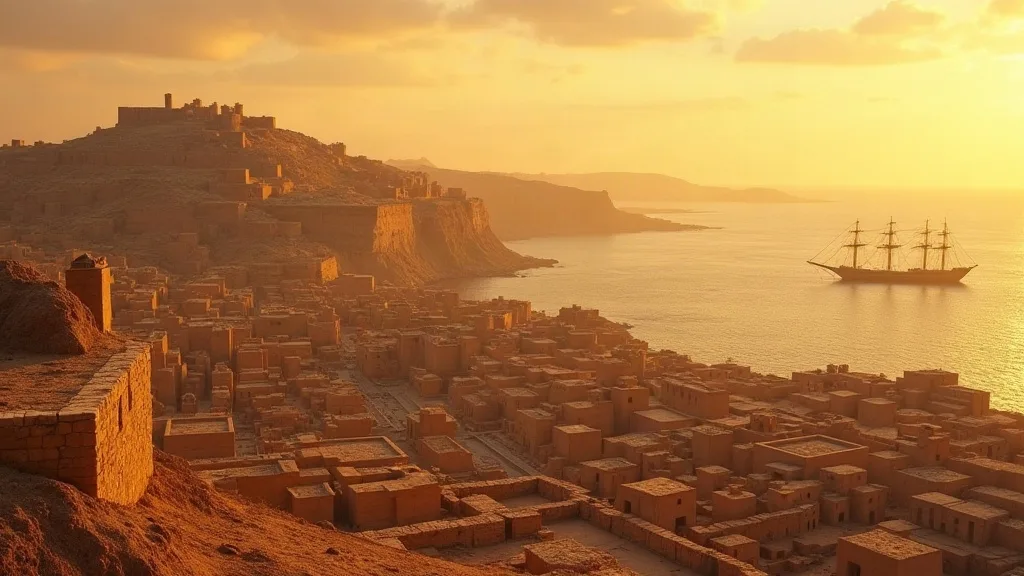
Ugarit: The Archaeological Key to Canaanite Religion
Ugarit, the Bronze Age port city buried beneath a Syrian mound, gave the world its first clear window into Canaanite religion. What the clay tablets found there reveal still reshapes how scholars read the Hebrew Bible.
Contents
The mound had sat silent for three thousand years. In 1928, a Syrian farmer ploughing his field near the coastal village of Ras Shamra struck a buried stone slab. Beneath it lay a chamber. Beneath the chamber lay a city that no one knew had survived.
That city was Ugarit, a Bronze Age port on the northern Levantine coast, and the clay tablets found inside its ruined library have done more to illuminate Canaanite religion than any other single discovery in the history of archaeology. Scholars who spent careers guessing at the gods behind the Hebrew Bible suddenly had names, hymns, myths, and rituals written in the gods' own era, baked into tablets no larger than a human palm.
The find was not subtle in its implications. It rewrote the origin story of monotheism, explained dozens of biblical phrases that had puzzled translators for centuries, and introduced the world to a pantheon of rain-gods, sea-dragons, and death-gods so vivid that their stories feel less like archaeology and more like literature.
Ras Shamra and the City Beneath the Mound
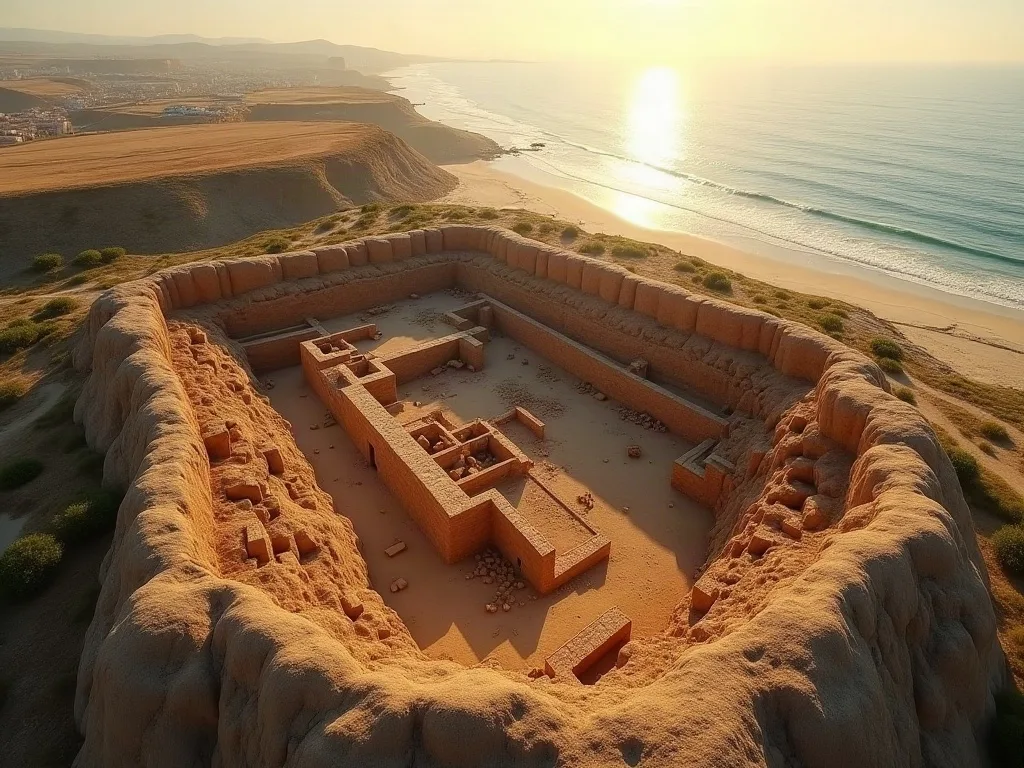
The site sits roughly 12 kilometres north of Latakia on the Syrian coast. French archaeologist Claude Schaeffer led the first systematic excavation beginning in 1929, and the layers he peeled back told a story stretching from the Neolithic period to a violent, sudden end around 1185 BC. Ugarit was not merely old. It was continuously occupied for roughly six thousand years before the catastrophe that finished it.
At its height, between roughly 1450 and 1200 BC, Ugarit was one of the wealthiest trading cities in the ancient Near East. Its harbour connected Egypt to Anatolia, Cyprus to Mesopotamia. Merchants arrived speaking Egyptian, Hittite, Hurrian, Akkadian, and Mycenaean Greek. The city's scribes, working in a palace and a temple complex on the acropolis, had to manage correspondence in multiple languages and multiple writing systems simultaneously.
What those scribes produced, beyond diplomatic letters and grain inventories, was a corpus of religious and mythological literature written in a language called Ugaritic, a Semitic tongue closely related to Hebrew and Phoenician. The script they invented for it is remarkable: a cuneiform alphabet of only 30 signs, the oldest known alphabet adapted to cuneiform, pressed into clay with a reed stylus.
When scholars cracked the script in 1930 - a feat accomplished independently by four researchers within months of one another - what they read stopped them cold.
The Pantheon That the Tablets Named
The texts from Ugarit do not describe a vague or abstract religion. They are specific, dramatic, and full of personality.
At the head of the Canaanite divine assembly sits El, called ab adami ("father of humanity") and banu banawati ("creator of creatures"). El is old. Ancient, white-bearded, seated at the source of two rivers. He presides over a divine council, the assembly of the gods, with the authority of a patriarch rather than a warrior. His name means simply "god" in Semitic, and every biblical name compounded with "-el" - Israel, Michael, Gabriel - carries his syllable into the present day.
Beside El, and sometimes in tension with him, stands his consort Asherah, qaniyatu ilima, "the creatrix of the gods." She appears in the Ugaritic texts as a powerful intercessor, a figure who can sway El's decisions and who nurses the divine infants at her breast. Her name appears forty times in the Hebrew Bible, almost always in a context of condemnation, which is itself a clue: the prophets do not attack what nobody worships.
The dramatic engine of the mythological cycle, however, is Baal Hadad, the storm-god. Young, violent, magnificently alive. Baal rides the clouds and speaks with the voice of thunder. The Ugaritic texts, particularly the long narrative called the Baal Cycle, follow him through two great conflicts: a battle against Yam (the Sea, a dragon-god representing chaos) and a descent into the power of Mot (Death), from which he eventually returns. Read more about Baal Hadad and the Baal Cycle.
The structure of that story - a young warrior-god who dies, descends, and rises again, linked to the agricultural seasons - found echoes in scholarship connecting it to Osiris, to Tammuz, and eventually to debates about dying-and-rising gods across the ancient Mediterranean.
The Baal Cycle: Reading the Storm

The Baal Cycle survives on a set of large clay tablets found in the house of a temple priest. Its full length is estimated at around 1,500 lines, though many sections remain broken or missing. The surviving portions are enough to reconstruct the arc of the story.
Yam, the god of the sea and rivers, petitions El to be given dominion over the other gods, including Baal. El, characteristically cautious, grants the request. Baal's allies are outraged. The craftsman-god Kothar-wa-Khasis (whose name means "Skillful and Clever," a divine artisan comparable to Hephaestus in Greek myth) forges two magical clubs for Baal. Baal uses them to defeat Yam, driving him from his throne and establishing his own kingship over the gods.
Victory demands a palace. In a long and politically charged sequence, Baal lobbies El and Asherah to permit him a house worthy of a king, the same word used in Semitic languages for a temple. Kothar-wa-Khasis builds it from cedar, silver, and gold, with a great window through which Baal's thunder can roll.
Then comes Mot. Death sends an invitation that is also a command: come to my house, the house beneath the earth, and be consumed. Baal goes, because there is no refusing Death. He descends. The earth dries. The rains stop. Anat, Baal's fierce sister-goddess, searches for him, weeping, then finds Mot and splits him with her sword, winnows him, grinds him like grain, and scatters him in the fields. Baal returns. The rains return. The cycle, quite literally, is agricultural theology rendered as epic.
Scholars including Michael Coogan and John Day have drawn detailed comparisons between this cycle and passages in the Psalms, Job, and Isaiah where Yahweh is described crushing the sea-serpent Leviathan (the biblical heir of Yam) or calling to the clouds as a rider. The Ugaritic texts did not invent the Hebrew Bible. But they make clear that the biblical poets were working from the same mythological vocabulary as their Canaanite neighbours.
What Ugarit Tells Us About the Hebrew Bible
This is where the tablets become genuinely disruptive to earlier assumptions.
Nineteenth-century scholarship often treated the Hebrew Bible as a self-contained world. The gods condemned in the books of Kings and the prophets were assumed to be foreign imports, temptations brought in from outside. Ugarit proved they were local. El, Asherah, Baal, Mot, Yam: these were the native religious inheritance of the Levantine Bronze Age, the furniture of the very culture out of which monotheism emerged.
Consider three specific cases.
The divine council. Psalm 82 opens with "Elohim stands in the adat El, the assembly of El." Translators historically softened this as a metaphor. The Ugaritic texts show that the puhru ilima, the assembly of the gods, was a fully developed theological institution. El chairs it. The other gods vote or petition. Psalm 82's scene is not metaphorical. It is mythological, imported intact from the same tradition Ugarit preserves.
Baal's epithets applied to Yahweh. In the Baal Cycle, Baal is called rkb 'rpt, "Rider of the Clouds." Psalm 68:4 gives that exact title to Yahweh. The same phrase, the same image, migrated from the storm-god to the god of Israel.
Death and the underworld. Isaiah 5:14 describes Sheol opening wide its mouth, swallowing the dead. In the Ugaritic texts, Mot's mouth is described in almost identical terms: one lip to the earth, one lip to the sky, so that all things fall into his throat. The imagery is shared because the conception is shared.
None of this collapses the distinctiveness of Israelite religion. But it places that religion inside a history rather than outside one.
The Temple Complex and the Ritual Texts
Ugarit's religious life was not confined to mythology. The tablets also preserve ritual texts, lists of offerings, and prayers that show how the Canaanite theological system worked in practice.
The city had two main temples, one dedicated to Baal and one to Dagon (an older grain-god, father of Baal in some texts, whose name survives in the Philistine religion of the Hebrew Bible). Both temples stood on the highest point of the tell, the acropolis. Their basic plan - a long rectangular hall leading to an inner sanctuary - matches the architectural description of Solomon's Temple in 1 Kings 6 closely enough that archaeologists use Ugarit's temples as a comparative model for understanding the Jerusalem structure.
The ritual texts describe a marzeah, a communal feast of a religious character, associated with mourning rites and the cult of dead ancestors. The marzeah appears in the book of Amos as something the prophet condemns, which again confirms it was not a foreign import but a native Levantine institution. Tables of offerings list oxen, rams, birds, wine, and oil dedicated to El, to Baal, to Asherah, to Anat, and to a long list of minor deities. The economy of the sacred was specific and expensive.
One particularly striking ritual text is the Rephaim cycle, a set of tablets describing a feast attended by the rp'um, the spirits of dead warrior-kings. The same word, Rephaim, appears in the Hebrew Bible as a term for ancient giants or shades of the dead, depending on context. Ugarit suggests both meanings coexisted: the heroised dead, treated as quasi-divine presences whose goodwill the living needed to cultivate.
The Scribal Library and Its Legacy
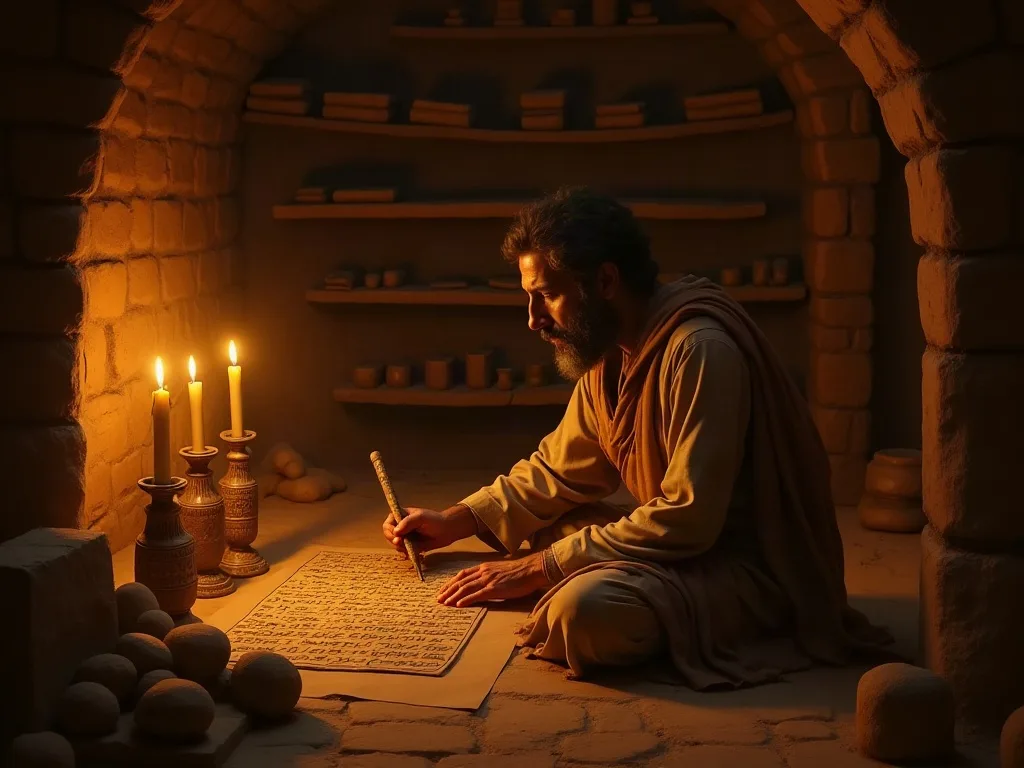
The tablets were not found in a palace archive alone. A significant portion came from the house of a man named Ilimilku, identified in the texts themselves as the scribe who copied the Baal Cycle. His house stood near the temple of Baal, and its library contained not only mythology and ritual but vocabulary lists, grammatical exercises, and multilingual dictionaries: the tools of a professional whose training required fluency in Sumerian, Akkadian, Ugaritic, and at least passing familiarity with Egyptian hieroglyphs.
This tells us something important. The mythological texts were not folk productions. They were the products of a literate priestly class, trained in the scribal schools that operated across the ancient Near East in a shared intellectual culture. When Ilimilku sat down to write the Baal Cycle around 1350-1300 BC, he was doing what his counterparts in Mesopotamia did with the Enuma Elish (the Babylonian creation epic) or what Egyptian scribes did with the Pyramid Texts: preserving, shaping, and transmitting a living theological tradition.
The library was still in use when Ugarit ended. The city's final destruction, around 1185 BC, came from the sea. A letter found at Ugarit, addressed to the king of Alashiya (almost certainly Cyprus), describes an attack by ships and asks desperately for help. The help never came. The tablets were fired in the burning of the city rather than in a kiln. The disaster that killed Ugarit preserved its library.
Ugarit and the Canaanite World Beyond the Tablets
Ugarit was a single city, and its texts reflect one local tradition within a broader Canaanite world. Scholars are rightly cautious about treating Ugaritic religion as perfectly synonymous with the religion of the Canaanites of Palestine or of the Phoenicians further south.
But the overlap is substantial. The gods named at Ugarit appear in inscriptions from across the Levant. El and Asherah are attested in a ninth-century BC inscription from Kuntillet Ajrud in the Sinai, where a Hebrew text speaks of "Yahweh and his Asherah," a phrase suggesting that even within Israelite communities the goddess retained a worshipped presence. The Baal title appears on Phoenician inscriptions, in Carthaginian proper names, in the names of Canaanite rulers mentioned in Egyptian texts.
Ugarit does not stand alone. It stands at the centre of a web of evidence that scholars use carefully, placing each thread alongside archaeological, epigraphic, and textual data from across the region. What the city gives, more than any single answer, is a language: the vocabulary, the imagery, the narrative patterns that run through the whole Canaanite cultural sphere and into the traditions that grew from it.
What Scholars Still Debate: El, Yahweh, and the Question of Origins
The most contested question that Ugarit raises is also the most significant. How did Yahweh, the god of Israel, relate to El and Baal?
Scholars including Frank Moore Cross, in his landmark 1973 study Canaanite Myth and Hebrew Epic, argued that Yahweh was originally identified with El: the creator, the father, the god of the divine council. As Israelite religion developed, attributes of Baal (the storm imagery, the combat with chaos, the cloud-riding) were absorbed into Yahweh's character, while Baal himself was condemned. The result is a composite figure whose individual features are legible precisely because Ugarit preserved their originals.
Others, including Mark Smith in The Origins of Biblical Monotheism (2001), have refined this picture: the process was not straightforward absorption but a long, contested, locally variable evolution in which different Israelite communities held different views, and in which the move toward strict monotheism was late rather than original.
Neither camp claims Ugarit resolves everything. The tablets end in 1185 BC. The Hebrew Bible as we have it comes from several centuries later. The gap is real, and filling it requires inference. What Ugarit provides is not a final answer but a fixed point: a detailed, dateable, primary-source record of the religious world from which the biblical tradition emerged.
That is what makes Ugarit: the archaeological key to Canaanite religion more than a metaphor. Every major interpretive debate about the origins of Western monotheism passes through the mound at Ras Shamra.
Frequently Asked Questions About Ugarit and Canaanite Religion
Frequently asked questions
Where exactly is Ugarit, and can it be visited today?
Ugarit is located at the site known as Ras Shamra, approximately 12 kilometres north of the modern city of Latakia on the Syrian coast. Excavations have continued intermittently since 1929. The site itself is accessible in principle, though ongoing instability in Syria has made visits difficult since 2011. Artefacts from the site, including many of the original tablets, are held at the National Museum of Damascus and at the Louvre in Paris.
What language were the Ugaritic tablets written in, and how was it deciphered?
The tablets were written in Ugaritic, a Northwest Semitic language closely related to Hebrew, Aramaic, and Phoenician. The script, a cuneiform alphabet of 30 signs, was deciphered in 1930 independently by Hans Bauer, Édouard Dhorme, and Charles Virolleaud. Because the language was Semitic, scholars with knowledge of Biblical Hebrew and Akkadian could use known grammatical patterns and vocabulary to crack the system relatively quickly. Bilingual tablets in Akkadian and Ugaritic also provided a key.
How does the Baal Cycle connect to the Hebrew Bible?
The parallels are direct and numerous. Baal's title "Rider of the Clouds" appears verbatim in Psalm 68. The description of Mot (Death) opening his mouth to swallow the dead matches imagery in Isaiah 5. The combat between Yahweh and the sea-serpent Leviathan in Psalm 74 and Job 41 mirrors Baal's battle with Yam. Scholars including John Day (in Yahweh and the Gods and Goddesses of Canaan, 2000) and Mark Smith have mapped these parallels in detail. They do not prove literary borrowing but confirm a shared mythological inheritance.
Who was the goddess Asherah, and why does she matter?
Asherah was El's consort and the mother of the gods in Ugaritic theology. She appears 40 times in the Hebrew Bible, usually in references to her cult objects (sacred poles or trees) being destroyed by reforming kings. The ninth-century BC Kuntillet Ajrud inscription, found in the Sinai, refers to "Yahweh of Samaria and his Asherah," suggesting she was worshipped as Yahweh's consort in some Israelite communities. Her presence in both Ugaritic myth and Hebrew scripture makes her the single strongest thread connecting the two traditions.
What destroyed Ugarit, and why did the city never recover?
Ugarit was destroyed around 1185 BC, almost certainly by the Sea Peoples, the same coalition of maritime raiders whose invasions destabilised Egypt and erased several other eastern Mediterranean civilisations during the same period. A clay tablet found at Ugarit describes an urgent plea for military help against ships attacking the coast; the city was burned before help arrived. The site was never resettled as an urban centre, which is precisely what preserved its archives: the tablets were never disturbed, sorted, or reused by later inhabitants.
Are Ugaritic texts available to read in translation?
Yes. The most accessible scholarly translation is Simon Parker's edited volume Ugaritic Narrative Poetry (1997), published by the Society of Biblical Literature. Mark Smith and Wayne Pitard's two-volume The Ugaritic Baal Cycle (1994, 2009) provides the most detailed philological treatment. For a readable introduction, Nicolas Wyatt's Religious Texts from Ugarit (2002) covers both mythological and ritual material with commentary accessible to non-specialists.
The Living Afterlife of a Buried City
Ugarit stopped existing as a city in 1185 BC. Its afterlife as a reference point has never stopped growing.
Every new translation of a difficult Hebrew psalm, every debate about whether ancient Israel was monotheist or monolatrist (worshipping one god while acknowledging others), every argument about Asherah's role in the Temple in Jerusalem reaches back to the tablets from Ras Shamra. The city's texts have been cited in Supreme Court cases about religious freedom, referenced in rabbinic responsa about the origins of Jewish liturgy, and used by archaeologists excavating sites from Jordan to Turkey to calibrate what "Canaanite" actually meant in practice.
The discovery also changed how scholars read religious competition in the ancient world. The Hebrew Bible's sustained polemic against Baal worship reads differently when you know what Baal worship actually looked like: not a debased foreign cult but a sophisticated theological system with its own epic poetry, its own priestly schools, its own account of creation and death and the return of life. The prophets were arguing against something they knew intimately because it was native to the same soil.
There is something worth sitting with in that image. Underneath a farmer's field, under three thousand years of silence, lay a library. Inside that library, a scribe named Ilimilku had copied out the story of a storm-god who died and came back, of a sea-monster defeated by divine clubs, of a goddess who grieved and fought and scattered Death like grain. He never knew those words would survive. He never knew that the city around him had only decades left. He pressed the signs into wet clay because it was his job, because the tradition required it, because the story needed to be kept.
It was.
Read the full book
Want the whole story?
The complete edition is an instant PDF download here, with a paperback on Amazon for selected titles.
Canaanite
The Canaanite Mythology Book: Baal, El, Anat, and the Gods of the Ancient Levant
Baal, El, Anat, and the Gods of the Levant
The gods the Hebrew Bible warned against, recovered from the clay tablets of Ugarit: El the patriarch, Baal the storm-rider, Anat the war goddess, and Mot the lord of death. The mythology behind the Bible’s great rival.
More from Canaanite
All articles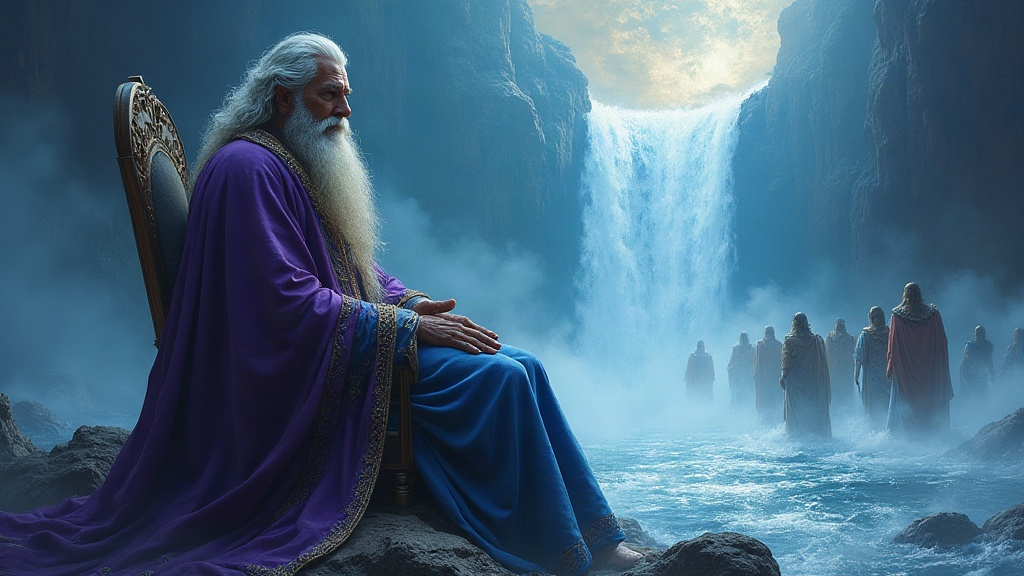
Canaanite
El: The Father of Gods in Canaanite Religion
El ruled the Canaanite pantheon as the ancient king of gods, a weathered father whose name meant simply "god." Discover how this Syrian deity shaped Near Eastern belief for a thousand years before fading from memory.

Canaanite
Asherah: The Queen of Heaven and Consort of El
Asherah ruled the Canaanite pantheon as the Queen of Heaven, the consort of El, and the mother of seventy gods. Discover how this ancient goddess shaped Levantine belief and why her worship scandalized biblical writers.

Canaanite
Mot: The God of Death and the Underworld in Canaanite Myth
Mot rules the Canaanite underworld with an insatiable hunger, devouring all things mortal. Explore how this ancient god of death embodied fear, finality, and the cosmic struggle between life and extinction.
Canaanite
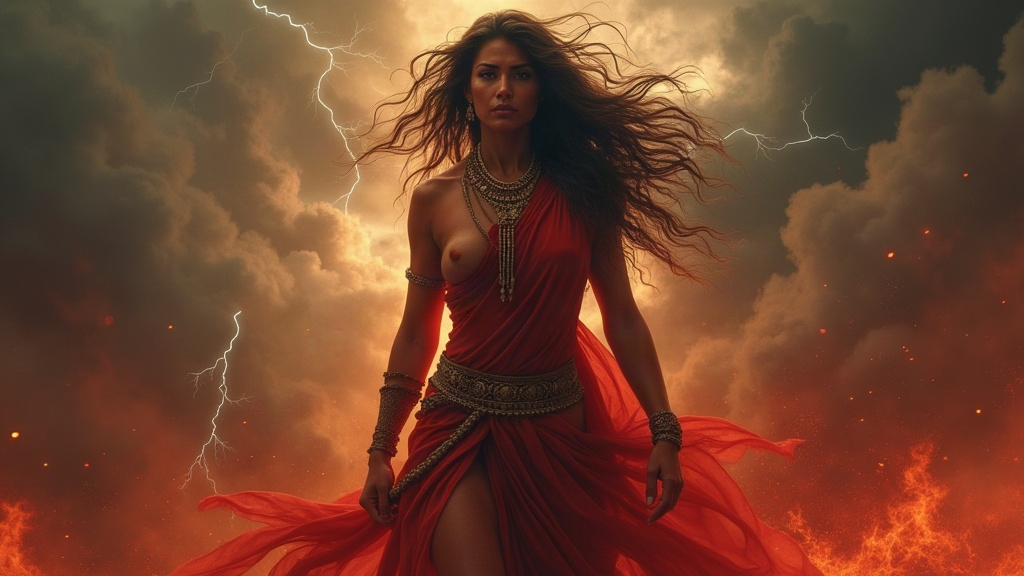
Anat: The Warrior Goddess of Love and Battle
Anat stands alone in Canaanite myth: a goddess who commands bloodshed and desire with equal fury. Explore the warrior deity who protected kings, seduced gods, and defied every boundary of her world.