
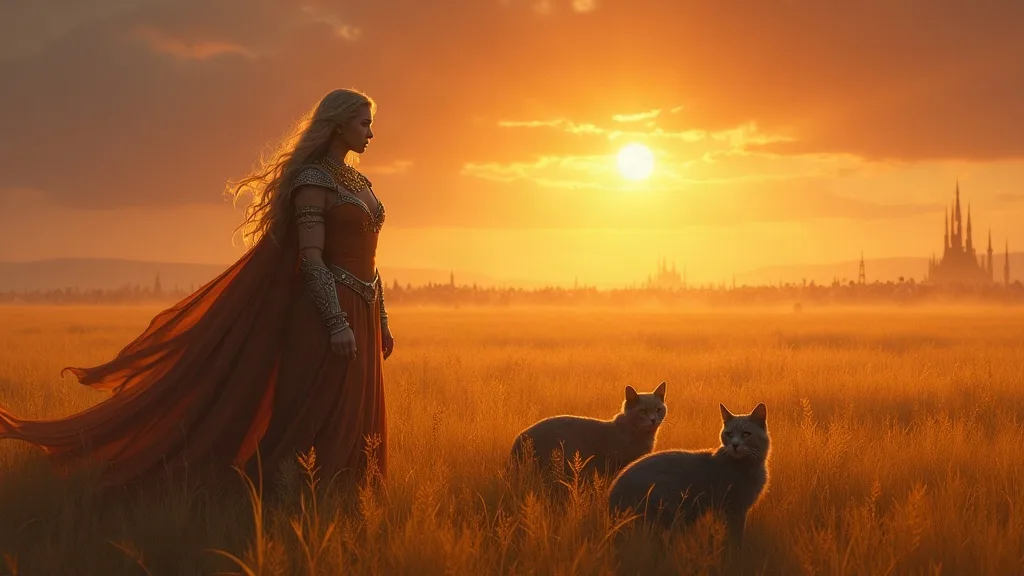
Freyja: Goddess of Love, War, and Seidr Magic
Freyja rules love, battle-death, and seidr magic in Norse myth, claiming half the slain before Odin. Learn her origins, symbols, and living legacy.
Contents
Half the warriors who die in battle never reach Valhalla. They go somewhere else. Freyja: Goddess of Love, War, and Seidr Magic takes them first, into her great hall Sessrumnir, "the seat-roomy one," set inside the meadow called Fólkvangr. Only after she has chosen does Odin get the rest. That single fact alone should tell you where Freyja stands in the Norse hierarchy: not below the Allfather, but beside him, equal in power and far more ancient in origin.
She is the most prominent of the Vanir, a race of gods whose roots reach back to fertility, the sea, and wild, instinctive knowledge. The Aesir (the warrior-sky gods led by Odin) fought the Vanir in the first war the cosmos ever saw, and when the truce was struck, Freyja came to Asgard as a hostage-turned-citizen. She brought something none of the Aesir possessed: seiðr, the deep magic of spinning fate itself. Odin would beg her to teach it to him. That negotiation changed the Norse cosmos forever.
Freyja weeps tears of red gold when her husband Óðr wanders away on long, inexplicable journeys. She searches for him under different names in foreign lands, wearing a falcon-feather cloak that lets her fly between the worlds. She is a goddess who loves completely, grieves openly, and fights without hesitation. She is simultaneously the patron of new lovers and the deity who rides a chariot pulled by two cats onto a battlefield. No single label fits her.
Freyja's Origins Among the Vanir
The Norse mythological tradition divides the gods into two families. The Aesir live in Asgard and tend toward order, law, and war strategy. The Vanir live in Vanaheimr and embody nature cycles, fertility, wealth, and intuitive magic. Freyja and her twin brother Freyr are the children of Njörðr, the sea god, and an unnamed mother (possibly Njörðr's own sister, reflecting ancient sacred-marriage traditions the myths dance around without explaining directly).
The war between Aesir and Vanir, described in Völuspá (the "Prophecy of the Seeress," one of the oldest poems in the Poetic Edda, assembled in Iceland around 1270 CE but drawing on much older oral tradition), ended in a hostage exchange. Njörðr, Freyr, and Freyja went to Asgard. The Vanir received Hœnir and Mímir in return. This was not defeat for the Vanir. It was absorption, and Freyja carried the full weight of Vanir wisdom into the new arrangement.
Scholars like Rudolf Simek, in his Dictionary of Northern Mythology (1993), note that Freyja's name simply means "Lady" in Old Norse, the feminine counterpart to Freyr ("Lord"). This linguistic pairing suggests they may have once been worshipped as a divine couple in early Germanic religion before the mythological tradition recast them as siblings. The name itself is so powerful that in some regions of medieval Scandinavia, saying Freyja's name directly was considered dangerous; worshippers used epithets instead.
Seiðr: The Magic Freyja Taught Odin
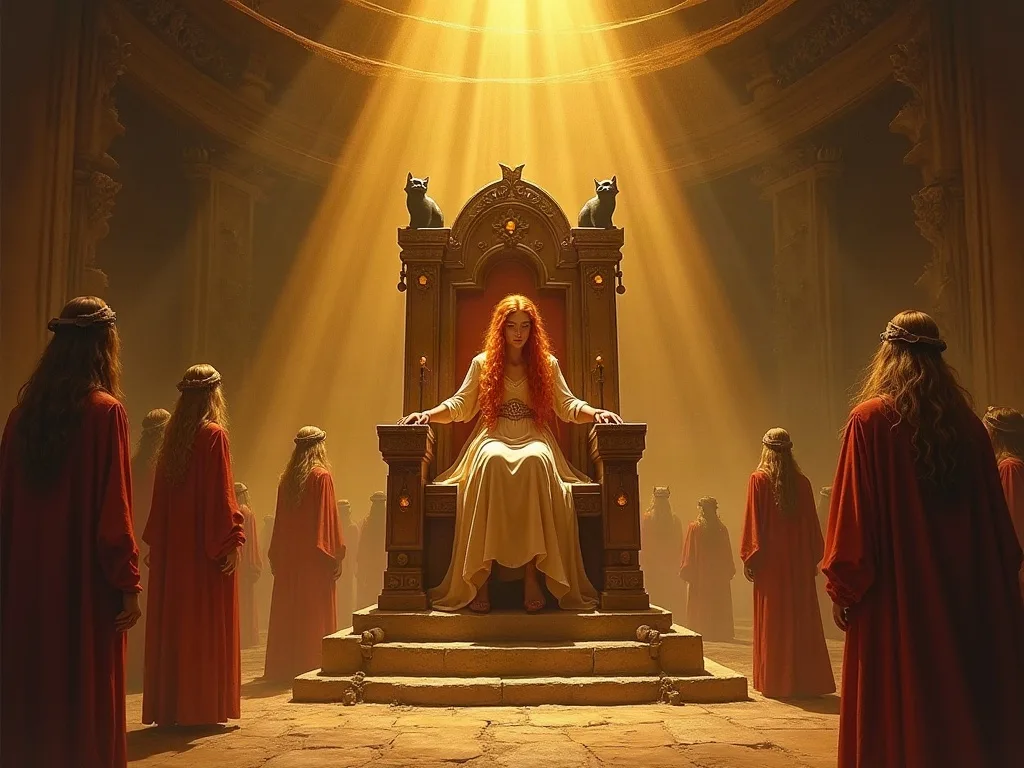
Seiðr (pronounced roughly "SAY-thr") is the most complex and contested form of magic in Norse cosmology. It is not combat sorcery or simple enchantment. Seiðr works on fate itself: a seiðr practitioner, called a völva (seeress) or seiðkona (seiðr-woman), could perceive the threads of destiny, alter them, call spirits, and shape the future by intervening in the present. The practice involved entering a trance, often seated on a high platform called a seiðhjallr, surrounded by chanting assistants.
Freyja is the originator and mistress of seiðr magic in the Norse tradition. The Ynglinga saga, written by the Icelandic historian Snorri Sturluson around 1230 CE, states this explicitly: "Freyja was the first to teach the Aesir the art of seiðr, which was practiced among the Vanir." Odin learned it from her, but the myths note that seiðr carried a social stigma for men. Performing it meant taking a receptive, "unmanning" role, which Old Norse culture called ergi. Odin accepted that stigma for the power. Freyja bore no such burden; the magic was already native to her.
The implications are profound. Odin's famous capacity to see the future, to consult the dead, to manipulate outcomes in battle - all of that derives from knowledge Freyja already held. Her magic predates his mastery of it. When the myths credit Odin with cosmic wisdom, they are, in part, describing wisdom he acquired from the Lady of the Vanir.
Practitioners of seiðr in Viking Age Scandinavia, documented through archaeological finds like the völva's staff (a seiðstafr) found in the Fyrkat burial (Denmark, 10th century), carried objects strongly associated with Freyja's iconography: amber beads, feathers, small animal figures. The goddess and the living practice were inseparable.
The Brísingamen: A Necklace Worth Every Sacrifice
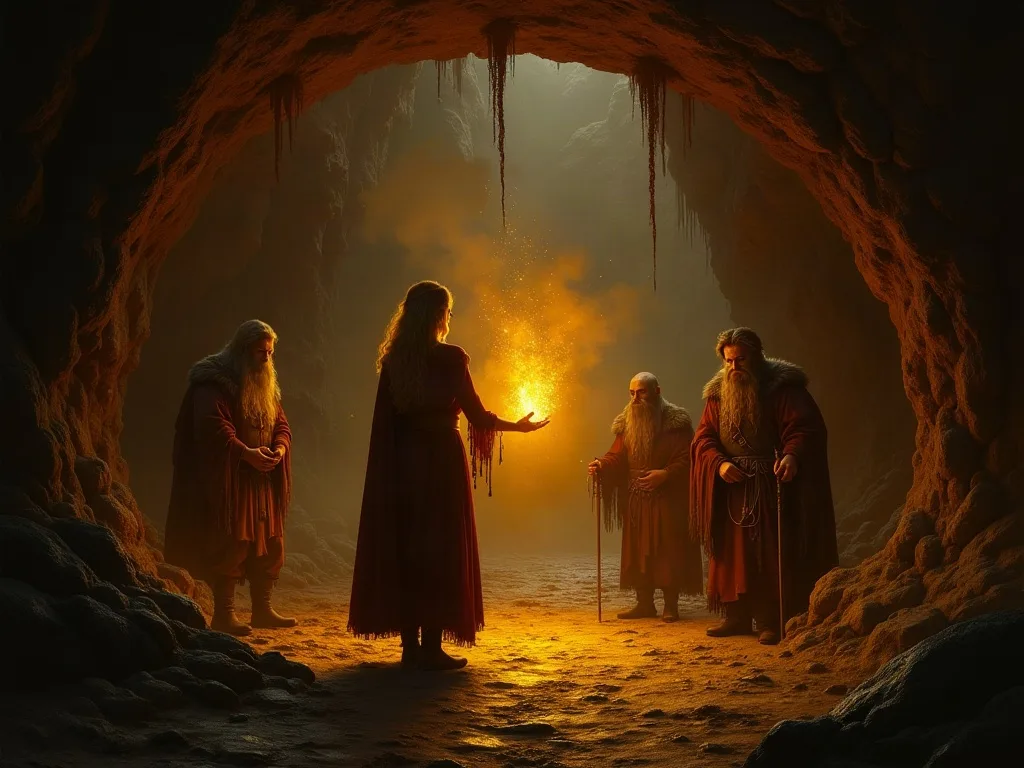
Freyja's most iconic possession is Brísingamen, a necklace of extraordinary beauty and power. The Flateyjarbók (a 14th-century Icelandic manuscript) tells the story: Freyja saw four dwarves, the Brísings, crafting a gold necklace of such radiance that she could not look away. She wanted it. The dwarves refused to sell it for any price except one night each with her. She agreed to all four nights.
The story has generated enormous scholarly debate. Some read it as evidence of sacred prostitution traditions in early Norse religion. Others, like Hilda Ellis Davidson in Gods and Myths of Northern Europe (1964), interpret it as a myth about the true cost of beauty and power: Freyja pays in vulnerability, in giving up the untouchable status most deities maintain. The necklace then becomes a symbol not of vanity but of power purchased through willingness to be seen fully.
Loki stole Brísingamen while Freyja slept, and Odin directed him to do it, using the theft as leverage. Some scholars read this as the Aesir asserting control over Vanir power. Freyja got it back. She always does.
In the poem Þrymskviða ("The Lay of Thrym"), Thor loses his hammer Mjolnir to the giant Thrym, who demands Freyja as his bride to return it. The gods turn to Freyja first. She refuses so furiously that her fury shakes the hall and Brísingamen breaks open at her neck from the force of her anger. The gods do not press her. They find another solution entirely.
Fólkvangr and the First Choice of the Battle-Dead
The geography of the Norse afterlife is precise and meaningful. Valhalla gets the majority of popular attention: Odin's hall, the einherjar (chosen warriors), mead, and preparation for Ragnarök. But the Grímnismál (stanza 14) places Freyja's domain before Valhalla in importance by giving her the first selection.
Fólkvangr means "field of the host" or "field of the people." It is not a second-rate heaven for the warriors Odin didn't want. Freyja chooses. That is the operative verb. She selects, deliberately, the dead who belong to her. Her hall Sessrumnir is described as large and beautiful, and the poem Hyndluljóð shows Freyja as a generous patron, interceding for her favorites in matters of lineage and fate.
Who does Freyja choose? The texts do not specify a precise warrior criterion, unlike Odin's selection of the bravest fighters for Ragnarök-readiness. This silence may be intentional. Some scholars, including Britt-Mari Näsström in Freyja: The Great Goddess of the North (1995), suggest Freyja's chosen are those who died in love-related violence, in defense of kin, or in circumstances bound to the emotional rather than purely martial dimensions of battle. Others argue she simply chooses first, which is a statement of precedence rather than categorization.
What is certain is that Freyja's domain over the dead links her love portfolio to her war portfolio in a way that might seem paradoxical until you consider the Norse worldview. Love and death share a border in every culture. In Norse thought, that border was managed by a goddess who wept golden tears and wore a falcon cloak.
Her Companions, Her Cats, and Her Husband
Freyja does not travel alone. Her chariot is pulled by two large cats, unnamed in the primary sources but described as grey or blue-grey in later Scandinavian folk tradition. Cats in medieval Scandinavia were associated with the domestic and the wild simultaneously: they kept grain stores safe (practical, valued) but hunted alone and answered to no one (untameable). The cats suit Freyja perfectly.
Her companion boar Hildisvíni ("battle-swine") is equally significant. The Hyndluljóð reveals that Hildisvíni is actually a human hero, Óttar, transformed into a boar. Freyja rides him to a meeting with the giantess Hyndla to establish Óttar's divine lineage, essentially using seiðr and cunning to protect a human devotee. It is one of the most direct depictions of a Norse deity acting as patron and advocate for a mortal.
Her handmaidens Fulla, Hnoss, and Gersemi appear in Snorri Sturluson's Prose Edda (composed around 1220 CE). The names Hnoss and Gersemi both mean "treasure" or "jewel" in Old Norse, and the Prose Edda states they are Freyja's daughters by Óðr. They are, quite literally, the treasures she bore.
Óðr himself is mysterious. He disappears repeatedly, and Freyja weeps red-gold tears searching for him under the names Mardöll, Hörn, Gefn, and Sýr. These are all attested names for Freyja. Many scholars, including John Lindow in Norse Mythology: A Guide to the Gods, Heroes, Rituals and Beliefs (2001), note the striking similarity between Óðr and Odin: same root (óðr means "frenzy, inspiration, madness"), similar wandering habits. Whether Óðr is a separate deity or an older version of Odin doubled by mythological tradition remains an open question in Old Norse scholarship.
Freyja and the Seeress Tradition in Viking Age Scandinavia
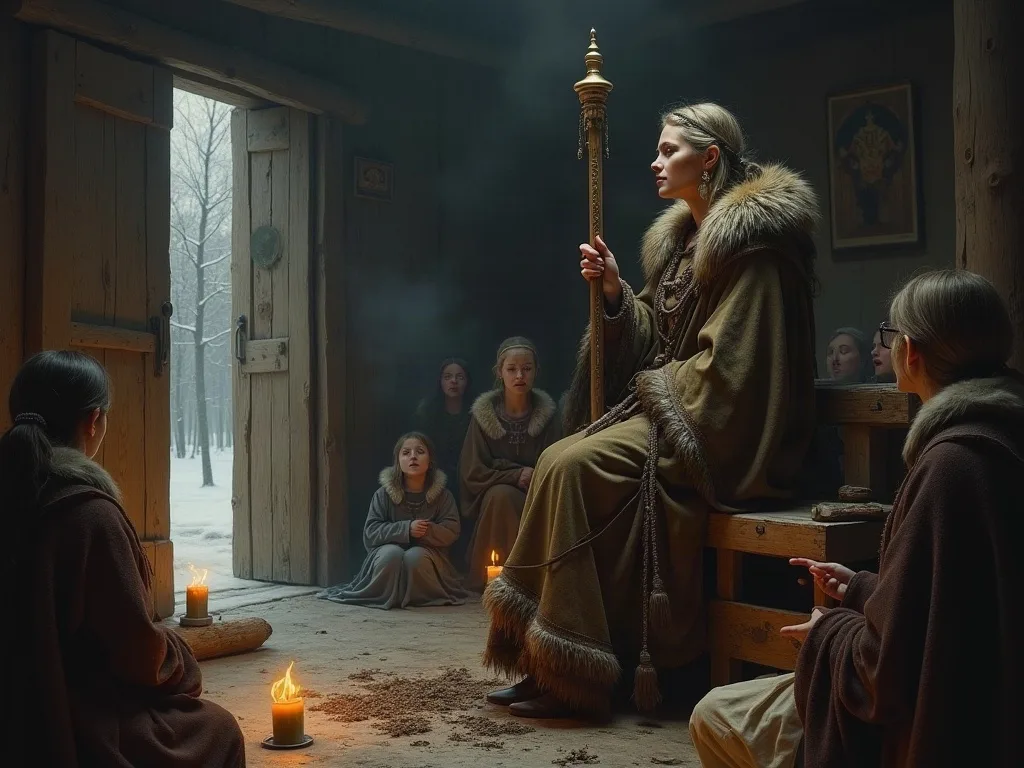
The völva tradition - wandering female seeresses who traveled between communities performing seiðr ceremonies - is one of the best-documented religious practices of the Viking Age. The Saga of Erik the Red describes a völva named Þorbjörg arriving at a Norse Greenland settlement, wearing a cloak trimmed with cat skin, carrying a staff topped with a brass knob, and leading a ceremony that required specific chants and communal participation to summon spirits and read the coming year's fate.
Every element of that description connects to Freyja. The cat-skin cloak echoes her feline companions. The staff echoes the seiðstafr. The communal chanting echoes the varðlokur (ward-songs) used in her rites. Freyja was not simply worshipped by völur; she was, in a real sense, the divine model they embodied when they worked.
Archaeological evidence supports this. The Oseberg burial (Norway, 834 CE), one of the richest Viking Age graves ever excavated, contained two women buried with extraordinary goods: a decorated cart, four sleds, fifteen horses, a peacock, and a small leather pouch filled with cannabis seeds, a psychoactive plant associated with trance-induction in seiðr practice. Scholars like Neil Price in The Viking Way (2019) argue compellingly that at least one of the Oseberg women was a high-status völva, a priestess in Freyja's tradition.
Freyja Across the Germanic World
The Norse Freyja has clear cognates across the wider Germanic world. The continental Germanic goddess Frīja (or Frigg in the Aesir tradition) shares linguistic and functional roots with Freyja, and scholars have long debated whether they were once a single deity that split into two as the Vanir/Aesir distinction hardened in mythological storytelling. Frigg, Odin's wife in Asgard, shares Freyja's capacity for foresight and her grief for a lost beloved (Baldr, in Frigg's case).
The English weekday Friday (Old English Frīgedæg) likely honors Frīja, the same root. If so, every English-speaker inadvertently says Freyja's name once a week. The German Freitag carries the same etymology.
The Roman planet-day dies Veneris (Venus's day, which became Friday in the Roman calendar) maps neatly onto this, and medieval chroniclers noted the parallel: Freyja and Venus both govern love, beauty, and desire. But Freyja also governs death-selection and fate-magic, which Venus notably does not. The comparison flatters Venus more than it captures Freyja.
Tacitus, writing in Germania (98 CE), describes Germanic tribes worshipping a goddess he calls Nerthus, a "Mother Earth" figure carried in a wagon across the land, bringing peace and prosperity, then ritually bathed in a sacred lake. Some scholars link Nerthus to Njörðr (Freyja's father), others see echoes of Freyja's own processions. The connection is contested but points toward a deep Vanir-worship tradition predating the Viking Age by centuries.
Freyja in Eddic Poetry: A Reading Guide
For readers who want the primary sources, here is where Freyja appears most vividly in the Eddic corpus:
- Völuspá (Poetic Edda): Freyja appears as Heiðr, the first völva, though scholars debate whether this identification is direct.
- Grímnismál (Poetic Edda, stanza 14): The clearest statement of her rule over Fólkvangr and her equal status with Odin in claiming the dead.
- Þrymskviða (Poetic Edda): Freyja's furious refusal to be traded as a bride price, and the breaking of Brísingamen.
- Hyndluljóð (Poetic Edda): Freyja as divine patron, riding Hildisvíni, interceding for Óttar, proving lineage through seiðr.
- Lokasenna (Poetic Edda): Loki accuses Freyja of various sexual misdeeds; most scholars read these insults as reflecting the ergi-adjacent nature of seiðr and the anxious relationship the Aesir had with Vanir power.
- Gylfaginning and Skáldskaparmál (Prose Edda by Snorri Sturluson): The fullest prose summaries of her attributes, her husband, her daughters, and her epithets.
The best modern translation of the Poetic Edda for English readers remains Carolyne Larrington's (Oxford University Press, 2014), which renders the poetry's strangeness intact without flattening it into prose paraphrase.
Freyja's Living Presence in Modern Norse Paganism
Asatru, the reconstructed Norse religion practiced by an estimated 20,000-50,000 adherents worldwide as of the early 2020s, places Freyja among its most actively venerated deities. She is invoked in blót (ritual offerings) associated with love, fertility, and creative work. Many practitioners work specifically within her seiðr tradition, using contemporary adaptations of the trance-work documented in the Icelandic sagas.
In Iceland, where the Ásatrúarfélagið (the Asatru Fellowship) holds legal recognition as a religious organization and had over 6,000 registered members by 2024, Freyja is one of the gods featured in the first dedicated Norse pagan temple built in Reykjavik, under construction in the 2020s. Her symbols, the amber necklace, the cat, the falcon cloak, appear on modern ritual objects worldwide.
She also appears consistently in contemporary literature and media. Neil Gaiman's American Gods (2001) includes a version of her. The Marvel Cinematic Universe's Thor films simplify and sideline her, but the written Marvel Comics tradition gave her the name Freyja and maintained more of her complexity, particularly her seiðr abilities and her role as leader of the Asgardian women.
The persistence is not accidental. Freyja is one of the few ancient deities who does not require modern revision to feel relevant. A goddess of love who weeps openly, of war who chooses her own dead, of magic that reshapes fate and costs something real: she was always more complicated than the myths her detractors remembered.
Frequently Asked Questions About Freyja, Norse Goddess of Love and Seiðr
Frequently asked questions
Is Freyja the same goddess as Frigg?
They are distinct deities in the surviving Norse texts, but the question has occupied scholars for over a century. Both share the Old Norse root Frī- (meaning "beloved" or "free"), both possess foresight, both grieve a lost partner, and both connect to the same Roman interpretive layer (dies Veneris, Friday). Jacob Grimm argued in Teutonic Mythology (1835) that they were once a single goddess who split as the Aesir/Vanir narrative distinction hardened. Most modern scholars, including Lindow and Simek, treat them as separate figures with overlapping functions, possibly descended from a common Proto-Germanic ancestor deity.
What is seiðr magic and why does it matter that Freyja invented it?
Seiðr is a Norse shamanic practice involving trance-states, spirit contact, and direct manipulation of fate-threads. A seiðr practitioner could see the future, alter destinies, and communicate with the dead. Freyja's position as the originator of seiðr (confirmed in Snorri's Ynglinga saga) means she held the most powerful form of knowledge in Norse cosmology before Odin ever sought it. Odin's entire reputation for wisdom partly rests on knowledge he learned from her, making her the source-point of Norse magical tradition.
Why does Freyja have so many names?
The Prose Edda lists at least fifteen names for Freyja, including Mardöll ("sea-shining one"), Hörn (possibly "flax" or "linen"), Gefn ("the giver"), and Sýr ("sow"). Multiple names for a deity often signal either a very old cult with regional variants (different communities developed different epithets) or a deity whose nature is so multifaceted that no single name captures it. Freyja's names span love, fertility, the sea, battle, and magic, reflecting how broadly her influence ran across Norse religious life.
What is the story of Brísingamen and why did Freyja want it so badly?
Brísingamen appears in the Flateyjarbók manuscript. Four dwarf craftsmen (the Brísings) had made a necklace of surpassing beauty. They refused gold, silver, or any conventional payment. Their price was a night each with Freyja. She accepted. Scholars read the myth differently: some see it as a survival of sacred-marriage rites tied to agricultural fertility; others read it as a myth about the price of power. The necklace itself is linked to Freyja's domain over the dead and over fate in some interpretations, making it a symbol of authority rather than mere adornment.
Who does Freyja take to her hall Fólkvangr, and why does it matter?
The Grímnismál states only that Freyja "chooses half the slain" and that Fólkvangr is where she rules. The texts do not specify her selection criteria the way they specify Odin's (he takes warriors to prepare for Ragnarök). Britt-Mari Näsström and other scholars suggest her chosen may be those bound to her through love-gifts, devotion during life, or deaths connected to emotional rather than purely martial causes. The significance is structural: Freyja has first choice. The most powerful afterlife-claim in Norse mythology belongs to the Vanir goddess, not the Allfather.
How was Freyja actually worshipped in Viking Age Scandinavia?
Freyja received blót (blood sacrifice) at seasonal festivals, particularly those connected to fertility and the harvest. Her association with völur (seeresses) means that seiðr ceremonies were, in part, acts of her worship. Archaeological finds including the Oseberg burial and numerous small bronze figurines of a seated, necklace-wearing female deity found across Scandinavia point to a widespread cult. Her name also appears in Scandinavian place-names: Frölunda, Frövi, and similar locations in Sweden preserve variants of Freyr/Freyja worship, suggesting permanent sanctuaries and regular communal rites.
What Freyja's Paradoxes Reveal About Norse Thought
Every tradition that survives long enough accumulates its contradictions, and Freyja's are among the most instructive in world mythology. She is a goddess of love who claims the dead. She weeps tears of gold and laughs loud enough to shake a hall. She is the origin of magic that carries social shame, yet she bears no shame for practicing it. She is generous to her human favorites and furious to anyone who tries to trade her as property.
These are not inconsistencies. They are a coherent theology of abundance and cost. In Norse thought, nothing of value came free. Odin gave an eye for wisdom and hung nine nights on Yggdrasil for the runes. Freyja gave four nights to dwarves for a necklace and her tears for a wandering husband. The grief and the gold are the same thing: proof that she values what she loves enough to suffer for it.
The scholarly work of Carolyne Larrington, Neil Price, and Näsström has pushed strongly against the older tendency (reaching back to 19th-century German Romanticism) to reduce Freyja to a simple fertility goddess, a Norse Venus with a nice cloak. She is a cosmic figure who holds more of the dead than Odin, who originated the most powerful magic in the Norse world, and who refused, loudly and without negotiation, to be used as a diplomatic tool. Understanding her fully means sitting with all of that at once: the love, the fury, the gold tears, and the battlefield.
Freyja does not resolve neatly. That may be exactly why her name has survived two thousand years.
Read the full book
Want the whole story?
The complete edition is an instant PDF download here, with a paperback on Amazon for selected titles.
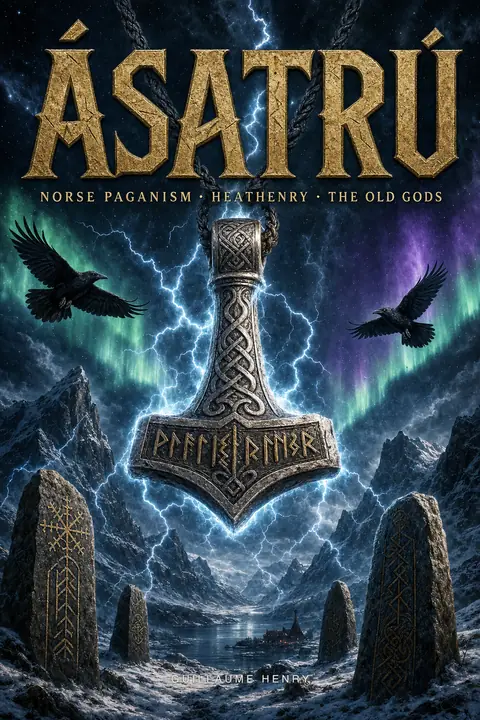
Asatru
The Asatru Book: Norse Paganism, Heathenry, and the Worship of the Old Gods
Norse Paganism, Heathenry, and the Old Gods
The living revival of Norse paganism: who the heathens worship, how the blót and the sumbel work, what the Nine Noble Virtues are, and how a faith that ended a thousand years ago came back to life in the modern world. Rooted in the Eddas, practiced today.
More from Asatru
All articles
Asatru
Mjolnir: Thor's Hammer as Symbol and Talisman
Mjolnir, Thor's legendary hammer, embodies divine power, protection, and order in Norse mythology. Discover how this symbol shaped Viking belief, ritual, and endures in modern culture.
Asatru
Winter Nights and Yule: Heathen Seasonal Festivals and Their Sacred Roots
Winter Nights and Yule are the two cornerstone heathen seasonal festivals that mark the darkest months of the year. Rooted in pre-Christian Norse and Germanic traditions, these observances honor the cycle of death and rebirth, ancestor veneration, and the sacred interplay between human and divine realms.
Asatru
Folkish versus Universalist Asatru: The Inclusion Debate
Asatru splits between two visions: one rooted in ancestry and ethnicity, one open to anyone who honors the Norse gods. We trace the ideological divide, its history, and how it shapes modern practice.
Asatru
Wyrd and Orlog: Fate and Personal Destiny in Norse Mythology
In Norse tradition, **Wyrd and Orlog** are the twin forces that shape destiny. Wyrd flows from the present moment, personal and mutable; Orlog is the ancient law laid down at creation. Together they answer the oldest question: how much of our fate is written, and how much is ours to choose?