

Laima: Goddess of Fate and Childbirth in Baltic Mythology
Laima is the Baltic goddess who decides every human fate at the moment of birth. Discover her myths, symbols, and living presence in Latvian and Lithuanian folklore.
Contents
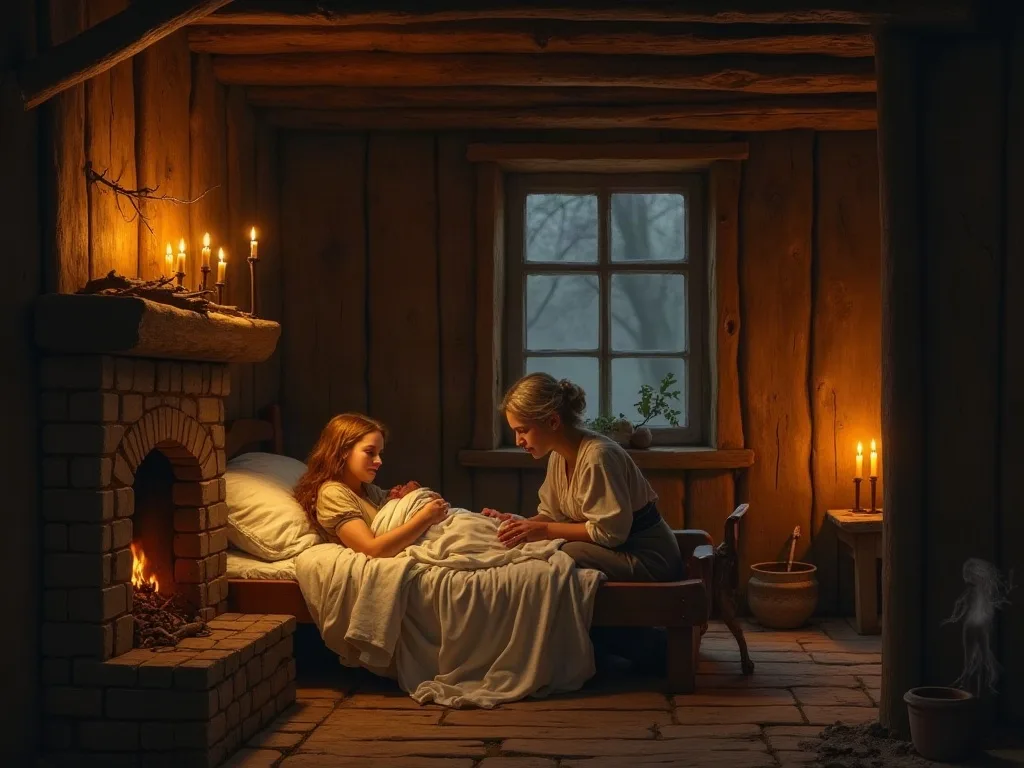
A woman goes into labor. The midwife calls out a name before the child even cries. She is calling Laima, the goddess who arrives unseen at every birth, leans over the newborn, and pronounces the life that will follow. One word from her lips and the child's thread is spun: long or short, lucky or hard, royal or poor.
No other figure in Baltic mythology holds that kind of authority over a single human life. The great sky god Dievs governs the order of the heavens. Pērkons (the thunderer) controls storms and justice. But Laima governs the intimate, irreversible stuff: the length of your years, the name of the person you will love, the hour of your death. The Latvian word laime means "happiness" or "luck," yet Laima herself is not a cheerful dispensary of good fortune. She is fate itself, indifferent and precise.
Her myths survived in the dainas, the traditional Latvian folk songs that run into the hundreds of thousands. They were collected in the 19th century by Krišjānis Barons, whose six-volume compilation preserved an oral tradition stretching back centuries. In those songs Laima appears more than almost any other deity: she argues with the sky, she weeps over a soldier, she sets down the lifespan of a tree. She is everywhere that human life meets its edge.
What Laima Actually Did: The Mechanics of Fate-Weaving
Laima does not weave threads or cut them. That image belongs to the Greek Moirai and the Norse Norns. Laima speaks. Her tool is the word, a single utterance delivered at the cradle, and that word crystallizes into destiny.
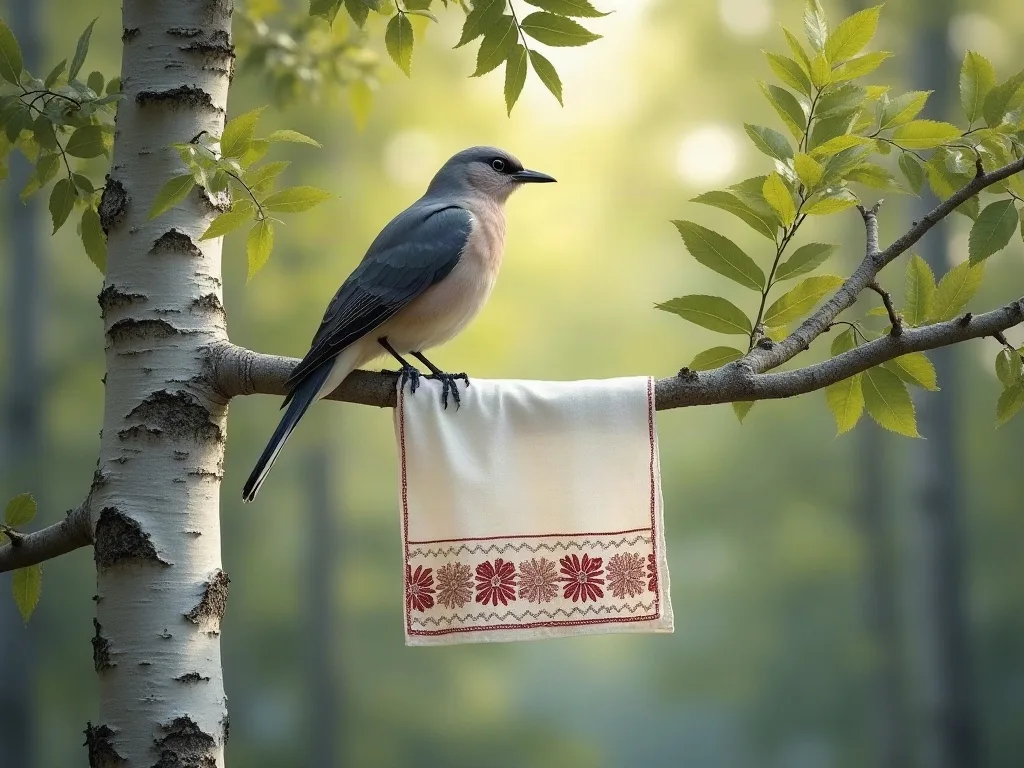
The dainas describe her appearing as a cuckoo (dzeguze in Latvian), a bird that counted out lifespans by the number of its calls. Ask a cuckoo in the forest how many years you have left and you are asking Laima. This association is not decorative. The cuckoo's call is unpredictable, finite, and unrepeatable, exactly like a human life. When the bird falls silent, the answer is given.
She also appeared in human form: an old woman wrapped in grey cloth, or occasionally a beautiful woman in white linen standing near a birch tree. Birch trees mattered greatly in Baltic ritual. They marked sacred ground, they sheltered newborns during naming ceremonies, and they were planted at graves. Laima's proximity to the birch placed her at every threshold of human life simultaneously.
The role she played at a birth was specific. Before a child drew its first breath, Laima arrived and set down three things:
- The length of the person's life.
- The quality of their luck (laime) in love, work, and conflict.
- The manner of their death.
These three could not be altered. Prayers to Laima in the dainas do not ask her to change the fate already given. They ask her to have been generous when she delivered it. The distinction is important. Baltic religion, as scholars like Marija Gimbutas and Haralds Biezais have documented, understood fate as already woven into the past, not as something still being decided.
Laima and Dievs: A Partnership of Cosmic Order
Laima did not work entirely alone. In Latvian mythology, she operated in close relationship with Dievs, the sky god whose name derives from the Proto-Indo-European root dyeus, meaning "sky" or "shining." Dievs represented divine order, the stable architecture of the cosmos. Laima represented the specific content of individual lives within that order.
The dainas show them consulting each other. One famous song describes Dievs riding his horse across the sky while Laima sits under a linden tree, stitching a shirt. He asks about a farmer's son. She has already decided. The exchange reads less like a prayer than a domestic scene between two enormous forces who have known each other forever.
This partnership had a practical implication for Baltic worshippers. You prayed to Dievs for the harvest, for fair weather, for the community's survival. You prayed to Laima for the personal: a safe delivery, a good marriage, a death that came in old age rather than on a battlefield. She was the face of the divine that touched your particular story.
Biezais, the Latvian religious historian whose 1955 work Die Hauptgöttinnen der alten Letten (The Chief Goddesses of the Ancient Latvians) remains a foundational text, argued that Laima's authority over fate was more concrete and more intimate than Dievs's. Dievs set the table. Laima put the food on it.
The Cuckoo and the Birch: Laima's Sacred Symbols
Every major deity in the Baltic tradition carried a signature in the natural world. Pērkons announced himself through thunder. The sun goddess Saule moved across the sky in a copper chariot. Laima's signatures were quieter but everywhere.
The cuckoo stood at the center of her symbolic presence. Latvian and Lithuanian folklore records dozens of practices around the cuckoo's call: counting its calls to estimate years of life remaining, asking it the number of children you would have, listening on the first morning of spring when it was believed Laima herself was speaking through the bird. This was not superstition in the dismissive modern sense. It was consultation, a way of listening for what had already been decided.
The birch tree connected her to the great transitions. White-barked, slender, and hardy in northern climates, the birch marked the sites where Laima was believed to sit. In Latvia, a birch branch was traditionally placed above the bed of a woman in labor. After a naming ceremony, birch saplings were sometimes planted, one for the child. The tree would grow alongside the child, and if it died young, the tree's decline was watched for signs.
Linen and stitching appear repeatedly in the folk songs. Laima is described preparing a white linen shirt, a garment worn at birth and at death in Baltic tradition. The act of stitching is deliberate, careful, and irreversible once the thread is in: another image of fate fixed before the wearer knows they will need it.
Laima in Lithuania: Dalia and the Goddess of Threads
Cross the border from Latvia into Lithuania and Laima's mythology shifts in a revealing way. Lithuanian tradition presents a goddess called Dalia or Laima-Dalia who handles a more explicitly textile image of fate: she spins and cuts the thread of life. The word dalia means "portion" or "share," and Dalia assigned to each person their portion of years.
Scholars debate whether Dalia and Laima are the same goddess under different names, or two distinct figures whose functions overlapped so much they eventually merged. The linguist and mythologist Norbertas Vėlius, whose multi-volume Baltų religijos ir mitologijos šaltiniai (Sources of Baltic Religion and Mythology) compiled primary sources in Lithuanian, noted that in some regional traditions they appeared as separate beings with different temperaments: Laima generous and maternal, Dalia more detached and mechanical in her portioning.
What both figures share is the absolute quality of their decisions. No hero in Baltic mythology overturns a fate pronounced by Laima or Dalia. No trickster bargains the goddess down. This distinguishes Baltic fate-goddesses sharply from, say, Odin in the Norse tradition, who regularly manipulates the web of fate for his favorites, or from the Greek Moirai, whose decisions Zeus himself sometimes tested. In the Baltic world, the decree was the decree.
Laima's Companions: The Fate Sisters and Dēkla
Laima did not always appear alone. Latvian mythology sometimes placed her alongside two companion goddesses: Dēkla and Kārta. The three together are sometimes called the Laimas (plural), a triad who attended every birth collectively.
Dēkla protected infants and small children, a kind of divine guardian over the most vulnerable stage of life. Kārta governed order and arrangement, the structure of things as they were meant to unfold. Laima spoke the fate. Dēkla sheltered the child long enough to grow into it. Kārta ensured the pattern held.
This triad attracted comparison with the Greek Moirai (Clotho, Lachesis, Atropos) and the Roman Parcae almost from the first moment 19th-century European folklorists encountered the Baltic material. The comparison is structurally plausible but culturally misleading. The Moirai are cold, marble-distant, cosmic machinery. The dainas portray Laima, Dēkla, and Kārta with grief, with affection, sometimes with visible sadness when the fate they must deliver is a hard one. In one famous daina, Laima weeps when she pronounces a short life for a young man about to go to war. She does not change it. But she weeps.
That emotional quality matters. Baltic religion was not built around fear of the gods. It was built around a kind of sorrowful solidarity: Laima knew what was coming, the worshipper knew Laima knew, and the prayer was less a petition than a shared acknowledgment of the human condition.
How People Honored Laima: Ritual and Devotion
Because Laima's decrees could not be changed, the worship directed toward her had a particular shape. People did not go to her with requests in the way they petitioned Dievs for rain. They went to her with acknowledgment, with gratitude, and especially with ceremony at the moments she was believed to be present.
At births, the midwife would call Laima's name aloud and place an offering near the hearth: bread, grain, a cup of milk. The hearth was considered a crossing point between the human world and the divine, and Laima was believed to pass through it on her way to the newborn. Some regional Latvian traditions had the midwife address Laima directly, asking not that she change the fate but that she had been kind in setting it.
At weddings, Laima was invoked because marriage was one of the fates she had already determined. The dainas contain hundreds of wedding songs that reference Laima's earlier decision, treating the ceremony as the fulfillment of something she decreed at the bride's birth. Asking Laima's blessing at a wedding was asking her to have been generous years ago.
At the cuckoo's first call each spring, Latvian custom held that you should have coins in your pocket (for wealth), be standing upright (for health), and address a silent wish toward the sound. This was Laima speaking through the bird, and the coins and posture were small acts of preparation for whatever she answered.
Sacred oak groves and linden trees were also sites of offering. Linen cloth, embroidered with specific patterns, was left tied to branches. The embroidery patterns carried their own symbolic language, a visual grammar of protection and gratitude that ethnographers like Ernests Brastiņš documented in the early 20th century as part of the Dievturība movement, which sought to revive indigenous Latvian religious practice.
Laima and the Christian Conversion: Survival Underground
Christianity arrived in Latvia and Lithuania later than almost anywhere else in Europe. Lithuania was officially baptized only in 1387, Latvia in the 13th century under violent crusade. The Baltic goddess traditions did not simply vanish. They went underground, or more precisely, they blended.
Laima's functions were transferred in popular practice to the Virgin Mary, who in Baltic Catholic and later folk-Catholic tradition took on attributes of a fate goddess: she was present at births, she decided life's quality, she received the same linen offerings once tied to birch trees. The process scholars call interpretatio christiana operated here with particular smoothness because the emotional texture of devotion to Laima (sorrow, gratitude, acceptance) mapped onto Marian piety without friction.
The dainas themselves survived because they were treated as folk songs rather than religious texts, a category that the church found less threatening. Krišjānis Barons, collecting them in the 1870s-1900s, was working in a Latvian national awakening context where folk culture was politically valuable. The goddess material he preserved was understood at the time as poetry. Only later did scholars like Gimbutas and Biezais begin reading it as systematic religious record.
Marija Gimbutas, the Lithuanian-American archaeologist whose work on Old European goddess cultures generated decades of scholarly debate, placed Laima within a broad pre-Indo-European tradition of female cosmic forces. Her interpretations remain contested: critics argue she over-unified diverse traditions into a single "goddess religion." But her core observation about Laima's antiquity and her structural centrality in Baltic religious life has not been seriously challenged.
Laima Across the Indo-European World: What Sets Her Apart
The impulse to control fate is universal, so it is not surprising that goddesses of fate appear across the Indo-European world. The Greek Moirai, the Norse Norns, the Roman Parcae, the Hindu concept of karma and the goddess Lakshmi as a fate-adjacent figure of fortune: these all carry fragments of the same ancient concern.
What makes Laima: Goddess of Fate and Childbirth different from most of her counterparts is the register in which she operates. The Moirai are cosmic mechanics, impersonal and architectural. The Norns (Urðr, Verðandi, Skuld) tend the roots of Yggdrasil, the World Tree, and their work is geological in scale. Laima arrives in the bedroom. She sits under your specific birch tree. She counts out your particular years through the throat of a cuckoo you actually heard this morning.
That intimacy is the Baltic contribution to the mythology of fate. Laima is not a principle. She is a presence. And the hundreds of thousands of folk songs that carry her name are not theology. They are the record of people talking to a goddess who, they believed, had already listened.
Frequently asked questions about Laima, Goddess of Fate and Childbirth
Frequently asked questions
What is Laima the goddess of, exactly?
Laima is the Baltic goddess of fate, luck, and childbirth. She appears in Latvian and Lithuanian mythology as the divine figure who pronounces a person's destiny at the moment of birth, determining the length of their life, the quality of their luck, and the manner of their death. Her name comes directly from the Latvian word laime, meaning "luck" or "happiness," though her role encompasses the full range of fate, favorable or harsh.
How did people worship Laima in ancient Baltic tradition?
Worship of Laima centered on life's thresholds: birth, marriage, and death. At births, midwives called her name and left offerings of bread and milk near the hearth. At weddings, she was invoked as the one who had already determined the match. The cuckoo's spring call was treated as her voice, and people listened for it while holding coins and standing upright. Linen cloth embroidered with protective patterns was left at birch trees and in sacred groves as offerings.
Is Laima similar to the Greek Fates or the Norse Norns?
Structurally yes, but the emotional register is quite different. The Greek Moirai and the Norse Norns operate at a cosmic, impersonal scale. Laima operates intimately: she appears at an individual birth, she is associated with a specific bird (the cuckoo) and a specific tree (the birch), and the dainas (Latvian folk songs) portray her with genuine emotion, including sorrow when she must decree a short or painful life. The Baltic tradition's contribution is a fate goddess who is a felt presence, not an abstract mechanism.
What is the connection between Laima and the cuckoo bird?
In Baltic folklore, the cuckoo was Laima's earthly voice. Its calls counted out the years of life remaining, answered questions about future children, and served as the goddess's way of communicating with living humans. Specific customs governed how to listen correctly: you should be outdoors, standing, with something of value in your pocket when you heard the first cuckoo call of spring. The number of calls you heard was understood as Laima's answer to an unspoken question about your future.
Who are Dēkla and Kārta, and how do they relate to Laima?
Dēkla and Kārta are Laima's companion goddesses in Latvian mythology, and together the three sometimes function as a fate-triad. Dēkla protected newborns and young children during their most vulnerable years. Kārta oversaw order and the proper unfolding of events. Laima herself pronounced the fate. The three are sometimes called the Laimas collectively, and their structure invites comparison with the Greek Moirai, though each Baltic goddess carries a warmer, more grief-capable emotional quality than her Greek counterparts.
Did Laima survive the Christianization of Latvia and Lithuania?
Yes, through a process of absorption. When Christianity arrived (Lithuania officially in 1387, Latvia under 13th-century crusade), Laima's functions migrated onto the Virgin Mary in popular devotion. The same linen offerings, the same invocations at birth, the same emotional texture of gratitude and acceptance that characterized Laima worship were transferred to Marian piety without much friction. The dainas also preserved her image across centuries because they were classified as folk songs rather than religious texts, keeping them out of reach of theological censorship.
Laima's Living Presence: From Folk Revival to Modern Paganism
The 19th-century collection of the dainas was more than archivism. It was the beginning of a modern relationship with Laima that continues today. The Dievturība movement, founded by Ernests Brastiņš in the 1920s, positioned the Baltic gods as the proper spiritual inheritance of Latvian national identity. Laima stood near the center of that revival: accessible, intimate, deeply embedded in the agricultural and domestic rhythms that defined Latvian rural life.
After Soviet occupation suppressed the movement for decades, Dievturība re-emerged after Latvian independence in 1991. Contemporary practitioners hold seasonal festivals that directly address Laima, observe the cuckoo rituals in spring, and treat the dainas as liturgical texts. The embroidery traditions Brastiņš documented have also seen a significant revival, with Latvian artisans producing linen goods bearing the protective patterns once offered to the goddess.
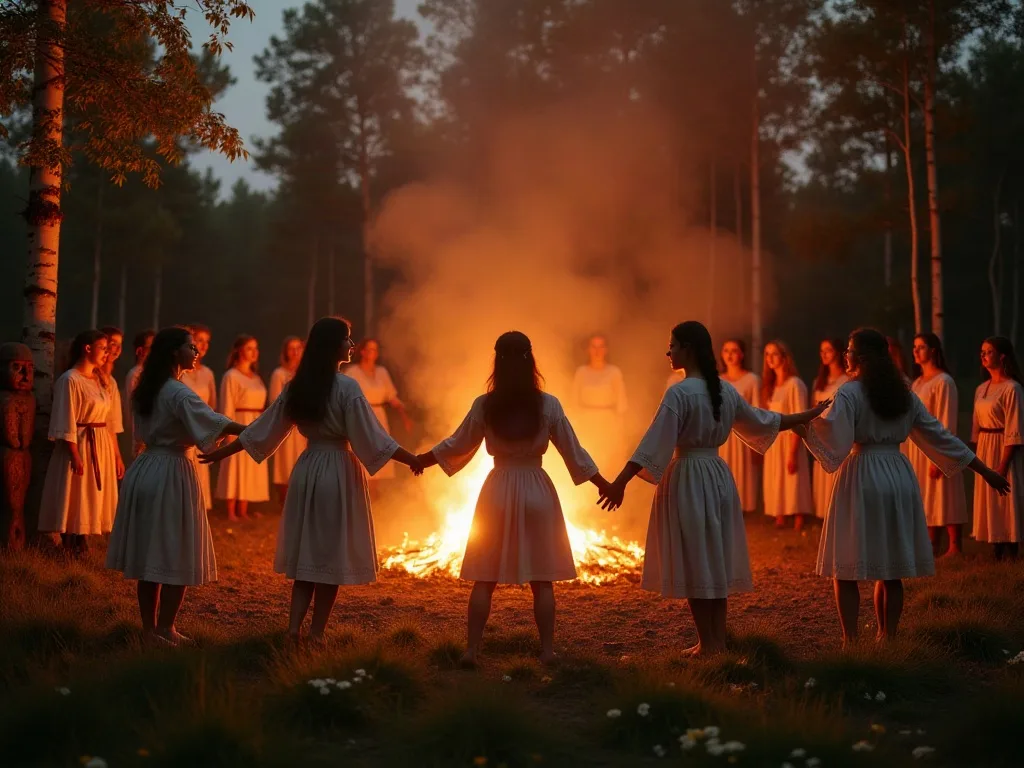
In Lithuania, a parallel neo-pagan movement called Romuva centers on the pre-Christian Baltic pantheon, including Laima-Dalia. Named after the sacred grove where Baltic priests once performed rituals, Romuva holds public ceremonies at solstices and seasonal turning points where fate-goddesses are explicitly honored.
Outside the Baltic states, Laima appears in contemporary goddess spirituality movements across Europe and North America, often grouped with other fate-spinning goddesses from various traditions. The specific texture that makes her Baltic, the intimacy, the cuckoo, the weeping, the acceptance rather than the bargain, tends to get preserved by practitioners who work directly with the dainas in translation.
Laima: Goddess of Fate and Childbirth is not a goddess who faded. She traveled through folk song, through Marian devotion, through nationalist revival, through Soviet suppression, and out the other side. The cuckoo is still counting.
Read the full book
Want the whole story?
The complete edition is an instant PDF download here, with a paperback on Amazon for selected titles.
Baltic
The Baltic Mythology Book: Perkūnas, Saulė, Dievas, and the Gods of Lithuania and Latvia
Perkūnas, Saulė, and Dievas
The last pagans of Europe: the Lithuanians and Latvians who kept their old gods into the 1400s. Perkūnas the thunderer, Saulė the sun, the sky-god Dievas, and a forest religion preserved in tens of thousands of folk songs.
More from Baltic
All articles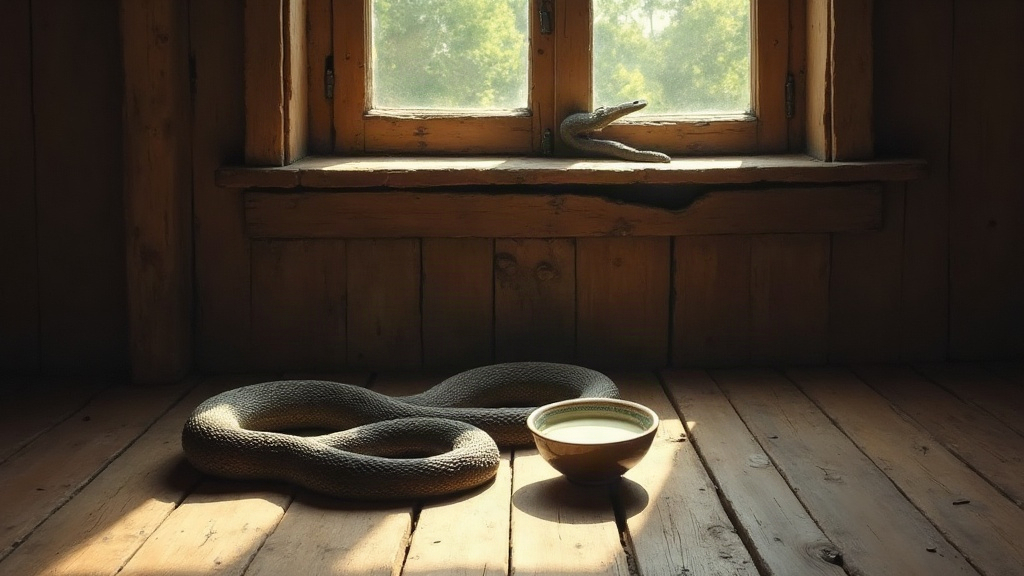
Baltic
The Grass Snake: Sacred Household Guardian of Baltic Homes
The grass snake was no mere reptile in Baltic homes, it was a household god, a protective spirit that lived in the walls and brought prosperity. Learn how this sacred creature shaped daily life and spiritual belief in Lithuania and Latvia.

Baltic
Dainas: Sacred Folk Songs as Living Mythology
Dainas are more than songs, they are Lithuania and Latvia's oldest mythology preserved in four-line verses sung for millennia. Discover how peasants encoded gods, rituals, and cosmic wisdom into folk poetry that shaped Baltic identity and survives today.

Baltic
Žemyna: Mother Earth Goddess of the Baltic Lands
Žemyna stands at the heart of Baltic spirituality as the life-giving earth mother who nurtures crops, heals the sick, and guards the sacred bond between humans and land. Discover how this ancient goddess shaped Lithuanian and Latvian culture for centuries.

Baltic
The Sacred Oak: World Tree of Baltic Tradition
The Sacred Oak stands at the center of Baltic cosmology as the world tree connecting earth, sky, and the underworld. Discover how Lithuania and Latvia's ancient oak groves shaped a mythology that survived centuries of Christian suppression.