
Birth Control in Ancient Egypt
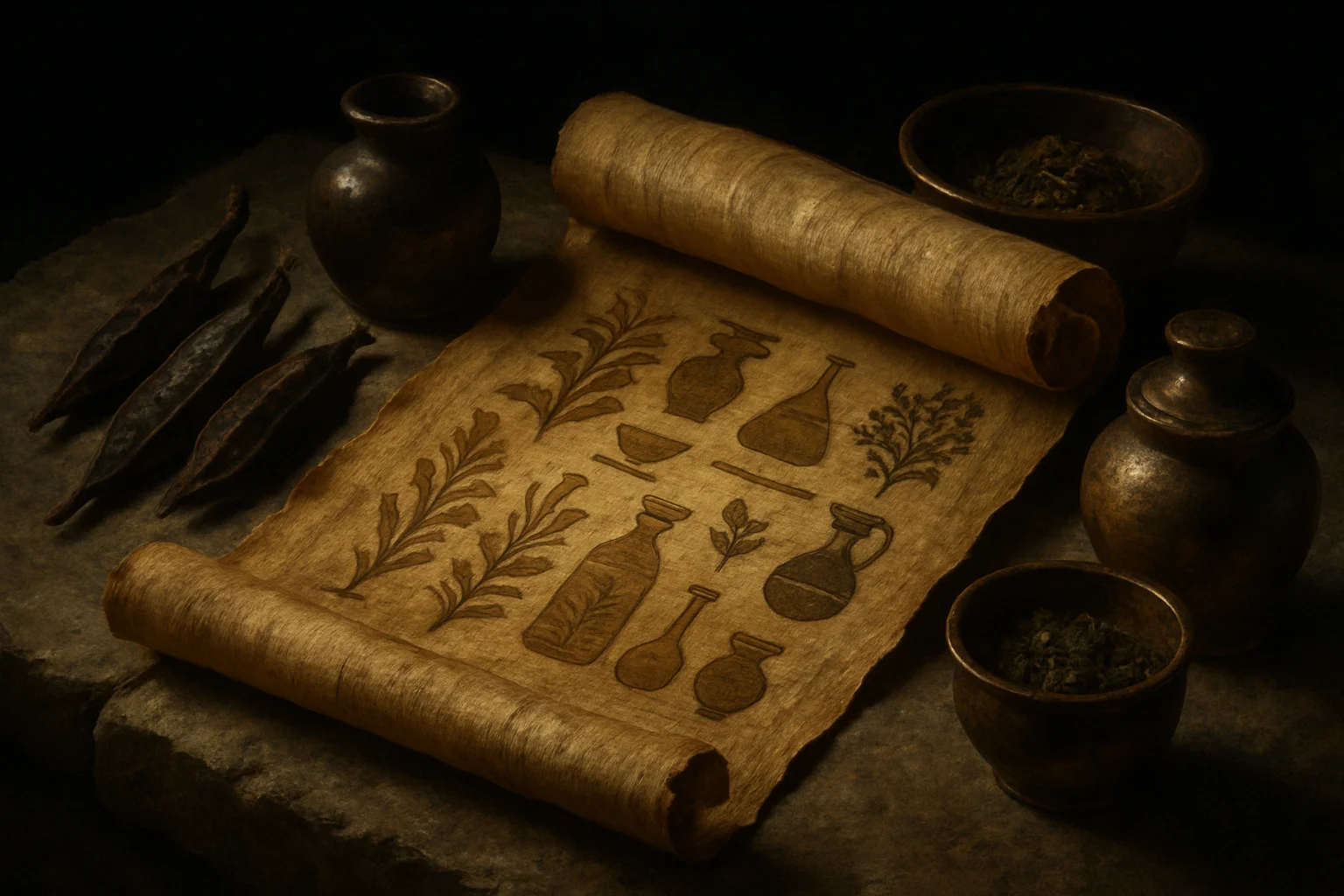
Ancient Egyptian contraception from the Kahun, Ebers, and Berlin papyri. Acacia, honey, crocodile dung, and the medical logic behind each method.
Contents
Birth control in ancient Egypt was documented in medical papyri dating from 1825 BCE onward and included barrier methods using acacia gum, honey, and lint; oral herbal preparations; and possibly animal excrement pessaries. The Kahun Gynecological Papyrus, the Ebers Papyrus, and the Berlin Papyrus preserve these recipes alongside treatments for infertility, suggesting that Egyptian physicians understood contraception and fertility as two sides of the same medical knowledge. These methods reflect a culture in which women exercised considerable autonomy over reproduction, with no surviving legal or religious prohibition against preventing pregnancy.
The popular image of ancient Egyptian contraception tends to fixate on the exotic: crocodile dung, for instance, or fermented dough inserted into the vagina. These details are real, but they obscure the sophistication of the underlying pharmacology and the broader social context. Egyptian women had access to a range of contraceptive strategies, some of which align closely with modern understanding of spermicides and barrier methods.
The Medical Papyri: Where the Evidence Lives
Egyptian contraceptive knowledge survives in medical texts written by and for physicians, not in religious or literary sources. These papyri belong to the education of scribes trained in healing arts, and they treat contraception as a routine aspect of gynecological care.
The Kahun Gynecological Papyrus
The Kahun Gynecological Papyrus (UC 32057), dated to approximately 1825 BCE during the Middle Kingdom, is the oldest known medical text devoted entirely to women's health. It contains 34 sections, three of which describe contraceptive methods. One recipe calls for a pessary made from crocodile dung mixed with fermented dough. Another prescribes a paste of honey and natron, a naturally occurring sodium carbonate salt. The text offers no commentary on moral or religious implications, treating these recipes with the same clinical tone it applies to treatments for prolapse or menstrual irregularities.
The Ebers Papyrus
The Ebers Papyrus, dated to around 1550 BCE and now held in Leipzig, is a 110-page compendium covering conditions from eye disease to digestive ailments. Section 783 describes a contraceptive suppository made from acacia tips, dates, and honey, ground together and applied to moistened lint. The acacia component is pharmacologically significant: when fermented, acacia gum produces lactic acid, a compound used in modern spermicidal jellies. The Ebers Papyrus also includes recipes intended to promote fertility, suggesting that Egyptian medicine approached reproductive control as a spectrum rather than a binary.
The Berlin Papyrus
The Berlin Papyrus 3038, dated to approximately 1300 BCE, offers additional contraceptive formulas and includes a test to determine whether a woman is capable of bearing children. One passage recommends a mixture of acacia, coloquintida (a bitter desert gourd), and dates, to be inserted before intercourse. The text specifies that the mixture should remain in place for a defined period, indicating an understanding that timing and duration matter for efficacy.
Barrier Methods: Acacia, Honey, and Fermentation
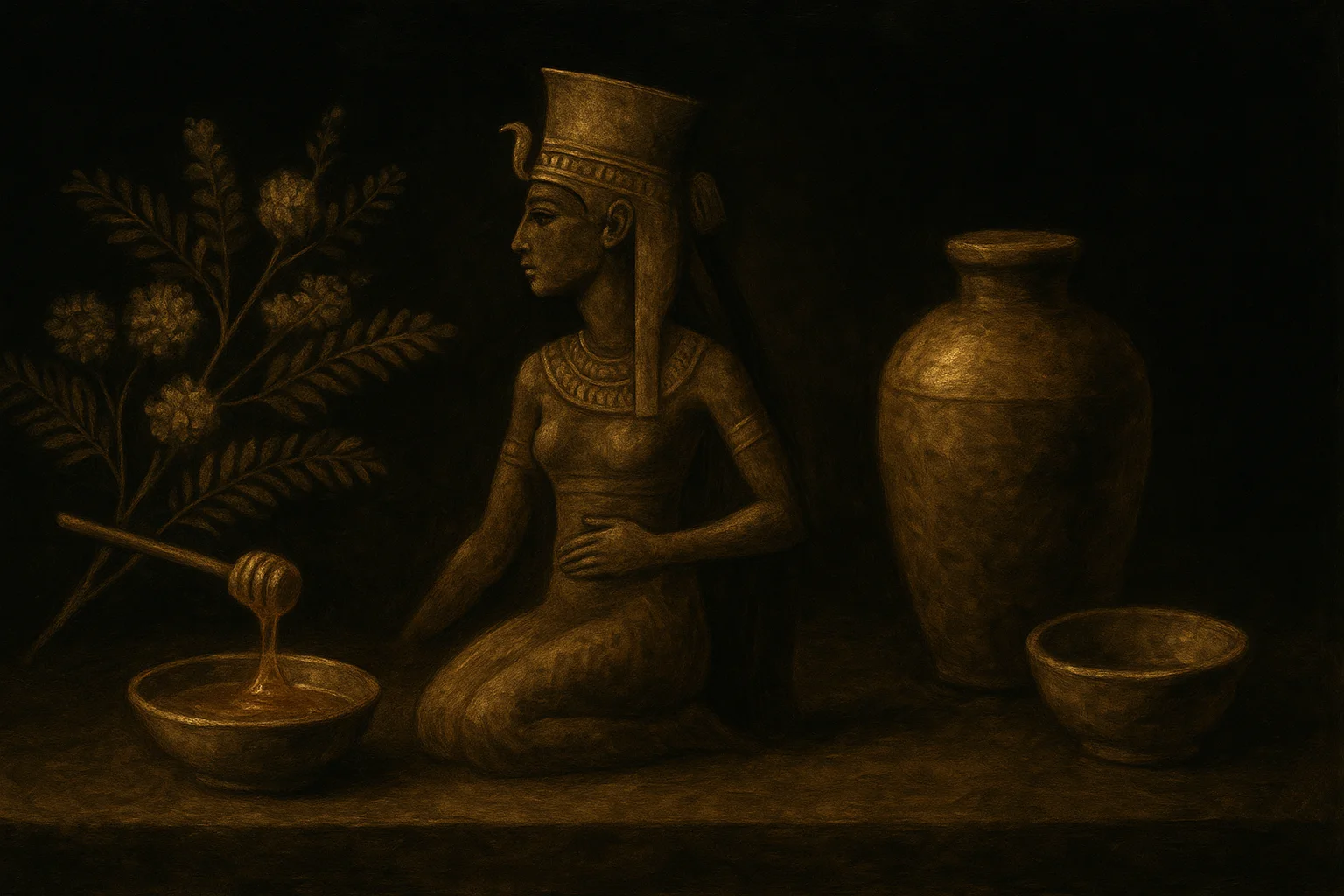
The most frequently cited Egyptian contraceptive involves acacia gum, honey, and a fibrous carrier such as lint or shredded papyrus. The logic behind this combination is threefold: physical barrier, chemical spermicide, and antimicrobial protection. Honey is hygroscopic, meaning it draws moisture out of cells, and it has mild antibacterial properties. Acacia gum, as noted, ferments into lactic acid, which lowers vaginal pH and immobilizes sperm. The lint or fiber provides structure, forming a crude cervical cap.
Modern laboratory studies have confirmed that lactic acid at concentrations of 1 to 2 percent can reduce sperm motility significantly. The fermentation process required to convert acacia into lactic acid would have occurred naturally in the warm, moist environment of the vagina, particularly if the mixture was left in place for several hours. This is not folk magic; it is applied chemistry, arrived at through observation and iteration.
Crocodile Dung and Animal Excrement: Myth or Method?
The Kahun Papyrus prescribes crocodile dung mixed with fermented dough as a pessary. This detail has been repeated in popular accounts with a mixture of fascination and disbelief, but the recipe deserves a closer look. Animal dung, when dried, is alkaline and slightly acidic depending on diet, and it can form a dense, malleable paste. In theory, it could function as a physical barrier to sperm, blocking the cervical os.
Whether this method was widely used or effective is another question. The Kahun Papyrus is the only source that mentions crocodile dung in this context, and no later papyri repeat the recipe. Crocodiles were animals held sacred status in certain regions, associated with the god Sobek, and their excrement may have carried symbolic as well as practical significance. It is possible that the recipe was regional, experimental, or reserved for women who could not access other materials.
Elephant and other animal dungs appear in contraceptive recipes from other ancient cultures, including India and Persia, suggesting a cross-cultural belief in the barrier properties of dried excrement. The practice is strange to modern sensibilities, but it reflects a pragmatic use of available materials in a pre-industrial context.
Oral Contraceptives and Herbal Preparations
Several papyri describe drinks and herbal preparations intended to prevent conception. The Ramesseum Papyrus IV, dated to around 1700 BCE, includes a recipe for a beverage made from celery, beer, and an unidentified plant referred to as "swnw." The text instructs the woman to drink this mixture for several days following menstruation. Modern phytochemical analysis has not conclusively identified "swnw," but celery contains apiol, a compound that can stimulate uterine contractions and has been used historically as an abortifacient in toxic doses.
Another oral method involved the seeds of the pomegranate, which contain natural estrogens. The Ebers Papyrus recommends crushing pomegranate seeds and mixing them with wax, then forming the paste into a suppository. Whether the estrogen content was sufficient to disrupt ovulation is uncertain, but the recipe shows an awareness that certain plants could influence reproductive cycles.
Egyptian herbal contraceptives
Focused on local plants like acacia, celery, and pomegranate; recipes documented in medical papyri with dosage and timing instructions; no moral or religious commentary attached.
Greek and Roman herbal contraceptives
Silphium, a now-extinct fennel relative, was the most prized; Soranus and Dioscorides wrote extensively on contraceptive herbs; methods often conflated with abortifacients in later Christian sources.
The Role of Amulets and Divine Protection
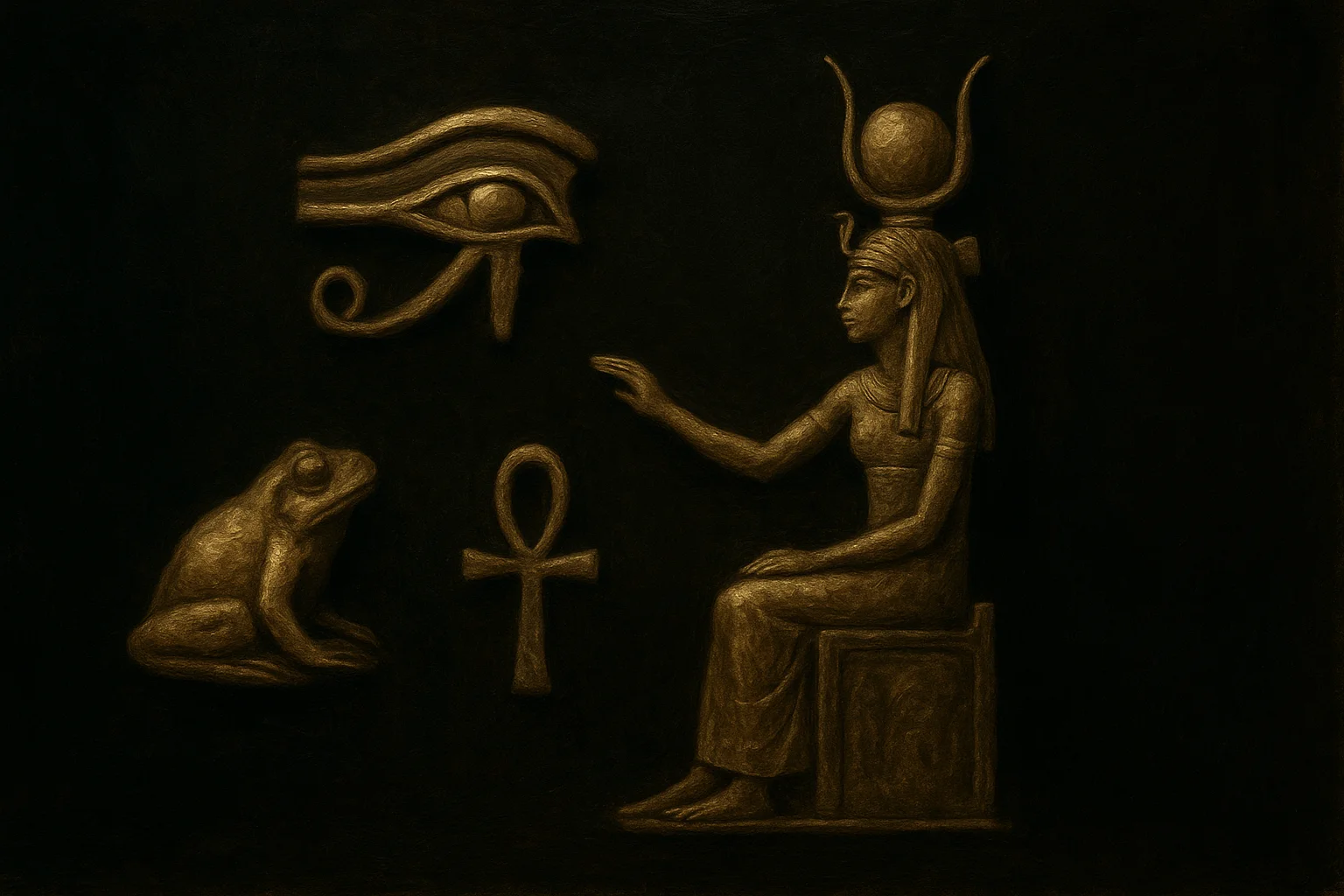
Contraception in Egypt was not solely a medical matter. Women also invoked divine assistance to regulate fertility, particularly through amulets and sacred symbols. The goddess Taweret, depicted as a pregnant hippopotamus, presided over childbirth and protection of mothers and infants. Women wore Taweret amulets during pregnancy, but they also invoked her when they wished to delay or space births. The goddess Hathor, associated with sexuality and motherhood, appears in spells intended to control conception.
The relationship between Egyptian gods and human fertility was reciprocal rather than coercive. Unlike later religious traditions that framed reproduction as a divine mandate, Egyptian theology allowed for human agency in matters of childbearing. This is consistent with the mother goddesses across cultures, many of whom governed both fertility and its regulation.
Amulets were often inscribed with protective spells from the Pyramid Texts or Coffin Texts, adapted for personal use. One such spell, recorded on a Middle Kingdom amulet now in the Cairo Museum, asks Taweret to "hold back the seed" until the wearer is ready. The phrasing suggests that delayed conception was understood as a legitimate request, not a transgression.
Women's Autonomy and the Absence of Legal Restriction
No surviving Egyptian legal code, religious text, or royal decree prohibits the use of contraception. This silence is significant. Egyptian women could own property, initiate divorce, and conduct business independently. Nefertari, the Great Royal Wife of Ramesses II, wielded considerable political influence, and Cleopatra VII ruled as a sovereign in her own right. The legal and social structures of Egypt, particularly during the New Kingdom, granted women a degree of autonomy rare in the ancient Mediterranean.
Contraceptive knowledge was transmitted within families and among women, but it was also formalized in the medical curriculum. Male physicians wrote the papyri, but midwives and female healers likely administered many of the treatments. The absence of moral commentary in the medical texts suggests that preventing pregnancy was seen as a practical decision, not a spiritual or ethical dilemma.
This stands in contrast to later Greco-Roman and Abrahamic traditions, which increasingly framed reproduction as a religious duty and contraception as a disruption of divine will. The broader timeline of Egyptian history shows no comparable shift; even as Egypt came under foreign rule, the medical papyri continued to circulate without censorship.
How Effective Were These Methods?
Measuring the efficacy of ancient contraceptives is difficult, but some educated guesses are possible. The acacia and honey pessary, if used correctly, likely had a failure rate comparable to modern spermicidal foams, which range from 18 to 28 percent with typical use. The lactic acid produced by fermented acacia would have reduced sperm motility, and the physical barrier of lint or fiber would have blocked some sperm from reaching the cervix. Perfect use might have lowered the failure rate further, but perfect use is rare in any era.
The crocodile dung pessary, if it functioned at all, would have worked primarily as a physical barrier. Its alkaline properties might have had a mild spermicidal effect, but dried dung is porous and would not have formed a reliable seal. The method's single appearance in the sources suggests it was not widely trusted.
Oral herbal preparations are harder to assess. Apiol and other plant estrogens can disrupt ovulation, but the dosages required are high, and toxicity is a risk. It is likely that these drinks were used as part of a broader strategy, combined with barrier methods and timing intercourse around perceived fertile windows.
- Acacia and honey pessary: plausible spermicidal and barrier function, likely 70 to 80 percent effective with consistent use
- Crocodile dung pessary: physical barrier only, uncertain efficacy, rarely cited in later texts
- Pomegranate and celery drinks: possible hormonal disruption, but dosage and timing critical
- Amulets and spells: psychological and cultural support, no measurable contraceptive effect
Frequently asked questions
What primary sources document birth control in ancient Egypt?
The Kahun Gynecological Papyrus (circa 1825 BCE), the Ebers Papyrus (circa 1550 BCE), and the Berlin Papyrus 3038 (circa 1300 BCE) are the three major medical texts that preserve contraceptive recipes and gynecological treatments. These papyri were written by physicians and used in the training of medical scribes. The Ramesseum Papyrus IV also includes herbal preparations intended to prevent conception. No religious or legal texts address contraception, suggesting it was treated as a medical rather than a moral issue.
Did ancient Egyptians really use crocodile dung as contraception?
The Kahun Gynecological Papyrus prescribes crocodile dung mixed with fermented dough as a pessary, but this recipe appears in only one source and is not repeated in later medical texts. Dried animal dung is alkaline and could theoretically function as a physical barrier to sperm, blocking the cervical opening. Whether the method was widely practiced or effective remains uncertain, and it may have been regional or experimental. The crocodile's sacred association with the god Sobek may have added symbolic significance to the material.
How did acacia and honey work as a contraceptive barrier?
Acacia gum ferments into lactic acid, a compound that lowers vaginal pH and immobilizes sperm, while honey draws moisture from cells and has mild antibacterial properties. The mixture was applied to lint or shredded fiber and inserted into the vagina before intercourse, forming a crude cervical cap. Modern laboratory studies confirm that lactic acid at concentrations of 1 to 2 percent can significantly reduce sperm motility. The method combined physical barrier, chemical spermicide, and antimicrobial protection, making it one of the more plausible ancient contraceptives by modern standards.
Were Egyptian women legally allowed to control their fertility?
No surviving Egyptian legal code, religious decree, or royal edict prohibits the use of contraception, and women in ancient Egypt enjoyed considerable legal autonomy, including the right to own property, initiate divorce, and conduct business independently. Contraceptive knowledge was formalized in medical papyri and transmitted by both male physicians and female healers. The absence of moral or religious commentary in the medical texts suggests that preventing pregnancy was viewed as a practical decision rather than a spiritual or ethical transgression, a stance that contrasts sharply with later Greco-Roman and Abrahamic traditions.
Which Egyptian deities were associated with fertility and childbirth?
Taweret, depicted as a pregnant hippopotamus, presided over childbirth and the protection of mothers and infants, and women invoked her both to ensure safe delivery and to delay or space births. Hathor, the goddess of sexuality, love, and motherhood, appears in spells intended to regulate conception. The relationship between Egyptian gods and human fertility was reciprocal rather than coercive, allowing for human agency in reproductive decisions. Amulets inscribed with protective spells often invoked these goddesses, and some explicitly asked for fertility to be held back until the wearer was ready.
How effective were ancient Egyptian contraceptive methods by modern standards?
The acacia and honey pessary likely had a failure rate comparable to modern spermicidal foams, which range from 18 to 28 percent with typical use, and possibly lower with perfect use due to the lactic acid's proven spermicidal properties. The crocodile dung pessary, if it worked at all, functioned primarily as a physical barrier with uncertain efficacy. Oral herbal preparations containing apiol or plant estrogens could disrupt ovulation, but required precise dosages and timing. Amulets and divine invocations provided psychological and cultural support but had no measurable contraceptive effect. Overall, the barrier methods were plausible and chemically sound, though far less reliable than modern contraceptives.
Further reading on Mythologis
Free 25-page sample
Want the whole story?
Take the first 25 pages free. If it pulls you in, the full edition is yours as an instant PDF download, with a paperback on Amazon for selected titles.
Egyptian
The Egyptian Mythology Book: Ra, Osiris, Isis, Anubis, and the Sacred Stories of the Pharaohs
Ra, Osiris, Isis, Anubis, and the Sacred Stories of the Pharaohs
Three thousand years of Egyptian sacred stories. The Duat, the weighing of the heart, the cult of Osiris, and the daily voyage of the sun.
More from Egyptian
All articles
Egyptian
The Book of the Dead: Egypt's Guide to Eternity
Ancient Egypt's most sacred funerary text was not a single book but a living archive of spells, maps, and prayers that guided the dead through the perils between death and eternal life.
Egyptian
Eye of Horus: The Protective Amulet That Watched Over the Living and the Dead
Worn by pharaohs and fishermen alike, the Eye of Horus is one of antiquity's most potent protective symbols, carrying the weight of cosmic battle, divine healing, and eternal vigilance.

Egyptian
Ra the Sun God: Egypt's Supreme Ruler of Light and Creation
Ra, the ancient Egyptian sun god, blazed at the very heart of a civilization that worshipped light as the pulse of creation itself. Discover his origins, his many forms, and the sacred journey he took across the sky and through the underworld every single day.

Egyptian
The Ankh: Egypt's Eternal Symbol of Life
The ankh is ancient Egypt's most recognizable hieroglyph, a looped cross carried by gods and pharaohs alike as the very key to immortal life. Discover its origins, meanings, and sacred legacy.