
Nefertari: The Beloved Wife of Pharaoh Ramesses II
Nefertari was the first Great Royal Wife of Ramesses II, a diplomatic actor in foreign policy, and owner of Egypt's most beautiful tomb.
Contents
Nefertari was the principal wife of the Egyptian pharaoh Ramesses II, who reigned from approximately 1279 to 1213 BCE during the Nineteenth Dynasty. She held the title of Great Royal Wife and exercised documented diplomatic authority, including direct correspondence with the Hittite queen as part of the peace negotiations that ended decades of conflict between the two empires. Her tomb in the Valley of the Queens, designated QV66, is among the most elaborately decorated royal burials ever discovered in Egypt.
Most modern accounts reduce Nefertari to a romantic footnote in the story of Ramesses the Great. The evidence tells a different story. Temple inscriptions, diplomatic letters, and the iconography of her tomb reveal a woman who functioned as a political actor in her own right, performing religious ceremonies, conducting foreign diplomacy, and occupying ritual space normally reserved for deities. What remains unknown about her origins only sharpens the questions about how she came to wield such authority.
Who Was Nefertari?
Nefertari served as the most prominent of Ramesses II's wives during the early decades of his 66-year reign. Her full title, Nefertari Meritmut, translates as "Beautiful Companion, Beloved of the Goddess Mut." She appears in temple reliefs from Thebes to Nubia, often depicted at a scale equal to the pharaoh himself, a visual statement of status that few royal wives achieved. The historical record places her most active period between approximately 1279 and 1255 BCE, after which she disappears from inscriptions.
Unlike later queens such as Cleopatra VII, whose political maneuvering is documented in multiple external sources, Nefertari's authority must be reconstructed from Egyptian temple texts, tomb paintings, and fragments of international correspondence. She was not a ruling pharaoh. She was something else: a queen whose religious and diplomatic functions were woven into the machinery of imperial administration at a moment when Egypt was negotiating its place among rival Near Eastern powers.
Origins and Marriage
Unknown Ancestry
No surviving text identifies Nefertari's parents or place of birth. This silence is unusual for a woman of her rank. Royal wives of the New Kingdom typically came from elite families whose lineage was worth advertising, yet no inscription claims noble blood for Nefertari. Some Egyptologists have speculated that she may have been of non-royal origin, elevated by marriage alone. Others suggest her family records were simply lost or that her parentage was considered self-evident to contemporary audiences and therefore not worth stating.
One stela from Aksha in Nubia refers to her as "hereditary princess," a title that implies some degree of noble birth, but the term was often honorific rather than genealogical. The absence of evidence is not evidence of obscurity. It is a gap in the record.
Marriage to Ramesses II
Nefertari married Ramesses either shortly before or shortly after his accession to the throne in 1279 BCE. She was likely his first principal wife, though Ramesses would go on to marry several others, including Isetnofret and later two Hittite princesses as part of diplomatic arrangements. The marriage produced at least six children, four sons and two daughters, several of whom held prominent positions in the royal administration.
Ramesses' devotion to Nefertari, if we can call it that, was expressed through monumental architecture rather than poetry. He built her a temple. He gave her a tomb of extraordinary quality. These were not gestures of sentiment. They were public declarations of her importance to the functioning of the state.
Titles and Political Authority
Nefertari held the title Great Royal Wife, the highest rank available to a queen consort. Temple inscriptions at Karnak and Abu Simbel also refer to her as "Mistress of Upper and Lower Egypt," "Lady of the Two Lands," and "Sweet of Love." The latter phrase, often cited as evidence of romantic affection, was a formulaic epithet applied to royal women and tied to the goddess Hathor, whose attributes included beauty, music, and the legitimation of kingship.
More telling are the contexts in which Nefertari appears. She is shown performing rituals before the Egyptian gods, shaking the sistrum in ceremonies that required the presence of a divine or semi-divine female figure. In several reliefs, she stands between Ramesses and the gods, a position that places her within the ritual chain linking the mortal and divine realms. This was not decorative. It was functional theology.
Diplomatic Role in Foreign Relations
Correspondence with the Hittite Court
The most concrete evidence of Nefertari's political authority comes from diplomatic correspondence preserved in the Hittite archives at Hattusa. After the Battle of Kadesh in 1274 BCE, Egypt and the Hittite Empire spent years negotiating a peace treaty. The final agreement, signed around 1259 BCE, was one of the first recorded international treaties in history. Nefertari played a documented role in the diplomacy that made it possible.
Letters between Nefertari and Puduhepa, the queen of the Hittite king Hattusili III, survive in cuneiform. The correspondence is formal but direct. Nefertari addresses Puduhepa as "my sister," the conventional language of diplomatic parity. The letters discuss gifts, the health of royal family members, and the maintenance of peaceful relations. One tablet records Nefertari sending a gold necklace and linen garments to the Hittite court.
The Peace Treaty and Nefertari's Influence
The treaty itself was inscribed on temple walls at Karnak and on silver tablets exchanged between the two courts. While Ramesses and Hattusili are named as the primary signatories, the involvement of both queens in the surrounding correspondence suggests that the negotiations were conducted through multiple channels, not solely between kings. Puduhepa, in particular, was known to wield considerable influence in Hittite politics, and the pairing of the two queens in the diplomatic record implies a recognition of parallel authority.
Whether Nefertari shaped the terms of the treaty or simply transmitted messages is unknowable. What is clear is that her participation was considered important enough to document and that her name appears in contexts where the stakes were imperial stability.
Religious Functions and Temple Dedications
Abu Simbel: A Temple Shared with the Divine
The smaller temple at Abu Simbel, located in Nubia near the second cataract of the Nile, was dedicated jointly to Nefertari and the goddess Hathor. The facade features six colossal statues, four of Ramesses and two of Nefertari, each standing approximately ten meters tall. The queen is depicted at the same scale as the pharaoh, a visual equality almost without precedent in Egyptian temple architecture.
An inscription on the temple facade reads: "Ramesses II has made a temple, excavated in the mountain, of eternal workmanship, for the chief queen Nefertari Meritmut, in Nubia, forever and ever, Nefertari for whose sake the very sun does shine." The hyperbole is conventional, but the decision to carve it in stone was not. The temple was a public statement that Nefertari's ritual presence was necessary for the proper functioning of the cosmos.
Appearances in Ritual Contexts
Reliefs inside the temple show Nefertari performing rites before Hathor, Mut, and other deities. She wears the costume and regalia of a goddess: the vulture crown, the solar disk, the double plumes. In one scene, she is shown being crowned by Isis and Hathor, a motif that places her within the divine family rather than merely under its protection.
These are not passive images. They depict Nefertari as an active participant in the maintenance of maat, the cosmic order that Egyptian theology understood as fragile and requiring constant ritual reinforcement. Her presence in these scenes was not symbolic. It was operational.
QV66: The Tomb in the Valley of the Queens
Architecture and Decoration
Nefertari's tomb, designated QV66, was discovered in 1904 by the Italian archaeologist Ernesto Schiaparelli. It is widely considered the most beautiful tomb in the Valley of the Queens. The walls are covered with polychrome paintings of exceptional quality, depicting scenes from the Book of the Dead, the Book of Gates, and other funerary practices texts. The colors, preserved by the dry climate and later restored in the 1980s, remain vivid.
The tomb consists of a descending corridor, an antechamber, and a burial chamber supported by four pillars. Every surface is painted. Nefertari appears repeatedly, dressed in a diaphanous white gown, her skin rendered in the golden yellow reserved for divine or semi-divine beings. She is shown playing senet, offering incense, and addressing the gods who will judge her in the afterlife.
The Afterlife Journey Depicted
The iconography of QV66 follows the structure of underworld journeys common to Egyptian royal burials. Nefertari is depicted passing through the gates of the Duat, the Egyptian underworld, guided by deities including Anubis, Thoth, and Osiris. In one scene, she stands before Osiris, her heart weighed against the feather of maat. In another, she emerges into the Field of Reeds, the paradisiacal afterlife reserved for the justified dead.
"Osiris, the great god, lord of eternity, king of the gods, whose names are manifold, whose forms are holy, thou being of hidden form in the temples, whose Ka is holy."
This invocation, painted on the wall of the burial chamber, is drawn from the Book of the Dead and places Nefertari in direct communication with the god who judges the dead. The tomb was not a monument to memory. It was a functional instrument, a map and a set of instructions for navigating the dangers of the afterlife.
No trace of Nefertari's mummy has been found. The tomb was looted in antiquity, and the sarcophagus was smashed. Fragments of funerary equipment, including shabtis and pieces of the burial shroud, were recovered, but the body itself is lost. The absence of her mummy means we know nothing certain about her age at death, her health, or the circumstances of her burial beyond what the tomb walls depict.
Nefertari (Nineteenth Dynasty)
Tomb features polychrome paintings, full narrative cycle of afterlife journey, and depictions of the queen in divine regalia. Scale and quality suggest exceptional royal favor.
Tutankhamun (Eighteenth Dynasty)
Tomb contained intact burial goods and mummy but relatively modest wall decoration. Wealth of objects contrasts with simplicity of painted program, likely due to early death and hurried burial.
Children and Royal Lineage
Nefertari bore Ramesses at least six children, though some sources suggest the number may have been higher. The four sons were Amunherkhepeshef, Pareherwenemef, Meryre, and Meryatum. The two daughters were Meritamen and Henuttawy. Several of these children held important positions: Amunherkhepeshef served as crown prince and military commander before his early death, and Meryatum became High Priest of Re at Heliopolis.
None of Nefertari's sons succeeded Ramesses to the throne. The eventual heir, Merenptah, was the son of Isetnofret, Ramesses' second principal wife. This has led to speculation about the relative political fortunes of the two queens, but the evidence is too thin to support firm conclusions. Succession in the New Kingdom was determined by a combination of birth order, survival, and political maneuvering, and many of Ramesses' sons predeceased him.
Nefertari's daughters, like most royal women of the period, are less well documented. Meritamen later became a Great Royal Wife herself, likely after her mother's death, a practice that was not uncommon when pharaohs sought to consolidate dynastic legitimacy.
Death and Legacy
Nefertari disappears from the historical record around Year 25 of Ramesses' reign, approximately 1255 BCE. No inscription records her death, and no funerary text survives outside the tomb itself. The most likely explanation is that she died in her early forties, though this is conjecture based on the typical age of marriage and the span of her documented activity.
After her death, Ramesses continued to rule for another four decades. He married other women, built other temples, and fathered dozens more children. Yet Nefertari's tomb remained the finest, and her temple at Abu Simbel stood as a permanent record of her status. Later pharaohs, including Akhenaten's successors, would experiment with elevating royal women to near-divine status, but few achieved the monumental recognition that Nefertari received.
Her legacy is not one of political revolution or theological innovation. It is the legacy of a woman who occupied the available structures of power with enough skill that those structures were bent, slightly, to accommodate her. The temples, the tomb, the diplomatic letters: these are the residue of authority exercised within constraints.
- She held the title Great Royal Wife and performed state religious rituals.
- She conducted diplomatic correspondence with the Hittite queen during peace negotiations.
- She was honored with a temple at Abu Simbel, depicted at the same scale as Ramesses.
- Her tomb, QV66, is among the most elaborately decorated in Egypt.
- She bore at least six children, including four sons who held high office.
- She disappeared from the record around 1255 BCE, likely due to death.
Frequently asked questions
What made Nefertari different from other Egyptian queens?
Nefertari held exceptional documented authority as Great Royal Wife of Ramesses II, including direct diplomatic correspondence with the Hittite queen Puduhepa and joint dedication of the Abu Simbel temple where she was depicted at equal scale to the pharaoh himself. Unlike many royal consorts whose roles were primarily ceremonial, Nefertari functioned as a political actor in foreign relations and performed religious rituals that positioned her within the divine order. Her tomb, QV66, is among the most elaborately decorated royal burials ever discovered in Egypt, suggesting a status that went beyond typical queenly honors.
What role did Nefertari play in the Egyptian-Hittite peace treaty?
Nefertari conducted direct diplomatic correspondence with Puduhepa, queen of the Hittite king Hattusili III, as part of the negotiations surrounding the peace treaty signed around 1259 BCE following the Battle of Kadesh. Letters preserved in the Hittite archives at Hattusa show the two queens exchanging gifts and messages using the formal language of diplomatic parity, addressing each other as "sister." While the treaty itself was signed by the two kings, the involvement of both queens in the surrounding diplomacy suggests that negotiations were conducted through multiple channels and that Nefertari's participation was considered important enough to document in the official record.
What does Nefertari's tomb tell us about Egyptian beliefs in the afterlife?
The tomb of Nefertari, designated QV66, contains polychrome wall paintings depicting her journey through the Duat, the Egyptian underworld, following the structure outlined in funerary texts such as the Book of the Dead and the Book of Gates. The iconography shows Nefertari passing through gates, being judged by Osiris, and ultimately entering the Field of Reeds, the paradisiacal afterlife reserved for the justified dead. The tomb functioned not merely as a monument but as a ritual instrument, providing both a map and a set of instructions for navigating the dangers of the afterlife, with every painted scene serving a protective or guiding function in her posthumous journey.
How many children did Nefertari have with Ramesses II?
Nefertari bore Ramesses II at least six documented children: four sons named Amunherkhepeshef, Pareherwenemef, Meryre, and Meryatum, and two daughters named Meritamen and Henuttawy. Several of these children held prominent positions in the royal administration, with Amunherkhepeshef serving as crown prince and military commander before his early death, and Meryatum becoming High Priest of Re at Heliopolis. None of Nefertari's sons succeeded to the throne; the eventual heir was Merenptah, son of Ramesses' second principal wife Isetnofret.
When and how did Nefertari die?
Nefertari disappears from the historical record around Year 25 of Ramesses II's reign, approximately 1255 BCE, and no surviving inscription records the circumstances of her death. The most likely explanation, based on the typical age of royal marriage and the span of her documented activity, is that she died in her early to mid-forties, though this remains conjecture. Her tomb in the Valley of the Queens was looted in antiquity, and no trace of her mummy has been recovered, meaning we have no physical evidence regarding her age at death, health, or the specific cause of her passing.
Why is Nefertari's tomb considered so exceptional?
QV66 is widely regarded as the most beautiful tomb in the Valley of the Queens due to the exceptional quality and preservation of its polychrome wall paintings, which cover every surface of the descending corridor, antechamber, and pillared burial chamber. The paintings depict Nefertari in diaphanous white gowns with her skin rendered in golden yellow, the color reserved for divine or semi-divine beings, and show her performing rituals, playing senet, and navigating the afterlife journey. The tomb's artistic program is both more extensive and more finely executed than most other royal burials of the period, reflecting the extraordinary status Nefertari held during her lifetime.
Further reading on Mythologis
Free 25-page sample
Want the whole story?
Take the first 25 pages free. If it pulls you in, the full edition is yours as an instant PDF download, with a paperback on Amazon for selected titles.
Egyptian
The Egyptian Mythology Book: Ra, Osiris, Isis, Anubis, and the Sacred Stories of the Pharaohs
Ra, Osiris, Isis, Anubis, and the Sacred Stories of the Pharaohs
Three thousand years of Egyptian sacred stories. The Duat, the weighing of the heart, the cult of Osiris, and the daily voyage of the sun.
More from Egyptian
All articles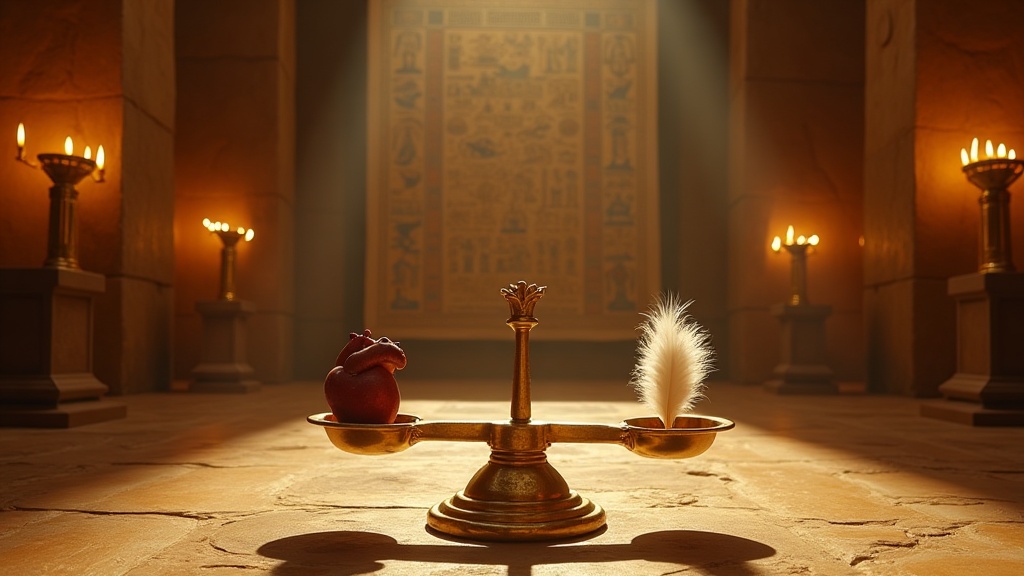
Egyptian
The Book of the Dead: Egypt's Guide to Eternity
Ancient Egypt's most sacred funerary text was not a single book but a living archive of spells, maps, and prayers that guided the dead through the perils between death and eternal life.
Egyptian
Eye of Horus: The Protective Amulet That Watched Over the Living and the Dead
Worn by pharaohs and fishermen alike, the Eye of Horus is one of antiquity's most potent protective symbols, carrying the weight of cosmic battle, divine healing, and eternal vigilance.

Egyptian
Ra the Sun God: Egypt's Supreme Ruler of Light and Creation
Ra, the ancient Egyptian sun god, blazed at the very heart of a civilization that worshipped light as the pulse of creation itself. Discover his origins, his many forms, and the sacred journey he took across the sky and through the underworld every single day.
Egyptian
The Ankh: Egypt's Eternal Symbol of Life
The ankh is ancient Egypt's most recognizable hieroglyph, a looped cross carried by gods and pharaohs alike as the very key to immortal life. Discover its origins, meanings, and sacred legacy.