
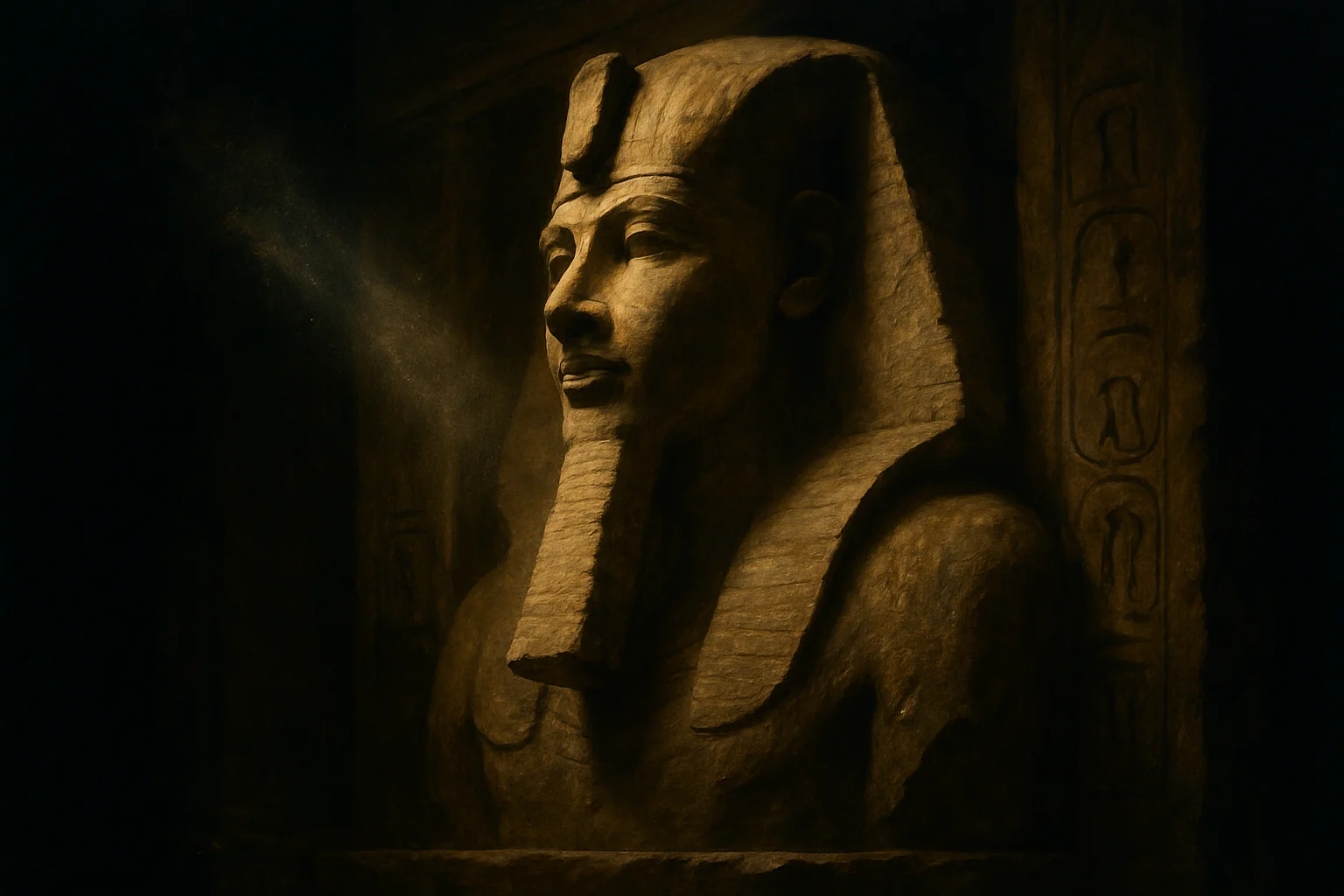
Ramses II: The Great Pharaoh of Ancient Egypt
Ramses II ruled Egypt for 66 years, built monuments across two continents, and signed history's first surviving peace treaty. The man behind the myth.
Contents
Ramses II was the third pharaoh of Egypt's Nineteenth Dynasty, ruling for 66 years from approximately 1279 to 1213 BCE during the New Kingdom, and is remembered as one of the most prolific builders and self-promoters in Egyptian history. His reign produced more colossal statuary, temple inscriptions, and monumental architecture than any other pharaoh. The treaty he signed with the Hittite empire in his twenty-first regnal year remains the oldest surviving peace accord in the world.
The title "the Great" was not ancient. It arrived centuries later, bestowed by Greek and Roman writers dazzled by the scale of his monuments. What the inscriptions reveal is a ruler who understood that power in the ancient world required not just military success but the relentless repetition of an image. Ramses II built that image in stone, and it has outlasted empires.
Birth, lineage, and the path to the throne
Ramses was born around 1303 BCE to Seti I and Queen Tuya. His grandfather, Ramses I, had founded the Nineteenth Dynasty after serving as vizier and military commander under the last pharaoh of the Eighteenth Dynasty. The family came from the eastern Nile Delta, a region with strong military traditions and close ties to the Levantine frontier. Unlike the old Theban aristocracy or the royal bloodlines that stretched back to Tutankhamun, this was a dynasty built on administrative competence and military loyalty.
Seti I groomed his son early. By age ten, Ramses held the rank of captain in the army. By fourteen, he was crown prince and accompanied his father on campaigns into Syria and Nubia. The training was deliberate. Seti understood that the Nineteenth Dynasty's legitimacy rested not on divine ancestry but on visible strength and continuity. When Seti died around 1279 BCE, Ramses ascended without contest.
He was in his mid-twenties. The kingdom he inherited was stable, wealthy, and bordered by two rival powers: the Hittite empire to the north and the Libyan tribes to the west. The religious upheaval of Akhenaten's monotheistic experiment had been reversed two generations earlier, but its memory lingered. Ramses would spend his reign proving that the old gods, and the old model of kingship, still worked.
The Battle of Kadesh and the art of spin
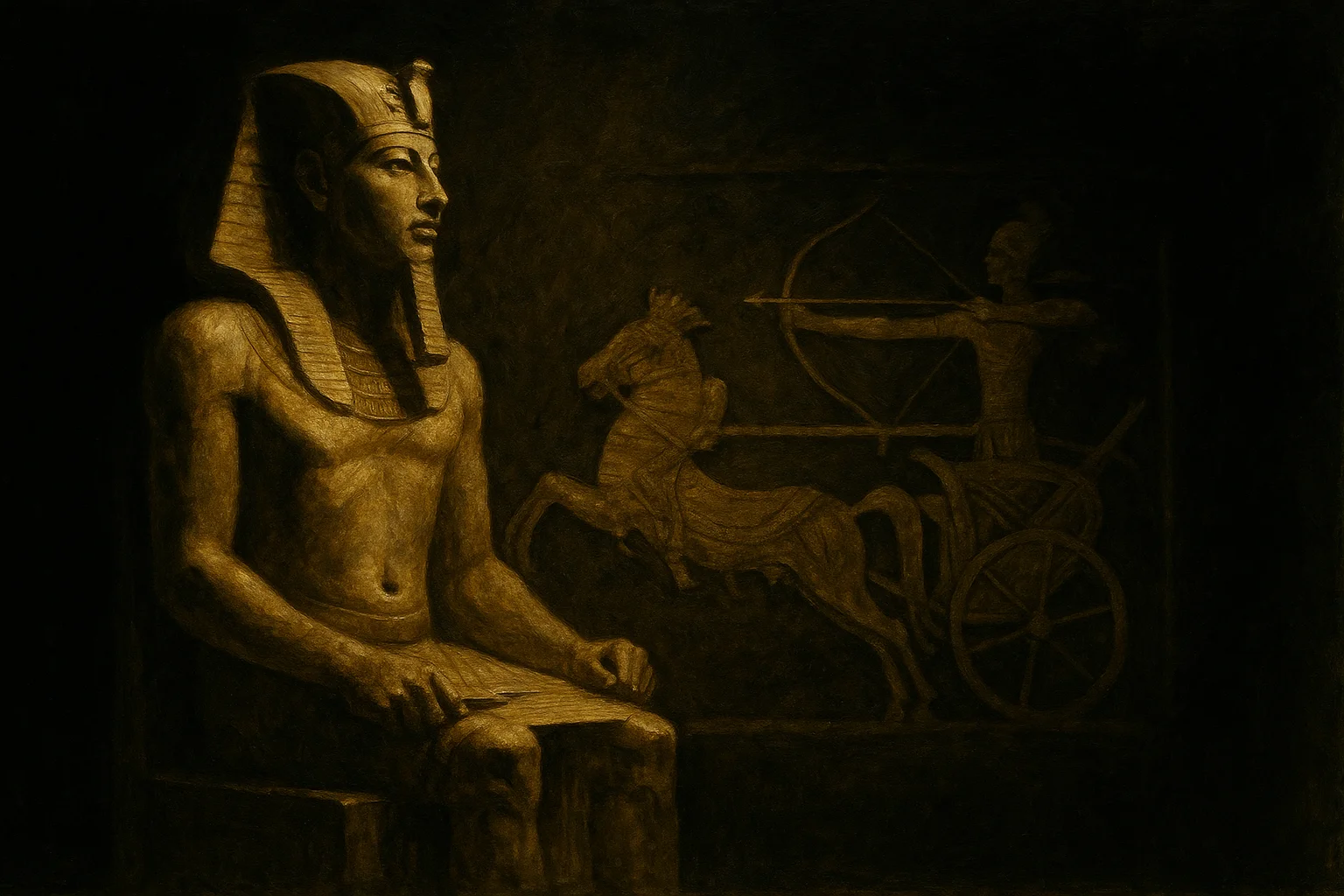
In his fifth regnal year, 1274 BCE, Ramses II marched north with four divisions to confront Muwatalli II, king of the Hittites, over control of the city of Kadesh on the Orontes River in modern Syria. What happened next became the most documented military engagement in ancient Egyptian history, not because it was decisive, but because Ramses made sure it was remembered.
The Poem and the Bulletin
Two principal texts survive: the so-called Poem of Pentaur and the Kadesh Bulletin. Both were inscribed on temple walls at Abu Simbel, Luxor, Karnak, and the Ramesseum. The Poem casts the battle in epic terms. Ramses, separated from his divisions by a Hittite ambush, calls upon the god Amun and single-handedly turns the tide. The Bulletin offers a more sober tactical account but still centres the pharaoh's personal valour.
"Then His Majesty arose like his father Montu. He seized his weapons of war, he girded himself with his coat of mail. He was like Baal in his moment of power." Kadesh Bulletin, temple of Luxor
The archaeology tells a different story. Kadesh was a stalemate. Neither side took the city. Both armies withdrew. Hittite records, recovered from the archives at Hattusa, make no mention of an Egyptian victory. What Ramses achieved was not a military triumph but a narrative one. By flooding Egypt's temples with inscriptions celebrating his divine intervention, he transformed an inconclusive skirmish into proof of his fitness to rule.
The treaty with Hatti
Sixteen years later, in 1258 BCE, Ramses II and the Hittite king Hattusili III signed a peace treaty. Copies were inscribed in Egyptian hieroglyphs at Karnak and in Akkadian cuneiform at Hattusa. The terms were reciprocal: mutual defence, extradition of fugitives, and recognition of existing borders. It was not a surrender. It was a pragmatic acknowledgment that neither empire could afford prolonged war.
The treaty held for the rest of Ramses' reign. Thirteen years after its signing, a Hittite princess arrived in Egypt to marry the pharaoh, cementing the alliance. Ramses commemorated the event with another round of inscriptions. The marriage was diplomatic theatre, but it worked. The northern frontier stayed quiet for half a century.
Building programme: Abu Simbel, the Ramesseum, and territorial ambition
Ramses built more than any pharaoh before or after. His projects stretched from the Nile Delta to Nubia, over 1,200 kilometres. The scale was not accidental. Every temple, every colossus, every inscription reinforced the same message: Egypt was eternal, and so was its king.
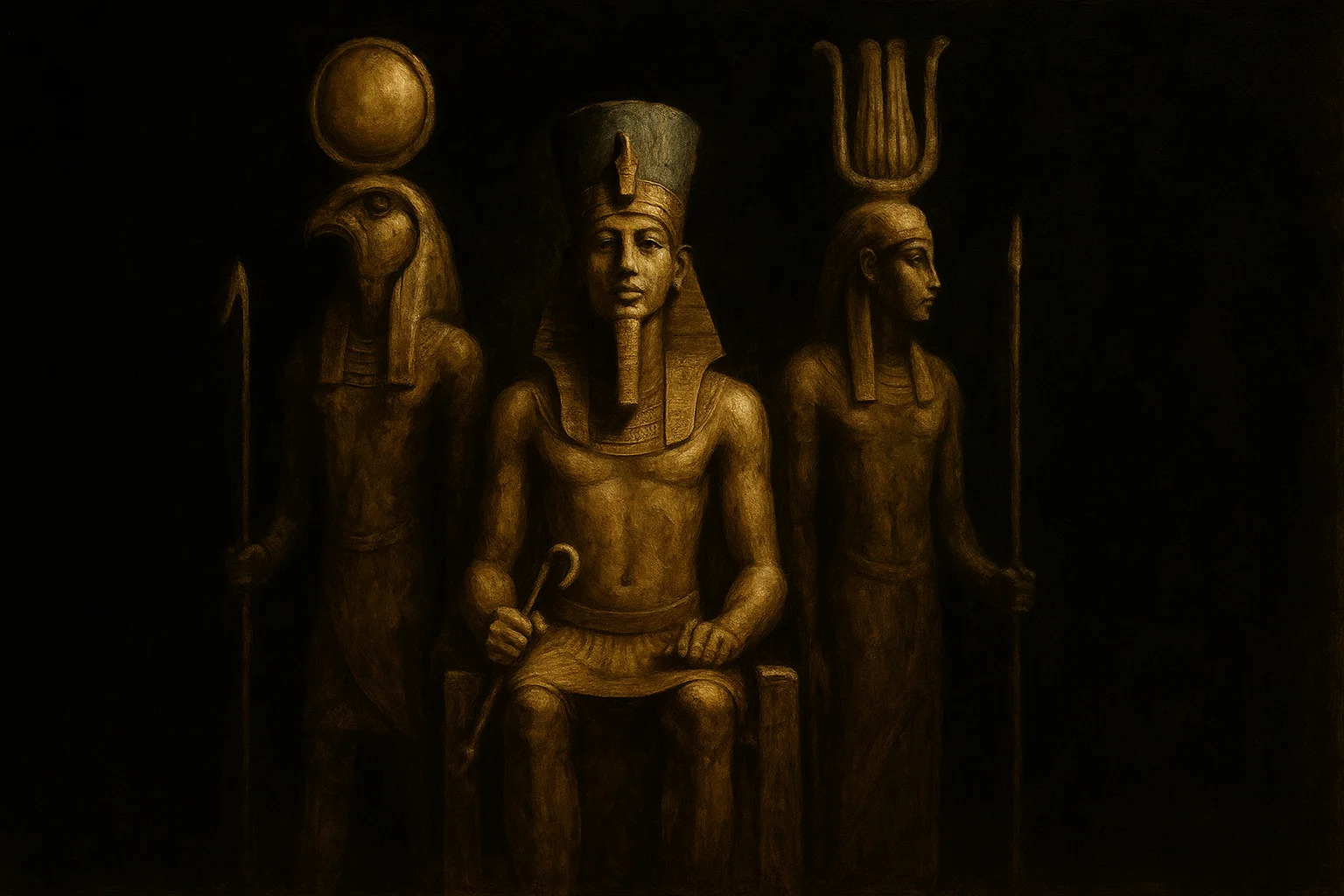
Abu Simbel, carved into a sandstone cliff in Nubia around 1264 BCE, remains the most famous. Four seated colossi of Ramses, each over 20 metres tall, guard the entrance. Inside, the sanctuary was aligned so that twice a year, on the pharaoh's birthday and coronation day, sunlight penetrated the inner chamber and illuminated statues of Ramses alongside the gods Ptah, Amun-Ra, and Ra-Horakhty. A smaller temple nearby honoured his chief wife, Nefertari, depicted at equal scale to the king, an unusual gesture.
The Ramesseum, his mortuary temple on the west bank at Thebes, covered over 20 hectares. Diodorus Siculus, writing in the first century BCE, called it the "tomb of Ozymandias" and marvelled at a fallen colossus he estimated at 1,000 talents in weight. The statue, originally over 17 metres tall, now lies in fragments. Shelley's poem borrowed the Greek name, but the ruin he described was real.
Ramses expanded Karnak and Luxor, added a hypostyle hall at Karnak with 134 columns, and built a new capital in the eastern Delta called Pi-Ramesses. Administrative texts such as Papyrus Anastasi II describe the city's shipyards, granaries, and barracks. It was a logistical hub, not just a monument.
- Abu Simbel: twin rock-cut temples in Nubia, aligned to solar events
- The Ramesseum: mortuary temple at Thebes with colossal statuary
- Karnak and Luxor: expanded hypostyle halls and pylon gateways
- Pi-Ramesses: new administrative capital in the eastern Delta
- Nubian fortresses: reinforced southern frontier with temple-forts
The building programme served multiple purposes. It employed thousands, distributed grain, and projected power into contested regions. It also ensured that Ramses' name appeared on more monuments than any predecessor, a calculated bid for immortality.
Queens, children, and the machinery of succession
Ramses II fathered over 100 children with at least eight principal wives and numerous secondary consorts. The numbers are recorded in tomb inscriptions and temple reliefs. Nefertari, his first and most prominent queen, bore at least six children before her death around year 24 of his reign. Her tomb in the Valley of the Queens, discovered in 1904, contains some of the finest surviving examples of New Kingdom funerary art.
After Nefertari's death, Isetnofret, another principal wife, rose in prominence. Several of Ramses' sons by Isetnofret held high office, including Khaemwaset, who served as high priest of Ptah at Memphis and conducted restoration work on older monuments. Khaemwaset's reputation as a scholar and magician persisted into Ptolemaic times, long after his death.
The sheer number of offspring created logistical challenges. Ramses outlived at least twelve of his sons. His thirteenth son, Merneptah, eventually succeeded him at an advanced age. The extended reign and high mortality among heirs meant that the succession, while orderly, was anything but predictable.
Ramses II
Ruled 66 years, fathered over 100 children, outlived multiple heirs, succeeded by his thirteenth son Merneptah at age 60 or older.
Cleopatra VII
Ruled 21 years, bore four children with two Roman leaders, used dynastic marriage as diplomatic tool, died at 39 with no surviving heir to continue the Ptolemaic line.
Ramses also married several of his own daughters, a practice attested in temple reliefs and inscriptions. The unions were symbolic, reinforcing the royal bloodline's purity and the king's divine status. Whether these marriages were consummated remains a matter of scholarly debate, but their political function is clear.
Religious policy and divine self-presentation
Ramses did not innovate theologically. He restored and expanded the cults of the traditional Egyptian gods: Amun-Ra at Thebes, Ptah at Memphis, Ra-Horakhty at Heliopolis. What distinguished his reign was the degree to which he inserted himself into the divine hierarchy. Temples built under Ramses routinely depicted him making offerings not to the gods but alongside them, as a peer.
At Abu Simbel, the inner sanctuary included a statue of Ramses seated with Amun-Ra, Ra-Horakhty, and Ptah. The alignment of the temple to illuminate these figures twice a year was not mere architectural flourish. It was a statement: the king's ka, his vital essence, participated in the eternal cycle of the sun.
Ramses also promoted the cult of his own deified image during his lifetime. Colossi inscribed with his name received offerings and prayers. This was not unprecedented, earlier pharaohs had been worshipped posthumously, but Ramses accelerated the process. By his later years, he was both king and god, a living intermediary between the human and divine realms.
His religious policy avoided the radicalism of Akhenaten. There was no attempt to suppress local cults or centralise worship. Instead, Ramses co-opted existing religious infrastructure, ensuring that every major temple bore his name and image. The strategy worked. The priesthoods remained loyal, and the theological order stayed intact.
Death, burial, and the mummy's second life
Ramses II died in 1213 BCE, probably in his early nineties. His mummy was prepared according to traditional mummification techniques and interred in tomb KV7 in the Valley of the Kings. The tomb, one of the largest in the valley, was extensively decorated but suffered from flooding and structural damage over the centuries. By the Twenty-first Dynasty, priests moved Ramses' mummy to the royal cache at Deir el-Bahari to protect it from tomb robbers.
The mummy was rediscovered in 1881 along with dozens of other royal burials. It was transported to Cairo, where it remains in the National Museum of Egyptian Civilisation. In 1976, French scientists examined the mummy and found evidence of arthritis, dental abscesses, and hardened arteries. The body showed signs of ankylosing spondylitis, a chronic inflammatory condition. For a man who lived into his nineties in the thirteenth century BCE, the preservation is extraordinary.
The mummy's journey did not end in Cairo. In 1976, it was flown to Paris for conservation treatment and issued an Egyptian passport listing "King (deceased)" as occupation. The episode, widely reported, underscored the degree to which Ramses had become a symbol not just of ancient Egypt but of cultural heritage itself.
Legacy: how Ramses II shaped the pharaonic ideal
Ramses' influence extended long past his death. Later pharaohs adopted his throne name, Usermaatre, as a model. Merneptah, his successor, and subsequent Nineteenth and Twentieth Dynasty rulers built in his style and invoked his image. By the time Herodotus visited Egypt in the fifth century BCE, Greek travellers identified colossal statues across the Nile valley as monuments to a king they called Sesostris, likely a conflation of several rulers including Ramses.
Diodorus Siculus, writing four centuries later, described the Ramesseum in detail and attributed to "Ozymandias" a vast library and a claim to have conquered lands from Libya to India. The claim was propaganda, but it had staying power. Ramses had built not just temples but a legend, and that legend shaped how subsequent generations understood what a pharaoh should be.
Modern Egyptology has worked to separate the man from the myth. Ramses was not a military genius. Kadesh was not a triumph. His building programme, while vast, relied on corvée labour and the redistribution of resources from older monuments. He usurped statues, re-carved inscriptions, and claimed credit for projects begun by his predecessors. Yet the scale of his ambition and the coherence of his self-presentation remain unmatched.
In this, Ramses succeeded. He understood that kingship in the ancient world was as much performance as governance. The inscriptions, the colossi, the temples, they were not vanity. They were infrastructure. They communicated power to his subjects, legitimacy to his rivals, and continuity to the gods. Compared to figures like Cleopatra VII, who ruled at the end of Egypt's independence, or monuments like the Great Sphinx of Giza, which predated him by over a millennium, Ramses occupies a middle ground: not the origin of Egyptian civilisation, but its most effective advertiser.
His reign set the template. For the next thousand years, until the Ptolemaic period, pharaohs measured themselves against Ramses. Even the Greeks and Romans, who knew little of Egypt's earlier history, recognised his monuments as symbols of an empire that had endured. The image he built, carved in stone and repeated across a thousand kilometres, outlasted the kingdom itself.
Frequently asked questions
How long did Ramses II rule Egypt?
Ramses II ruled Egypt for 66 years, from approximately 1279 to 1213 BCE, making his reign one of the longest in ancient Egyptian history and the second-longest for which reliable records survive. He ascended the throne in his mid-twenties and died in his early nineties. His extended reign allowed him to outlive many of his children and to complete an unprecedented building programme across Egypt and Nubia.
What happened at the Battle of Kadesh?
The Battle of Kadesh, fought in 1274 BCE between Ramses II and the Hittite king Muwatalli II, ended in a tactical stalemate with neither side securing control of the contested city in Syria. Ramses was ambushed by Hittite forces but managed to regroup and avoid total defeat. Egyptian temple inscriptions, including the Poem of Pentaur and the Kadesh Bulletin, present the battle as a great victory, but Hittite records and the subsequent peace treaty suggest the engagement was inconclusive. Ramses' real achievement was transforming the stalemate into a propaganda triumph through monumental inscriptions.
How many children did Ramses II have?
Ramses II fathered over 100 children with at least eight principal wives and numerous secondary consorts, according to tomb inscriptions and temple reliefs that list his offspring by name. His most prominent queen, Nefertari, bore at least six children, while Isetnofret and other wives contributed dozens more. The large number of heirs created succession challenges, as Ramses outlived at least twelve of his sons. His thirteenth son, Merneptah, eventually succeeded him at an advanced age.
What monuments did Ramses II build?
Ramses II built or expanded more monuments than any other pharaoh, including the twin rock-cut temples at Abu Simbel, the Ramesseum mortuary temple at Thebes, and additions to the temple complexes at Karnak and Luxor. He also constructed a new capital city, Pi-Ramesses, in the eastern Nile Delta and reinforced the southern frontier with temple-fortresses in Nubia. His building programme extended over 1,200 kilometres and employed thousands of workers. Many older monuments were also usurped, with Ramses re-carving inscriptions to claim credit for earlier projects.
Where is the mummy of Ramses II today?
The mummy of Ramses II is housed in the National Museum of Egyptian Civilisation in Cairo, Egypt, where it was transferred in 2021 as part of a ceremonial procession of royal mummies from the Egyptian Museum. The mummy was originally discovered in 1881 in the royal cache at Deir el-Bahari, where priests had moved it during the Twenty-first Dynasty to protect it from tomb robbers. In 1976, the mummy was flown to Paris for conservation treatment and scientific analysis, revealing details about Ramses' health and the embalming techniques used in his preparation.
Why is Ramses II called the Great?
Ramses II is called "the Great" not because of an ancient Egyptian title but due to the Greek and Roman writers who marvelled at the scale and number of his monuments centuries after his death. The epithet reflects his success as a builder and self-promoter rather than military conquest, as his most famous battle at Kadesh was a stalemate. His 66-year reign, vast building programme, and the sheer volume of inscriptions bearing his name made him the most visible pharaoh in the archaeological record. Later rulers adopted his throne name and emulated his style, cementing his reputation as the model of pharaonic kingship.
Further reading on Mythologis
Free 25-page sample
Want the whole story?
Take the first 25 pages free. If it pulls you in, the full edition is yours as an instant PDF download, with a paperback on Amazon for selected titles.
Egyptian
The Egyptian Mythology Book: Ra, Osiris, Isis, Anubis, and the Sacred Stories of the Pharaohs
Ra, Osiris, Isis, Anubis, and the Sacred Stories of the Pharaohs
Three thousand years of Egyptian sacred stories. The Duat, the weighing of the heart, the cult of Osiris, and the daily voyage of the sun.
More from Egyptian
All articles
Egyptian
The Book of the Dead: Egypt's Guide to Eternity
Ancient Egypt's most sacred funerary text was not a single book but a living archive of spells, maps, and prayers that guided the dead through the perils between death and eternal life.
Egyptian
Eye of Horus: The Protective Amulet That Watched Over the Living and the Dead
Worn by pharaohs and fishermen alike, the Eye of Horus is one of antiquity's most potent protective symbols, carrying the weight of cosmic battle, divine healing, and eternal vigilance.
Egyptian
Ra the Sun God: Egypt's Supreme Ruler of Light and Creation
Ra, the ancient Egyptian sun god, blazed at the very heart of a civilization that worshipped light as the pulse of creation itself. Discover his origins, his many forms, and the sacred journey he took across the sky and through the underworld every single day.
Egyptian
The Ankh: Egypt's Eternal Symbol of Life
The ankh is ancient Egypt's most recognizable hieroglyph, a looped cross carried by gods and pharaohs alike as the very key to immortal life. Discover its origins, meanings, and sacred legacy.