
Odin: The Allfather in Asatru Practice
Odin is the wandering, one-eyed Allfather at the heart of Asatru devotion. Learn his myths, his symbols, and how modern practitioners honor him today.
Contents
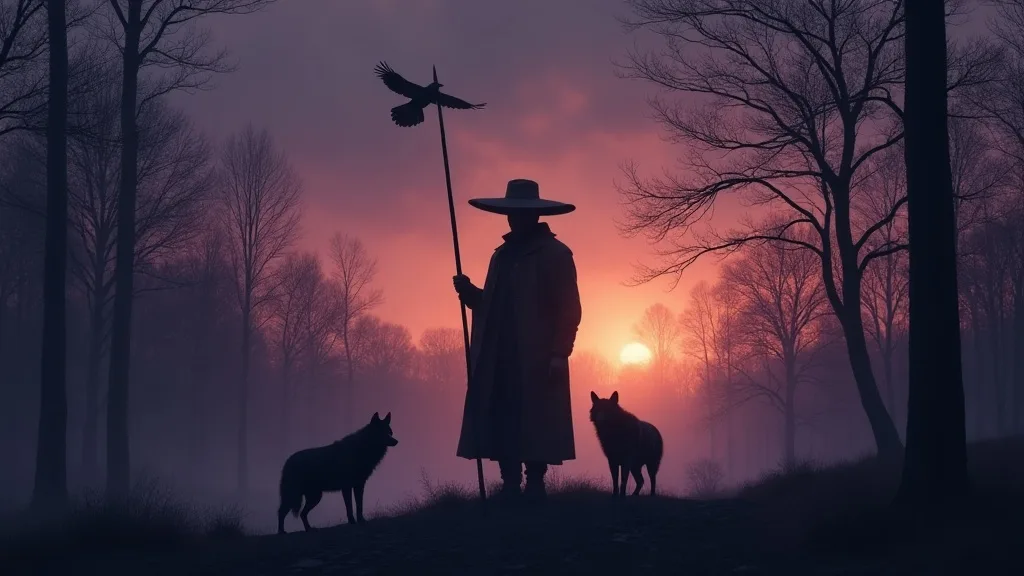
He arrives without announcement. A broad-brimmed hat pulled low. One eye missing, given away for a drink from a well that holds the memory of every world. A pair of ravens on his shoulders, a spear in his hand, and two wolves at his heels. Odin: The Allfather in Asatru Practice is not a tidy subject. He is the god of poetry and death, of war and wisdom, of madness and magic. He is the father of the gods and, simultaneously, the most dangerous figure in the Norse pantheon.
The Eddas, the two great medieval compilations of Norse myth, circle around him the way planets orbit a dark star. The Prose Edda, written by the Icelandic scholar Snorri Sturluson around 1220 CE, and the Poetic Edda, a collection of older poems preserved in the Codex Regius manuscript from roughly the same period, both return to Odin again and again: as creator, as wanderer, as schemer, as seeker of the runes. He defies easy categorization. Every time a reader thinks they have him pinned, he shapeshifts and walks out a different door.
For practitioners of Asatru, the modern revival of pre-Christian Norse and Germanic religion, Odin is not merely a literary character. He is a living presence: honored at altars, invoked in ritual toasts called blót, tattooed on skin, and whispered to in moments of creative desperation or mortal grief. Understanding him means understanding why a god who trades in sacrifice and deception still commands genuine devotion across the world today.
Who Odin Is: The Many Names of the Allfather
No Norse deity carries more names. The Prose Edda's "Gylfaginning" section lists over fifty of them. Yggr, meaning "the Terrible." Grímnir, "the Hooded One." Bölverkr, "Worker of Evil." Hár, "the High One." Each name is a facet of a different role, a different mood, a different story.
Odin sits at the peak of the Aesir, the primary tribe of Norse gods who dwell in Asgard, the great citadel at the center of the cosmos. He is the husband of Frigg, the father of Thor, and by various liaisons, the father of Baldr, Vidar, and Vali. The Prose Edda calls him Aldaföðr, the Father of All, not because he literally fathered every being, but because he shaped the conditions in which all life became possible.
His physical signature is unmistakable in the sources. One eye, always. The Völuspá, perhaps the most celebrated poem in the Poetic Edda, places that eye in Mimir's well beneath the roots of Yggdrasil, the World Tree. Mimir guards the waters of memory and understanding. Odin wanted a drink. Mimir named the price. The eye was given, sunk into the water, and what Odin saw with two eyes was traded for something no physical sight can reach.
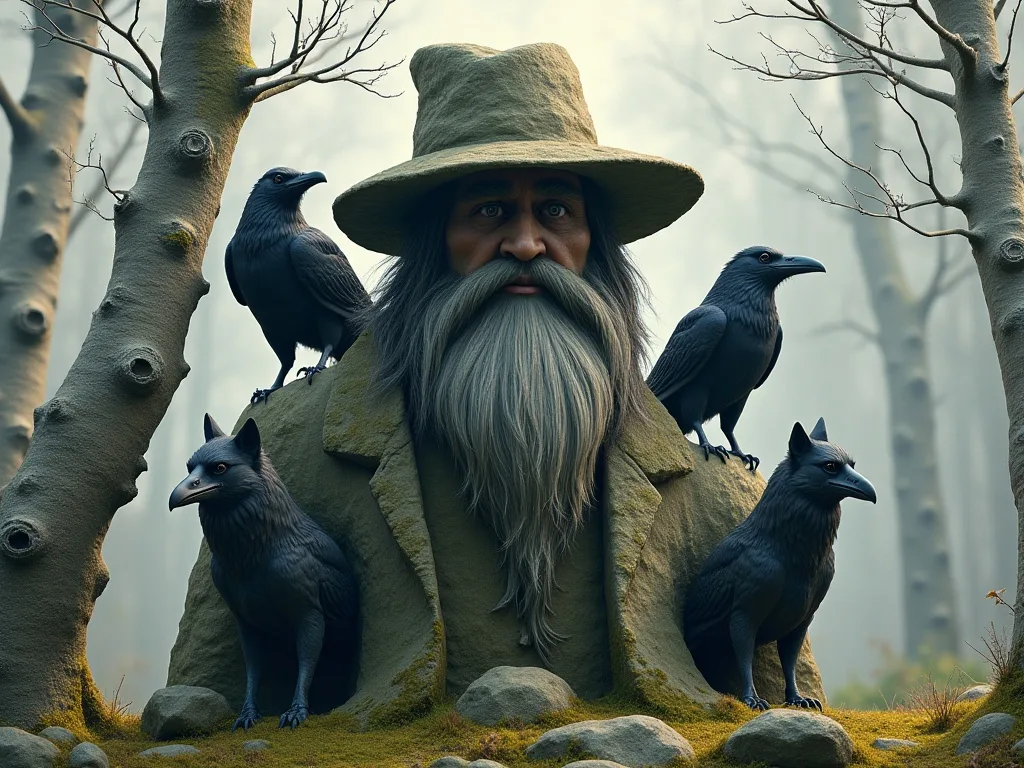
He carries Gungnir, the spear forged by the dwarves known as the Sons of Ivaldi, a weapon so perfectly balanced that it never misses its mark. He rides an eight-legged horse named Sleipnir, the son of Loki in a shape not worth describing in polite company. His two ravens, Huginn and Muninn, meaning "Thought" and "Memory," fly across all nine worlds every day and return at dusk to whisper what they have seen. The 10th-century Grímnismál poem records Odin saying he fears more for Muninn, Memory, than for Huginn, Thought. A god who can act without thought is dangerous. A god who forgets is undone.
The Sacrifice on Yggdrasil: Where the Runes Came Shape
The most extraordinary story attached to Odin is neither a battle nor a conquest. It is a self-inflicted ordeal. The Hávamál, a long poem of proverbs and wisdom preserved in the Poetic Edda, contains a passage known as the Rúnatal, the "Tally of the Runes," in which Odin speaks in the first person about what he did.
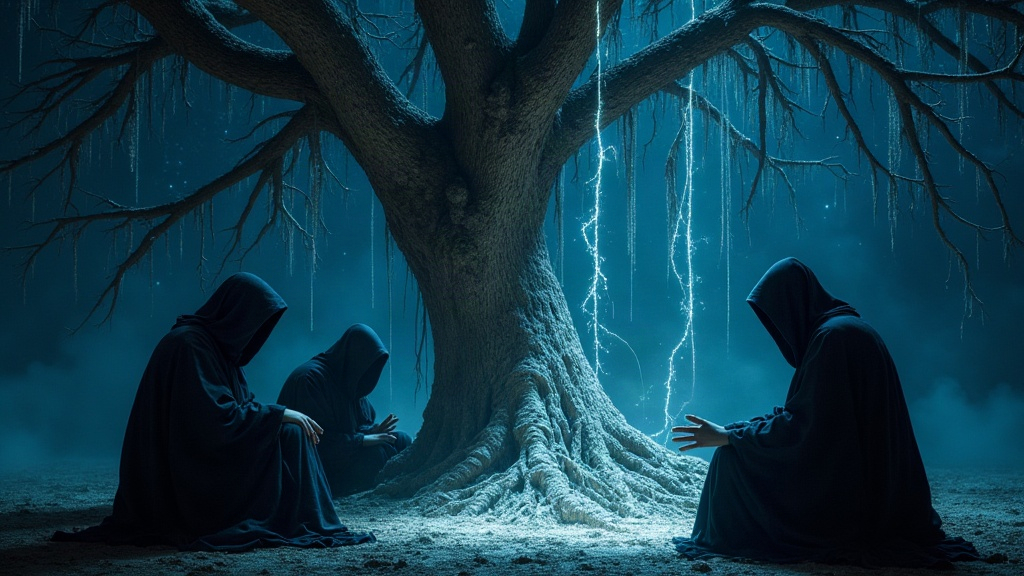
He hung on Yggdrasil for nine nights. He was wounded by his own spear. He had no food, no drink, no help from any other being. He hung there, between life and death, between the worlds, in a space where ordinary perception dissolves. At the end of the nine nights, he saw the runes. He seized them. He fell back into the living world carrying the oldest alphabet in Norse cosmology, a set of symbols that are simultaneously letters, sounds, magical forces, and philosophical concepts.
The word rune itself comes from the Proto-Germanic rūnō, meaning a secret or a whisper. In modern Asatru practice, the runes carry that same double weight. They are writing. They are also cosmological keys. The twenty-four runes of the Elder Futhark, the oldest runic alphabet attested in inscriptions from around the 2nd to 8th centuries CE, are studied, cast, and meditated upon by Asatru practitioners specifically because Odin paid for them with pain and isolation.
The hanging on the tree echoes shamanic initiation rituals documented across Siberian and Central Asian cultures, and scholars like Hilda Ellis Davidson in her 1964 work Gods and Myths of Northern Europe have drawn those parallels carefully. Odin's role as a seiðr practitioner, a user of the Norse form of trance magic called seiðr, also connects him to shamanistic traditions. He learned seiðr from Freyja, the Vanir goddess, and the Ynglinga Saga notes that this magic was considered ergi, unmanly, by Norse social standards. Odin practiced it anyway. His hunger for power exceeded his care for social reputation.
Valhalla, the Einherjar, and Odin's Preparation for Ragnarök
Behind every generous act Odin performs lies a calculation. The mead of poetry he steals from the giants and shares with gods and humans? It makes poets, and poets make memory, and memory is armor against oblivion. The warriors he selects after death for his hall, Valhöll, Valhalla? They are not a reward. They are an army.
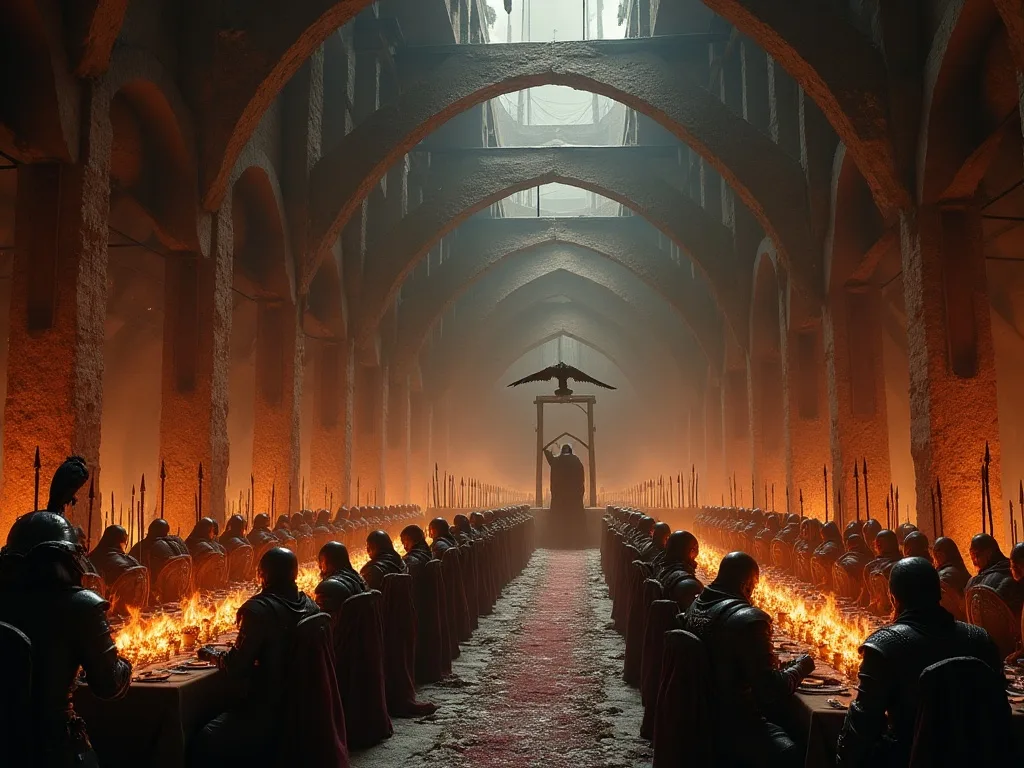
Valhalla is described in the Grímnismál as having 540 doors, each wide enough for 800 warriors to walk through shoulder to shoulder. The dead warriors called Einherjar, the "Alone-Fighters," feast on boar meat every night, drink mead from a she-goat named Heiðrún, and spend their days fighting each other to death. Then they rise and do it again. This is not a paradise of rest. It is a training ground.
Odin collects the finest mortal fighters because he knows what is coming. Ragnarök, the twilight of the gods, is not a myth he can prevent. The Völuspá lays it out clearly: the wolf Fenrir will break free, the serpent Jörmungandr will rise from the ocean, and Odin himself will be swallowed by Fenrir on the final battlefield. He knows this. He has known it since the seeress told him at the beginning of time. Every warrior he gathers, every piece of wisdom he acquires, every sacrifice he makes is a preparation for a war he will still lose.
This is one of the qualities that makes Odin so compelling to modern readers and practitioners alike. He is not omnipotent. He operates under fate, just like humans do. He fights anyway.
Odin in Asatru: How Modern Practitioners Honor the Allfather
Asatru, from the Old Norse meaning roughly "faith in the Aesir," began its formal modern revival in Iceland in 1972 when Sveinbjörn Beinteinsson founded the Ásatrúarfélagið, the Asatru Fellowship. It has since grown into a recognized religion in multiple countries, with organizations active across Scandinavia, North America, and Australia.
For practitioners who work with Odin, the relationship is not passive. He is not a deity you light a candle for and walk away. Odin demands engagement. He is associated with creative work, with scholarship, with leadership, with divination using the runes, and with accepting hard truths. Many Asatru practitioners describe him as a god who calls rather than a god you choose casually.
Ritual forms vary by group and by individual practice, but several patterns repeat across the tradition:
- Blót: A ritual offering, typically of mead, ale, or food, poured into a bowl called a hlaut-bowl and sprinkled onto a statue or altar of Odin, or onto the earth. The blót is both a sacrifice and a communion. Major seasonal blóts dedicated to Odin include Odin's Blót in November and the winter Dísablót period.
- Sumbel: A ritual drinking ceremony in which participants make toasts to the gods, to ancestors, and to personal commitments. Odin is frequently toasted first among the Aesir.
- Rune work: Because Odin is the source of the runes, many practitioners study, cast, and meditate on the Elder Futhark as a primary devotional act. Galdr, the practice of chanting rune sounds to activate their properties, is considered Odin's domain.
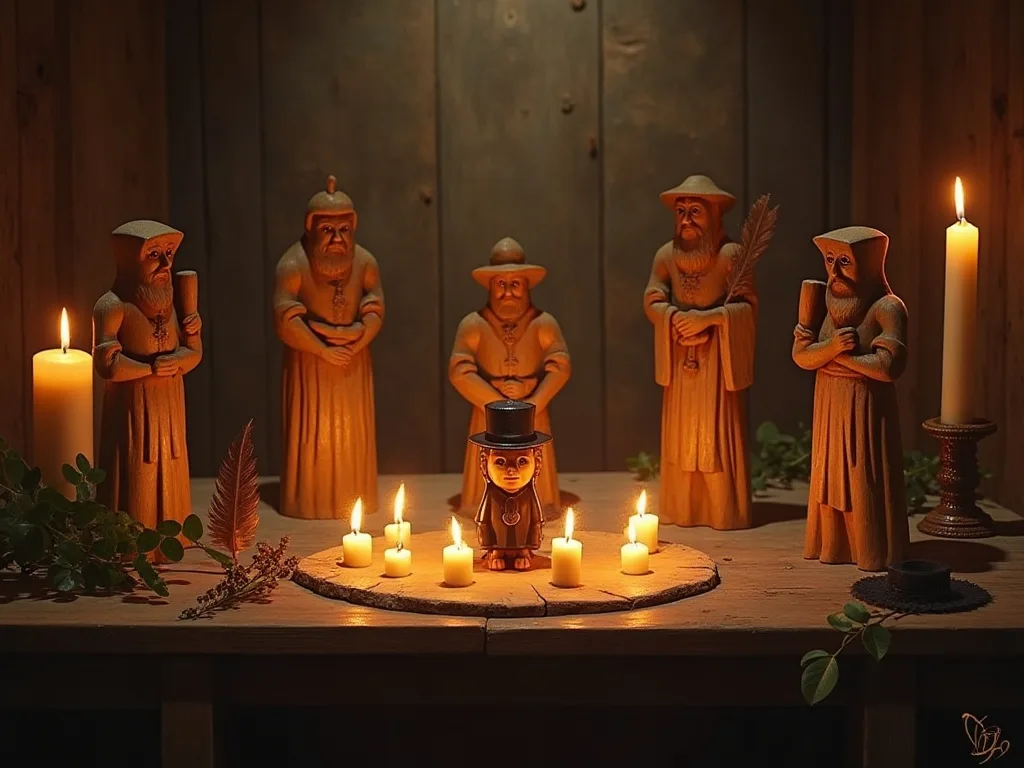
- Altar dedication: A dedicated altar with representations of Odin, such as imagery of ravens, wolves, or a single eye, along with offerings of mead, poetry, or creative work placed at his feet.
Odin's sacred day in many modern Asatru traditions is Wednesday, the word itself derived from "Woden's Day," Woden being the Anglo-Saxon form of Odin's name. His associated animals are the raven, the wolf, and the horse. His sacred plant is the ash tree, since Yggdrasil is described as an ash in the Eddas. His number is nine, in honor of the nine nights on the World Tree.
Odin and Wisdom: The Mead of Poetry and Mimir's Well
Two great stories in Norse myth frame Odin as the god who pays any price for knowledge. Both appear in the Prose Edda.
The first is the story of Mimir's Well. Mimir, a being of vast intelligence who may once have been a god himself, guards a spring beneath the root of Yggdrasil that touches Niflheim, the realm of ice and mist. Anyone who drinks from it gains unparalleled insight. Odin traveled there and asked for a drink. Mimir's price was an eye. Odin gave it without hesitation, pressed it into the water, and drank. The Völuspá confirms the eye is still there: "I know where Odin's eye is hidden, in the famous well of Mimir."
The second story concerns the skáldskaparmjöðr, the Mead of Poetry. Two dwarves, Fjalarr and Galarr, killed the wisest being ever created, a man named Kvasir who was formed from the saliva of gods at a peace treaty, and mixed his blood with honey to brew a mead that grants anyone who drinks it the gift of poetry or scholarship. After a chain of thefts and transformations, the mead ended up with a giant named Suttungr. Odin seduced Suttungr's daughter Gunnlöð, spent three nights with her, drank all three vats of mead, transformed into an eagle, and flew back to Asgard. He spat most of the mead into vessels for the gods and for human poets. He spilled a little from his flight. That careless spill, the Prose Edda notes, is the portion available to bad poets.
Both stories reinforce the same principle: in Norse cosmology, knowledge is not a gift. It is a resource that must be taken, earned, or purchased. Odin embodies that principle completely.
Odin's Shadow Side: The Deceiver, the Oathbreaker
Devotion to Odin in Asatru practice is not uncomplicated, and experienced practitioners say so openly. The Eddas are honest about his flaws. He breaks oaths. The Lokasenna, a poem in which Loki accuses the gods of various vices at a feast, has Loki pointing directly at Odin and accusing him of practicing seiðr magic like a woman, and of awarding victory unjustly on the battlefield. Odin does not deny either charge.
In the Ynglinga Saga, Snorri writes that Odin could cause his enemies to become blind or deaf in the middle of battle, filled with terror, while his own warriors fought with berserker fury. The berserkers, warriors who wore wolf or bear skins and fought in states of animal frenzy, were Odin's men. Violence was one of his instruments.
He also abandons his favorites. The Völsunga Saga, the epic story of the Völsung clan that inspired Richard Wagner's Ring Cycle, shows Odin granting the hero Sigmund an extraordinary sword by plunging it into a tree. Decades later, when Sigmund's time has come, Odin appears on the battlefield and shatters the same sword with his spear. He gave the gift. He took it back when it served his larger design.
For modern Asatru practitioners, this complexity is not hidden or softened. Many practitioners describe their relationship with Odin as one that requires clear eyes. He asks much. He may lead you into difficulty intentionally. Several Asatru writers, including Diana Paxson in her 2006 book Essential Asatru, describe Odin as a god who tests his devotees relentlessly and that entering a close working relationship with him is a decision to be made seriously, not casually.
Odin Across the Germanic World: Woden, Wotan, and the Wild Hunt
Odin did not belong only to the Norse. Across the Germanic-speaking world, from Anglo-Saxon England to the Frankish territories of continental Europe, the same figure appeared under different names. The Anglo-Saxons called him Woden. The continental Germans called him Wotan or Wuotan. The root name, reconstructed as Proto-Germanic Wōðanaz, connects to a word meaning inspiration, fury, or divine frenzy.
Wednesday, Mercredi in French, preserves the Roman equation of Odin with Mercury: both are guides of the dead, both are associated with communication and travel, both are tricksters who move between worlds. The Roman writer Tacitus, writing his Germania around 98 CE, identified the chief god of the Germanic tribes as Mercury, almost certainly meaning Wotan.
The Wild Hunt is perhaps the most persistent echo of Odin across European folklore. A spectral cavalcade of riders, led by a figure on a great horse, rushes through winter skies and over dark fields. In German folklore, the leader is Wotan. In Norse tradition, it connects to Odin's ride on Sleipnir through the nine worlds. In England, the hunt was reported across centuries, localized under names like Herne the Hunter in the Thames valley. Folklorist Katharine Briggs documented dozens of British variants in the 20th century. The hunting figure at the head of the cavalcade always shares Odin's core attributes: a wide hat, a horse, a connection to death and to the winter darkness.
This spread across cultures is one reason Odin occupies such a large space in Asatru and in the wider modern Pagan movement. He is not a local deity. He is an archetype woven into the earliest layers of Germanic civilization.
Frequently Asked Questions About Odin in Asatru
Frequently asked questions
What is the difference between Odin in the Eddas and Odin as worshipped in modern Asatru?
The Eddas were written down by Christian-era Icelanders preserving older oral traditions, which means they reflect both genuine pre-Christian belief and medieval literary reshaping. Modern Asatru practitioners generally treat the Eddas as the best available primary source while acknowledging that living practice involves personal relationship, ritual, and interpretation that the texts do not prescribe. Odin in the Eddas is a literary and mythological figure; Odin in Asatru is also a devotional presence engaged through ritual, prayer, rune work, and creative practice.
Why did Odin sacrifice his eye to Mimir's well?
The Völuspá and the Prose Edda both describe Mimir's well as the source of cosmic wisdom and memory. Odin wanted the knowledge held in those waters badly enough to pay the price Mimir named: one eye. The act reflects a core Norse value, that the highest forms of knowledge require genuine sacrifice, not token effort. Many Asatru practitioners interpret the story as a model for how to approach serious spiritual or intellectual work.
Is Odin considered dangerous to work with in Asatru?
Many experienced Asatru practitioners say yes, in a specific sense. Odin is not random or malicious, but he is known in the lore for testing his chosen people, withdrawing support when he judges the moment right, and asking more than a practitioner expects to give. Authors like Diana Paxson and Galina Krasskova, who have written extensively on Odin devotion, consistently note that he is a god of transformation and that transformation is rarely comfortable. Practitioners are encouraged to approach him with honesty, clear intention, and realistic expectations.
What are the runes, and why are they connected to Odin?
The runes are the characters of the Elder Futhark, the oldest runic alphabet, attested in inscriptions from around the 2nd century CE onward. In Norse myth, they are not a human invention but a cosmic force Odin obtained by hanging on the World Tree for nine nights in an ordeal described in the Hávamál. Each rune represents both a sound and a broader concept or force. In Asatru, working with the runes, through casting, carving, chanting, or meditation, is considered Odin's gift and his domain. The practice is called runework or runelore.
What does Odin's name actually mean?
The name Odin derives from the Proto-Germanic Wōðanaz, connected to the root wōðaz, meaning inspiration, fury, or frenzy. Related words appear in Old English (wōd, mad or inspired), Old High German (wuot, rage), and even in the Latin term vates, a seer or inspired poet, which some linguists link to the same Indo-European root. Odin's name essentially means the god of inspired frenzy, which fits his roles as patron of poets, warriors, and shamanic practitioners perfectly.
How does Odin's fate at Ragnarök shape his character?
Odin knows from the Völuspá that he will be swallowed by the wolf Fenrir at Ragnarök. This foreknowledge shapes everything he does. Every sacrifice, every piece of wisdom gathered, every warrior brought to Valhalla is preparation for a battle he cannot avoid and cannot win. This makes him a figure of tragic grandeur rather than simple authority. In Asatru, this quality resonates: Odin models how to act with full knowledge of one's own limits and mortality, without either denial or paralysis.
Odin's Continuing Presence: From the Eddas to the Modern Altar
Odin did not disappear when Scandinavia converted to Christianity. He migrated. He became the basis for the wandering stranger in European folktales, the white-bearded old man who appears at crossroads and tests travelers. He surfaced in Wagner's Ring Cycle as the brooding, scheming Wotan who engineers a catastrophe he cannot stop. He entered the 20th century as the trickster-philosopher in Neil Gaiman's 2001 novel American Gods, and in 2022 he appeared as a manipulative king in the Marvel series Thor: Love and Thunder, a version stripped of theology but retaining the essential cunning.
In serious Asatru practice, the conversation about Odin is more nuanced than popular culture allows. Scholars like John Lindow, whose Norse Mythology: A Guide to Gods, Heroes, Rituals, and Beliefs (2001) remains a standard academic reference, and Hilda Ellis Davidson, whose comparative work across decades traced Odin from Bronze Age precedents to medieval literature, have both argued that Odin represents something older and stranger than a simple war god. He is a god of altered states: the poetic trance, the battle frenzy, the shamanic journey, the edge between life and death. All of these states involve leaving ordinary consciousness behind and returning with something that was not there before.
That is why practitioners today, sitting with a set of rune stones or standing before an altar in an Asatru ceremony, still speak his name. Not out of nostalgia. Not because a fantasy franchise made him famous. Because the archetype he embodies, the cost of true knowledge, the necessity of sacrifice, the courage to act under fate, still asks something real from the people who take him seriously. The one-eyed god is still watching. Both ravens are still in the sky.
Read the full book
Want the whole story?
The complete edition is an instant PDF download here, with a paperback on Amazon for selected titles.
Asatru
The Asatru Book: Norse Paganism, Heathenry, and the Worship of the Old Gods
Norse Paganism, Heathenry, and the Old Gods
The living revival of Norse paganism: who the heathens worship, how the blót and the sumbel work, what the Nine Noble Virtues are, and how a faith that ended a thousand years ago came back to life in the modern world. Rooted in the Eddas, practiced today.
More from Asatru
All articles
Asatru
Mjolnir: Thor's Hammer as Symbol and Talisman
Mjolnir, Thor's legendary hammer, embodies divine power, protection, and order in Norse mythology. Discover how this symbol shaped Viking belief, ritual, and endures in modern culture.
Asatru
Winter Nights and Yule: Heathen Seasonal Festivals and Their Sacred Roots
Winter Nights and Yule are the two cornerstone heathen seasonal festivals that mark the darkest months of the year. Rooted in pre-Christian Norse and Germanic traditions, these observances honor the cycle of death and rebirth, ancestor veneration, and the sacred interplay between human and divine realms.
Asatru
Folkish versus Universalist Asatru: The Inclusion Debate
Asatru splits between two visions: one rooted in ancestry and ethnicity, one open to anyone who honors the Norse gods. We trace the ideological divide, its history, and how it shapes modern practice.
Asatru
Wyrd and Orlog: Fate and Personal Destiny in Norse Mythology
In Norse tradition, **Wyrd and Orlog** are the twin forces that shape destiny. Wyrd flows from the present moment, personal and mutable; Orlog is the ancient law laid down at creation. Together they answer the oldest question: how much of our fate is written, and how much is ours to choose?