Chinese
From Pangu's cosmic egg to the Jade Emperor's celestial bureaucracy: a primary-source guide to three thousand years of Chinese myth and legend.
Browse Chinese
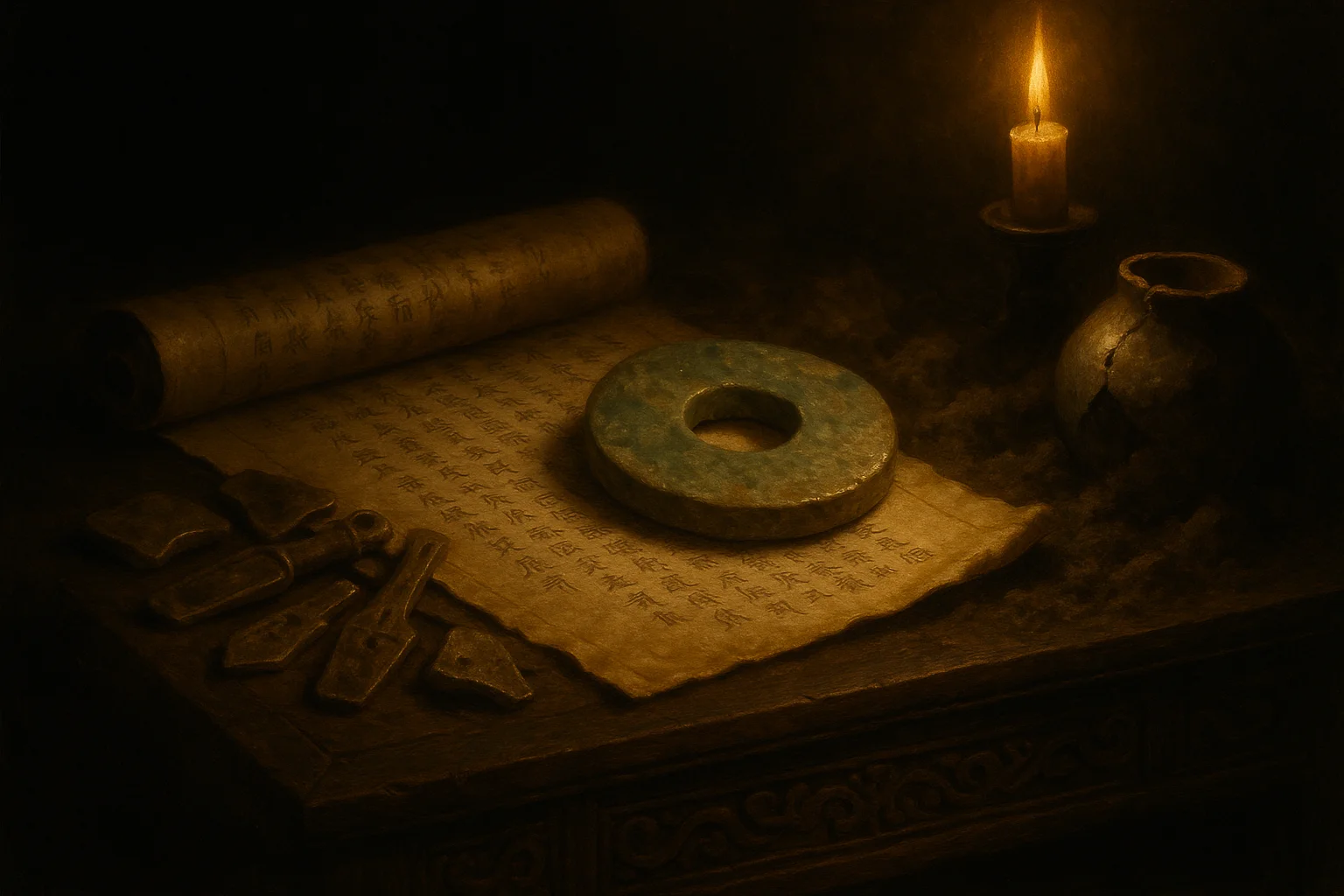
Chinese mythology does not arrive in a single book. There is no Theogony, no Edda, no authoritative canon handed down by a priestly class. Instead, the tradition accumulates across three millennia in court histories, philosophical treatises, regional gazetteers, novels, and oral lore that was written down centuries after it was first told. The Shanhaijing (Classic of Mountains and Seas), compiled between the fourth and first centuries BCE, catalogues gods, monsters, and sacred geography but offers little narrative connective tissue. The Huainanzi, a second-century BCE philosophical compendium, preserves cosmogonic fragments. The sixteenth-century novel Fengshen Yanyi (Investiture of the Gods) dramatises the pantheon but does so fifteen hundred years after many of the deities it describes first appeared in ritual practice. To study Chinese mythology is to work with an archive, not a scripture.
This creates a problem for anyone seeking a tidy origin story or a stable cast of characters. The same deity may appear in five texts under three names with contradictory parentage. Regional cults elevate local heroes to godhood; state ideology folds them into the bureaucracy of heaven. What survives is not a single mythology but a long conversation between poets, historians, shamans, and novelists, each contributing layers that never fully reconcile.
The Problem of Sources
The earliest mythological material appears in the Shanhaijing, a text that reads more like a gazetteer than a narrative. It lists mountains, rivers, and the creatures or spirits associated with them, often in terse, catalogic prose. The god Zhulong, for instance, is described as a human-faced serpent whose opening and closing of his eyes creates day and night. No story explains why. The text assumes the reader already knows.
The Chu Ci (Songs of Chu), attributed to the poet Qu Yuan in the third century BCE, preserves older shamanic traditions from the southern state of Chu. Its "Tianwen" (Heavenly Questions) section poses riddles about cosmogony and divine genealogy but offers few answers. The Huainanzi, compiled under the patronage of Liu An in the second century BCE, provides the most coherent early account of creation, but it is embedded in a Daoist philosophical framework that treats myth as allegory.
By the time the Shiji (Records of the Grand Historian) is written by Sima Qian in the first century BCE, myth has already begun to merge with dynastic history. Sima Qian treats the Yellow Emperor and other legendary rulers as historical figures, placing them in a chronological sequence that leads directly to the Han dynasty. Later novels such as Journey to the West (Xiyouji), written by Wu Cheng'en in the sixteenth century, draw on Buddhist, Daoist, and folk traditions to create new mythological narratives that feel ancient but are, in textual terms, relatively recent.
The result is a mythology that resists easy summary. Variants proliferate. Dates blur. What matters is not which version is correct but how each version reflects the concerns of its time.
Creation: Pangu, Nüwa, and the Ordering of Chaos
Chinese creation myths do not begin with a deity speaking the world into being. They begin with chaos, undifferentiated and formless, which must be separated, organised, and repaired. The process is physical, often violent, and never quite finished.
Pangu and the Cosmic Egg
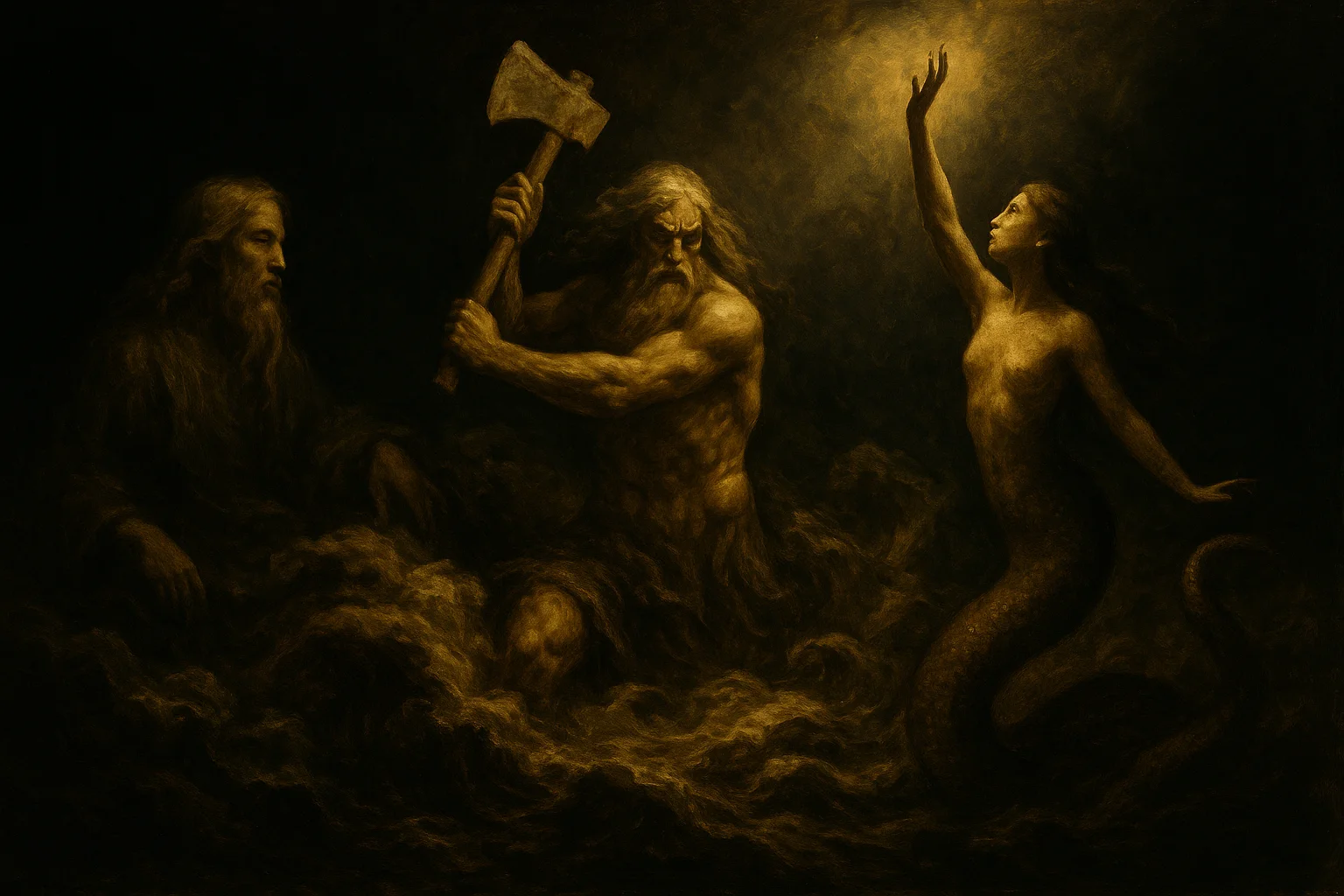
Pangu appears late in the textual record, first mentioned in the third-century CE work Sanwu Liji (Historical Records of the Three Sovereigns and Five Emperors) by Xu Zheng. According to this account, the universe begins as a cosmic egg containing only chaos. Pangu sleeps inside for eighteen thousand years. When he wakes, he splits the egg with an axe. The light, pure elements rise to become the sky; the heavy, turbid elements sink to become the earth.
Pangu stands between them, growing ten feet per day, pushing heaven and earth apart for another eighteen thousand years until the separation is permanent. When he dies, his body transforms into the world: his breath becomes wind, his voice thunder, his left eye the sun, his right eye the moon. His limbs become the four cardinal mountains. His blood forms rivers. His hair becomes the stars. Even his parasites, some versions add, become humanity.
The myth shares structural features with other creation myths involving primordial beings whose bodies become the cosmos, but it lacks the sacrificial theology found in, say, the Norse account of Ymir or the Vedic Purusha. Pangu does not die to create; he simply exhausts himself in the act of separation.
Nüwa Repairs the Sky
Nüwa is older in the textual record than Pangu and more widely attested. The Huainanzi describes her as the goddess who repairs the sky after the pillars holding it up are broken in a cosmic battle between the gods Gonggong and Zhuanxu. The sky tilts; the earth cracks; floods and fires ravage the world. Nüwa smelts five-coloured stones to patch the holes in heaven, cuts the legs off a giant turtle to prop up the sky, and dams the floodwaters with ash from burned reeds.
Other versions, including those in the Shanhaijing, credit Nüwa with creating humanity. She moulds the first people from yellow clay, shaping each one by hand. When the work becomes tedious, she dips a rope in mud and swings it in a circle; the droplets that fall become commoners. The hand-shaped figures become the nobility. The myth encodes social hierarchy into the act of creation itself.
The Celestial Bureaucracy: Heaven as Empire
Chinese cosmology mirrors the structure of the imperial state. Heaven is not a realm of transcendence but an administrative hierarchy, staffed by deities who hold rank, submit reports, and can be promoted or demoted based on performance. This is not metaphor. It is how the system is imagined to function.
The Jade Emperor and the Heavenly Court
The Jade Emperor (Yuhuang Dadi) presides over the celestial bureaucracy, though his supremacy is a relatively late development, solidified during the Song dynasty (960–1279 CE). Earlier texts assign ultimate authority to figures such as Shangdi or Tian (Heaven), more abstract and less personalised. The Jade Emperor, by contrast, holds court, issues decrees, and delegates authority to a vast array of gods, immortals, and nature spirits.
Below him are ministries governing thunder, rain, wind, and the movements of stars. The Four Heavenly Kings guard the cardinal directions. The Three Pure Ones (Sanqing) represent the highest Daoist deities, embodying different aspects of the Dao. The Eight Immortals serve as folk heroes and exemplars of different paths to transcendence. Each deity has a portfolio, a jurisdiction, and a chain of command.
This structure allows for continuous expansion. Local gods can be co-opted into the heavenly hierarchy. Mortals who achieve great merit can be deified and assigned a post. The system is flexible, accommodating regional variation without requiring doctrinal uniformity.
Immortals, Officials, and Merit
Immortality in Chinese mythology is not a gift but an achievement. The xian (immortals) attain their status through alchemical practice, moral cultivation, or exceptional service. Some, like the Eight Immortals, are historical or semi-historical figures elevated to divine status. Others, like the Queen Mother of the West (Xiwangmu), are ancient deities whose roles shift over time.
The Fengshen Yanyi dramatises this process. Set during the transition from the Shang to the Zhou dynasty, the novel depicts a war between human kingdoms that is simultaneously a cosmic struggle. When mortals die in battle, their souls are assigned positions in the heavenly bureaucracy according to their deeds. The text functions as both myth and political allegory, encoding the idea that heaven's order reflects and legitimises earthly power.
Dragons, Phoenixes, and the Four Symbols
Chinese dragons are not the fire-breathing hoarders of European legend. They are water deities, bringers of rain, symbols of imperial authority, and mediators between heaven and earth. The Long (dragon) has antlers, scales, and a serpentine body. It can shrink to the size of a silkworm or expand to fill the sky. It dwells in rivers, lakes, and seas, and its movements control the weather.
The Dragon Kings (Longwang) rule the four seas, each governing a cardinal direction. They appear in the Journey to the West as both allies and obstacles, capable of great benevolence or devastating wrath. Unlike dragons in other traditions, they are not inherently evil. They are forces of nature, morally neutral, responsive to ritual and respect.
The Fenghuang (phoenix) is often mistranslated as "phoenix" but shares little with the Greek bird of resurrection. It is a composite creature, embodying the union of yin and yang, male and female. Its appearance signals peace and prosperity. It does not die and rise from ashes; it simply is, a living symbol of harmony.
The Four Symbols (Si Xiang) guard the cardinal directions and correspond to the seasons, elements, and colours:
- Azure Dragon (Qinglong) of the East, associated with spring and wood.
- Vermilion Bird (Zhuque) of the South, associated with summer and fire.
- White Tiger (Baihu) of the West, associated with autumn and metal.
- Black Tortoise (Xuanwu) of the North, associated with winter and water.
These are not merely mythological creatures but cosmological principles, woven into architecture, military strategy, and ritual. Their presence in Han dynasty tomb art suggests they were already well established by the second century BCE.
Chinese Long (Dragon)
Water deity, bringer of rain, symbol of imperial power. Benevolent when respected, dangerous when offended. Serpentine, antlered, associated with rivers and seas.
European Dragon
Fire-breathing hoarder of treasure, symbol of chaos and greed. Typically malevolent, slain by heroes. Winged, reptilian, associated with mountains and caves.
Flood, Fire, and the Archer Yi
Chinese flood narratives do not centre on divine punishment or a single survivor. The Great Flood is a recurring disaster, and the hero is not a patriarch building an ark but an engineer named Gun, and later his son Yu, who spend decades digging channels and dredging rivers to control the waters.
Gun attempts to dam the flood using stolen divine soil that expands infinitely. He fails and is executed. His son Yu the Great succeeds by working with the water rather than against it, carving out riverbeds and guiding the flood to the sea. For his efforts, Yu is made emperor and founds the Xia dynasty, the first in Chinese traditional historiography. The myth is less about divine wrath and more about human ingenuity and the taming of nature through labour.
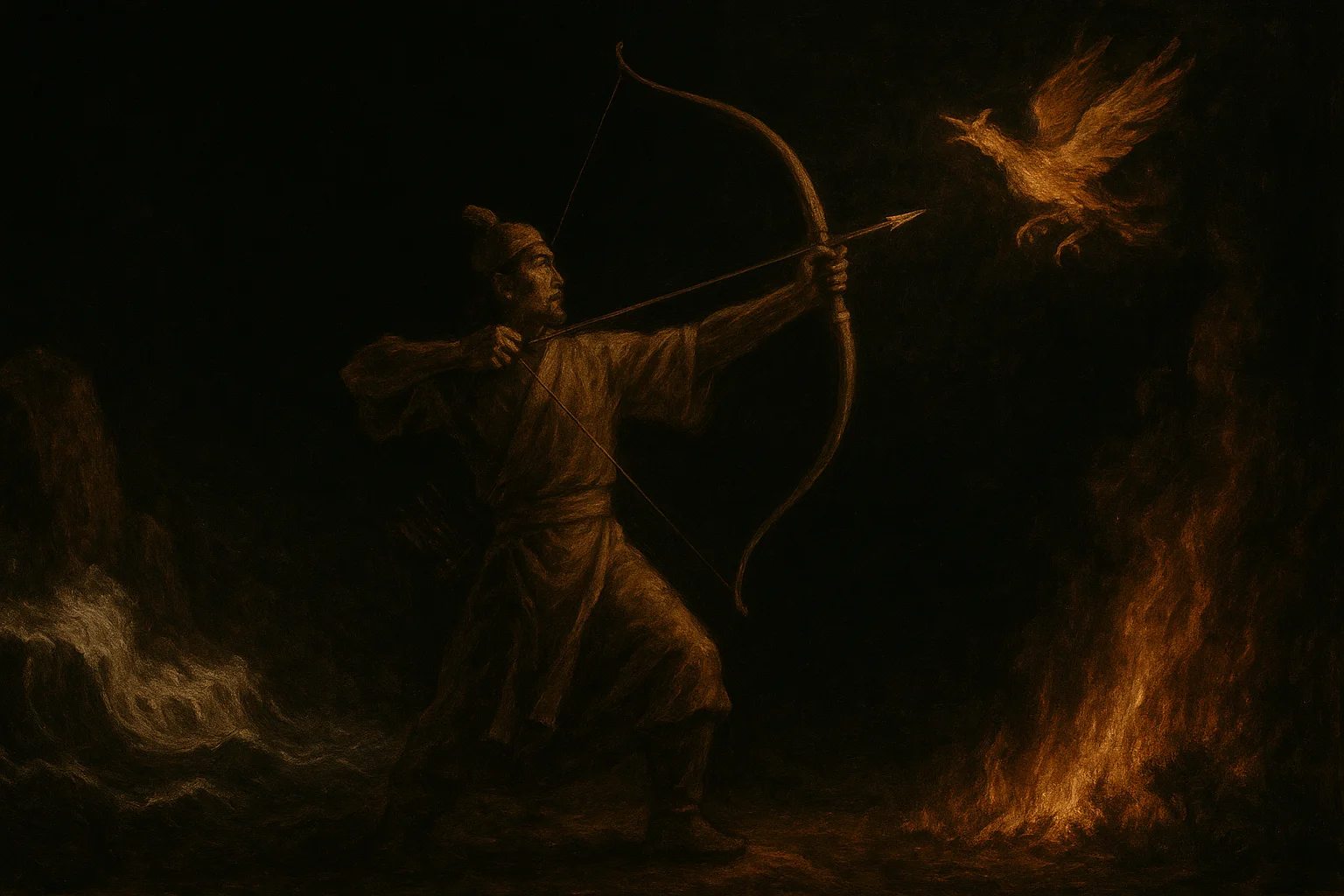
The archer Yi addresses a different cosmological crisis. According to the Huainanzi, ten suns once rose in the sky simultaneously, scorching the earth. Yi, a divine archer, shoots down nine of them, leaving only one. He also slays various monsters plaguing humanity: the Yayu, a man-eating beast with human face and boar tusks; the Chisel-Tooth, a creature with teeth like chisels; and the Nine-Headed Bird.
"In the time of Yao, the ten suns came out together, scorching the crops and killing the vegetation. Yao commanded Yi to shoot them. Yi shot down nine suns, and the people were saved." Huainanzi, chapter 8
Yi's story does not end well. In some versions, he is betrayed by his wife Chang'e, who steals the elixir of immortality and flees to the moon. In others, he is murdered by his apprentice. The myth reflects a recurring theme: even great heroes are subject to fate, betrayal, and mortality.
Journey to the West and the Monkey King
Sun Wukong, the Monkey King, is the most famous figure in Chinese mythology outside China, and his story is told in the sixteenth-century novel Journey to the West by Wu Cheng'en. Born from a stone on the Mountain of Flowers and Fruit, Sun Wukong learns the arts of transformation and immortality from a Daoist master. He acquires the Ruyi Jingu Bang, a magical staff that can change size, from the Dragon King of the Eastern Sea. He eats the peaches of immortality, drinks the wine of the gods, and declares himself equal to heaven.
The Jade Emperor sends armies to subdue him. All fail. Finally, the Buddha traps Sun Wukong under a mountain for five hundred years. He is released only when the monk Xuanzang (based on the historical pilgrim Xuanzang, 602–664 CE) recruits him as a bodyguard on a journey to India to retrieve Buddhist scriptures. The novel is a picaresque, a religious allegory, and a satire of bureaucracy all at once.
Sun Wukong fits the archetype of the trickster figures found across mythologies: irreverent, clever, disruptive, ultimately redeemable. His journey mirrors the structure of the hero's journey, though his transformation is spiritual rather than martial. By the novel's end, he achieves Buddhahood, not through submission but through discipline and service.
Ancestor Worship and the Blurred Line Between Myth and History
Chinese mythology does not distinguish sharply between gods, ancestors, and historical figures. The Yellow Emperor (Huangdi), the Yan Emperor (Yandi), and the sage kings Yao, Shun, and Yu are treated as both mythological progenitors and dynastic founders. Sima Qian's Shiji places them in a chronological sequence, assigning them reign dates and genealogies, even though no archaeological evidence supports their historicity in the form described.
This is not a failure of historiography but a different understanding of what history is for. The past serves to legitimise the present. Emperors claim descent from the Yellow Emperor. Clans trace their lineage to mythological heroes. Ancestor worship, central to Chinese religious practice, assumes that the dead retain agency and must be honoured with offerings and ritual. The boundary between myth and history is porous because both serve the same function: to connect the living to a sacred past.
Deification works in reverse as well. Historical figures such as Guan Yu, a general from the Three Kingdoms period (third century CE), are elevated to godhood centuries after their deaths. Guan Yu becomes Guandi, the god of war and righteousness, worshipped in temples across China and beyond. His transformation from man to deity follows the same logic as the celestial bureaucracy: merit earns rank, and rank can be conferred posthumously.
This fluidity extends to local cults. A village hero who saved his community from flood or famine might be worshipped as a god within a few generations. If the cult spreads, the deity may be incorporated into the larger pantheon, assigned a heavenly title, and given a place in the bureaucracy. The system is open-ended, constantly absorbing new figures while retaining older ones.
Continuity and Adaptation Across Three Millennia
Chinese mythology does not fossilise. It adapts. Buddhist deities such as Guanyin (Avalokiteshvara) are sinicised, their iconography and stories reshaped to fit local sensibilities. Daoist immortals coexist with Confucian sages and folk gods. The same deity may appear in a philosophical text as an abstract principle, in a novel as a comic character, and in a temple as the object of earnest devotion.
The tradition survives not because it is static but because it is flexible. It does not demand orthodoxy. It does not require a single authoritative text. It allows for contradiction, regional variation, and reinterpretation. What remains constant is the underlying structure: a cosmos that mirrors human society, a heaven that operates like an empire, and a past that is always in conversation with the present.
Frequently asked questions
What are the primary written sources for Chinese mythology?
The Shanhaijing (Classic of Mountains and Seas), compiled between the fourth and first centuries BCE, is the earliest extensive source, cataloguing gods, creatures, and sacred geography. The Huainanzi (second century BCE) preserves cosmogonic narratives. Later sources include the Shiji by Sima Qian (first century BCE), which blends myth and history, and novels such as Fengshen Yanyi and Journey to the West (both sixteenth century CE), which dramatise the pantheon for popular audiences.
How do Chinese dragons differ from European dragons?
Chinese dragons are water deities associated with rain, rivers, and imperial authority. They are benevolent when respected and dangerous when offended, but not inherently evil. European dragons, by contrast, are typically fire-breathing hoarders of treasure, symbols of chaos, and adversaries to be slain by heroes. The Chinese dragon is serpentine and antlered; the European dragon is winged and reptilian.
What is the celestial bureaucracy?
The celestial bureaucracy is the organisational structure of heaven, modelled on the Chinese imperial state. The Jade Emperor presides over ministries governing natural phenomena, with gods holding rank and jurisdiction. Deities can be promoted or demoted based on merit, and mortals who achieve great deeds can be deified and assigned heavenly posts. This system reflects and legitimises earthly governance.
Why is ancestor worship central to Chinese mythological thinking?
Ancestor worship assumes the dead retain agency and must be honoured with offerings and ritual. The boundary between myth, history, and religion is fluid: legendary rulers are treated as ancestors, and historical figures can be deified. This practice connects the living to a sacred past and reinforces social hierarchy, as clans trace their lineage to mythological heroes or imperial founders.
Who is the Monkey King and why does he matter?
Sun Wukong, the Monkey King, is the protagonist of the sixteenth-century novel Journey to the West. Born from stone, he achieves immortality, rebels against heaven, and is eventually subdued by the Buddha. He serves as a bodyguard to the monk Xuanzang on a pilgrimage to India, undergoing spiritual transformation. Sun Wukong embodies the trickster archetype: irreverent, clever, and ultimately redeemable through discipline and service.
How does Chinese creation mythology differ from other traditions?
Chinese creation myths emphasise the ordering of chaos through physical labour rather than divine speech or sacrifice. Pangu separates heaven and earth by pushing them apart for eighteen thousand years. Nüwa repairs the broken sky with smelted stones and turtle legs. There is no single creator god, no ex nihilo creation, and no fall from paradise. The cosmos requires constant maintenance, and creation is never fully finished.
Further reading on Mythologis
Major gods of Chinese
View all →Recent in Chinese
3 entries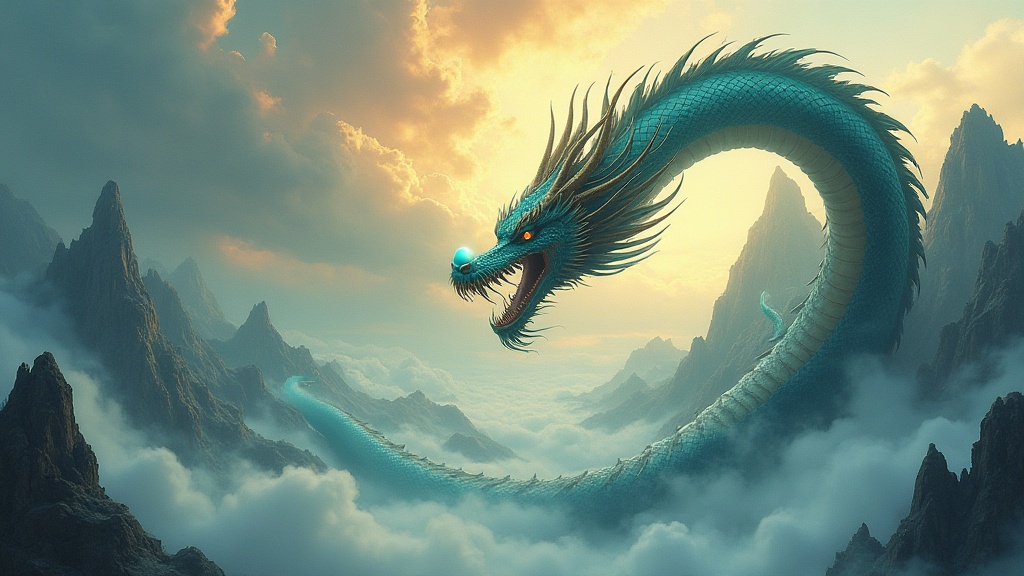
Chinese
The Dragon Symbolism in Chinese Myth: Sovereign of Waters, Heaven, and Time
In Chinese mythology, the dragon is not a monster to be slain but a cosmic sovereign: lord of rivers, rain, and imperial destiny. Its symbolism reaches from creation itself to the bones of the earth.
Chinese
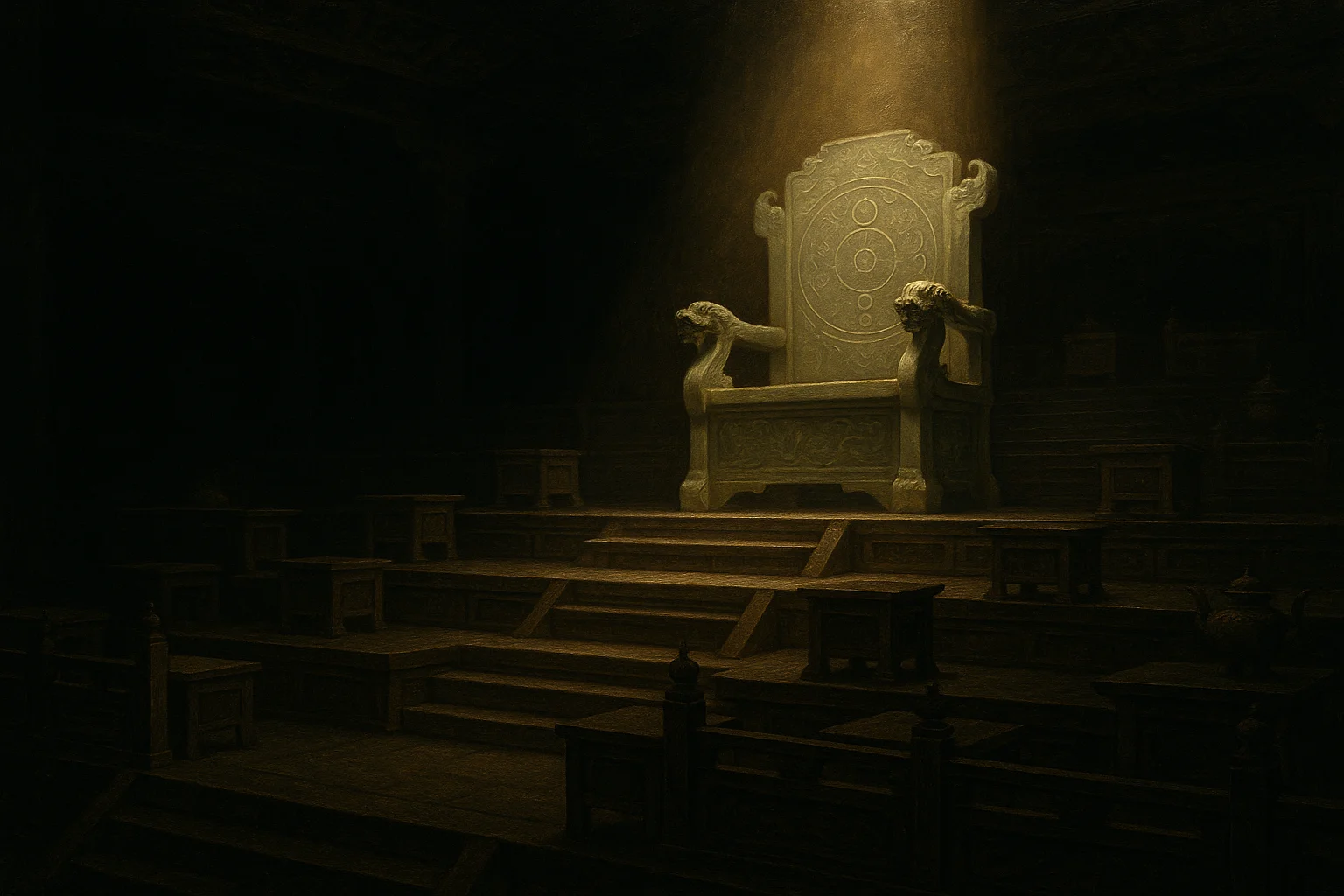
Jade Emperor: Supreme Ruler of Heaven and the Celestial Bureaucracy
The Jade Emperor governs heaven through a celestial bureaucracy mirroring imperial China. His origins, trials, and role in Daoist cosmology.
Chinese
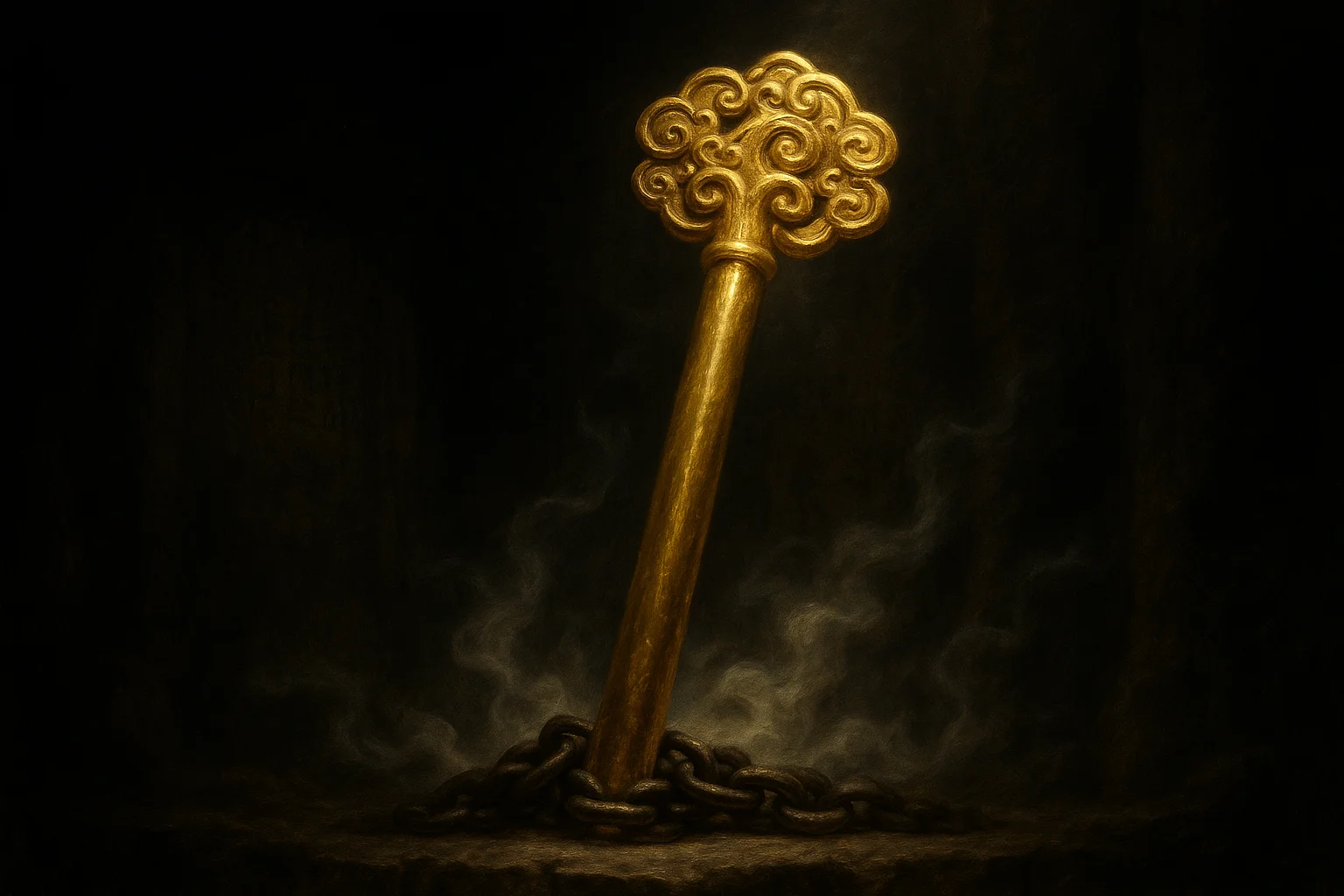
Sun Wukong: The Monkey King and Trickster Hero
Sun Wukong, the Monkey King of Journey to the West, rebels against heaven, masters 72 transformations, and escorts a monk to India. His story explained.