
The Pyramids of Giza: A Destination for History Lovers
The Giza pyramids in their Fourth Dynasty context: who built them, how they functioned as royal tombs, and what stands today on the plateau.
Contents
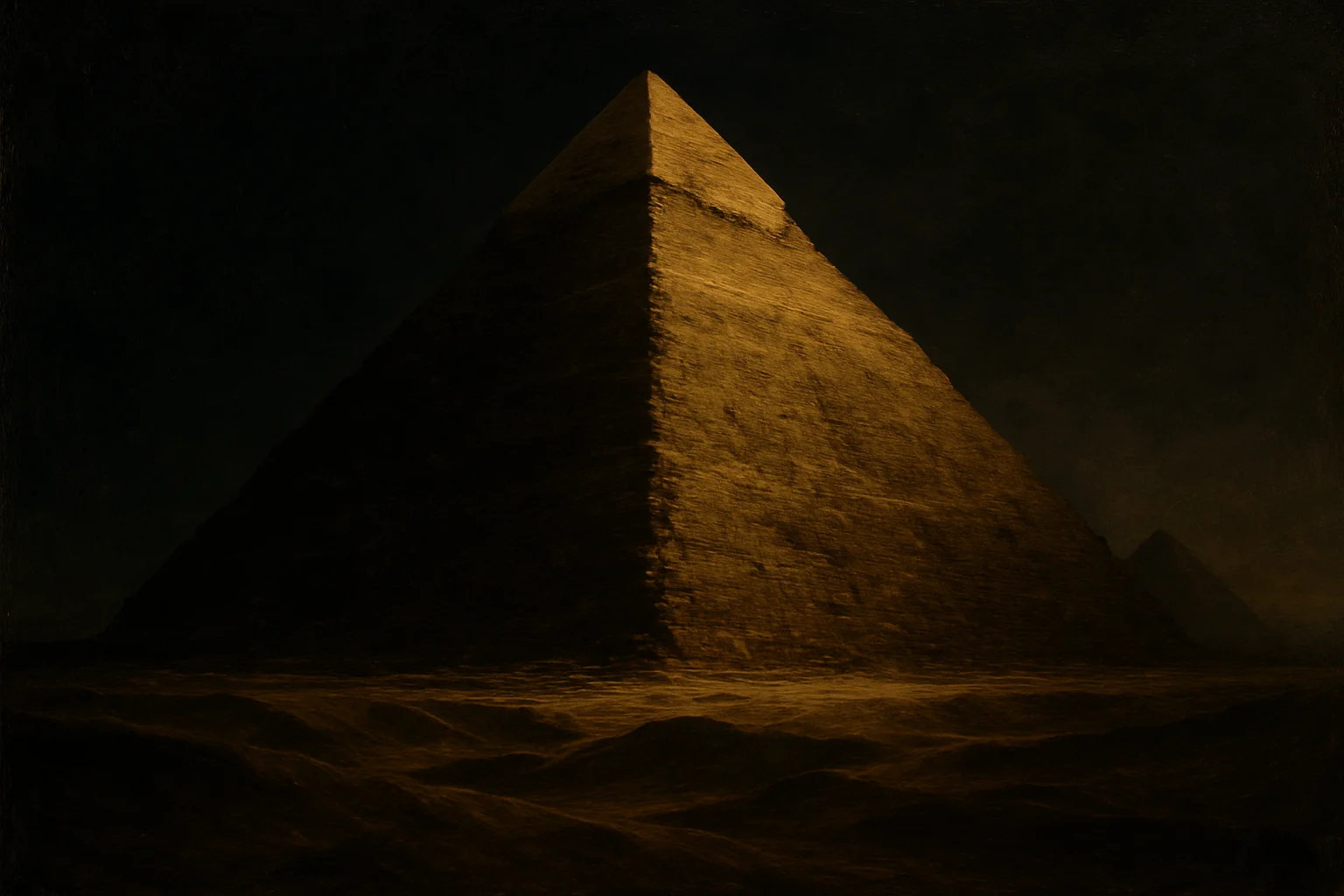
The Pyramids of Giza are three Fourth Dynasty royal tombs built on the Giza plateau near Cairo between approximately 2580 and 2510 BCE, constructed for the pharaohs Khufu, Khafre, and Menkaure as monumental expressions of divine kingship and resurrection theology. The Great Pyramid of Khufu, completed around 2560 BCE, remains the largest and oldest of the three. These structures anchor the most complete surviving necropolis complex from Old Kingdom Egypt, combining funerary architecture, temple precincts, and worker settlements into a landscape designed to sustain the pharaoh's journey into the afterlife.
Most visitors arrive expecting a photo opportunity. What they encounter instead is a working archaeological site layered with twenty-six centuries of interpretation, misreading, and rediscovery. The pyramids matter not because they are mysterious, but because the evidence for how and why they were built survives in unusual detail.
Three Pyramids, Three Pharaohs
The Giza necropolis centres on three pyramid complexes, each named for the king who commissioned it. They were not built in isolation. Each pyramid formed part of a larger ritual landscape connecting valley temple, causeway, mortuary temple, and subsidiary structures.
Khufu and the Great Pyramid
Khufu, second king of the Fourth Dynasty, reigned approximately 2589 to 2566 BCE. His pyramid, known in antiquity as Akhet Khufu (the Horizon of Khufu), originally stood 146.5 metres tall with a base covering 5.3 hectares. It held the record as the tallest human-made structure for 3,800 years. The core consists of roughly 2.3 million limestone blocks, most quarried locally, with finer Tura limestone casing stones transported across the Nile. Inscriptions bearing Khufu's cartouche survive in the so-called relieving chambers above the King's Chamber, discovered by Howard Vyse in 1837. These are the only contemporary textual evidence linking Khufu directly to the structure.
Three smaller pyramids stand on the eastern flank, traditionally identified as queens' tombs. Boat pits flank the pyramid on the south and east sides. One contained a disassembled cedar vessel, reconstructed and displayed in the Solar Boat Museum until its recent relocation.
Khafre's Pyramid and Causeway
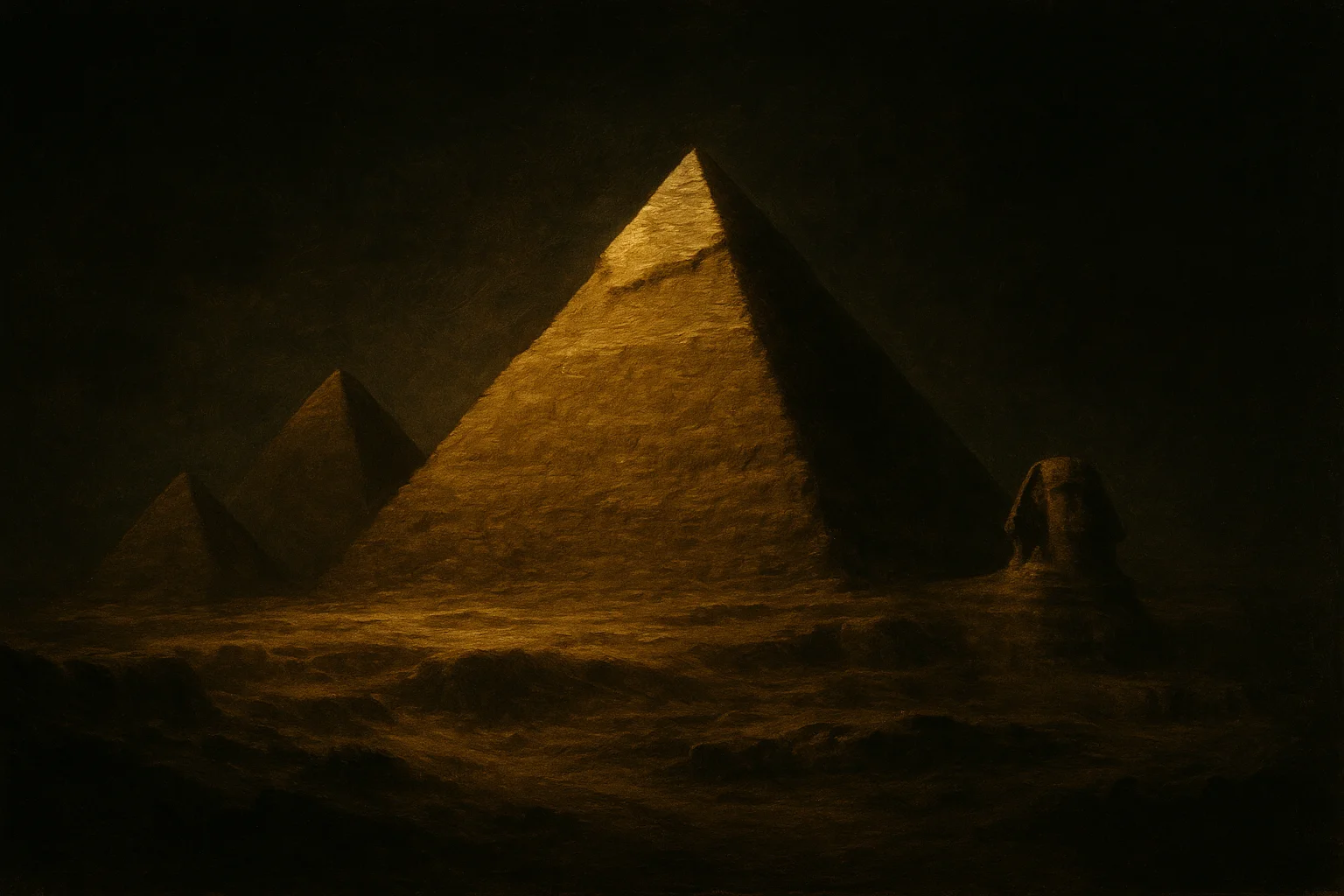
Khafre, Khufu's son or grandson, built the second pyramid around 2558 to 2532 BCE. At 136.4 metres, it appears taller than Khufu's due to its elevated position on the plateau. A band of original Tura limestone casing survives near the apex, offering a glimpse of the pyramids' original polished appearance. Khafre's complex preserves the best-surviving causeway, a covered corridor linking the valley temple to the mortuary temple on the pyramid's east face. The valley temple, built from massive granite blocks, remains one of the most austere and imposing structures of Ancient Egypt History.
Menkaure's Pyramid and the Queens' Pyramids
Menkaure's pyramid, the smallest of the three at 65 metres, dates to approximately 2532 to 2503 BCE. Its lower courses were originally clad in red granite from Aswan, a departure from the limestone tradition. Three subsidiary pyramids stand to the south, one unfinished. Excavations in the nineteenth century recovered statuary from Menkaure's valley temple, including triads showing the king flanked by deities, now in the Cairo Museum. The pyramid was never fully completed; Menkaure's successor Shepseskaf finished the mortuary temple in mudbrick rather than stone.
The Fourth Dynasty Context
The Fourth Dynasty represents the apex of pyramid construction, both in scale and precision. Sneferu, Khufu's father, built three pyramids at Dahshur and Meidum, experimenting with angle and internal structure. His son consolidated those experiments into the Great Pyramid's design. The dynasty's power rested on centralised control of labour, resources, and ideology. Pyramid construction was not an economic burden but a mechanism for integrating the state: quarrying, transport, provisioning, and ritual all reinforced the king's role as mediator between human and divine realms.
The theology underpinning these structures centres on solar resurrection. The pyramid shape may represent a petrified sunbeam or a stairway to the sky. Later Pyramid Texts, inscribed in Fifth and Sixth Dynasty tombs, describe the king ascending to join the sun god Ra. Though no texts survive inside the Giza pyramids themselves, the architectural alignment and boat burials suggest similar beliefs. The inclusion of ancient Egyptian astronomy in the design is evident: the Great Pyramid's sides align to the cardinal points within 0.05 degrees, and shafts in the King's and Queen's Chambers point toward circumpolar stars and Orion's Belt.
What the Ancient Sources Say
Herodotus visited Egypt around 450 BCE, more than two millennia after the pyramids were built. In Histories 2.124-127, he reports what his Egyptian guides told him: that Khufu enslaved his people, closed the temples, and forced labour on the pyramid for twenty years, with 100,000 men rotating in three-month shifts. He adds colourful details, including the claim that Khufu prostituted his daughter to fund construction. Scholars treat these accounts as a mix of garbled oral tradition, priestly propaganda, and Greek moralising. Herodotus himself notes uncertainty, writing "the Egyptians themselves say" rather than asserting firsthand knowledge.
Diodorus Siculus, writing in the first century BCE, offers a similar account in Library of History 1.63-64, but attributes the Great Pyramid to "Chemmis" (a corruption of Khufu's name) and claims it was built by foreign workers. Both classical sources reflect the pyramids' status as ancient monuments even in antiquity, objects of wonder whose original context had already been lost.
"They say that the stone was conveyed over a great distance from Arabia and that the construction was effected by means of mounds, since cranes had not yet been invented at that time." Diodorus Siculus, Library of History 1.63
Construction and Labour
The pyramids were not built by slaves. Archaeological evidence from workers' tombs, settlement remains, and administrative records contradicts the classical narrative. The 2013 discovery of the Papyrus of Merer at Wadi al-Jarf, a Fourth Dynasty logbook, records the daily operations of a work crew transporting limestone from Tura to Giza. Merer's team, called the "Pure Ones," worked in rotating shifts, received rations of bread and beer, and returned home periodically. The tone is bureaucratic, not coerced.
Workers lived in purpose-built settlements south of the plateau, excavated by Mark Lehner and Zahi Hawass in the 1990s. The remains include bakeries, breweries, and fish-processing facilities capable of feeding several thousand people. Tombs of overseers and artisans, located near the pyramids, contain inscriptions expressing pride in their work. One reads "the friends of Khufu," another "the drunkards of Menkaure." These are not the burials of enslaved labourers. The relationship between slavery in ancient Egypt and monumental construction is more complex than either ancient or modern sources often admit, but the Giza evidence points to a corvée system: rotating labour obligations fulfilled by free farmers during the Nile's inundation, when agricultural work was impossible.
Construction techniques combined mathematics in ancient Egypt, empirical engineering, and massive coordination. Ramps, levers, and sledges moved the blocks. Copper tools, sand abrasives, and dolerite pounders shaped them. The precision of the Great Pyramid's interior chambers, with joints finer than a millimetre, reflects skilled masonry, not brute force.
The Giza Necropolis Today
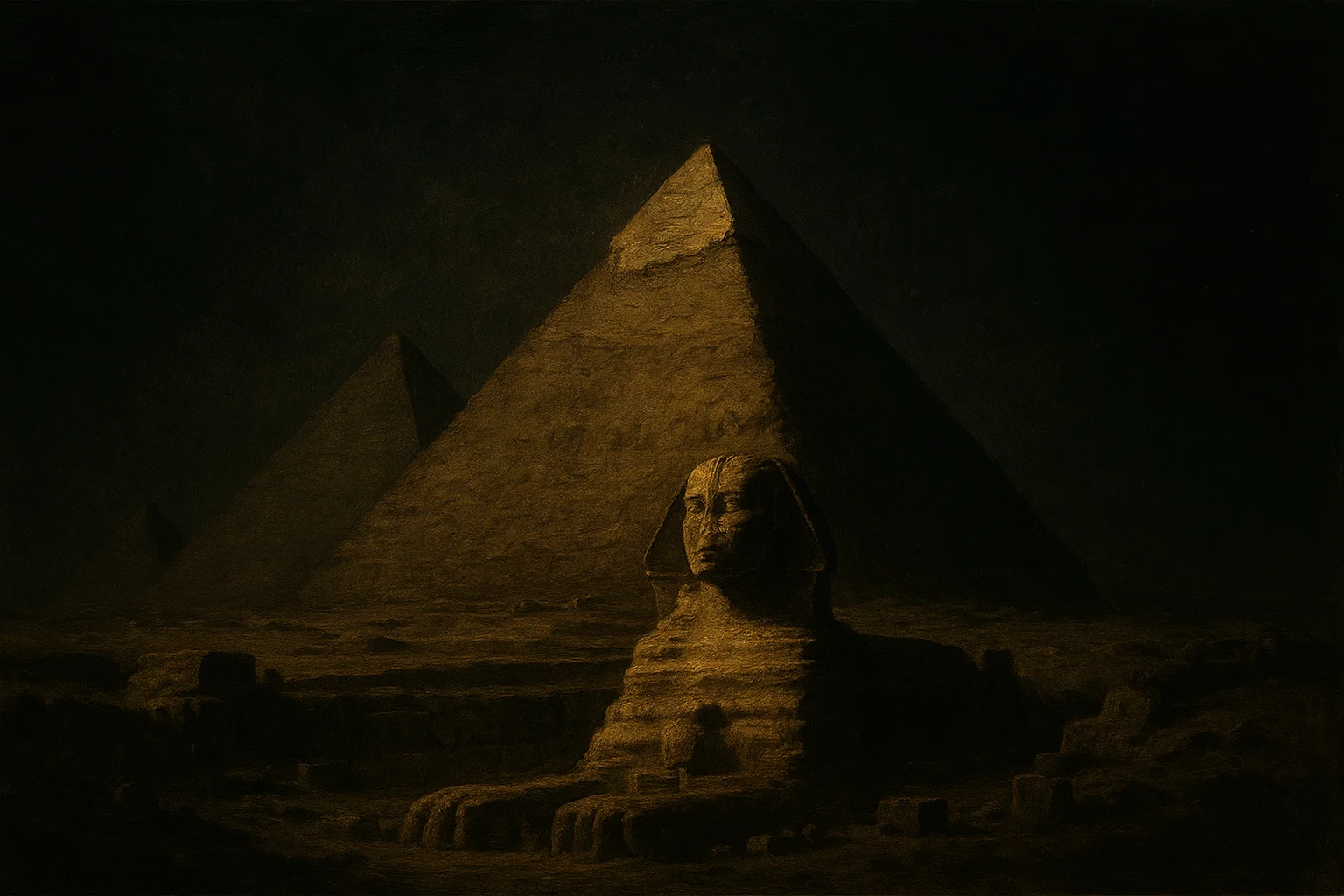
The plateau is an active archaeological zone, not a frozen monument. Excavation, conservation, and reinterpretation continue. What visitors see today is a palimpsest: Fourth Dynasty tombs, later burials, Roman-era graffiti, Islamic-era stonework, and modern infrastructure layered together.
The Plateau Layout
The three pyramids dominate, but the necropolis extends across the plateau. To the east and west lie fields of mastaba tombs, rectangular mudbrick or stone structures housing nobles, officials, and family members. These tombs, arranged in grid-like streets, offer vivid wall reliefs depicting daily life, agriculture, and ritual. The tombs of Qar, Idu, and Seshemnefer IV are often open to visitors and provide context for ancient Egypt funerals and the social hierarchy surrounding the king.
The workers' cemetery lies further south, discovered in 1990. These simpler tombs, some marked with small pyramidions, belonged to the labourers and artisans who built the monuments. The contrast between royal and worker burials is instructive: both groups expected an afterlife, both practiced mummification to varying degrees, but the scale and elaboration differed drastically.
Inside the Great Pyramid
Visitors enter through al-Ma'mun's forced passage and ascend via the Grand Gallery, a corbelled corridor 8.6 metres high and 47 metres long, to the King's Chamber. The chamber, built entirely of red granite, contains an empty sarcophagus. No burial goods, no inscriptions, no evidence of Khufu's mummy survive. The pyramid was likely robbed in antiquity, possibly during the First Intermediate Period. The so-called Queen's Chamber, lower and unfinished, may have served as a serdab (statue chamber) or been abandoned during a design change. Narrow shafts extend from both chambers toward the pyramid's exterior; their function remains debated, with theories ranging from ventilation to stellar alignment.
The interior is hot, narrow, and steep. Claustrophobic visitors should consider this before purchasing tickets. The experience offers no decoration, no colour, no inscriptions. What it offers is scale and precision: the weight of 2.3 million blocks overhead, the exactness of the joints, the audacity of the engineering.
The Solar Boat Museum
The reconstructed boat of Khufu, discovered in 1954 in a sealed pit on the pyramid's south side, measures 43.4 metres long. Built from Lebanese cedar without nails, using rope and mortise-and-tenon joints, it may have been used in Khufu's funeral procession before burial. Solar boats appear in funerary theology as vehicles for the deceased king's journey across the sky with Ra. The museum, recently relocated to the Grand Egyptian Museum, displays the vessel alongside explanatory models. A second boat pit, excavated in 2011, contained a similar vessel, now under conservation.
Fourth Dynasty Giza
Three pyramids, workers' settlements, evidence of state-organised labour, solar theology, no internal inscriptions.
Later Dynasties
Smaller pyramids at Saqqara and Abusir, Pyramid Texts inscribed inside, decentralised power, continued theological elaboration.
The Sphinx and the Pyramid Complex
The Great Sphinx of Giza, carved from a limestone outcrop on the plateau's eastern edge, measures 73 metres long and 20 metres high. It depicts a recumbent lion with a human head, traditionally identified as Khafre, though no contemporary inscription confirms this. The Sphinx faces due east, aligned with the equinox sunrise. Its construction likely dates to Khafre's reign, as it sits within his causeway complex and shares stylistic features with his statuary.
The Sphinx has been periodically buried and cleared throughout history. A stela between its paws, erected by Thutmose IV in the fifteenth century BCE, records a dream in which the Sphinx promised him kingship in exchange for clearing the sand. This indicates that even a millennium after its carving, the Sphinx required maintenance and had accrued its own mythology. Later visitors, including Ramses II, left inscriptions nearby. The Sphinx Temple, directly in front of the statue, mirrors the valley temple's architectural style and may have served a related ritual function.
The relationship between the Sphinx and the pyramids is spatial and theological rather than structural. Both express the king's divine nature and his role as intermediary between earth and sky, human and god. The Sphinx's leonine form evokes solar power and royal strength, themes central to the Egyptian gods of the Old Kingdom pantheon.
Visiting Giza: What to Expect
The Giza plateau lies on Cairo's southwestern outskirts, approximately 13 kilometres from Tahrir Square. Tickets are sold at the main entrance near the Great Pyramid and at a secondary entrance near the Sphinx. Separate tickets are required for entry to the Great Pyramid's interior, Khafre's pyramid, and Menkaure's pyramid; availability is limited and tickets often sell out by mid-morning. Photography inside the pyramids is prohibited.
The site is large, exposed, and hot. Comfortable shoes, sun protection, and water are necessary. Unofficial guides and camel touts operate aggressively near the entrances; agree on prices in advance or decline firmly. Official guides can be hired through the ticket office. The plateau is accessible year-round, but the cooler months from October to April offer more comfortable conditions. Early morning visits avoid both heat and crowds.
The Sound and Light show, held nightly at the Sphinx, offers a dramatised history in multiple languages. It is optional and aimed at general tourists rather than serious visitors. The nearby Grand Egyptian Museum, opened in stages from 2023, houses artefacts from Giza and across Egypt, including the full Tutankhamun collection. Combining Giza with the museum provides fuller context for the Fourth Dynasty material.
- Arrive at opening (8:00 AM) to avoid crowds and heat
- Purchase interior pyramid tickets first; they sell out quickly
- Allocate three to four hours minimum for the plateau
- Wear closed-toe shoes; the terrain is uneven and sandy
- Bring cash for tickets, tips, and any purchases; card acceptance is limited
- Consider hiring an Egyptologist guide for detailed architectural context
The pyramids reward preparation. Visitors who arrive with some understanding of Fourth Dynasty theology, construction techniques, and the archaeological debates surrounding the site will find the experience far richer than those expecting only a backdrop for photographs. The monuments are not mysterious in the sense of being inexplicable. They are mysterious in the sense that they embody a worldview in which the boundary between human and divine, earth and sky, was maintained through monumental architecture and ritual precision. That worldview is accessible, but it requires attention.
Frequently asked questions
Who built the Pyramids of Giza and when?
The Pyramids of Giza were built during Egypt's Fourth Dynasty, approximately 2580 to 2510 BCE, by three successive pharaohs: Khufu, Khafre, and Menkaure, each constructing a pyramid as part of a larger funerary complex designed to sustain the king's afterlife and divine status. Khufu's Great Pyramid, the largest, was completed around 2560 BCE. Archaeological evidence from workers' tombs, settlement remains, and administrative papyri indicates the pyramids were constructed by rotating crews of free labourers, not slaves, organised through a state corvée system during the Nile's annual flood season when agricultural work was impossible.
What do ancient sources like Herodotus say about the pyramids?
Herodotus, writing around 450 BCE in Histories 2.124-127, reports that Khufu enslaved his people and forced 100,000 men to work in three-month shifts over twenty years to build the Great Pyramid, adding sensational claims about temple closures and royal prostitution to fund construction. Modern scholars treat his account as a mixture of garbled oral tradition, priestly propaganda against an ancient king, and Greek moralising rather than reliable history. Diodorus Siculus, writing in the first century BCE, offers similar stories but attributes the pyramid to "Chemmis" and claims foreign workers built it. Both sources reflect the pyramids' status as ancient monuments even in classical antiquity, whose original context had already been lost or distorted.
Were the pyramids built by slaves?
The pyramids were not built by slaves but by rotating crews of free labourers fulfilling corvée obligations to the state, according to archaeological evidence from workers' tombs, settlement remains, and the Fourth Dynasty Papyrus of Merer discovered in 2013. Workers lived in purpose-built villages south of the plateau, received rations of bread and beer, and were buried in tombs near the pyramids with inscriptions expressing pride in their work, such as "the friends of Khufu" and "the drunkards of Menkaure." The classical sources that describe slave labour, including Herodotus and Diodorus Siculus, reflect later misunderstandings rather than contemporary Fourth Dynasty practice. The corvée system mobilised farmers during the Nile's inundation when agricultural work was impossible, integrating labour into the state's religious and economic structure.
What can visitors see inside the Great Pyramid today?
Visitors to the Great Pyramid enter through a ninth-century forced passage cut by Caliph al-Ma'mun's workers and ascend the Grand Gallery, a 47-metre corbelled corridor, to reach the King's Chamber, a granite room containing an empty sarcophagus with no inscriptions, burial goods, or trace of Khufu's mummy, likely robbed in antiquity. The interior is hot, narrow, and steep, with no decoration or colour, offering instead an experience of architectural scale and precision. A lower Queen's Chamber, unfinished and undecorated, may have served as a statue chamber or been abandoned during a design change. Narrow shafts extend from both chambers toward the pyramid's exterior, their function debated between ventilation and stellar alignment theories.
How does the Great Sphinx relate to the pyramid complex?
The Great Sphinx, a 73-metre limestone sculpture of a recumbent lion with a human head, sits within Khafre's causeway complex on the plateau's eastern edge and likely dates to his reign around 2558 to 2532 BCE, though no contemporary inscription confirms the attribution. The Sphinx faces due east toward the equinox sunrise, expressing solar theology central to Fourth Dynasty royal ideology, and shares stylistic features with Khafre's statuary. The adjacent Sphinx Temple mirrors Khafre's valley temple architecturally and may have served related ritual functions. The relationship between the Sphinx and pyramids is spatial and theological rather than structural, both expressing the king's divine nature and role as intermediary between human and celestial realms.
What is the best way to visit the Giza plateau?
The best approach is to arrive at opening time (8:00 AM) to avoid crowds and heat, purchase interior pyramid tickets immediately as they sell out quickly, and allocate three to four hours minimum to explore the plateau, which includes three pyramids, mastaba fields, workers' tombs, the Sphinx, and associated temples. Comfortable closed-toe shoes, sun protection, and water are necessary for the large, exposed, sandy site. Hiring an official Egyptologist guide through the ticket office provides detailed architectural and historical context that significantly enriches the experience beyond what signage alone offers. Combining Giza with a visit to the nearby Grand Egyptian Museum, which houses Fourth Dynasty artefacts and the Tutankhamun collection, provides fuller context for understanding the monuments within ancient Egyptian civilisation.
Further reading on Mythologis
Free 25-page sample
Want the whole story?
Take the first 25 pages free. If it pulls you in, the full edition is yours as an instant PDF download, with a paperback on Amazon for selected titles.
Egyptian
The Egyptian Mythology Book: Ra, Osiris, Isis, Anubis, and the Sacred Stories of the Pharaohs
Ra, Osiris, Isis, Anubis, and the Sacred Stories of the Pharaohs
Three thousand years of Egyptian sacred stories. The Duat, the weighing of the heart, the cult of Osiris, and the daily voyage of the sun.
More from Egyptian
All articles
Egyptian
The Book of the Dead: Egypt's Guide to Eternity
Ancient Egypt's most sacred funerary text was not a single book but a living archive of spells, maps, and prayers that guided the dead through the perils between death and eternal life.
Egyptian
Eye of Horus: The Protective Amulet That Watched Over the Living and the Dead
Worn by pharaohs and fishermen alike, the Eye of Horus is one of antiquity's most potent protective symbols, carrying the weight of cosmic battle, divine healing, and eternal vigilance.
Egyptian
Ra the Sun God: Egypt's Supreme Ruler of Light and Creation
Ra, the ancient Egyptian sun god, blazed at the very heart of a civilization that worshipped light as the pulse of creation itself. Discover his origins, his many forms, and the sacred journey he took across the sky and through the underworld every single day.
Egyptian
The Ankh: Egypt's Eternal Symbol of Life
The ankh is ancient Egypt's most recognizable hieroglyph, a looped cross carried by gods and pharaohs alike as the very key to immortal life. Discover its origins, meanings, and sacred legacy.