Ancient Egypt Funerals
How Egyptians prepared the dead for eternity. Mummification, processions, the Opening of the Mouth, and what the texts say about ba, ka, and the journey west.
Contents
Ancient Egypt funerals were theological performances designed to preserve the body as an anchor for the soul and equip the deceased for judgment and eternal life in the Field of Reeds. The process combined mummification, ritual purification, funerary processions, the Opening of the Mouth ceremony, and the provision of grave goods, all rooted in the belief that death was a transition requiring precise physical and spiritual preparation. Practices varied dramatically by social class and evolved across three millennia, from the pyramid-building Old Kingdom to the Greco-Roman period.
Most modern accounts treat Egyptian funerals as checklists of embalming steps and burial objects. That misses the point. Every act, from the removal of organs to the placement of scarab amulets on the chest, answered a theological question: how do you keep a soul tethered to the world of the living long enough to pass through the dangers of the underworld and be reborn?
The Theological Foundation: Why the Body Mattered
Egyptian cosmology divided the human being into several components. The physical body, the khat, was perishable but necessary. Without it, the other elements had nowhere to return. This is not metaphor. The Egyptians believed the soul required a physical home.
Ba, Ka, and the Akh
The ba was personality and mobility, often depicted as a human-headed bird. It could leave the tomb, travel to the land of the living, and consume offerings. The ka was life force, a spiritual double created at birth. It remained near the body and required sustenance: bread, beer, meat. The akh was the transfigured spirit, the successful union of ba and ka after judgment, capable of dwelling among the Egyptian gods.
Pyramid Texts, Utterance 213, addresses the ka directly: "Your ka is with you, it does not leave you." The ka needed the corpse intact. Decomposition was catastrophe.
The Corpse as Anchor
If the body decayed beyond recognition, the ba could not find its way back. The ka would starve. The deceased would experience a second, permanent death. This fear drove the entire mummification process: not vanity, but survival.
Coffin Texts, Spell 74, promises: "I am one whose name is unknown. I was yesterday; I know tomorrow." Continuity between life and afterlife required continuity of form. The body was the hinge.
Mummification: Preserving the Vessel
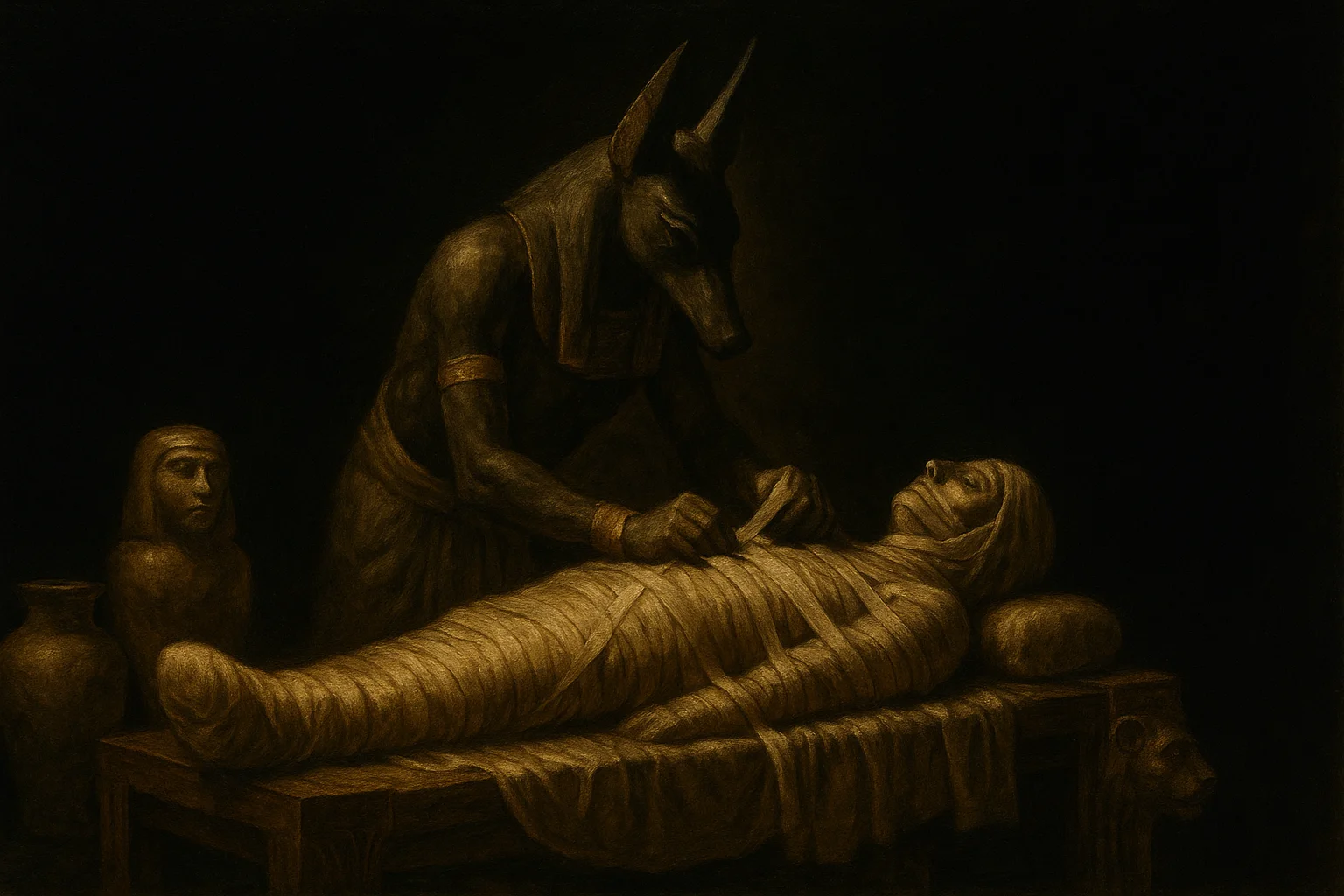
Mummification took seventy days. The Greek historian Herodotus, writing in the fifth century BCE, described three tiers of service in Histories 2.85-90. The most expensive involved removal of the brain through the nostrils with an iron hook, extraction of internal organs through an incision in the left flank, and immersion of the body in natron salt for forty days. The heart stayed in place. It would be weighed in the afterlife.
Cheaper methods skipped evisceration. The poorest received a purge with cedar oil and a brief natron wash. Herodotus notes that embalmers operated as a guild, offering fixed-price packages. This was commerce, not mystery.
Organs removed during mummification went into canopic jars, each protected by one of the Four Sons of Horus. The liver, lungs, stomach, and intestines had separate guardians. The brain, considered useless, was discarded. Thought resided in the heart.
The Funerary Procession
Once mummified, the body traveled to the tomb in a procession that announced status and grief. The route often crossed the Nile from the city of the living on the east bank to the necropolis on the west, where the sun set and the dead resided.
Mourners and Professional Keeners
Female mourners, often hired professionals, walked ahead of the coffin. They tore their garments, threw dust on their heads, and wailed. Tomb paintings from the New Kingdom show women with arms raised, hair disheveled. This was not private sorrow. Grief had to be visible, audible, public.
Family members followed. Men walked with composed faces. Women keened. The contrast was deliberate: control and release, order and chaos, the living and the dead.
Transporting the Coffin
The coffin rode on a sledge pulled by oxen. Servants carried grave goods: furniture, clothing, food, wine. A priest in a leopard skin walked alongside, burning incense. The procession stopped at stations for purification rites. Water was poured. Spells recited.
Royal processions could involve hundreds of participants. Ramses II, who reigned for sixty-seven years, had a funeral cortege that stretched for miles. Commoner funerals might involve a family and a single priest.
The Opening of the Mouth Ceremony
At the tomb entrance, the most critical ritual began. The Opening of the Mouth ceremony restored the senses to the mummified corpse. Without it, the deceased could not eat, speak, or see in the afterlife.
A priest touched the mouth and eyes of the mummy with ritual tools: an adze, a pesesh-kef blade, an ostrich feather. Book of the Dead, Spell 23, provides the script: "My mouth is opened by Ptah, the bonds of my mouth are loosened by my local god." Each tool corresponded to a divine act. The adze recalled the birth of Horus. The blade cut the umbilical cord of death.
"Your mouth was closed, but I have set in order for you your mouth and your teeth.", Pyramid Texts, Utterance 373-374
The ceremony also involved the sacrifice of an ox. Its foreleg was severed and presented to the mummy, a symbolic meal. Blood was smeared on the coffin. Life force transferred from beast to corpse.
Grave Goods and Provisions for the Afterlife
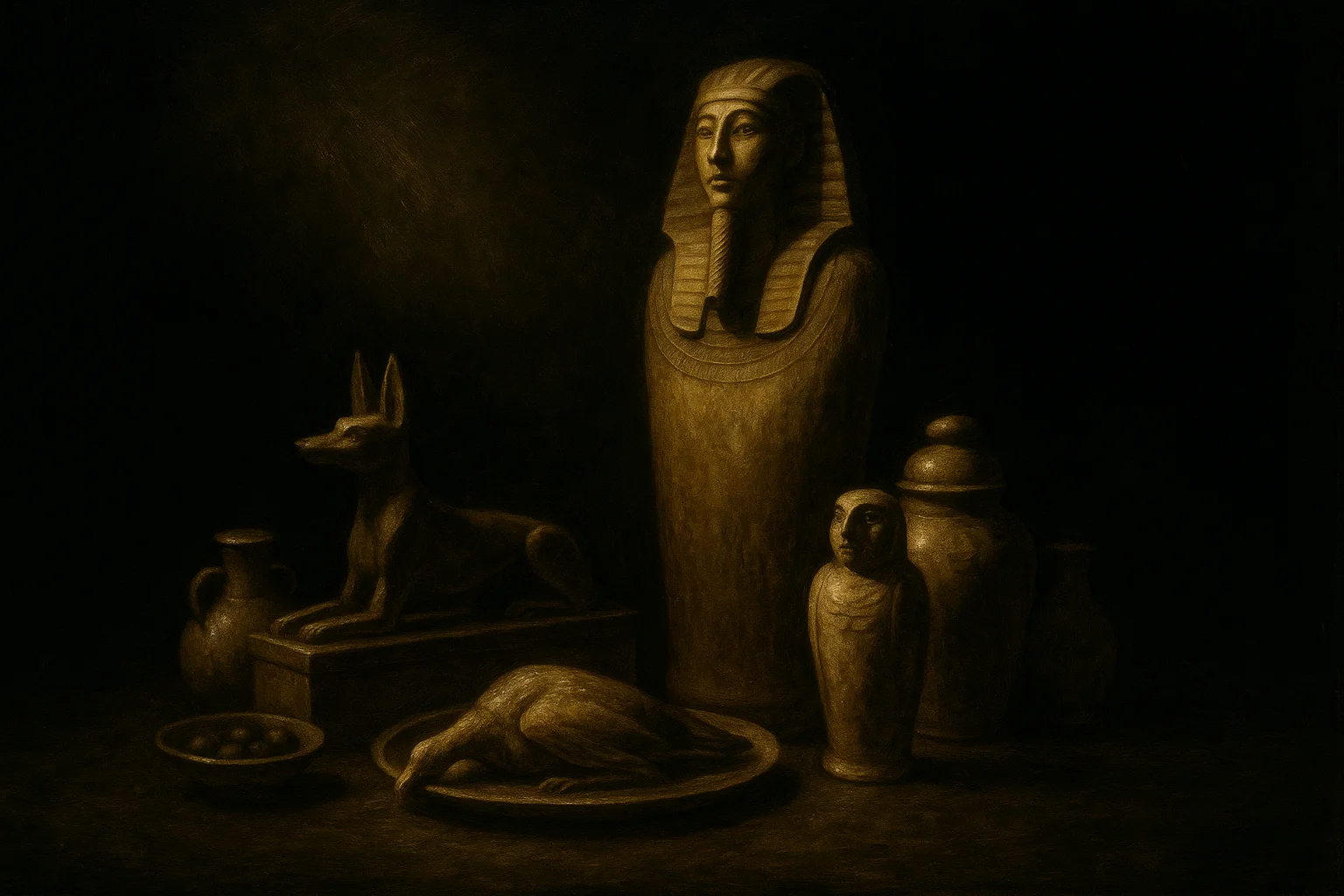
The tomb was a house. The dead required everything they had needed in life: food, drink, furniture, clothing, cosmetics, weapons, jewelry. Tomb paintings depicted these items so that, if physical objects decayed, the images could serve as substitutes. Magic and matter overlapped.
Food, Tools, and Shabti Figures
Bread and beer were staples. Meat, fowl, and fruit appeared in wealthier burials. Pottery jars held wine and oil. The ka consumed the spiritual essence of these offerings; the physical substance remained.
Shabti figures, small mummiform statues, served as laborers in the afterlife. The deceased might be called to work in the fields of Osiris. Shabtis answered the call instead. Book of the Dead, Spell 6, provides their activation spell: "O shabti, if I am called to do any work in the realm of the dead, you shall say, 'Here I am, I will do it.'" Elite tombs contained hundreds of shabtis, one for each day of the year, plus overseers.
Tools buried with the dead included hoes, sickles, and scribal palettes. The ankh symbol, representing life, appeared on amulets and tomb walls. The djed pillar, symbol of stability, was often painted on coffin floors.
Texts: Pyramid Texts, Coffin Texts, Book of the Dead
Funerary texts evolved across dynasties. The Pyramid Texts, inscribed inside Old Kingdom royal pyramids, are the oldest religious writings in the world. They map the king's ascent to the sky, his union with the sun god Ra.
The Coffin Texts of the Middle Kingdom democratized access. Non-royals could now purchase spells for their coffins. The texts included maps of the underworld, passwords for gates, and protective charms.
The Book of the Dead, used from the New Kingdom onward, was a collection of spells written on papyrus and placed in the coffin. Spell 125 describes the weighing of the heart. The deceased stands before forty-two divine judges and recites the Negative Confession: "I have not killed. I have not stolen. I have not caused pain." The heart is weighed against the feather of Ma'at, goddess of truth. If it balances, the deceased enters the Field of Reeds. If not, the heart is devoured by Ammit, a composite monster, and the soul ceases to exist.
Wealthy patrons customized their copies with vignettes and personal names inserted into spells. Tutankhamun's tomb contained a lavishly illustrated Book of the Dead, though he died young and likely had little time to prepare.
Class and Access: Royal Tombs Versus Commoner Burials
Funerary practice was stratified. Pharaohs built pyramids, rock-cut tombs, and mortuary temples staffed by priests in perpetuity. Commoners dug pits in the sand.
Royal burial
Multi-chambered tomb, full mummification, hundreds of shabtis, gilded coffins, walls covered in hieroglyphic inscriptions, endowed mortuary cult with daily offerings.
Commoner burial
Shallow pit, linen-wrapped body or simple mummification, few grave goods, reused coffin or none, occasional shabti, no inscriptions, reliance on family to leave offerings.
Middle-class artisans and scribes occupied a middle ground. They could afford painted wooden coffins, a modest set of amulets, and a short Book of the Dead. Tomb chapels at Deir el-Medina, the workers' village near the Valley of the Kings, show skilled craftsmen investing in their own afterlives.
Access to the afterlife was theoretically universal. In practice, wealth determined the quality of preservation and the likelihood that offerings would continue. A king's mortuary temple could function for centuries. A farmer's grave might be forgotten within a generation.
Changes Over Three Millennia
Egyptian funerary practice was conservative but not static. Shifts in theology, politics, and economy left marks on how the dead were treated.
Old Kingdom Practices
The Old Kingdom, roughly 2686 to 2181 BCE, was the age of pyramids. Funerals centered on the king. The Pyramid Texts promised solar ascent: the king climbs a ladder of light, joins the imperishable stars. Nobles built mastaba tombs near the royal pyramid, hoping proximity would secure their own immortality.
Mummification was rudimentary. Bodies were wrapped in linen soaked in resin. Natural desiccation in the desert sand did much of the work. Canopic jars appeared late in the period.
Middle and New Kingdom Shifts
The Middle Kingdom, 2055 to 1650 BCE, saw the rise of Osiris as the dominant funerary deity. The afterlife moved from the sky to the underworld. The Coffin Texts reflect this shift: the deceased journeys through caverns, not clouds.
The New Kingdom, 1550 to 1077 BCE, brought technical refinement. Mummification reached its peak. The Book of the Dead became standard. Royal tombs moved from pyramids to hidden rock-cut chambers in the Valley of the Kings, a response to tomb robbery.
Akhenaten's religious reforms briefly disrupted funerary tradition. His rejection of the traditional pantheon in favor of the Aten, the sun disc, left nobles uncertain how to equip their tombs. After his death, orthodoxy returned with force.
Late Period and Greco-Roman Influence
The Late Period, 664 to 332 BCE, saw a surge in animal mummification. Ibises, cats, crocodiles, and bulls were mummified by the millions as votive offerings. The practice became an industry.
Under Greek and Roman rule, funerary portraits replaced traditional masks. Mummy portraits from Fayum, painted on wooden panels in encaustic wax, show the deceased in Roman dress. The theology remained Egyptian, but the aesthetics hybridized.
Christianity gradually displaced traditional burial rites. By the fourth century CE, mummification had largely ceased. The old Egyptian symbols faded, though the ankh survived, repurposed as a Christian cross.
Frequently asked questions
What did ancient Egyptians believe happened to the soul after death?
Ancient Egyptians believed the soul divided into the ba, a mobile personality that could leave the tomb, and the ka, a life force that remained near the body and required offerings of food and drink. After death, the deceased traveled through the underworld, faced judgment before Osiris, and if found worthy, the ba and ka reunited to form the akh, a transfigured spirit capable of dwelling among the gods in the Field of Reeds. Failure in judgment meant the heart was devoured by Ammit, resulting in permanent annihilation.
Why did Egyptians mummify their dead?
Egyptians mummified their dead because they believed the ba, the soul's mobile aspect, needed a recognizable body to return to, and the ka, the life force, required a physical anchor to receive offerings. Decomposition of the corpse would leave the soul homeless and cause a second, irreversible death. Mummification preserved the body as a permanent dwelling, ensuring continuity between life and afterlife and allowing the deceased to participate in the eternal cycle of rebirth.
What was the Opening of the Mouth ceremony?
The Opening of the Mouth ceremony was a ritual performed at the tomb entrance to restore the senses of the mummified corpse, enabling the deceased to eat, speak, see, and breathe in the afterlife. A priest touched the mummy's mouth and eyes with ritual tools including an adze and a pesesh-kef blade while reciting spells from the Book of the Dead. The ceremony also involved the sacrifice of an ox, whose severed foreleg was presented to the mummy as a symbolic meal, transferring life force from the living animal to the dead.
What items were buried with the dead in ancient Egypt?
Items buried with the dead included food and drink for sustenance, shabti figures to perform labor in the afterlife, furniture, clothing, jewelry, cosmetics, tools, weapons, and amulets such as the scarab and ankh for protection. Wealthier burials also contained funerary texts like the Book of the Dead, written on papyrus and placed in the coffin, which provided spells and maps for navigating the underworld. Tomb walls were painted with images of these goods so that even if physical objects decayed, their spiritual essence remained available.
How did royal funerals differ from commoner burials?
Royal funerals involved multi-chambered tombs such as pyramids or rock-cut chambers in the Valley of the Kings, full mummification with removal of internal organs, gilded coffins, hundreds of shabti figures, walls covered in hieroglyphic inscriptions, and endowed mortuary cults with priests providing daily offerings in perpetuity. Commoner burials typically consisted of shallow sand pits, simple linen wrapping or basic mummification, few grave goods, reused or no coffins, and reliance on family members to leave occasional offerings. Middle-class artisans occupied a middle ground with painted wooden coffins and modest sets of amulets.
How did Egyptian funeral practices change over time?
Egyptian funeral practices evolved from the Old Kingdom's focus on royal solar ascent and pyramid burials with rudimentary mummification to the Middle Kingdom's emphasis on Osiris and underworld journeys reflected in Coffin Texts. The New Kingdom brought technical refinement in mummification, widespread use of the Book of the Dead, and hidden rock-cut royal tombs to prevent robbery. The Late Period saw mass animal mummification as votive offerings, and under Greco-Roman rule, funerary portraits replaced traditional masks while theology remained Egyptian. Christianity gradually displaced traditional rites by the fourth century CE.
Further reading on Mythologis
Free 25-page sample
Want the whole story?
Take the first 25 pages free. If it pulls you in, the full edition is yours as an instant PDF download, with a paperback on Amazon for selected titles.
Egyptian
The Egyptian Mythology Book: Ra, Osiris, Isis, Anubis, and the Sacred Stories of the Pharaohs
Ra, Osiris, Isis, Anubis, and the Sacred Stories of the Pharaohs
Three thousand years of Egyptian sacred stories. The Duat, the weighing of the heart, the cult of Osiris, and the daily voyage of the sun.
More from Egyptian
All articles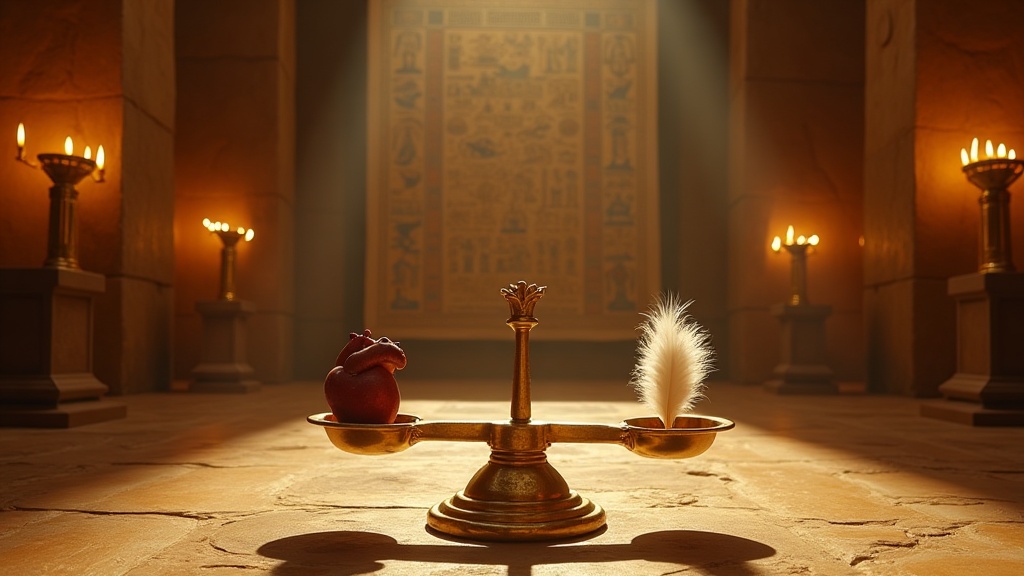
Egyptian
The Book of the Dead: Egypt's Guide to Eternity
Ancient Egypt's most sacred funerary text was not a single book but a living archive of spells, maps, and prayers that guided the dead through the perils between death and eternal life.
Egyptian
Eye of Horus: The Protective Amulet That Watched Over the Living and the Dead
Worn by pharaohs and fishermen alike, the Eye of Horus is one of antiquity's most potent protective symbols, carrying the weight of cosmic battle, divine healing, and eternal vigilance.
Egyptian
Ra the Sun God: Egypt's Supreme Ruler of Light and Creation
Ra, the ancient Egyptian sun god, blazed at the very heart of a civilization that worshipped light as the pulse of creation itself. Discover his origins, his many forms, and the sacred journey he took across the sky and through the underworld every single day.
Egyptian
The Ankh: Egypt's Eternal Symbol of Life
The ankh is ancient Egypt's most recognizable hieroglyph, a looped cross carried by gods and pharaohs alike as the very key to immortal life. Discover its origins, meanings, and sacred legacy.