Korean
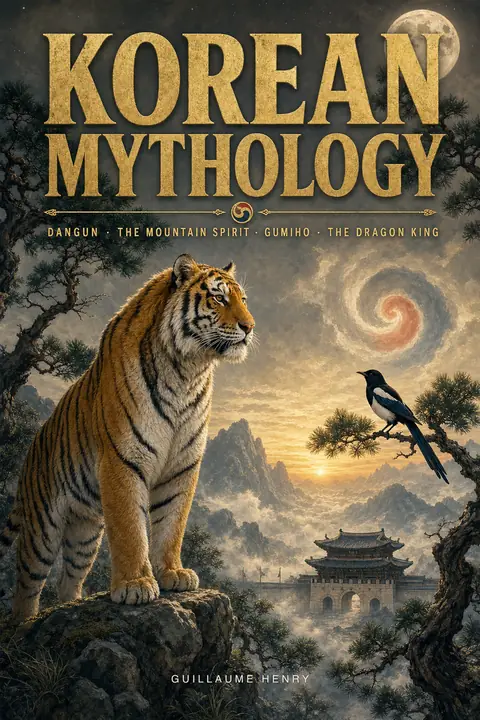
From the bear-woman who birthed a nation to the goddess who governs the dead, Korean mythology holds a vast cosmology that most Western readers have barely glimpsed. This guide covers it all.
Browse Korean
A bear waits in a cave. She has been given twenty days, a bundle of mugwort, and twenty cloves of garlic. If she endures the darkness without stepping into sunlight, she will become human. The tiger beside her gives up on day seven and bolts for the forest. The bear stays. On the twenty-first day she walks out of the cave as a woman, and the god Hwanung takes her as his wife. Their son will be called Dangun Wanggeom, the first king of Korea, the founder of Gojoseon, and the origin point of a civilisation that traces its mythological roots back more than four thousand years.
That story, recorded in the 13th-century chronicle Samguk Yusa ("Memorabilia of the Three Kingdoms") by the monk Iryeon, is one of the most widely known Korean myths outside the peninsula. But it represents only the doorstep of a tradition far larger, stranger, and more philosophically rich than the founding narrative alone suggests. Korean mythology weaves together shamanic spirit-work, Daoist cosmology, Buddhist afterlife geography, and a distinctly Korean sensibility that prizes resilience, communal suffering, and the moral weight of bureaucratic order, even in the celestial realms.
Korean mythology has no single canonical text the way the Norse tradition has the Eddas or the Mesopotamian tradition has the Enuma Elish. Its stories live in royal annals, shrine rituals, musok (shamanic) oral recitations called gut, Buddhist temple legends, and the oral tradition of the mudang (shamanic practitioners), many of them women whose knowledge was passed mother to daughter across centuries. That scattered, living quality is precisely what makes the tradition so rewarding to study and so easy to underestimate.
Dangun and the Foundation of Gojoseon: Korea's Creation Myth
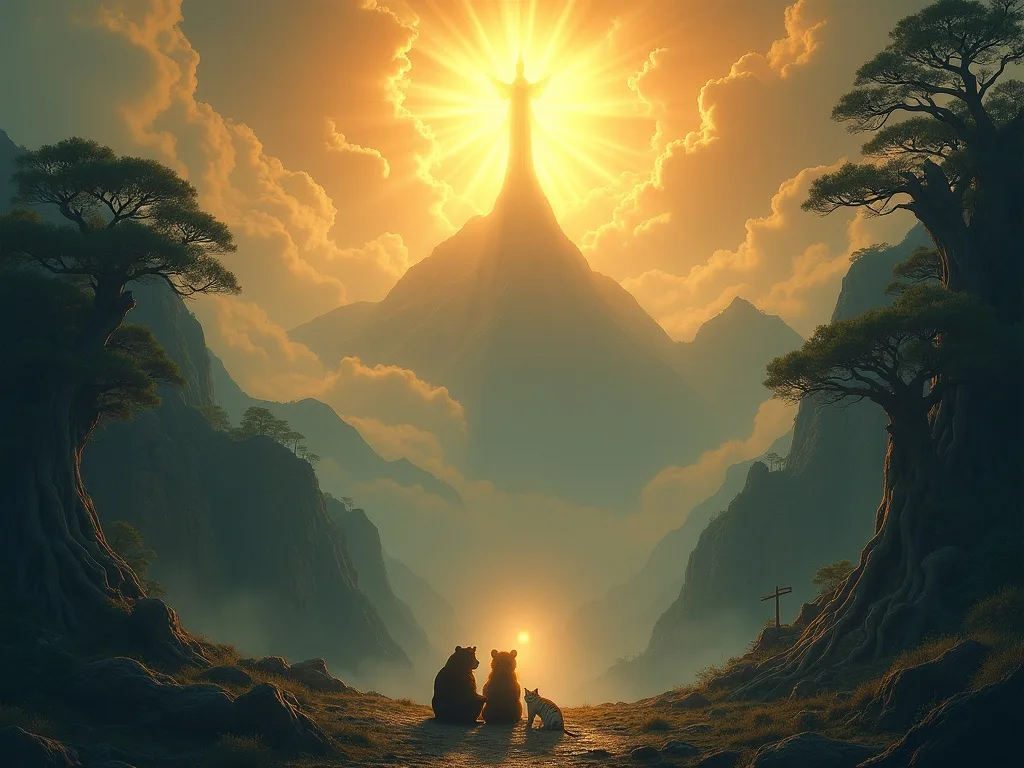
The Dangun myth opens with a celestial hierarchy. The sky god Hwanin (sometimes equated with the Buddhist Indra or the Daoist "Lord of Heaven") rules the upper realm. His son Hwanung yearns to descend and govern the human world. Hwanin surveys the three great mountains of the earth and grants permission, sending Hwanung down to Mount Taebaek with 3,000 followers and three divine ministers: the Earl of Wind (Pungbaek), the Master of Rain (Ubaek), and the Master of Clouds (Unsa). Together they govern 360 aspects of human affairs, from agriculture to disease, justice to morality.
On the mountain, a bear and a tiger pray to Hwanung. They want to become human. The bear's persistence earns her the transformation. She becomes Ungnyeo, the "Bear-Woman," and after marrying Hwanung she gives birth to Dangun around 2333 BCE according to traditional chronology. Dangun eventually descends further, founding Gojoseon (the "ancient pure land") and ruling for 1,500 years before retiring to become a mountain god (sanshin) on Mount Asadal.
Several elements of this narrative deserve attention. The bear is not defeated or punished; she is rewarded for endurance, a moral quality central to Korean cultural identity. The tiger, often a trickster or wild force in Korean folklore, cannot sustain the discipline. The division of labour between celestial and earthly administration mirrors the Confucian bureaucratic ideal that would later permeate Korean statecraft. Even at the mythological origin, heaven runs like a well-ordered court.
Scholarly debate around the Dangun narrative centres on its date of composition versus the date it claims to represent. The Samguk Yusa dates to around 1285 CE, but the Dangun story appears in even earlier references in the Samguk Sagi (1145 CE) and in Chinese records of the Goryeo period. Some historians argue the myth crystallised as a national-identity anchor during the Mongol invasions of the 13th century, when Koreans needed a symbolic lineage that reached above Chinese dynastic time. Others point to shamanic substrate elements, the bear-totem, the mountain cave, the 21-day ordeal, that suggest much older Central Asian or Siberian layers predating any literary codification.
The Shamanic Cosmos: Three Worlds and the Mudang
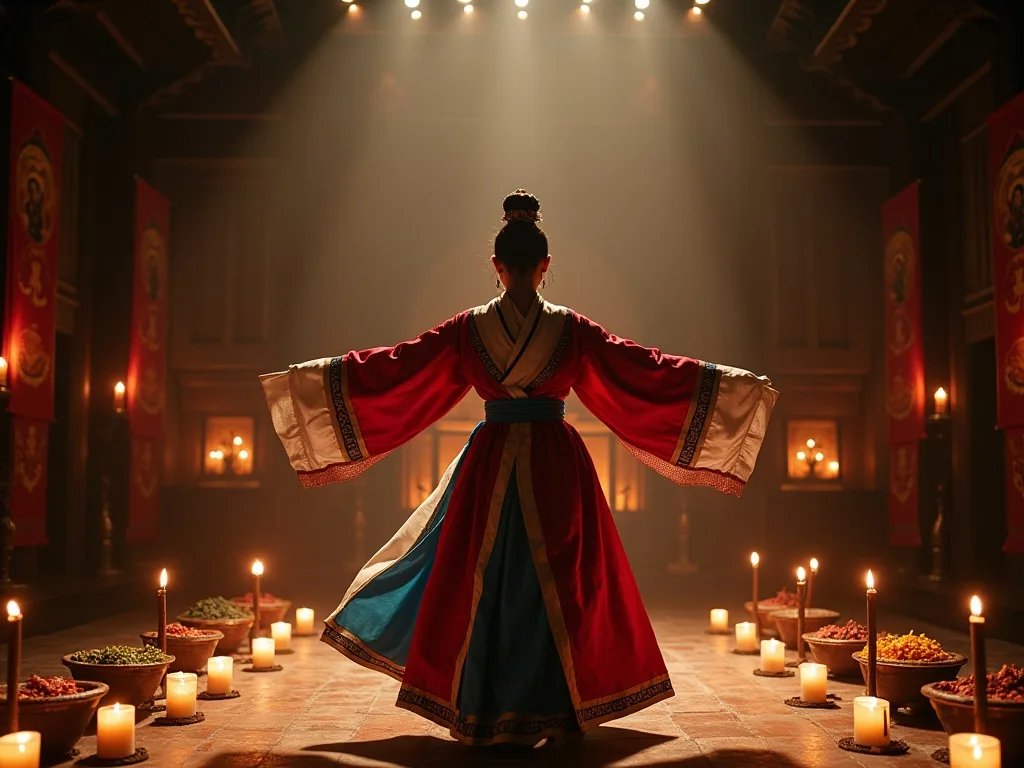
Korean shamanism (musok sinang) is not a religion of temples and texts. It is a religion of crisis, negotiation, and performance. When a family member falls ill, when a fishing boat is lost at sea, when a soldier does not return from war, the community calls a mudang, a shaman (historically most often a woman) who can cross between the three worlds: the upper realm of sky gods and celestial bureaucrats, the middle realm of the living, and the lower realm of the dead.
This three-tiered cosmos organises an enormous pantheon. At the upper level sit the great sky deities and stellar gods. The middle world is dense with sanshin (mountain gods), haeshin (sea gods), seonghwangsin (village guardian gods), and household gods who occupy every room of a traditional home. The lower world is governed by Yeomna Daewang (Yama in Buddhist cosmology, but reinterpreted through distinctly Korean sensibility), the king of the dead who presides over ten courts of judgment.
The mudang enters trance through drumming, dance, and the donning of specific ritual costumes that embody each deity in sequence. A full gut ceremony can last all night and involve the shaman cycling through dozens of divine personas. The oral texts recited during these ceremonies are called musok sinhwa, shamanic myths, and they constitute one of the richest mythological archives in East Asia. Many were preserved not in writing but in the living bodies of practitioners, a transmission so fragile that the 20th century's forced modernisation and anti-shamanic campaigns during Japanese colonial rule (1910-1945) and subsequent decades nearly extinguished entire regional lineages.
The cosmology shares structural echoes with Siberian shamanism to the north, with the three-world model and the shaman-as-intermediary also found among the Evenki and Tungusic peoples. Korean shamanism likely absorbed elements from these northern traditions while developing its own bureaucratic theology, where even the spirits of the dead must navigate a divine court system before reaching their final destination.
Baridegi: The Princess Who Governs the Dead
Of all the figures in the Korean shamanic canon, Baridegi may be the most theologically significant. Her myth, recited during ogu gut (funeral rites) ceremonies, tells the story of a seventh princess born to a king who desperately wanted a son. Disgusted, the king orders the infant abandoned, set adrift in a box on the sea.
The box is found and raised by an old couple. Baridegi grows up outside the palace, outside privilege, outside paternal recognition. When the king and queen fall gravely ill, an oracle declares that only medicine from the far western underworld can save them. Six older princesses refuse the quest. Baridegi volunteers.
The journey is brutal. She crosses mountains that close like jaws, rivers of blood, plains of thorns. In the underworld she meets the guardian god who demands nine years of labour (some versions say seven) before he will give her the medicine. She serves those years, bears the god three sons, and finally returns to the surface with the medicine of resurrection. She arrives too late: her parents are dead. She uses the medicine to raise them from their graves, forgives her father, and is rewarded with stewardship of the dead, becoming the deity who escorts souls from the living world to the realm beyond.
Baridegi's story is often read as a myth of abandonment and forgiveness, a narrative of the rejected child who proves her worth through suffering rather than through power. But it also encodes a specific cosmological function. As the Joseon dynasty intensified Confucian gender norms, the shamanic tradition, largely female-led, preserved Baridegi as a female deity with supreme authority over death, a counterweight to the heavily male celestial bureaucracy.
Her myth has drawn serious comparative attention: some scholars note structural parallels to Inanna's descent in Mesopotamian tradition and to Persephone's abduction in Greek myth, though the Korean narrative is distinct in its emphasis on voluntary endurance rather than coercion. Baridegi is never taken. She goes.
The Sun and Moon: Two Siblings and a Tiger
One of the most beloved myths across Korean regional traditions tells the story of two children, a brother and a sister (sometimes three siblings), whose mother is devoured by a tiger on her way home through the mountains. The tiger, wearing the mother's clothes, comes to the door and imitates her voice. The clever children refuse entry, notice the tiger's claws, and flee to the roof.
The tiger follows. The children pray, and a rope descends from heaven. They climb the rope and become the sun and moon. The tiger also prays, but receives a rotten rope that breaks, sending the tiger crashing into a field of millet, which is why millet stalks run red at harvest time.
This etiological myth, explaining the origin of celestial bodies through a survival story, carries unmistakable shamanic and animistic overtones. The tiger here is neither the divine helper of some regional traditions nor the noble beast of royal heraldry; it is pure hunger, a force that consumes the maternal and must be outwitted. The children's ascent to heaven is not triumph but escape, a bittersweet deification driven by loss.
The myth also illustrates how Korean mythological narrative tends to operate through practical consequences: why the sun shines, why the moon glows, why millet is red. Korean myths rarely explain only the spiritual. They explain the physical world simultaneously, grounding the sacred in the agricultural and the domestic.
Cheonjiwang Bonpuri: Creation, the Underworld, and the Flower Battle
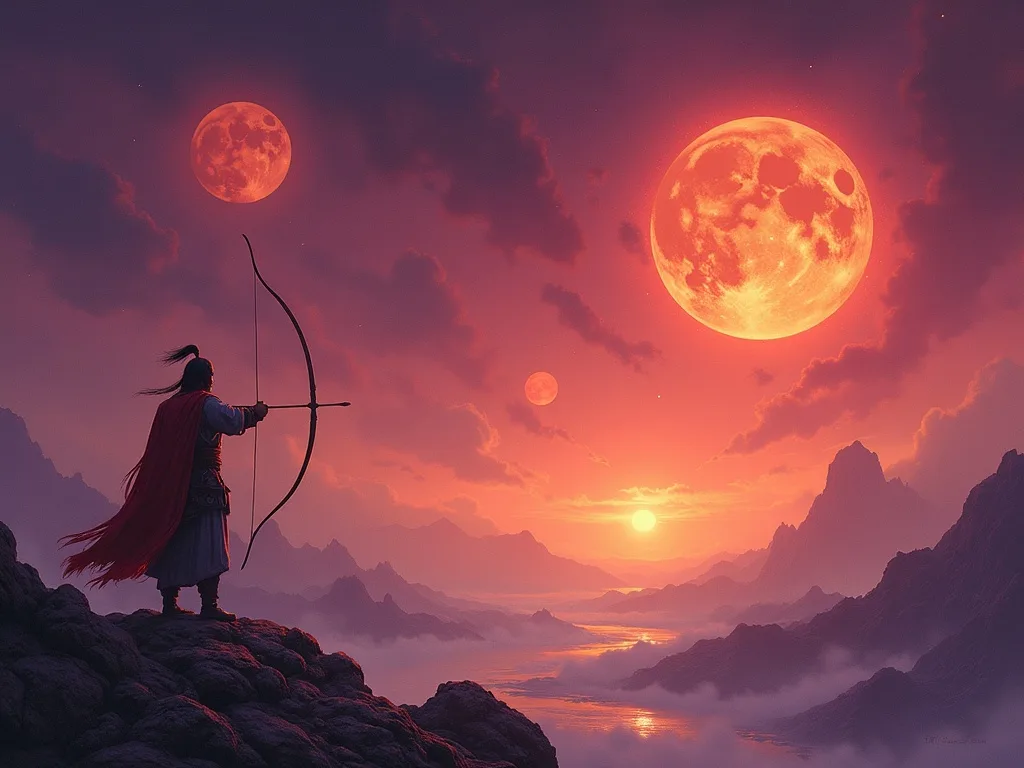
Preserved primarily in the bonpuri (origin myths) of Jeju Island shamanism, the Cheonjiwang Bonpuri is one of the most complex cosmogonic texts in the Korean tradition. It opens before differentiation: heaven and earth are fused, a single mass of primordial matter. Slowly they separate. The sky rises, the earth sinks. But the world that emerges is imperfect; two suns blaze during the day, two moons shine at night, making the earth alternately scorched and frozen.
A hero named Daebyeol shoots down one sun and one moon. The discarded celestial bodies become the stars. This act of violent cosmic editing produces the ordered world we inhabit, a world that only exists because of destruction.
The deeper drama of the Cheonjiwang Bonpuri involves the conflict between Sobyeol and Daebyeol, two brothers born from the union of the sky king Cheonjiwang and a mortal woman. The brothers compete to see who will govern the living world and who will govern the dead. They stage a contest: each plants a flower, and whoever's flower blooms first rules the living. Sobyeol's flower blooms. But while Daebyeol sleeps, Sobyeol steals the flower and claims dominion over the living. Daebyeol wakes, discovers the theft, and accepts rulership of the dead, but he prophesies that because Sobyeol came to power through deceit, the world of the living will always be full of lies, crime, and injustice.
This is extraordinary mythological thinking. The moral disorder of human society is not blamed on human weakness alone but on a structural flaw at the moment of cosmic administration, a god of the living who won by cheating. The myth offers no resolution, no redemption arc. It simply states the facts: our world is corrupt at the root, and a wronged deity rules the dead.
The Seven Stars of the North: Chil Seong and Stellar Religion
Korean stellar religion centres on Chil Seong, the Seven Stars of the Northern Dipper (Ursa Major in Western astronomy). Long before the introduction of Buddhism, the seven stars were worshipped as guardian deities of human lifespan and fate. Each star governs a specific year of a person's life cycle. Shamanistic rituals held on the seventh day of the seventh lunar month propitiated the Chil Seong for good fortune, fertility, and long life.
The tradition syncretised with Buddhism over the centuries. Most Korean Buddhist temples today contain a Chilseonggak, a small shrine dedicated to the Seven Stars, usually depicted as Daoist elders or Buddhist bodhisattvas, a striking visual symbol of the layering of religious traditions on the peninsula. The seven-star symbolism also appears in the Korean founding myth; the number seven echoes through the tradition with unusual persistence, from the seven courts of the dead to the seven-day ordeal in some variants of the tiger myth.
This stellar religion connects Korean mythology to a wider East Asian cosmological framework that includes Chinese xiu (lunar mansion) astronomy and Daoist cultivation practices, while maintaining distinctly Korean ritual forms. The mudang's drum, circular and often painted with stellar motifs, literally maps the cosmos onto the ritual instrument.
Gods of the Household and the Village: The Everyday Sacred
Korean mythology is not only a tradition of grand heroes and cosmic battles. Much of its most vivid theology lives in the domestic sphere. The traditional Korean home was overseen by a constellation of household gods whose jurisdictions were precisely mapped:
- Seongju (the house-lord deity) lived in the main beam of the roof and protected the overall household.
- Jowang (the kitchen god) occupied the hearth and monitored the family's moral behaviour, reporting to heaven annually.
- Teoju (the earth god of the site) was housed in a small jar filled with rice, kept in the back courtyard.
- Samsin Halmoni (the grandmother deity of birth) assisted women in childbirth and governed the first three years of a child's life.
Each of these gods required periodic propitiation, small offerings of rice, water, and seasonal foods. Women, as managers of the domestic space, were the primary ritualists of this household religion, a fact that reflects the broader pattern of Korean religious practice where women held practical spiritual authority even within patriarchal social structures.
The village level added another layer. Seonghwangsin, the tutelary god of each village, was often housed in a stone post or a tree at the village boundary. Twice a year, the whole community gathered to perform the dongje (village ritual) to renew the god's protection. These gods were not abstract theological concepts; they were local, personal, and geographically specific. The mountain god of Jirisan was a different deity from the mountain god of Bukhansan, and both had distinct personalities, histories, and demands.
Dragon Kings and the Sea: The Underwater Palaces
Korea's geography, a peninsula bounded on three sides by water, ensured that the sea featured prominently in its mythology. The great undersea realm of the Dragon King (Haeryongwang or Yongwang) mirrors the structure of the celestial court: a palace, courtiers, treasure chambers, and administrative halls where petitions from the surface world are received and judged.
The most famous narrative set in this realm involves a rabbit and a turtle. The Dragon King falls ill and can only be cured by a rabbit's liver. A turtle volunteers to go to the surface and bring back a rabbit. The turtle flatters the rabbit into agreeing to visit the underwater palace, promising him extraordinary honour. Once there, the rabbit is told of his intended fate. In a brilliant act of quick thinking, the rabbit claims his liver is currently drying on a rock on the surface and offers to go fetch it. The turtle, credulous, returns the rabbit to shore, where the rabbit immediately bolts. The story appears across Korean, Japanese, and Indian Buddhist traditions (notably in the Jataka tales), illustrating the deep current of narrative exchange across Asian mythological traditions.
The Dragon King also appears in the myth of the Silla kingdom's King Munmu (d. 681 CE), who reportedly asked to be buried at sea so he could become a dragon and protect Korea from Japanese raids. His underwater tomb, a reef off the coast of Gyeongju known as Daewangam ("The Great King's Rock"), remains a site of pilgrimage to this day, one of the places where myth and verifiable history become indistinguishable.
The Three Kingdoms and Their Divine Origins: Silla, Goguryeo, Baekje
The mythologies of Korea's Three Kingdoms period (roughly 57 BCE to 668 CE) differ strikingly from one another, a fact that reflects the distinct cultural constituencies each kingdom drew from.
Goguryeo, the northern kingdom, traced its lineage to Jumong (Dongmyeong), a figure of almost superhuman martial ability whose birth story is recorded in the Samguk Sagi. His mother, Yuhwa, was a river god's daughter who was impregnated by sunlight after an encounter with the sky king Haemosu. She gave birth to an egg. The egg was thrown to the dogs; the dogs ignored it. It was thrown to the pigs; the pigs walked away. It was left in the field; the horses stepped around it. Eventually the egg hatched and Jumong emerged, demonstrating mastery of archery and horsemanship from infancy. Driven out by jealous half-brothers, he fled south, parting a river through prayer (an episode that invited later Buddhist interpreters to draw parallels with Moses and the Red Sea), and founded Goguryeo.
Silla, the southeastern kingdom, was famously founded by Bak Hyeokgeose, who also hatched from an egg, a white egg found beneath a horse that knelt in reverence. His queen Aryeong emerged from the ribs of a dragon. The egg-birth motif, appearing across Goguryeo, Silla, and Gaya (the confederacy that preceded full unification), connects Korean founding mythology to a wider Eurasian tradition of solar heroes and divine births, from the egg of the Cosmic Goose in Hindu cosmology to the egg of Leda in Greek myth.
Baekje's founding myth connects to Jumong himself: his son Onjo founded Baekje after migrating south, giving the two kingdoms a genealogical relationship that the historical rivalry between them would spend centuries trying to forget.
These founding myths served political functions. They legitimised ruling dynasties through divine parentage, established territorial claims through miraculous geography, and embedded a particular moral vision (martial excellence in Goguryeo, administrative order in Baekje, cosmic favour in Silla) into the identity of each polity.
Jeju Island's Separate Mythological World
Jeju Island, 60 miles off Korea's southern coast, preserves a body of bonpuri (mythological recitation texts) so distinct that scholars sometimes treat it as a partially separate tradition. The island's relative isolation from mainland dynastic culture meant that Buddhist and Confucian pressures, which gradually suppressed shamanic practice on the mainland, arrived later and with less force. The result is an archive of extraordinary depth.
The Jeju bonpuri contain detailed origin myths for hundreds of local deities, from the goddess of childbirth Samseung Halmang to the god of smallpox Mashin, from the agricultural deities associated with specific crops to the gods of particular mountain passes. The Cheonjiwang Bonpuri cosmogony described earlier is the crown of this archive.
Jeju shamanism is practised by shimbang (the island's term for mudang), and the recitation of bonpuri during rituals is a performance art of considerable technical demand: the texts are long, formally structured, and must be delivered with precise intonation. In 2009 UNESCO recognised Jeju's Chilmeoridang Yeongdeung gut (a maritime shaman ritual for the sea goddess Yeongdeung) as an Intangible Cultural Heritage of Humanity, a formal acknowledgment that this tradition is not folklore but living theology.
Cross-Cultural Echoes: Korean Mythology in Its Asian Context
Korean mythology does not exist in a sealed container. The peninsula's history of contact with China, Japan, Central Asia, and the broader Buddhist world shaped its mythological language at every level, while Korean traditions also flowed outward and influenced neighbouring cultures.
The Buddhist Yama figure, borrowed from Hindu cosmology via Chinese Buddhist translation, became Yeomna Daewang in Korea, reinterpreted through local shamanic bureaucratic logic until he resembled a Korean magistrate more than an Indian lord of the dead. Similarly, the Daoist concept of gi (Korean: qi) permeated shamanic healing practice, interweaving with older animistic understandings of the body and landscape.
The structural parallel between Izanagi and Izanami in Japanese mythology and Korean underworld narratives is striking. Both traditions describe a living being who descends to the realm of the dead seeking a lost partner, confronts the horror of death made visible, and flees back to the upper world. Whether this parallel reflects direct transmission between the Korean and Yayoi Japanese cultural spheres, which had extensive contact during the Three Kingdoms period, or represents independent development of a pan-Northeast-Asian mythological template, remains an open question in comparative mythology.
The sun-shooting hero archetype, where a cosmic imbalance caused by too many suns is corrected by an archer, appears in Chinese mythology as Hou Yi, who shoots down nine of ten suns with his bow. In the Cheonjiwang Bonpuri, Daebyeol performs a structurally equivalent act. The parallel suggests a shared cosmological anxiety about solar excess that runs through a broad band of East Asian mythological thinking, though the Korean version reaches a distinctly darker conclusion about what the correction costs.
Korean Mythology in Modern Culture: From Webtoons to World Literature
The 21st century has brought Korean mythology to a global audience through vectors its original custodians could never have imagined. The Korean Wave (Hallyu), driven by K-pop, K-drama, and Korean cinema, has drawn millions of new readers toward the mythological sources underpinning the stories they love.
The dokkaebi (a creature somewhere between a goblin, a trickster spirit, and a minor deity, often depicted with a club) became internationally recognisable through the 2016 drama "Goblin" (Dokkaebi), which dramatised questions of fate, divine punishment, and human love drawn directly from Korean shamanic theology. The drama's central figure is a soldier cursed by a jealous king to live forever with a sword through his chest; only a human bride can remove it and grant him death. The emotional logic of the story, the longing for an honourable death, the guilt of survival, the bureaucratic cruelty of divine judgment, is purely Korean mythological in its sensibility.
Webtoon artists and novelists have mined the bonpuri tradition extensively, particularly the stories of Baridegi and the Dragon King's court. Korean-American author Hazel Gower and South Korean novelist Bae Suah have both written fiction that draws on the shamanic tradition. Bong Joon-ho's films, while not mythological in any literal sense, carry the moral weight of a tradition that believes the dead are owed justice and that heaven's administrators can be corrupt.
The mudang tradition itself has seen a partial rehabilitation after decades of stigma. The Korean Cultural Heritage Administration has designated numerous gut ceremonies and bonpuri recitation traditions as national intangible cultural heritages. Some shamanic lineages, nearly extinct in the 1980s, have found new students among younger Koreans drawn not by religious conviction alone but by the aesthetic, philosophical, and historical depth of what their grandparents' generation tried to set aside.
Frequently Asked Questions About Korean Mythology
Frequently asked questions
What is the primary source for Korean mythology?
Unlike Greek or Norse mythology, Korean mythology has no single canonical text. The main literary sources are the Samguk Yusa (1285 CE) and the Samguk Sagi (1145 CE), which record founding myths and royal genealogies. But the richest body of mythology survives in oral bonpuri texts recited by mudang during shamanic rituals, particularly those preserved on Jeju Island. Scholars like Hyun-key Kim Hogarth and Kim Tae-kon have spent decades transcribing and analysing these oral archives.
How does Korean mythology differ from Chinese and Japanese mythology?
All three traditions share cosmological vocabulary borrowed from Buddhist and Daoist frameworks, and there are clear lines of transmission and parallel narrative structures. But Korean mythology is distinctive in the central role of the mudang as theological authority, in the bureaucratic structure of its divine world (where even gods file petitions), and in the emotional register of its greatest myths, which tend toward patient suffering, wrongful death, and posthumous justice rather than heroic conquest. The Baridegi myth, for instance, has no close structural equivalent in Chinese or Japanese canonical mythology.
What role do women play in Korean mythology?
Women hold extraordinary positions of power in Korean mythological narrative. Baridegi governs the dead. Samsin Halmoni governs birth. The household goddess Jowang watches over the hearth and reports to heaven. The mudang tradition was (and largely remains) female-led, preserving mythological knowledge through an unbroken chain of women practitioners. This stands in notable tension with the Confucian patriarchal structures that dominated Korean public life for centuries, and some scholars read the shamanic tradition's persistence as a form of cultural counter-narrative.
What is the Dangun myth's relationship to Korean national identity?
Dangun is the mythological founder of the first Korean kingdom, Gojoseon, dated traditionally to 2333 BCE. Korean national identity has drawn on this figure repeatedly at moments of cultural stress, most intensely during the Mongol invasions of the 13th century (when the Samguk Yusa was written), during Japanese colonial occupation (1910-1945, when celebrating Dangun was a form of resistance), and in the post-liberation period when Gaecheonjeol (National Foundation Day, October 3) was established as a public holiday. In the Democratic People's Republic of Korea, an alleged tomb of Dangun was announced in 1993 in Pyongyang, a politically charged archaeological claim that most mainstream historians treat with considerable scepticism.
Who are the most important deities in the Korean pantheon?
The pantheon is vast and regionally variable, but several figures appear consistently across traditions. Hwanin (sky god and grandfather of Dangun), Hwanung (culture-bringer), Dangun (first king and mountain god), Baridegi (goddess of the dead), Samsin Halmoni (goddess of birth), the Dragon King Yongwang (ruler of the sea), Chil Seong (the Seven Stars), and the various mountain gods (sanshin) are among the most widely attested. The sanshin tradition is especially rich: virtually every significant mountain in Korea has its own deity with its own mythology, depicted in thousands of shrine paintings across the country.
Is Korean shamanism still practiced today?
Yes. Despite pressure from Confucian authorities during the Joseon dynasty (1392-1897), Japanese colonial suppression, Christian missionary activity in the 20th century, and rapid industrialisation, Korean shamanism (musok sinang) has survived. There are an estimated tens of thousands of active mudang in South Korea today. Several gut ceremonies and bonpuri recitation traditions have been designated as national intangible cultural heritages by the Korean government. Jeju Island's Chilmeoridang Yeongdeung gut was recognised by UNESCO in 2009. Academic and cultural interest has grown significantly since the 1990s, and some younger Koreans are entering shamanic practice as a conscious act of cultural recovery.
The Unresolved Question: What Korean Mythology Might Still Become
The greatest challenge facing Korean mythological scholarship is not the past but the present. Vast quantities of bonpuri were recorded imperfectly or not at all during the 20th century. Regional lineages of mudang who carried knowledge specific to particular localities died without successors. The Japanese colonial period's systematic denigration of Korean shamanism as primitive superstition, followed by post-independence modernising movements that shared much of the same contempt, left gaps in the archive that no amount of textual scholarship can fully repair.
But what survives is extraordinary. The Korean mythological tradition constitutes one of the most complex shamanic theological systems ever documented, with a pantheon that runs from the cosmic sky king to the god of the outhouse, a moral philosophy embedded in narrative rather than doctrine, and an afterlife cosmology of genuine intellectual rigour. The Cheonjiwang Bonpuri's flower-stealing origin of injustice is as searching a theodicy as anything produced by the ancient Mediterranean traditions.
More is being recovered. Scholars at Seoul National University, Jeju National University, and the National Folk Museum of Korea continue to transcribe, translate, and analyse gut ceremony recordings made throughout the 20th century. Digital archiving projects are making regional variants accessible to researchers outside Korea for the first time. Korean diaspora writers and artists in the United States, Canada, and Europe are reaching back into the tradition to find frameworks for stories about inheritance, loss, and identity that Western literary conventions cannot quite hold.
Korean mythology was never static. The bear-woman in her cave, the princess crossing rivers of blood, the brothers arguing over a flower: these stories changed every time a mudang recited them, adapting to the grief of the family in the room, the particular quality of the night, the things that needed to be said and could only be said sideways, through the voices of the dead. That living quality is exactly what makes the tradition so difficult to freeze into an encyclopedia entry, and exactly why it keeps speaking.
Major gods of Korean
View all →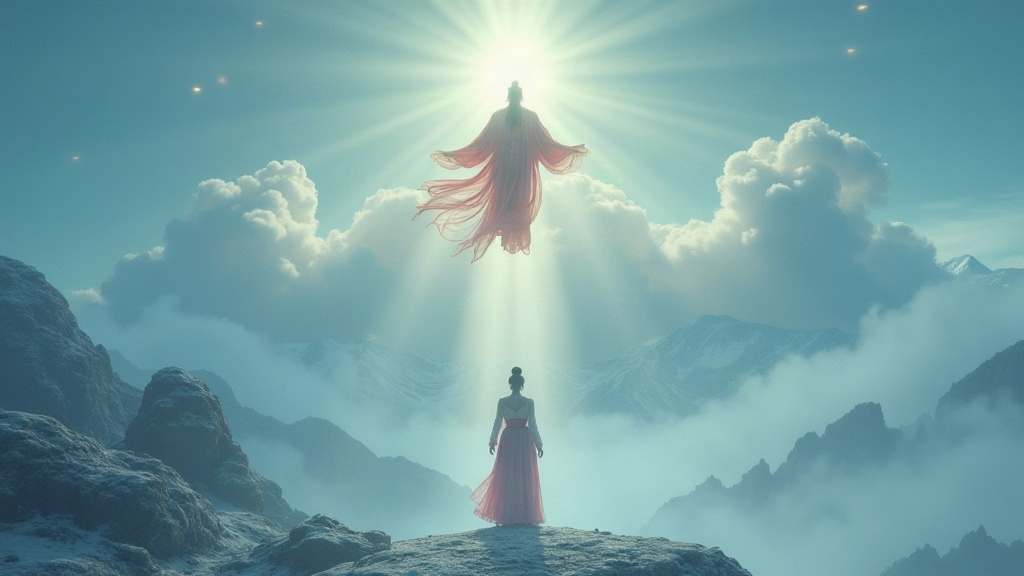
Korean
Hwanung: The Heavenly Prince Who Descended to Earth
Hwanung, the celestial prince of Korean myth, descended from heaven to establish human civilization. His union with a bear-woman bore Tangun, founder of Gojoseon, Korea's first kingdom. Discover how this cosmic descent shaped Korean identity and continues to echo through the nation's cultural memory.

Korean
Mago Halmi: The Primordial Creatrix Goddess
Mago Halmi shaped existence itself before time began. The Korean primordial goddess stands at the root of all creation, a force older than the heavens, wiser than fate itself.
Korean
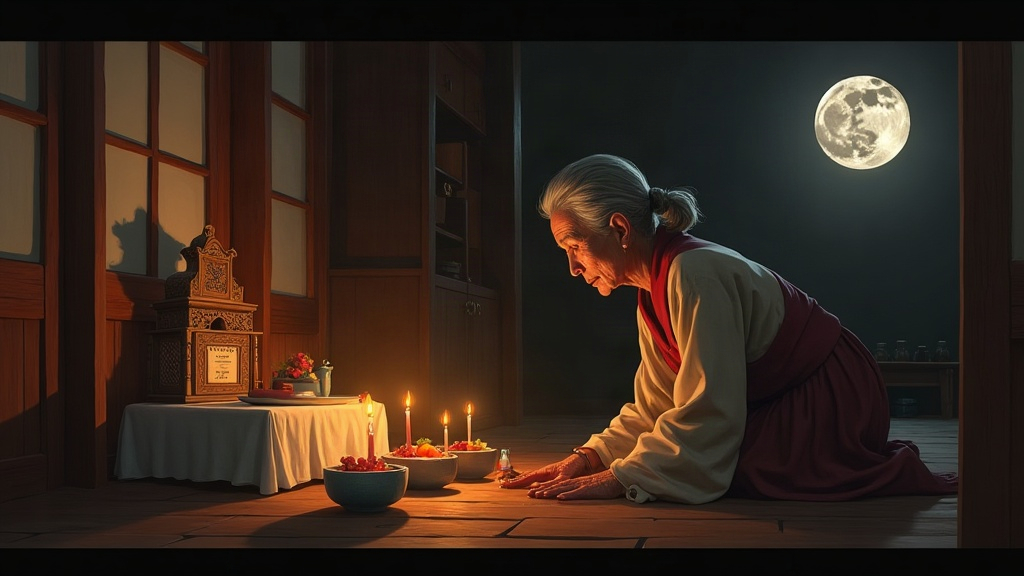
Samsin Halmoni: The Grandmother Goddess of Childbirth
Samsin Halmoni is the Korean grandmother goddess who presides over pregnancy, childbirth, and the health of newborns. Worshipped in homes and shrines for centuries, she remains central to Korean motherhood tradition and represents a mother's protective power.
Korean
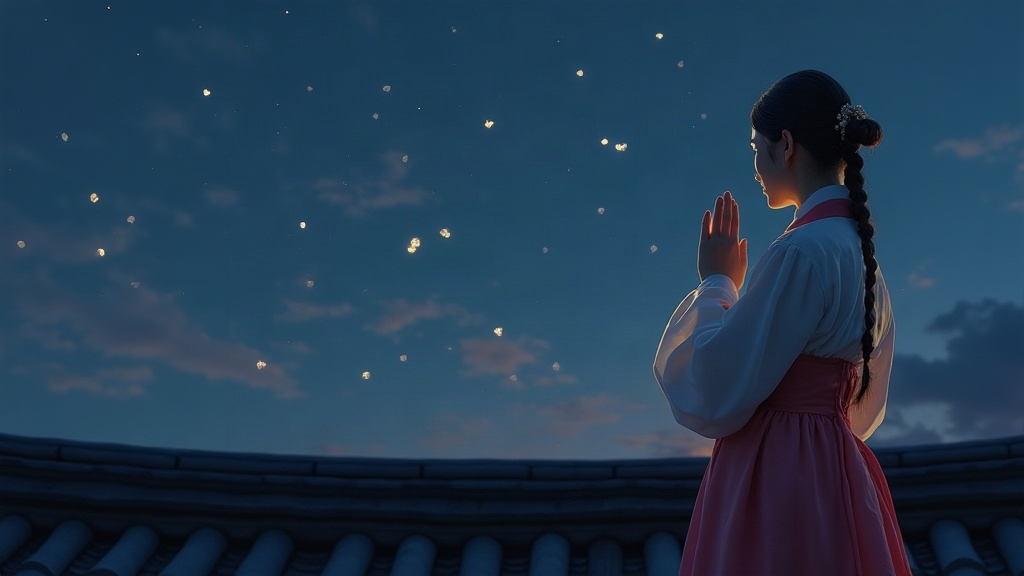
The Seven Star Maidens: Chilseong and Celestial Worship in Korean Tradition
The Seven Star Maidens weave Korean spirituality with the night sky itself. Chilseong worship shaped household rituals, artistic tradition, and how ordinary people imagined fortune for centuries.
Korean
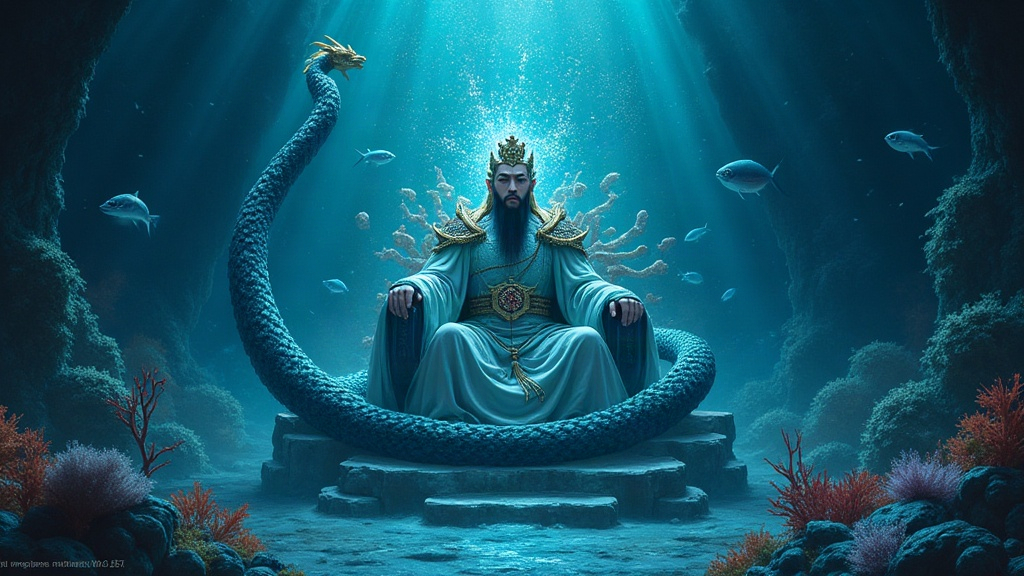
The Dragon King: Yongwang of the Underwater Palace
Yongwang, the Korean Dragon King, rules a glittering palace beneath the sea and commands rain, rivers, and fate itself. Learn who he is, why fishermen still fear his moods, and where his myth came from.
Famous Korean myths
View all →Recent in Korean
6 entries
Korean
Baekdu Mountain: The Sacred Peak of Korean Cosmology
Baekdu Mountain rises at the heart of Korean myth as the birthplace of the first kingdom and the cosmic axis binding earth to heaven. Discover how this real volcano became the sacred peak where gods walked and legends were born.

Korean
The Bear Woman Myth: Ungnyeo's Transformation
Ungnyeo the bear woman endured 100 days in a cave to become human and mother a nation. Here is the full myth, its shamanic roots, and why it still echoes in Korea today.
Korean
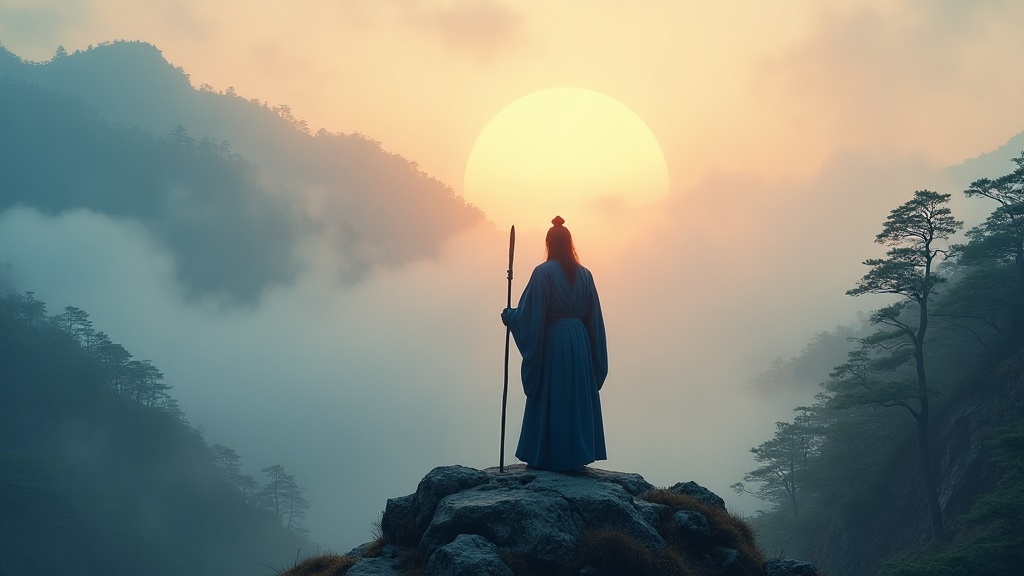
Dangun: The Divine Founder of Korea
Dangun, the bear-born king who shaped a civilization, stands at the heart of Korean mythology. Learn the myth, its sources, and why it still matters today.

Korean
Dokkaebi: The Trickster Goblins of Korean Folklore
The Dokkaebi are shape-shifting trickster spirits in Korean mythology who test human cleverness and greed. Mischievous yet rarely evil, they haunt crossroads and abandoned places, armed with magic clubs and boundless appetite for tricks.
Korean
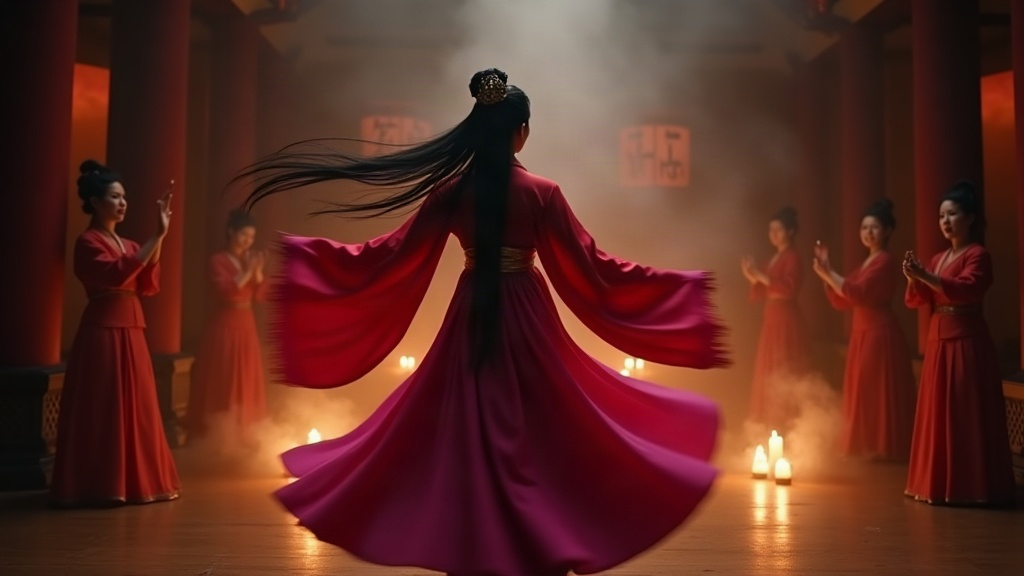
Gut: The Ecstatic Heart of Korean Shamanic Ritual
Gut are multi-day Korean shamanic ceremonies where a mudang (shaman) enters trance, dances with spirits, and heals community wounds through music, possession, and gift-offering. Rooted in ancient shamanistic traditions and woven into Korean identity for millennia, gut rituals survive today as living cultural practice and UNESCO-recognized heritage.
Korean
Hwanung: The Heavenly Prince Who Descended to Earth
Hwanung, the celestial prince of Korean myth, descended from heaven to establish human civilization. His union with a bear-woman bore Tangun, founder of Gojoseon, Korea's first kingdom. Discover how this cosmic descent shaped Korean identity and continues to echo through the nation's cultural memory.