Ankh: Egyptian Cross of Life
The ankh appears in temple reliefs, funerary texts, and royal iconography as hieroglyph and symbol. Its meaning shifts across dynasties.
Contents
The ankh is an ancient Egyptian hieroglyph representing the word for "life" (ʿnḫ), written in Gardiner's Sign List as S34, and appears throughout temple reliefs, funerary texts, and royal iconography as a looped cross held by gods and pharaohs to signify vitality, breath, and eternal existence. The symbol predates the Old Kingdom and remains in continuous use through three millennia of Egyptian civilization. Its adoption by Coptic Christians in the fourth century CE transformed it into one of the earliest forms of the Christian cross, bridging pagan and monotheistic traditions.
Most treatments stop at "symbol of life" and move on. But the ankh operates on multiple registers: phonetic sign, ritual object, theological shorthand, and material amulet. Its form invites speculation, its context demands precision, and its survival into the Christian era raises questions about how symbols migrate across belief systems.
The Hieroglyph and Its Phonetic Value
The ankh functions first as a hieroglyph. In hieroglyphic decipherment, it carries the phonetic value ʿnḫ, a triliteral sign representing the consonants ayin-nun-khet. It writes the verb "to live" and the noun "life," appearing in royal names, epithets, and blessing formulas. Ankhesenamun, wife of Tutankhamun, carries the sign in her name: "she lives for Amun."
The sign appears in the earliest hieroglyphic inscriptions and remains stable in form across dynasties. Unlike Eye of Horus or scarab, which accrue layers of mythological narrative, the ankh retains its phonetic clarity. It is a word before it is a symbol.
Scribes use it in compound signs and determinatives. The phrase ʿnḫ wḏȝ snb, "life, prosperity, health," appears as a standard blessing formula in royal inscriptions, the ankh leading the triad. The sign's ubiquity makes it one of the most recognizable elements of Egyptian symbols, but its semantic weight derives from linguistic function, not iconographic invention.
Form and Material: What the Ankh Looks Like
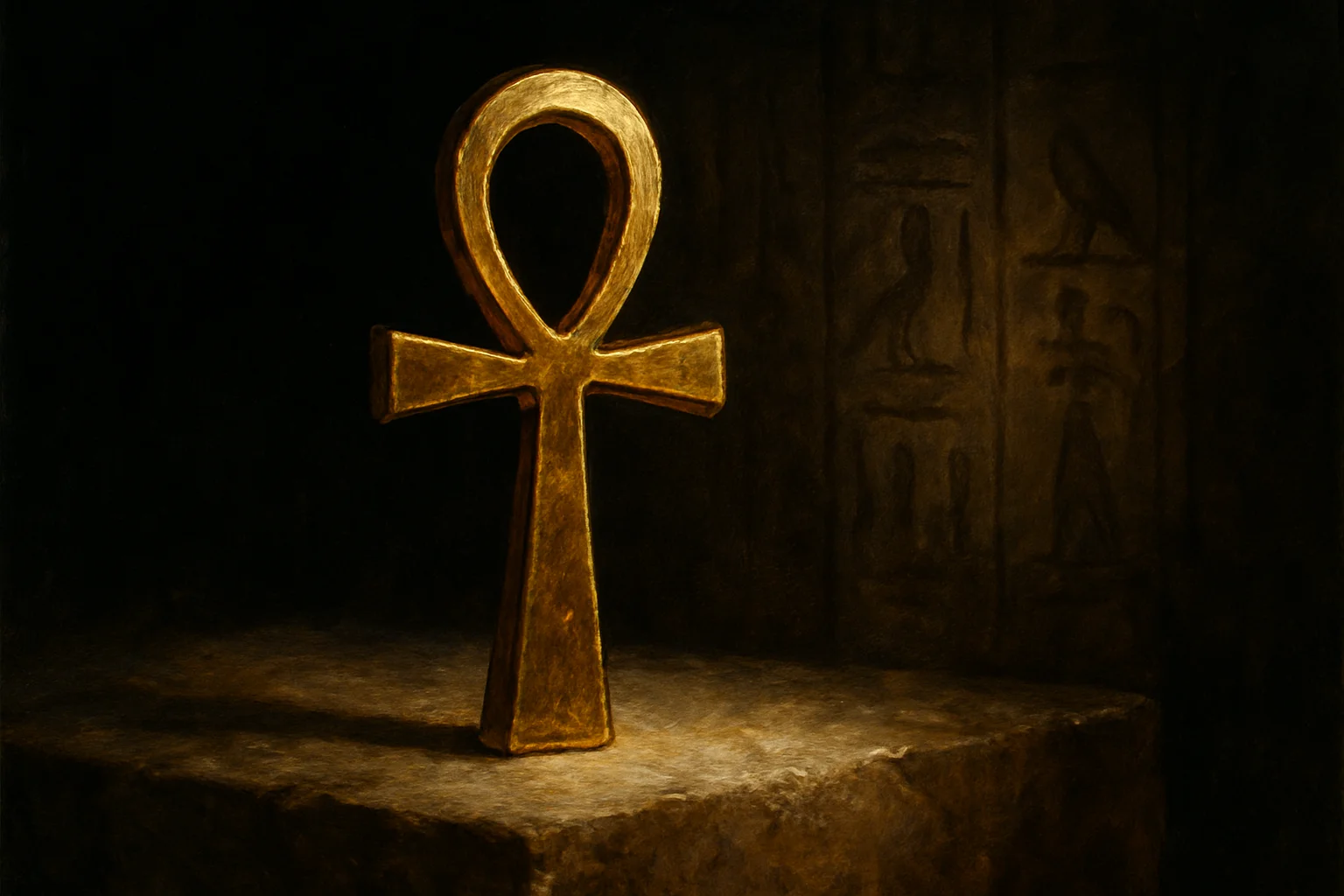
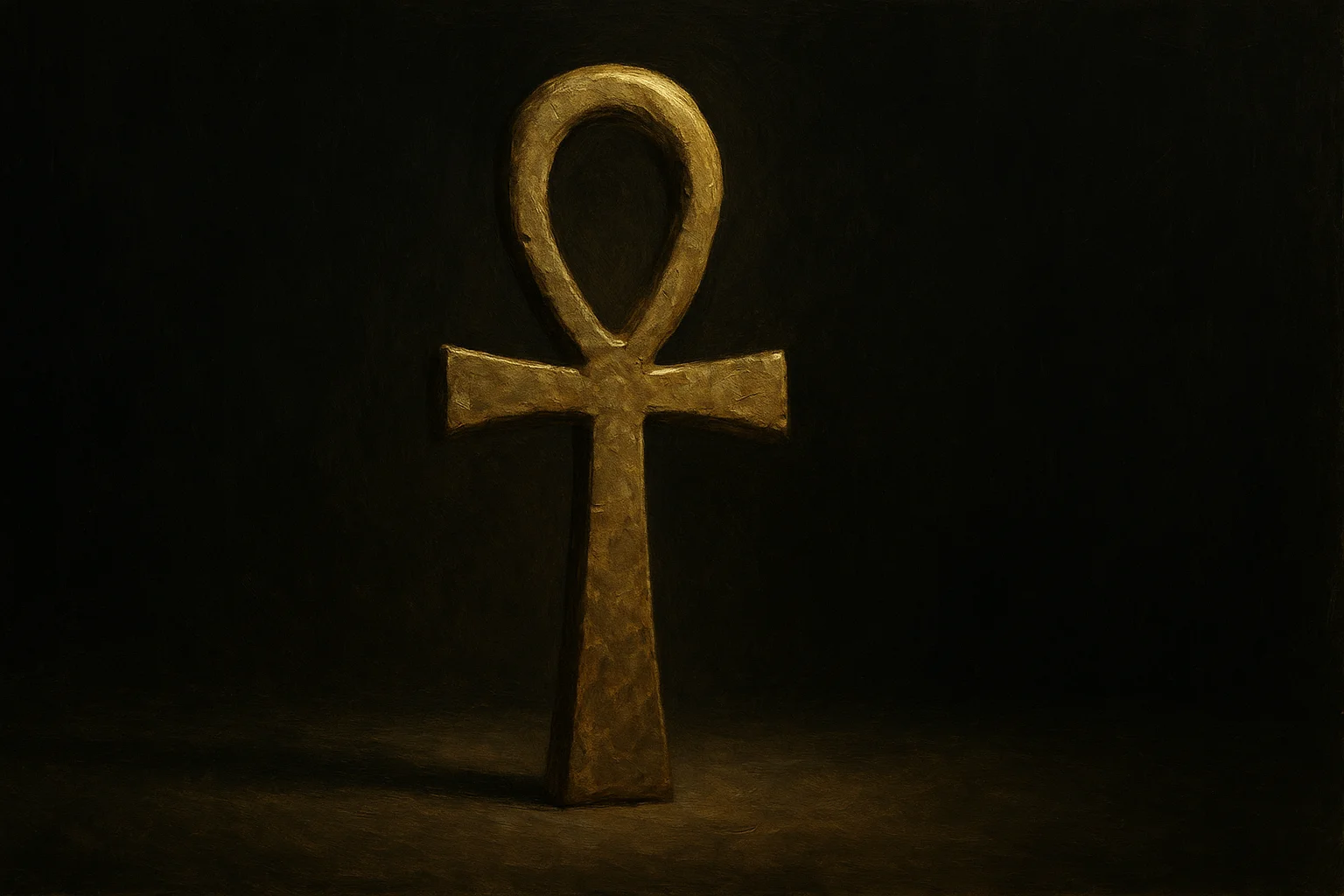
The ankh resembles a cross with a looped top: a vertical staff intersected by a horizontal bar, surmounted by an oval or teardrop loop. Proportions vary by period and medium. Old Kingdom examples tend toward compact loops; New Kingdom temple reliefs favor elongated forms. The loop sits atop the vertical, not threaded through it.
Material examples survive in faience, gold, carnelian, and wood. Amulets range from thumbnail-sized charms to ceremonial staffs taller than a man. The loop often shows wear at the top, suggesting suspension as a pendant. Larger ceremonial ankhs appear in temple processions, carried by priests or mounted on standards.
Color matters. Blue faience ankhs invoke the heavens and the Nile. Gold signifies solar divinity and the flesh of the gods. Red carnelian ties the symbol to blood and vitality. The choice of material encodes theological meaning, though the form itself remains constant.
Gods Holding the Ankh: Temple and Tomb Iconography
Temple reliefs at Karnak and Luxor show Egyptian gods holding the ankh by the loop, extending it toward the pharaoh. The gesture appears hundreds of times across New Kingdom monuments. Amun, Ra, Hathor, Isis, and Osiris all perform the act. The iconography is formulaic, which makes it theologically significant.
The ankh functions as a conduit. The god does not merely display life; the god transmits it. The pharaoh receives divine vitality through the symbol, a visual grammar of legitimacy and cosmic order. The relief at the Temple of Seti I at Abydos shows the king kneeling before Osiris, who extends the ankh with his right hand while gripping the was-scepter with his left. The composition balances power and sustenance.
The Ankh at the Nose: Breath and Resurrection
A subset of reliefs shows the god holding the ankh directly to the pharaoh's nostrils. The gesture appears in coronation scenes and funerary contexts. The Pyramid Texts, Utterance 213, describe the king receiving breath: "The breath of life is given to you." The ankh at the nose visualizes this transfer.
Breath and life are synonymous in Egyptian theology. The word for breath, ṯȝw, overlaps semantically with life force. The ankh at the nose literalizes the metaphor. In tomb paintings, the deceased receives the ankh from Anubis or Thoth, restoring breath for the afterlife. The iconography bridges mortal and divine, living and resurrected.
Royal Reliefs and Divine Bestowal
Royal reliefs emphasize the pharaoh as intermediary. The king receives the ankh from the gods and, in turn, offers it to the people through ritual action. A relief from the Temple of Ramesses II at Abu Simbel shows the king holding two ankhs, one in each hand, mirroring the divine posture. The symmetry suggests reciprocity: the gods sustain the king, the king sustains Egypt.
The ankh also appears in scenes of divine birth. The god Khnum, fashioning the royal ka on his potter's wheel, places an ankh before the infant's face. The symbol marks the moment life enters the body, a theological timestamp.
Theories of Origin: Sandal Strap, Vertebra, or Something Else
The ankh's form invites speculation. No ancient Egyptian text explains its shape, so scholars propose origins based on visual resemblance. The most common theory identifies the ankh with a sandal strap, the loop representing the strap's tie and the cross the sole's outline. Sandals appear in ancient Egyptian costume and carry connotations of groundedness and movement.
Another theory links the ankh to a vertebra, the loop corresponding to the atlas bone and the cross to the axis. This interpretation ties the symbol to the spine, the body's central support, and by extension to life itself. The anatomical reading has fewer adherents but persists in fringe scholarship.
A third proposal sees the ankh as a stylized representation of the womb and birth canal, the loop as uterus, the cross as the path of emergence. This reading aligns with the ankh's association with fertility goddesses like Hathor and Isis. The theory remains speculative, though the symbol's frequent appearance in contexts of birth and regeneration lends it circumstantial support.
None of these theories command consensus. The ankh may predate the visual referents scholars assign to it, or it may be a purely abstract sign whose form arose from scribal convention rather than mimetic representation. The silence of the primary sources leaves the question open.
The Ankh in Funerary Texts and Amulets
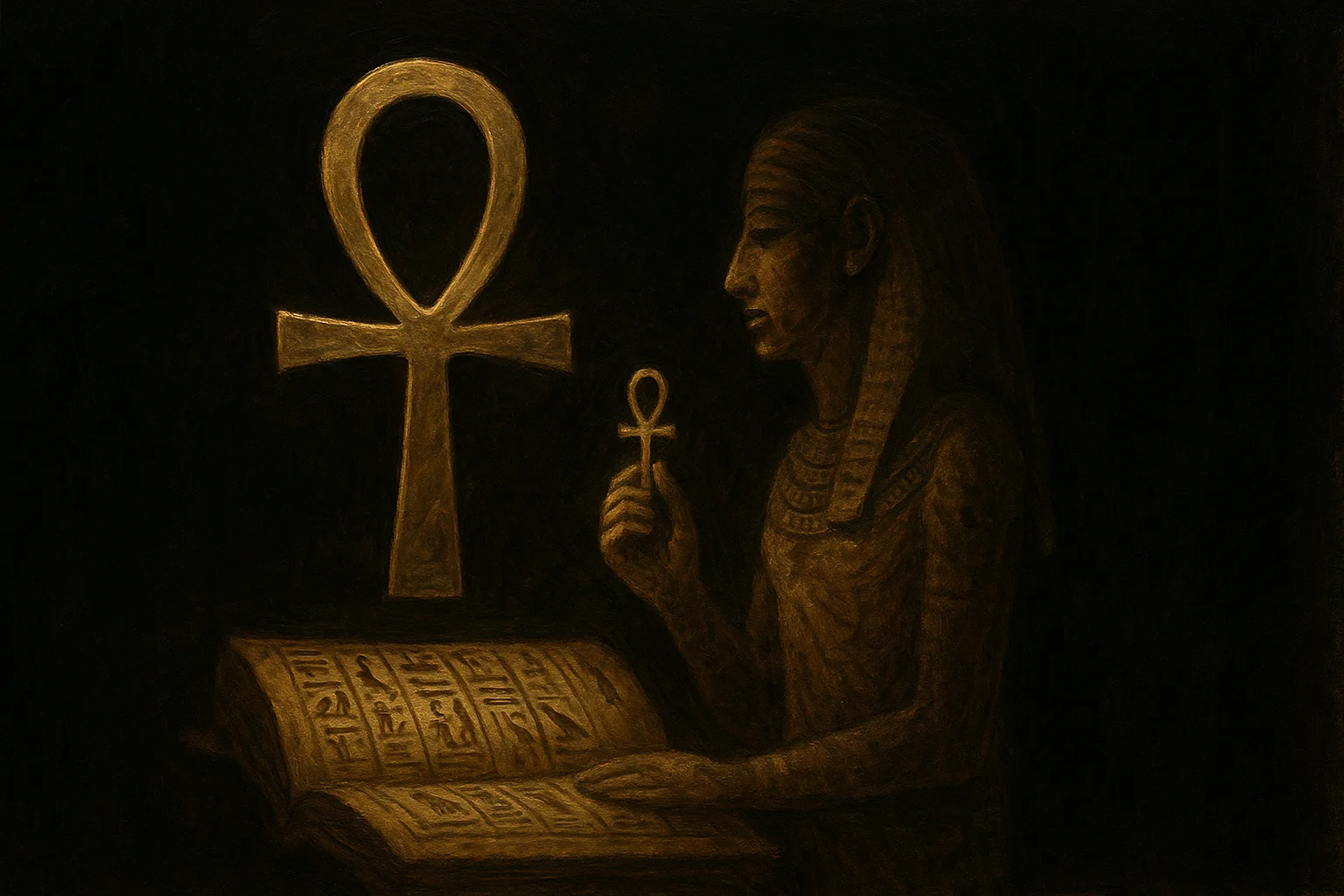
The ankh saturates Egyptian funerary practices. The Pyramid Texts, inscribed in the burial chambers of Old Kingdom pyramids, invoke the ankh in spells for resurrection. Utterance 213 addresses the deceased: "You have your heart, you have your ka, you have your life." The ankh appears in the accompanying hieroglyphs, a visual anchor for the spoken formula.
The Book of the Dead, Spell 125, includes the ankh in the weighing of the heart scene. The deceased stands before the scales, and the gods hold ankhs as they pronounce judgment. The symbol marks the threshold between annihilation and eternal life. A favorable verdict grants the deceased "life like Ra forever."
Amulets of the ankh were placed on the body during mummification, often at the throat or chest. The amulet's presence ensured the deceased retained the breath of life in the afterlife. Faience ankhs appear in burial assemblages from the Middle Kingdom onward, mass-produced for both elite and non-elite tombs. The symbol's protective function made it one of the most common funerary objects.
"I am the ankh of the gods, I am the life of the living, I am the breath of those who are in the necropolis." , Coffin Text 76, Middle Kingdom
Akhenaten and the Aten: The Ankh Under Monotheism
Akhenaten's religious revolution in the 14th century BCE reorganized Egyptian theology around the sun disc Aten. The ankh survives the upheaval, but its iconography shifts. In Amarna art, the Aten extends rays terminating in hands, and many of these hands hold ankhs. The boundary stelae at Amarna show the royal family receiving ankhs from the sun's rays, a decentralized theology of divine bestowal.
The ankh no longer requires anthropomorphic gods. The Aten, a non-figural deity, distributes life directly through solar radiation. The symbol adapts to monotheism without losing its core function. This flexibility suggests the ankh operates as a theological constant, independent of the specific gods who wield it.
After Akhenaten's death, the restoration of the traditional pantheon under Tutankhamun returns the ankh to the hands of Amun, Osiris, and the rest. The symbol's brief service to monotheism leaves no lasting iconographic trace, though it demonstrates the ankh's capacity to signify life under radically different theological frameworks.
Coptic Adoption: From Hieroglyph to Christian Cross
Coptic Christians in the fourth century CE adopted the ankh as the crux ansata, the "handled cross." The symbol's visual resemblance to the Christian cross and its association with life made the transition natural. Coptic liturgical texts from the fifth to seventh centuries CE invoke the ankh-cross in prayers and inscriptions, merging Egyptian and Christian symbolism.
Coptic textiles and manuscripts show the ankh-cross in contexts of resurrection and eternal life, themes continuous with pharaonic usage. A sixth-century Coptic funerary stele from Oxyrhynchus depicts the deceased flanked by ankh-crosses, the iconography nearly identical to New Kingdom tomb paintings, save the substitution of Christian saints for Egyptian gods.
The ankh's survival into Christianity is not unique among Egyptian symbols. The ouroboros and the djed pillar also migrate into Coptic and later Hermetic traditions. But the ankh's transformation is the most complete, its form and function preserved across a theological rupture that obliterated most of the old pantheon.
Pharaonic Ankh
Held by gods, extended to pharaohs and the deceased; signifies divine breath, life force, and resurrection within a polytheistic framework; appears in temple reliefs, funerary texts, and amulets from the Old Kingdom through the Ptolemaic period.
Coptic Crux Ansata
Held by saints, inscribed on Christian tombs and textiles; signifies Christ's resurrection and eternal life; retains the looped cross form but recontextualizes it within monotheistic Christianity; appears in liturgical manuscripts and funerary art from the fourth century CE onward.
Modern Use and Misuse
The ankh enters modern popular culture in the 19th century, following the decipherment of hieroglyphs and the rise of Egyptomania. Victorian occultists adopted the symbol as a marker of esoteric knowledge, often divorcing it from its Egyptian context. The Hermetic Order of the Golden Dawn used the ankh in ritual regalia, conflating it with alchemical and Kabbalistic symbolism.
Twentieth-century Afrocentrism reclaimed the ankh as a symbol of African heritage and spiritual continuity. The symbol appears in Black nationalist iconography, jewelry, and art, often paired with the slogan "knowledge of self." This usage restores a cultural specificity the Victorian occultists erased, though it sometimes flattens the ankh's theological complexity into a generalized marker of Africanness.
Contemporary fashion and tattoo culture treat the ankh as a generic symbol of life, often stripped of religious or cultural context. The symbol's visual appeal and vague associations with ancient wisdom make it commercially viable, but the result is a semantic dilution. The ankh becomes a logo, its hieroglyphic precision lost.
Pause here for a moment. The ankh's journey from phonetic sign to Christian cross to fashion accessory maps the life cycle of symbols in literate civilizations. Meaning migrates, context erodes, form persists. The ankh survives because it is simple enough to travel and complex enough to carry weight. Whether that weight remains legible depends on who holds it and what they know.
Frequently asked questions
What does the ankh hieroglyph mean in ancient Egyptian writing?
The ankh hieroglyph, designated S34 in Gardiner's Sign List, represents the triliteral phonetic value ʿnḫ, writing the verb "to live" and the noun "life" in ancient Egyptian script. It appears in royal names, blessing formulas, and religious texts, functioning as both a phonetic sign and a semantic marker of vitality and existence. The hieroglyph predates the Old Kingdom and remains in continuous use throughout Egyptian history, its form and phonetic value stable across three millennia.
Why do Egyptian gods hold the ankh to the pharaoh's nose in temple reliefs?
Egyptian gods hold the ankh to the pharaoh's nose to symbolize the transmission of divine breath and life force, a gesture rooted in the theological equivalence of breath and vitality in Egyptian cosmology. The Pyramid Texts describe the king receiving breath as a prerequisite for resurrection and eternal life. This iconography appears in coronation scenes, funerary contexts, and temple reliefs at Karnak, Luxor, and Abydos, visualizing the divine sustenance that legitimizes royal power and ensures the king's survival in the afterlife.
Where does the looped cross shape of the ankh come from?
The origin of the ankh's looped cross shape remains uncertain, as no ancient Egyptian text explains its form. Scholars propose three main theories: the ankh as a stylized sandal strap, the loop representing the tie and the cross the sole; the ankh as a vertebra, linking it to the spine and bodily life; or the ankh as a representation of the womb and birth canal, associating it with fertility and regeneration. None of these theories command consensus, and the ankh may be an abstract sign whose form arose from scribal convention rather than mimetic representation.
How did the ankh transition from pagan symbol to Coptic Christian use?
Coptic Christians in the fourth century CE adopted the ankh as the crux ansata, or "handled cross," merging its visual resemblance to the Christian cross with its ancient Egyptian association with life and resurrection. Coptic liturgical texts, funerary stelae, and textiles from the fifth to seventh centuries CE depict the ankh-cross in contexts continuous with pharaonic usage, substituting Christian saints for Egyptian gods but preserving the symbol's function as a marker of eternal life. The ankh's survival into Christianity reflects its theological flexibility and its capacity to signify life across radically different belief systems.
What role did the ankh play in Egyptian funerary practices?
The ankh played a central role in Egyptian funerary practices as both a textual invocation and a material amulet, appearing in the Pyramid Texts, Coffin Texts, and the Book of the Dead as a symbol of resurrection and eternal life. Faience, gold, and carnelian ankh amulets were placed on the body during mummification, often at the throat or chest, to ensure the deceased retained the breath of life in the afterlife. The symbol appears in tomb paintings where gods extend the ankh to the deceased, restoring vitality and marking the transition from death to eternal existence.
Did the ankh's meaning change under Akhenaten's religious reforms?
The ankh's core meaning as a symbol of life remained stable under Akhenaten's monotheistic reforms, but its iconography shifted to accommodate the non-anthropomorphic sun disc Aten. In Amarna art, the Aten extends rays terminating in hands that hold ankhs, distributing life directly through solar radiation without requiring traditional anthropomorphic gods. After Akhenaten's death, the restoration of the traditional pantheon under Tutankhamun returned the ankh to the hands of Amun, Osiris, and other deities, leaving no lasting iconographic trace of the Amarna period's theological experiment.
Further reading on Mythologis
Free 25-page sample
Want the whole story?
Take the first 25 pages free. If it pulls you in, the full edition is yours as an instant PDF download, with a paperback on Amazon for selected titles.
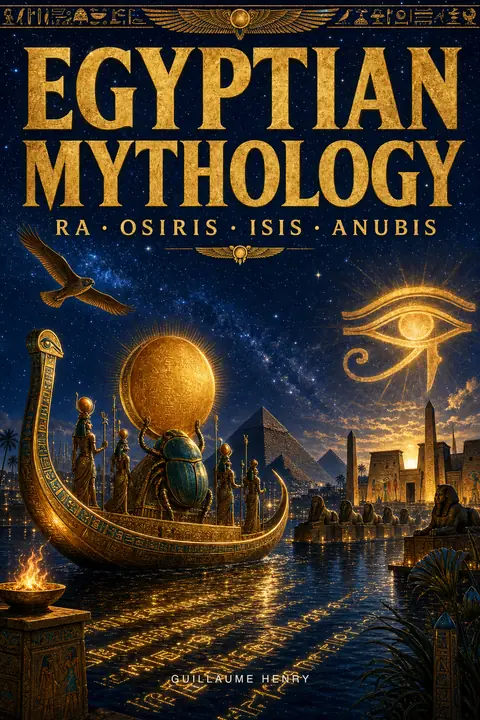
Egyptian
The Egyptian Mythology Book: Ra, Osiris, Isis, Anubis, and the Sacred Stories of the Pharaohs
Ra, Osiris, Isis, Anubis, and the Sacred Stories of the Pharaohs
Three thousand years of Egyptian sacred stories. The Duat, the weighing of the heart, the cult of Osiris, and the daily voyage of the sun.
More from Egyptian
All articles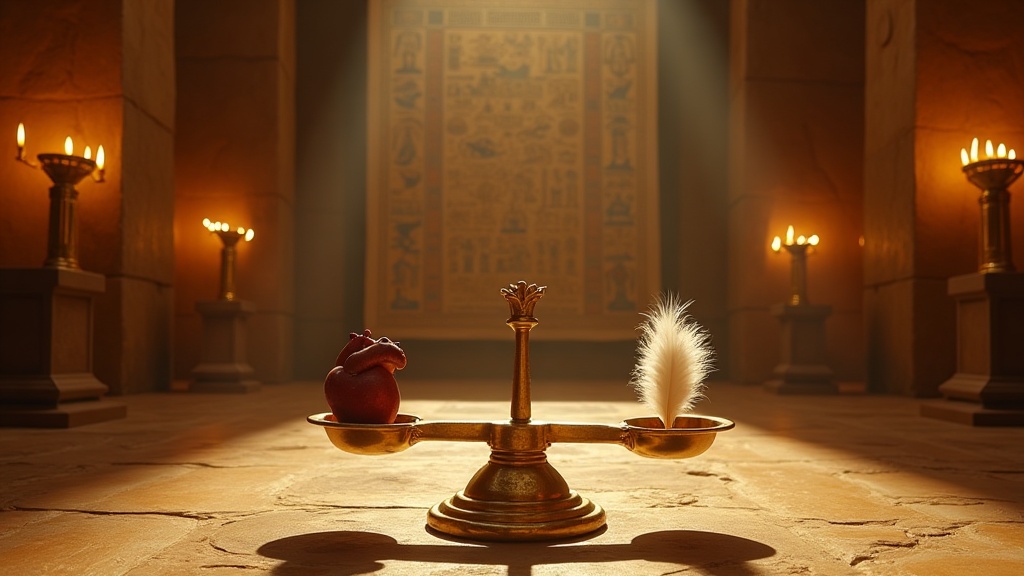
Egyptian
The Book of the Dead: Egypt's Guide to Eternity
Ancient Egypt's most sacred funerary text was not a single book but a living archive of spells, maps, and prayers that guided the dead through the perils between death and eternal life.
Egyptian
Eye of Horus: The Protective Amulet That Watched Over the Living and the Dead
Worn by pharaohs and fishermen alike, the Eye of Horus is one of antiquity's most potent protective symbols, carrying the weight of cosmic battle, divine healing, and eternal vigilance.
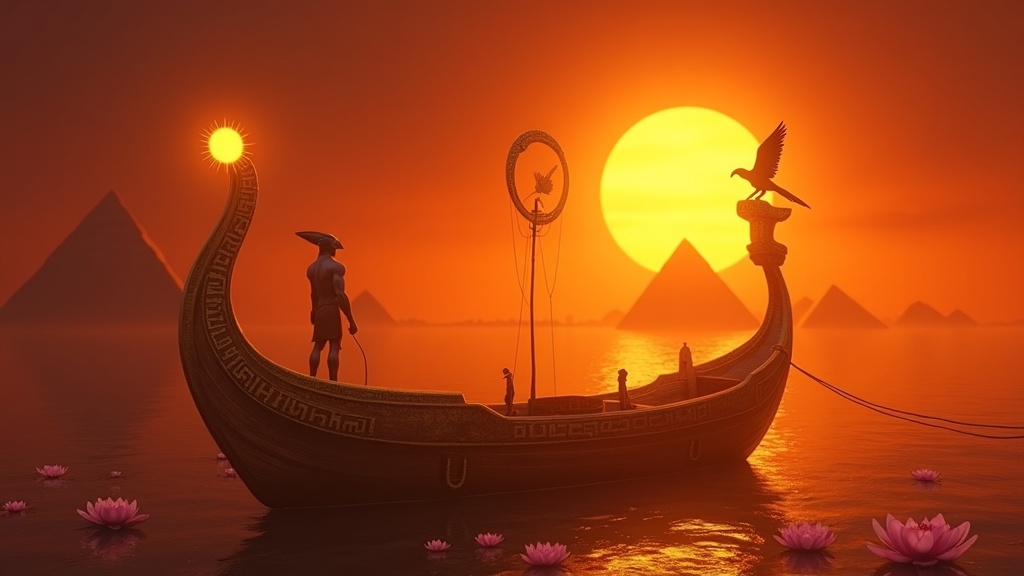
Egyptian
Ra the Sun God: Egypt's Supreme Ruler of Light and Creation
Ra, the ancient Egyptian sun god, blazed at the very heart of a civilization that worshipped light as the pulse of creation itself. Discover his origins, his many forms, and the sacred journey he took across the sky and through the underworld every single day.
Egyptian
The Ankh: Egypt's Eternal Symbol of Life
The ankh is ancient Egypt's most recognizable hieroglyph, a looped cross carried by gods and pharaohs alike as the very key to immortal life. Discover its origins, meanings, and sacred legacy.