Etruscan
Etruscan mythology shaped ancient Italy long before Rome rose to power. This complete guide traces the gods, creation myths, and sacred rituals of a civilization still rich with mystery.
Browse Etruscan
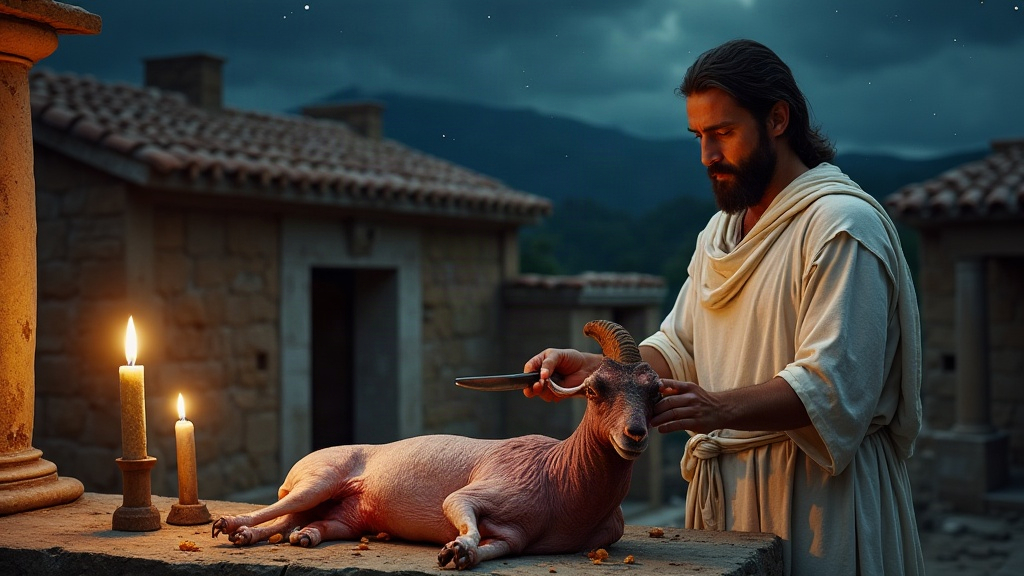
The priests watched the liver carefully. Holding a bronze model in one hand and a freshly slaughtered sheep's organ in the other, they read the landscape of lobes and veins like a map of the cosmos. Every bulge, every discoloration, carried a message from the gods. This was haruspicy, the Etruscan art of divination that Rome would later borrow wholesale, and it tells you something immediate about the Etruscan mind: the divine was not distant. It pressed against the living world at every moment, leaving marks in blood and bone for those trained to read them.
Etruscan mythology sits at one of the most intriguing crossroads in Mediterranean history. The Etruscans built the first true urban civilization on the Italian peninsula, flourishing between roughly 900 and 100 BC across the region they called Etruria (modern Tuscany, Umbria, and parts of Lazio). They traded with Greeks and Phoenicians, influenced early Rome profoundly, and produced some of antiquity's most striking art. Yet their religious world remains only partly decoded, because the Etruscans wrote in a language that, while now alphabetically readable, still resists full translation. What survives arrives through bronzes, tomb paintings, terracotta sculptures, and the secondhand accounts of Greek and Roman authors who found them at once familiar and alien.
The picture that emerges is not chaotic. Etruscan religion operated through a sophisticated cosmology, a calendar of sacred time, a rich pantheon of named divinities, and a theology that placed human fate squarely inside a larger divine plan. This guide moves through all of it: the origins of the universe according to Etruscan belief, the major gods and their attributes, the myths that animated the culture, the afterlife that consumed so much of their artistic energy, and the long afterlife of Etruscan ideas inside Roman and even Christian thought.
Where Etruscan Mythology Comes From
Before meeting the gods, it helps to know the sources. They are unusual compared with Greek or Norse traditions, because no surviving Etruscan text narrates a myth from beginning to end. What we have instead falls into three categories.
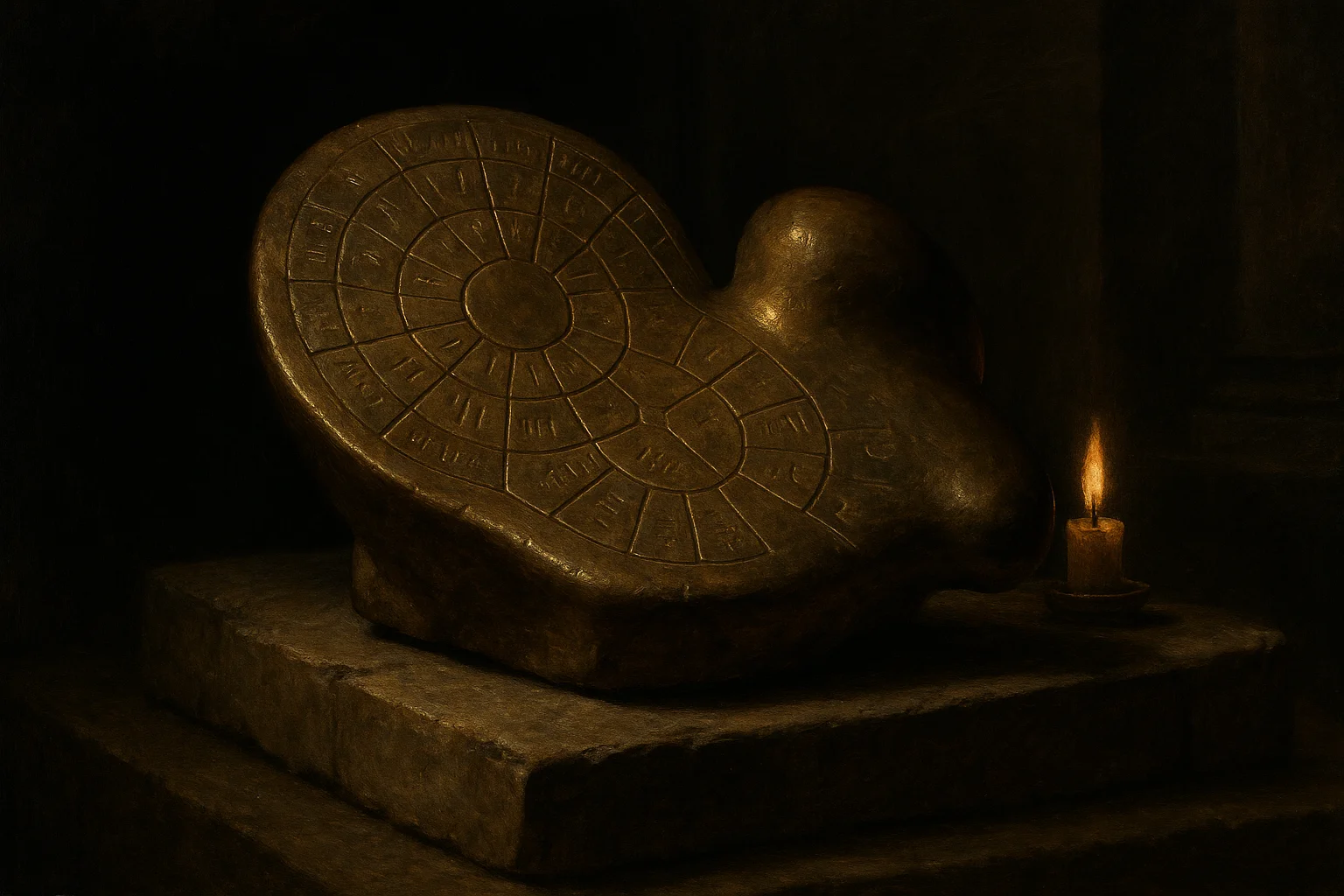
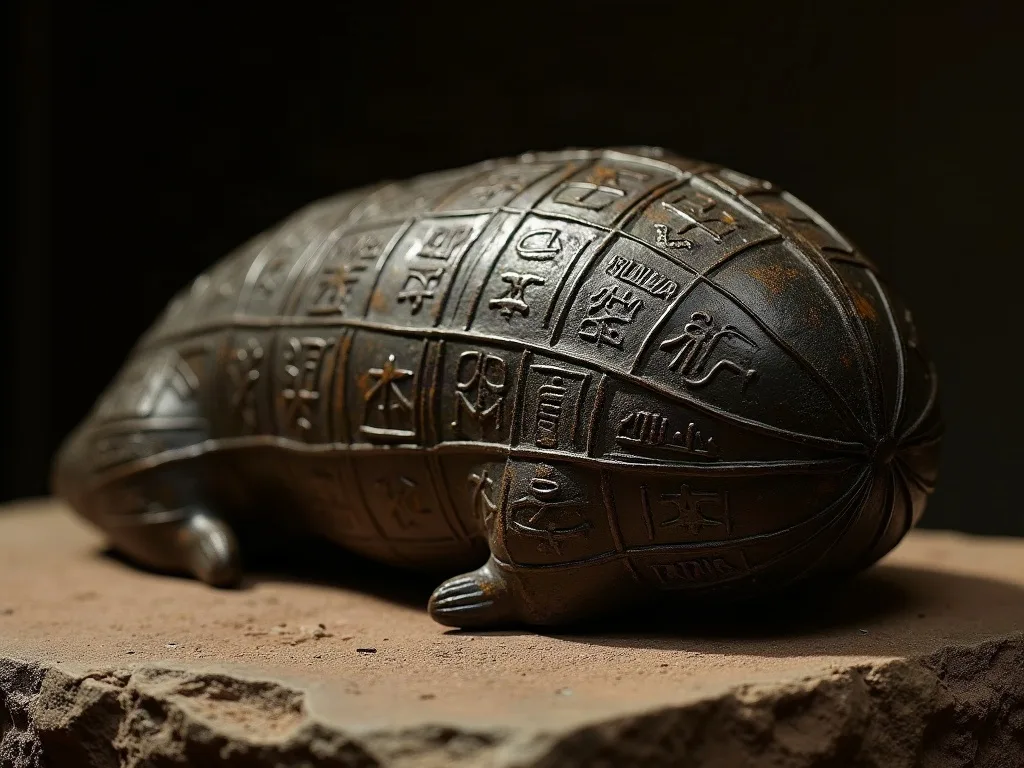
The first is material evidence: tomb paintings at Tarquinia (dating from the 6th century BC onward), bronze mirrors engraved with mythological scenes, terracotta plaques from temple rooftops, and the famous bronze liver of Piacenza, a model organ inscribed with the names of gods mapped to specific regions of the surface.
The second is linguistic evidence: short Etruscan inscriptions, some naming gods, dedicants, or ritual acts. The longest surviving Etruscan text, the Liber Linteus Zagrabiensis (a linen book later cut into mummy wrappings in Egypt, now in Zagreb), contains a ritual calendar. It is the longest known Etruscan text at roughly 1,200 readable words, and it still defies complete translation.
The third is external testimony: Greek geographers, Roman historians, and later encyclopedists like Pliny the Elder and Macrobius described Etruscan beliefs, sometimes mockingly, sometimes admiringly. The Roman scholar Nigidius Figulus in the 1st century BC wrote extensively about Etruscan religious science. The jurist Tarquitius Priscus compiled translations of Etruscan disciplinary books. None of those Latin translations survive intact, but later authors quote them.
Together these three streams allow scholars, including Ambros Josef Pfiffig, Larissa Bonfante, and Sybille Haynes, to reconstruct a mythology that is partial but coherent. The gaps are real. The tradition is genuine.
The Structure of the Etruscan Universe
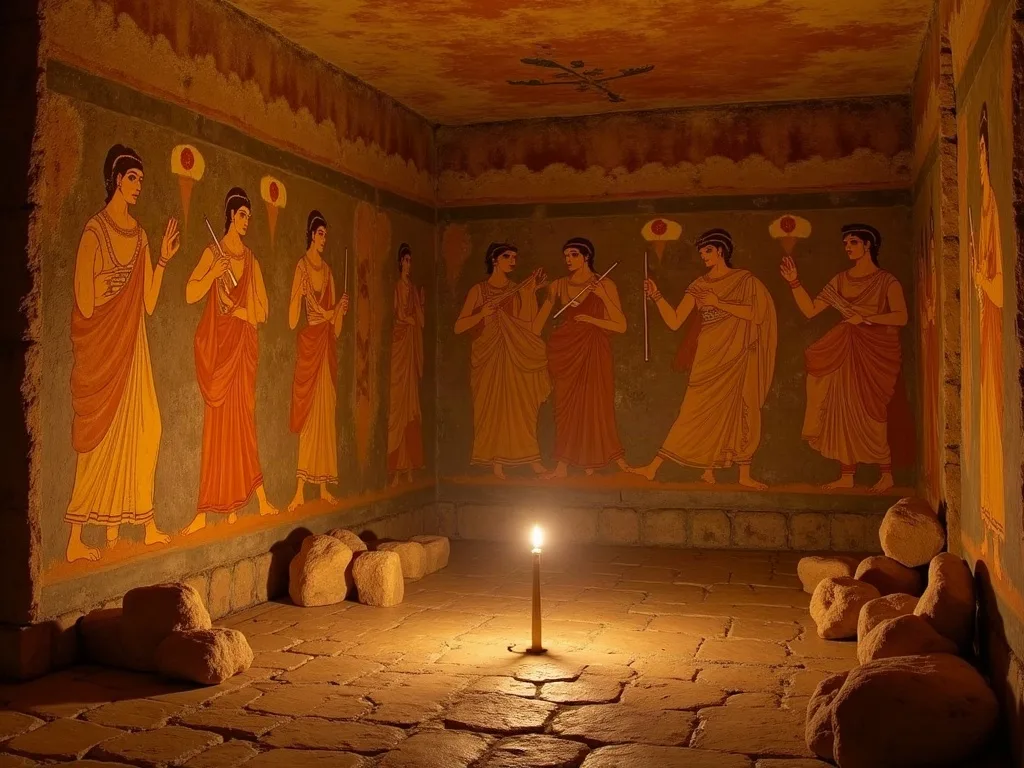
The Etruscans imagined the universe as layered and bounded. Above the earth stretched the heavens, divided into sixteen regions corresponding to the sixteen cardinal and semi-cardinal directions. Each region was home to specific divine powers or categories of gods. This celestial geography was not poetic fancy: priests oriented sacred space on earth to mirror it, aligning temples and cities along north-south and east-west axes. The Roman practice of limitatio, the ritual squaring of city and field boundaries, came directly from this Etruscan model.
Below the earth lay the underworld, called Aita after its ruling god. The Etruscans pictured the cosmos as a living body with a finite lifespan. The Etrusca Disciplina taught that the world would run through a fixed sequence of saecula, sacred ages, each lasting between 100 and 110 years. The gods had granted humanity a fixed span of time, and the present age was one chapter in a larger narrative moving toward an appointed end.
This sense of bounded, divinely scheduled time distinguishes Etruscan cosmology sharply from its Greek and Roman neighbors. Where Greek myth tends to frame cosmic history as a succession of conflicts resolved by Olympian order, the Etruscan vision is more like a contract: the gods have committed to a plan, humans must read it correctly, and ritual keeps the relationship functional.
The word fatum (fate) that Rome would make famous almost certainly carried Etruscan theological weight before Latin poets got hold of it. In Etruscan belief, fate was not arbitrary doom. It was the disclosed will of the gods, which could be partially known through divination and partly steered through correct ritual.
The Major Gods of the Etruscan Pantheon
The Etruscan pantheon was large, hierarchical, and shaped by sustained contact with Greek religion. Yet the Etruscans were not simply copying Greek myth. They absorbed Greek figures, renamed them, and reorganized them according to their own theology. The result is a pantheon that feels familiar in outline and strange in texture.
Tinia: The Lord of Lightning
Tinia stood at the head of the Etruscan gods, occupying a position roughly analogous to Zeus or Jupiter. His name likely connects to an Etruscan root for day or light. He wielded three thunderbolts, each with distinct properties: the first bolt was benevolent and could be hurled at his own discretion; the second required the agreement of twelve senior gods before it could be thrown; the third was so destructive that a council of higher, veiled gods (the Dii Involuti, hidden gods whose names humans were not permitted to know) had to sanction it. This graduated system of divine authority is distinctly Etruscan. Tinia was not an absolute monarch but the chairman of a sacred assembly.
On bronze mirrors, Tinia appears seated and robed, often with the eagle that also appears in later Roman iconography of Jupiter. The city of Rome adopted Tinia's thunderbolt theology almost without alteration when Roman priests classified lightning strikes into "obligate", "advisory", and "destructive" categories based on Etruscan books.
Uni: Queen of Heaven
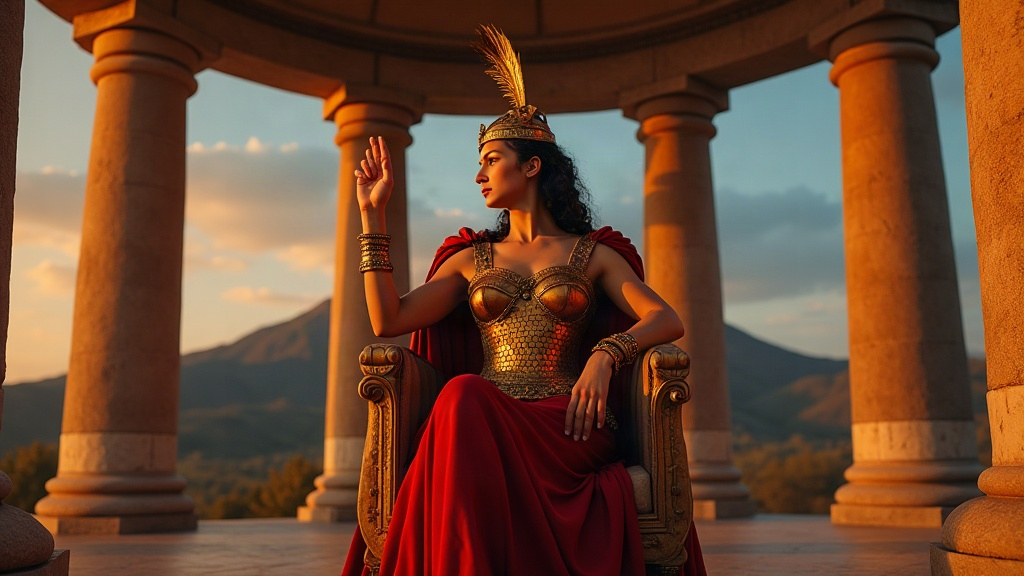
Uni paired with Tinia as his consort and ranked among the most actively worshipped goddesses in Etruria. Her name connects to a Latin root meaning "one" or "unity", though some scholars link it to the moon. She combined attributes that Greeks distributed across several goddesses: she protected marriage, childbirth, and sovereignty, but she also had a warrior aspect, appearing armed on some dedications.
At the great sanctuary of Pyrgi on the coast near Caere, excavators in 1964 found three gold plaques, two in Etruscan and one in Phoenician, recording a dedication to Uni by the Etruscan king Thefarie Velianas around 500 BC. The Phoenician text equates Uni with Astarte, the Semitic goddess of love and war. That trilingual sanctuary, where Etruscan and Phoenician religion overlapped, hints at how cosmopolitan and fluid Etruscan religious identity actually was. Uni would eventually merge into the Roman Juno, taking her month of June with her.
Menrva: The Thinking Goddess
Menrva governed wisdom, crafts, and war strategy. She has the clearest correspondence to Greek Athena, and Etruscan artists frequently depicted her helmeted, sometimes with the owl or the serpent. Yet Menrva was also a goddess of healing and medicine, with cult sites at therapeutic springs. On the bronze model liver of Piacenza, her name does not appear in a peripheral region: she sits at a position of central importance.
Tinia, Uni, and Menrva formed a divine triad that Rome would directly replicate as Jupiter, Juno, and Minerva, installed together in the Capitoline temple around 509 BC. The Capitoline Triad, the defining theological structure of Roman state religion, is Etruscan architecture under a Latin coat of paint.
Fufluns: The God of Wine and Growth
Fufluns was the Etruscan analog of Dionysus, but the connection runs deeper than wine. His name appears to relate to the place-name Populonia, and he was associated with plant growth, moisture, and the surging vitality of living things. Etruscan bronze mirrors show him as a young, beautiful figure, sometimes nursing at the breast of Uni in a scene that echoes the Greek myth of Dionysus and Hera but gives it a specifically Etruscan warmth and maternal quality.
Fufluns mattered for the afterlife as well. Like Dionysus in Greek mystery religion, he was associated with transformation, the idea that life could be renewed rather than simply extinguished. Tomb paintings at Tarquinia from the 5th century BC show feasting, music, and processions that carry his sensibility: abundance as sacred, pleasure as theology.
Turms: The Divine Messenger
Turms moved between worlds, human and divine, living and dead. He wore the winged hat and carried the caduceus, the staff of intertwined serpents, borrowed from Greek Hermes. But Turms in Etruscan art appears with a particular function that goes beyond what Hermes normally covers: he is the psychopomp who escorts souls into the underworld, depicted on ash urns guiding figures toward the gate of death with a gentle but irresistible hand. The Etruscan afterlife needed a guide who was both trustworthy and authoritative. Turms was that figure.
Charun: Keeper of the Underworld Gate
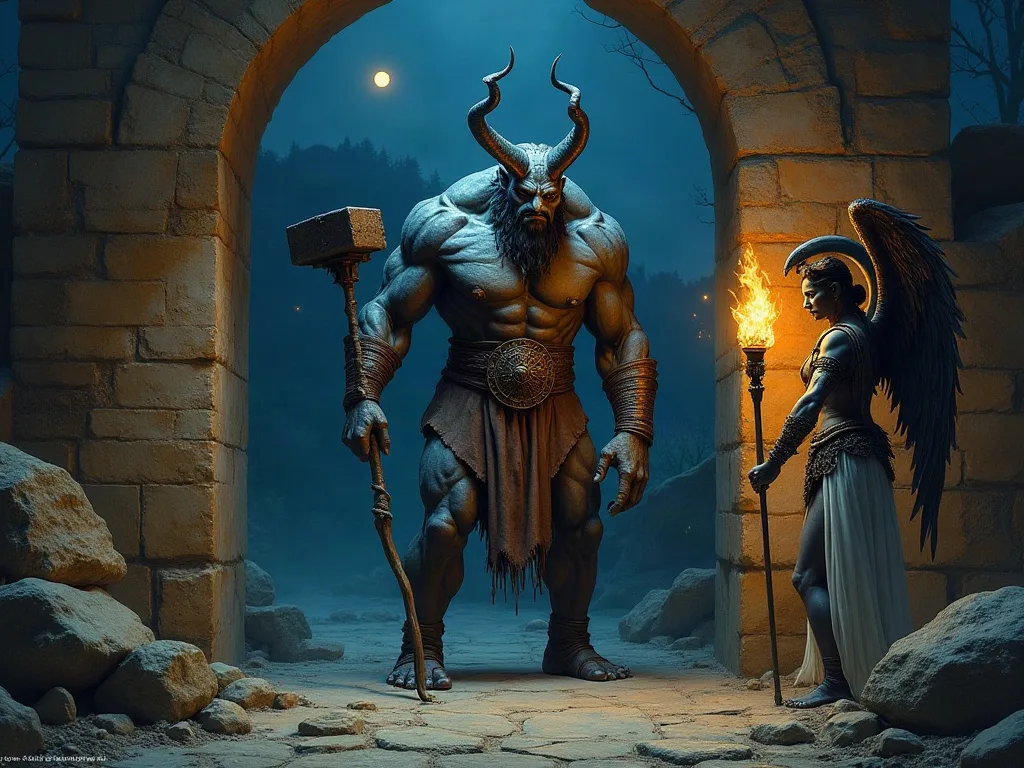
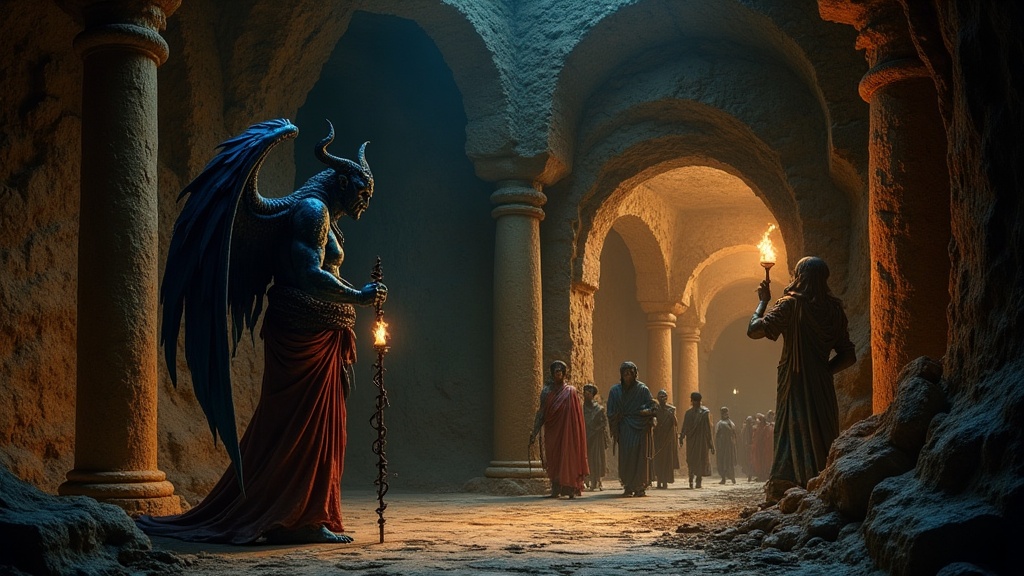
Here is where Etruscan mythology diverges most sharply from Greek influence. The Greeks had Charon, the quiet ferryman who rowed souls across the river Styx. The Etruscans took his name and transformed him into something far more unsettling: Charun carries a large hammer, his skin is blue-gray or greenish (the color of death and decay), his nose is hooked, his ears sometimes animal-like. He stands at the entrance to the afterlife not as a passive ferryman but as an active, even threatening presence.
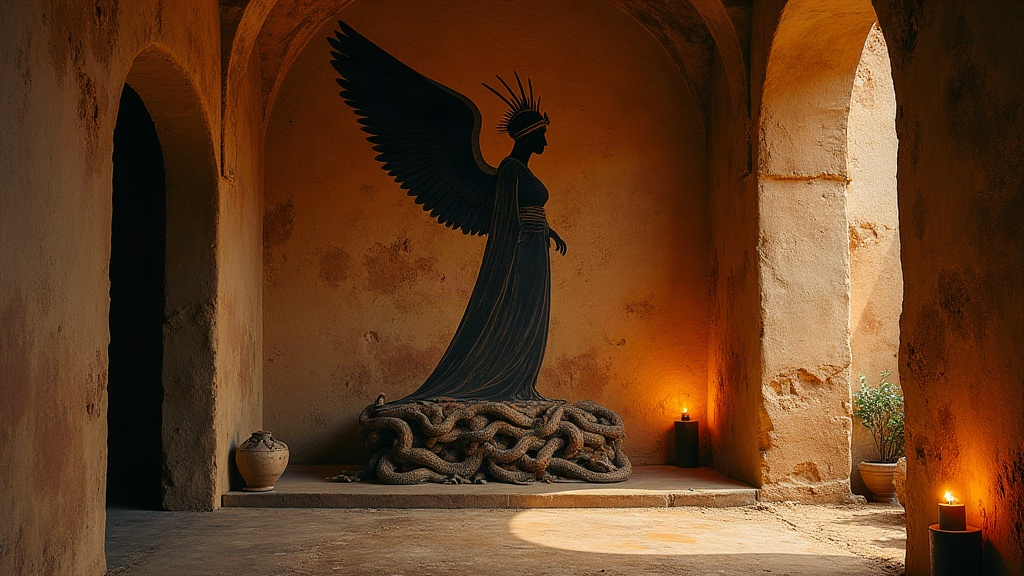
In tomb paintings, Charun does not attack the dead. But his looming posture communicates that death is a crossing one does not control. He is accompanied by Vanth, a winged female demon who carries a torch and a scroll on which the dead person's fate is inscribed. Vanth is not evil; she is inevitable. Her torch illuminates the path. Her scroll records the truth. Together, Charun and Vanth frame the Etruscan afterlife as a serious domain governed by its own laws, not a mere mirror of the living world.
The Etruscan Afterlife: Tombs as Sacred Architecture
No aspect of Etruscan culture has left more material remains than the afterlife, and this is not accidental. The Etruscans invested enormous resources in tomb construction and decoration because they believed that the dead continued to exist in a structured way, and that the quality of that existence depended partly on what the living provided.
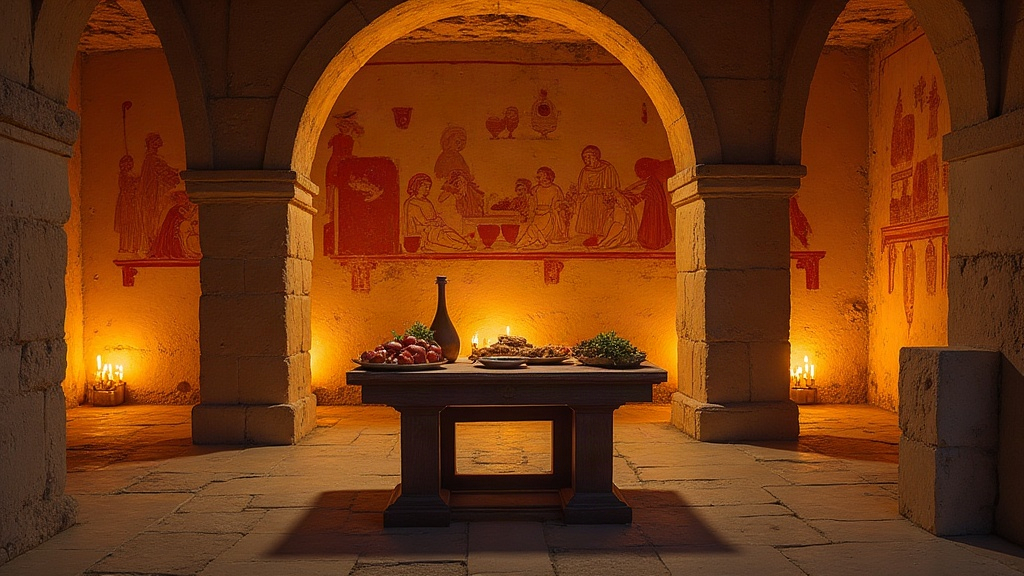
The necropolis (city of the dead) at Cerveteri, a UNESCO World Heritage site, contains hundreds of tombs designed as houses, complete with carved furniture, painted rooms, and goods for daily use. The tomb paintings at Tarquinia, also UNESCO-listed, show scenes of banqueting, dancing, hunting, and athletic competition during early periods (6th-5th century BC), reflecting a relatively optimistic view of the afterlife as a continuation of earthly pleasures.
By the 4th and 3rd centuries BC the mood in the paintings darkens. Demons multiply. Charun and Vanth appear more frequently. Scholars like Nigel Spivey have argued that this shift reflects contact with Greek underworld mythology and possibly with growing political anxiety as Etruscan cities began falling to Roman expansion. Whether or not that political reading is right, the visual change is real: death becomes a graver transaction.
The sarcophagus of the Spouses, now in Rome's Villa Giulia museum, dating from around 520 BC, shows a husband and wife reclining together at a banquet, relaxed and equal, their faces holding an archaic smile. They are not afraid. The afterlife they anticipate is companionate and dignified. That image, one of the most moving objects from the ancient Mediterranean, captures the early Etruscan ideal: death as a shared dwelling, not a punishment.
Sacred Texts and Revealed Religion: The Etrusca Disciplina
The Romans recognized the Etrusca Disciplina as a specific body of revealed knowledge, distinguishing it from ordinary priestly tradition. It arrived, in Etruscan sacred history, through two channels.
The first was a child named Tages. According to the myth preserved by Cicero (in De Divinatione) and later by Ovid, a farmer plowing a field near Tarquinia watched as the earth split open and a small boy climbed out. The boy had the wisdom of an old man. He spoke, and what he spoke was the complete art of divination: how to read livers, how to interpret lightning, how to understand the movement of birds. The priests of Etruria gathered around, wrote down every word, and when he had finished speaking, Tages died. His dictation became the Libri Tagetici, the books of Tages.
The second channel was a nymph named Vegoia (also spelled Begoe). She revealed the Libri Fulgurales, the books of lightning, and possibly sections of the Libri Rituales, the ceremonial texts governing the founding of cities and the consecration of boundaries. A fragmentary Latin text attributed to Vegoia survives, warning that those who violate boundary markers (the termini that divided land plots) will face divine punishment. It is striking: a goddess defending property law. The passage reveals how deeply Etruscan religion tied cosmic order to the practical management of the earth.
The Disciplina also included the Libri Acherontici, books describing the geography and governance of the underworld. Roman authors hint that these contained rituals for communicating with the dead, for creating protective spirits from the blood of sacrificed prisoners, and for extended the lifespan of a city by propitiating the right chthonic powers.
Mythological Narratives: Where Greek Meets Etruscan
Etruscan visual art tells stories constantly, and many of those stories are Greek in origin: the labors of Hercules (Herkle in Etruscan), the Trojan War, the adventures of Odysseus (Uthuze), the myths of Peleus and Thetis. But the Etruscans were not illustrating a foreign tradition. They made these stories their own through reinterpretation.
Herkle (Heracles) is the most prominent borrowed hero in Etruscan art. He appears on hundreds of bronze mirrors. In one distinctly Etruscan episode not found in Greek sources, Uni nurses the adult Herkle at her breast to grant him immortality. The scene inverts the Greek version (in which Hera, Herkle's enemy, accidentally nurses him) into an act of deliberate adoption. In Etruscan theology, Uni's milk transforms Herkle from a mortal hero into a god, legitimized by the queen of heaven herself. This is not a borrowing; it is a theological argument made in visual form.
The Trojan War material is equally transformed. On Etruscan ash urns from Volterra and Chiusi, the death of the Trojan prisoner Troilos at Achilles' hands is treated not as a heroic episode but as a sacrifice, with Charun often present. The Greek warrior becomes an Etruscan ritual killer. The Greek prisoner becomes a sacrificial victim whose death feeds the underworld. The same events, but a completely different meaning.
The myths of the Olympian gods that the Etruscans absorbed were, in each case, filtered through a religious sensibility that valued divination, boundary-marking, and cosmic time above heroic glory. The Greek hero strives to exceed fate. The Etruscan ideal is to read fate correctly and act in harmony with it.
Etruscan Divination: Reading the Sacred in the Living World
The three great systems of Etruscan divination shaped Roman religion so thoroughly that Rome later used the professional title haruspex (pl. haruspices) for specialists trained in the Etruscan method, even when those specialists were Roman citizens working centuries after Etruscan political independence was gone.
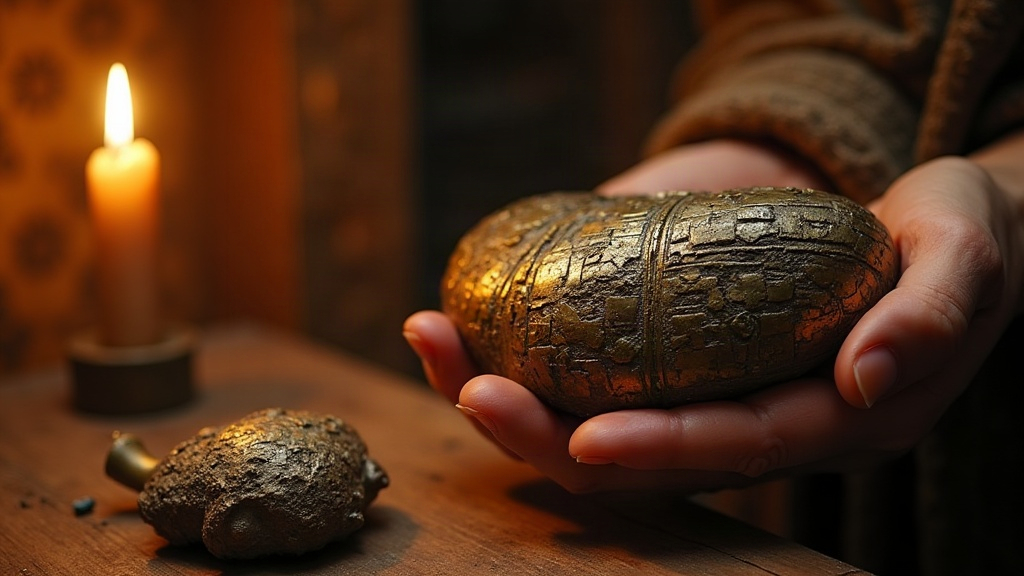
Haruspicy (reading entrails, especially the liver) was the most prestigious method. The bronze liver of Piacenza, a 2nd-century BC artifact discovered in 1877, shows a sheep's liver divided into regions, each labeled with the name of a god. The outer edge is divided into sixteen sections mirroring the sixteen celestial regions. Reading a real liver, an aruspex could locate which divine power was active in the animal's body at the moment of slaughter, and therefore which power was active in the cosmos at that moment. The method presupposes a universe in which macrocosm and microcosm genuinely mirror each other, a conviction the Etruscans held with more consistency than almost any other ancient culture.
Fulguratory (reading lightning) was equally systematic. The direction from which lightning came, the time of day, the season, the type of bolt, and where it struck all combined to produce a specific divine message. Seventeen different kinds of lightning were categorized, attributed to nine different gods. Only Tinia wielded three bolt-types on his own; Uni and Menrva held others.
Augury (reading the flight of birds) the Romans absorbed almost unchanged. The way a bird entered a surveyed zone of sky (the templum), from which direction, at what speed, in what formation, all carried weight. The Roman auspicium (the right of magistrates to take bird omens before public acts) is Etruscan institutional theology running inside Latin government.
The Hidden Gods and the Limits of Human Knowledge
The Dii Involuti, literally "wrapped" or "veiled" gods, are among the most original ideas in Etruscan theology. Roman sources, particularly the scholar Arnobius writing in the 3rd century AD, report that the Etruscans believed in a tier of divine powers so fundamental, so close to the raw fabric of reality, that even the named Olympian-style gods deferred to them. Their names were not spoken. Their forms were not depicted. They existed at the cosmological level rather than the mythological one: not characters in stories but forces behind all stories.
The concept resonates with later philosophical theology (Neoplatonism's "the One", Jewish and Islamic theological hesitance about naming the divine) but appears in Etruria at least as early as the 5th century BC, making it among the earliest examples of deliberate theological apophasis (the idea that the highest divine reality resists description) in the Western world.
The Dii Superiores et Involuti oversaw the movement of the saecula and could authorize Tinia's third, catastrophic thunderbolt. They sat above fate itself, or rather, they were the origin of fate: the source from which the fata (the disclosed plan) proceeded downward into the knowable world.
Etruscan Mythology's Long Life Inside Roman Religion
By 90 BC, Roman citizenship had been extended to most of Italy, and the political independence of Etruscan cities had ended. The language faded within a few generations. Yet the religion did not die; it was absorbed.
The Capitoline Triad (Jupiter, Juno, Minerva) was Etruscan theology in Roman clothing. The Roman practice of templum (a ritually bounded sacred space oriented to the sky) came from Etruscan augural procedure. The Roman triumph, the great victory procession, has structural roots in Etruscan royal ceremony, including the face painted red and the toga picta (the painted robe) worn by the general. Some scholars argue even the fasces, the bundle of rods symbolizing authority, entered Roman imagery from Etruscan royal insignia.
In Roman religious law, haruspices maintained their status as official consultants of the Roman Senate as late as the 4th century AD. The Emperor Julian, who tried to reverse the Christianization of the empire, consulted Etruscan haruspices in 363 AD. The tradition had outlasted the civilization that created it by nearly half a millennium.
The Etruscans also left traces in Christian Italy. The demon Charun with his hammer contributed, through the Roman Dis Pater and early Christian iconography, to the visual vocabulary of demons in medieval European art. The hooked-nose, dark-skinned figure of death carrying an implement of destruction is an Etruscan image that traveled through Rome into the European imagination without most people ever knowing its origin.
Frequently Asked Questions About Etruscan Mythology
Frequently asked questions
Did the Etruscans have a creation myth?
No complete Etruscan creation narrative survives in text form, but Roman sources, especially the 3rd-century writer Arnobius in "Adversus Nationes", report that Etruscan sacred books contained an account of how the world was structured by divine will and divided into a fixed span of sacred ages called saecula. The emphasis was on cosmic time and divine governance rather than on a primordial act of making the world from nothing. The god Tinia and the hidden Dii Involuti appear to have been the ultimate source of cosmic order in Etruscan theological thinking.
How do we know what the Etruscan gods looked like?
Primarily through material evidence: painted tomb walls, engraved bronze mirrors, terracotta votive statues, and sarcophagus reliefs. The Etruscans produced tens of thousands of bronze mirrors, many engraved with mythological scenes and labeled with divine names in the Etruscan alphabet. These labels let scholars match names to images. The 1964 discovery of the Pyrgi gold tablets, which equate Uni with the Phoenician Astarte, helped confirm attributions through cross-cultural comparison.
Why does the Etruscan afterlife look so different across different centuries?
The change is real and well-documented. Tomb paintings from the 6th and early 5th centuries BC at Tarquinia show joyful scenes of banqueting and athletics, suggesting a relatively positive view of life after death. By the 4th century BC, images of demons, Charun, Vanth, and darker underworld imagery multiply. Scholars including Nigel Spivey and Larissa Bonfante link this shift to two factors: increased familiarity with Greek underworld mythology (particularly Orphic texts that emphasized judgment and suffering after death) and the real political pressure of Roman military expansion, which was erasing Etruscan autonomy city by city.
Is there any connection between Etruscan religion and Hinduism or Eastern traditions?
Direct connection is unlikely given geography and chronology, but structural similarities are genuine and have interested scholars. The Etruscan practice of dividing sacred space into sixteen celestial regions and assigning divine powers to each direction resembles Vedic and later Hindu spatial theology, including the Vastu tradition's eight directional guardians (the Ashtadikpalas). The idea of bounded cosmic time divided into ages also parallels the Hindu concept of yugas. These resemblances most likely reflect a shared archaic Indo-European cosmological framework rather than direct contact. The comparison is worth making, but the evidence does not support a transmission line.
What is the most important Etruscan mythological artifact still accessible today?
Several deserve the title. The bronze liver of Piacenza (Museo Civico di Piacenza, northern Italy) is the most directly theological: it is a model organ that maps the entire divine cosmos onto a single object. The Sarcophagus of the Spouses (Museo Nazionale Etrusco di Villa Giulia, Rome) is the most emotionally powerful single piece: a life-sized terracotta couple reclining in the afterlife with quiet joy. The Tomb of the Augurs and the Tomb of the Leopards at Tarquinia (both UNESCO World Heritage sites, open to visitors) offer the most immersive mythological experience: walking into painted rooms where the gods and the dead share the same walls.
How much did Etruscan mythology directly influence early Christianity?
The influence was real but indirect, operating mostly through Roman religion as an intermediary. Etruscan concepts filtered into Roman civic religion and iconography, and early Christianity developed partly in conscious dialogue with Roman religious vocabulary. The visual type of Charun contributed to early Christian demon imagery. More significantly, the Etruscan concept of revealed sacred knowledge delivered through a divine child (Tages) has structural echoes in later religious texts, though no scholar argues for direct literary dependence. The clearest traceable line runs through the Roman haruspical tradition, which remained active into the 4th century AD, overlapping with the first generations of Christian Rome.
What Etruscan Mythology Still Tells Us About Ancient Italy
The story of Etruscan religion is, in one sense, a story of survival through transformation. No Etruscan state survived the Roman conquest. The language became extinct. The sacred books are mostly lost. Yet the theological architecture those books contained continues to operate in Western culture, embedded in legal concepts of boundaries and property, in architectural practices of orientation and zoning, in the image of the winged messenger, and in the very vocabulary of fate.
Scholars working today, including Jean-René Jannot and Richard De Puma, are still making new discoveries. The field of Etruscan studies is genuinely active: new inscriptions appear, new tomb paintings are documented, and computational linguistics is slowly making progress on the language itself. In 2018, a bilingual Etruscan-Latin inscription discovered in the sanctuary of the Etruscan goddess Uni at Cerveteri confirmed details about her cult that had previously been inferred only from later Roman sources.
The Etruscan gods were not, in the end, simply Greek gods with Italian accents. They operated inside a theology that had its own internal logic: a universe of bounded time, divinely readable signs, graduated divine authority, and an afterlife governed by law rather than caprice. That logic was sophisticated enough that Rome spent five centuries borrowing from it, and sophisticated enough that pieces of it are still visible if you know where to look.
The liver in the priest's hand. The lightning across a Tuscan sky. The bronze mirror engraved with gods whose names we can read but whose stories we are still learning to hear. The Etruscans left a religion in fragments. The fragments are worth every effort to reassemble.
Major gods of Etruscan
View all →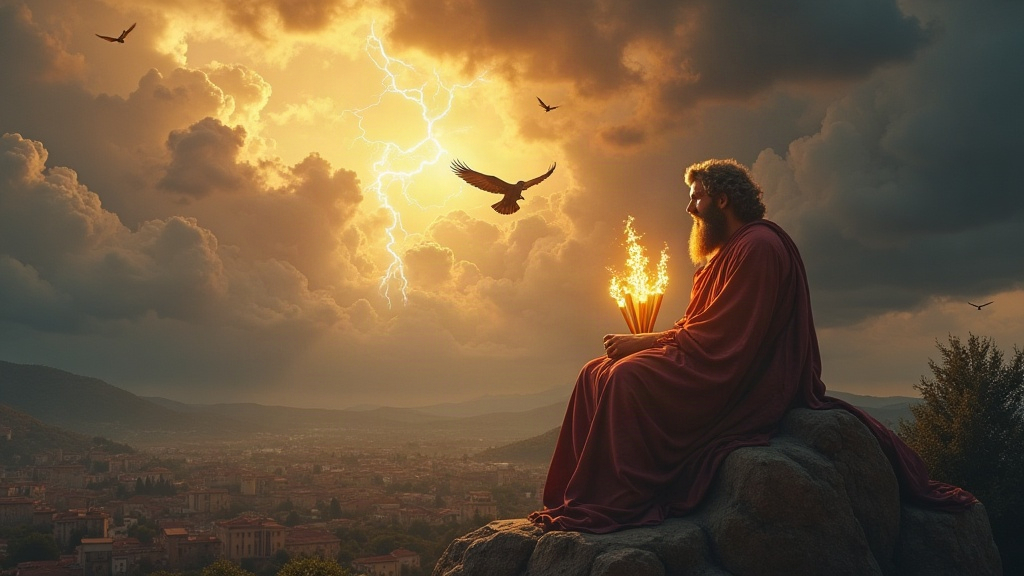
Etruscan
Tinia: Supreme Sky God of the Etruscans
Tinia ruled the Etruscan sky with three thunderbolts and a sovereignty no other god could match. Learn how this enigmatic deity shaped one of antiquity's most underrated civilizations.
Etruscan
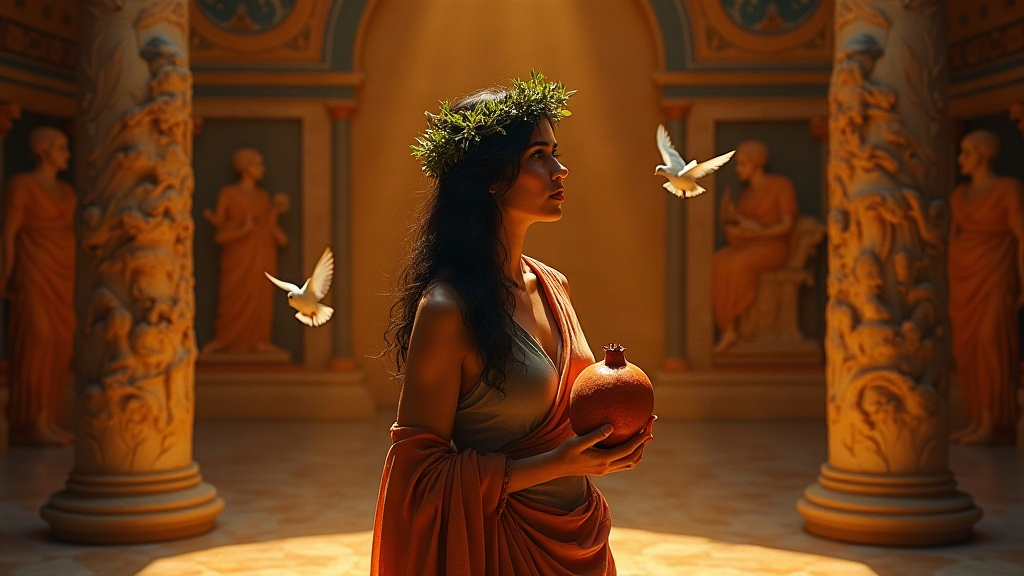
Turan: Etruscan Goddess of Love and Vitality
Turan stands at the heart of Etruscan life as the goddess who brings desire, fertility, and the power that binds community together. Discover how this ancient deity shaped an entire civilization's understanding of beauty, pleasure, and sacred sensuality.
Etruscan
Uni: Etruscan Queen of the Gods
Uni ruled the Etruscan heavens as queen, protector of cities, and giver of life. Meet the goddess who shaped Italian religion long before Rome claimed her as Juno.
Etruscan
Vanth: Etruscan Winged Death Goddess
Meet Vanth, the Etruscan winged death goddess who guarded the threshold between life and the underworld. Discover how this fierce divine figure shaped Etruscan beliefs about mortality, judgment, and the afterlife.
Famous Etruscan myths
View all →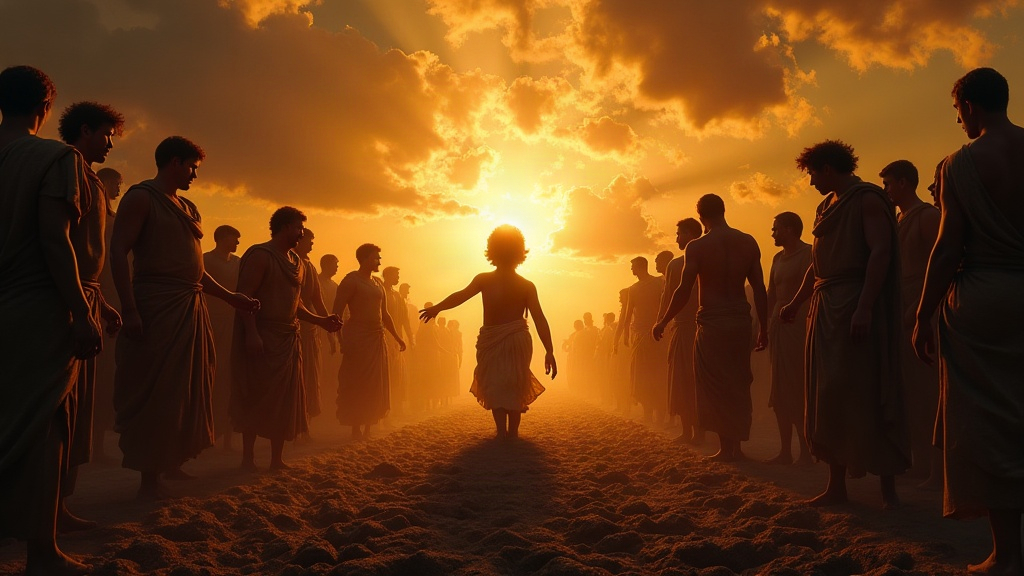
Recent in Etruscan
6 entries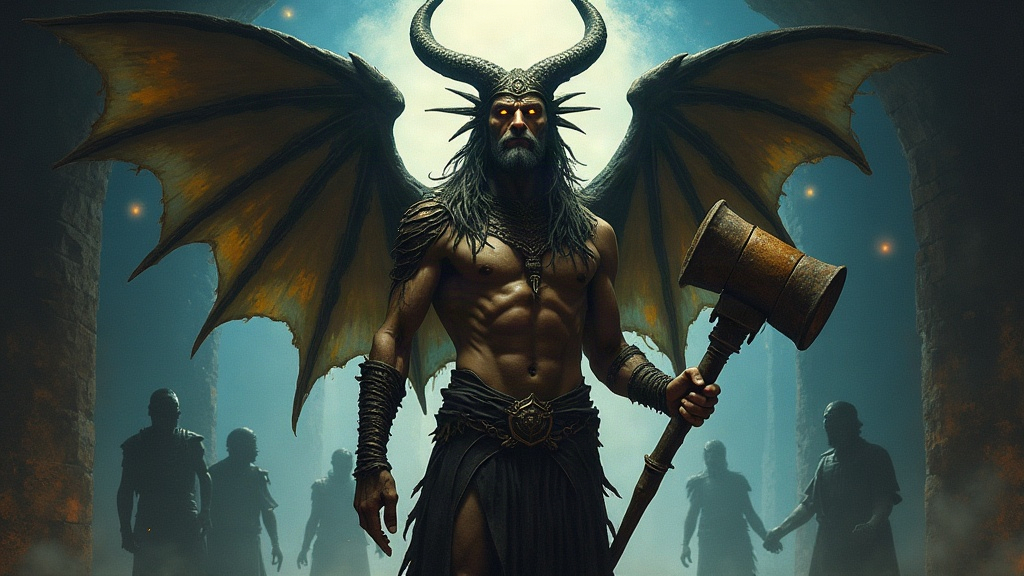
Etruscan
Charun: The Etruscan Demon of Death and the Underworld Guardian
Meet Charun, the fearless Etruscan demon who guards the gates between life and death. Winged, serpent-haired, and armed with a hammer, this creature shows how the ancient Etruscans imagined the passage into the afterlife, and why later Romans borrowed him into their own mythology.
Etruscan
The Etruscan Disciplina: Sacred Books and Ritual Knowledge
The Etruscan Disciplina preserved the cosmos in ritual codes and sacred texts. Explore how haruspicy, augury, and divine protocol shaped an entire civilization and influenced Rome itself.
Etruscan
Etruscan Tomb Banquets: Feasting with the Dead
In Etruscan tombs, the dead reclined at eternal banquets. Through painted walls and grave goods, archaeologists recover a ritual that bound living and dead in a single meal. Discover how the Etruscans fed their ancestors and what it reveals about their afterlife beliefs.
Etruscan
The Etruscan Underworld: Beliefs and Iconography
The Etruscan Underworld was a vivid, layered realm ruled by fearsome gods and guided by demons. Explore the beliefs, rituals, and tomb art that mapped the Etruscan afterlife in stunning detail.
Etruscan
Haruspicy: Etruscan Divination Through Liver Reading
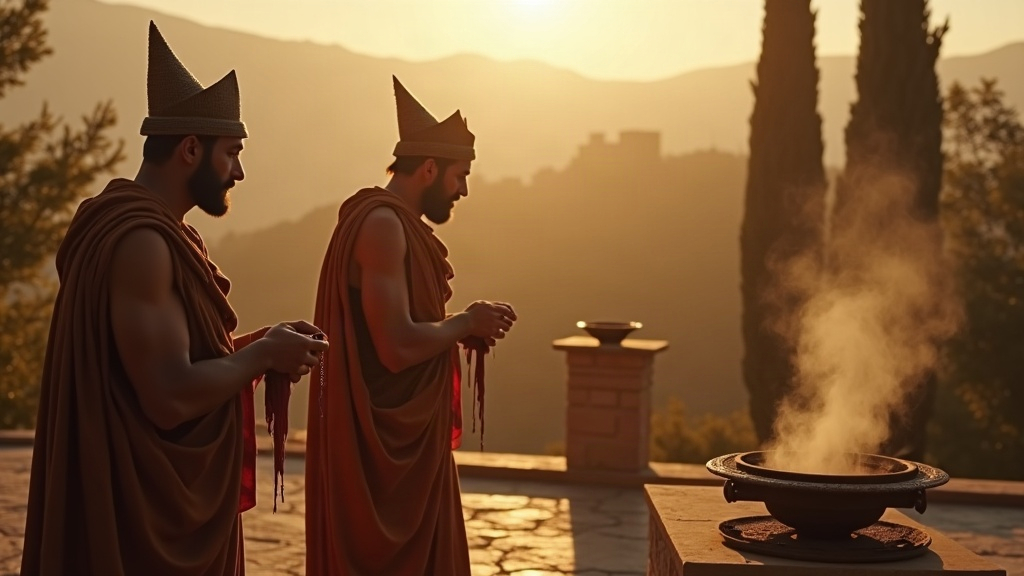
Etruscan priests read the future in the lobes of a sheep's liver. Here is how haruspicy worked, what it meant, and why Rome could not rule without it.
Etruscan
The Liver of Piacenza: Bronze Divination Model of the Etruscans
Discover how the Etruscan priests read fate itself: the Liver of Piacenza is a bronze model showing exactly where to look on a real liver for messages from the gods. It reveals the ancient art of haruspicy in bronze.