Best Mythology Books: The Ultimate Database (2026)
Thirteen mythologies, around a hundred books sorted by reading level: beginner, intermediate, primary source, modern fiction, academic. The most exhaustive English-language guide on the open web.
Contents
A reader opens Mythology by Edith Hamilton on a winter afternoon, expecting trivia about Zeus and Apollo. Three hundred pages later, they cannot look at a marble statue, a star map, or even a name like Helena without hearing an older voice underneath. That conversion is the entire point of reading mythology well. The hard part is choosing where to start, what to read next, and what to skip in a field with more books than any single reader can hope to finish.
This guide is the shelf we would build for a friend who wanted that conversion. Thirteen traditions, the canonical entry points for each, the primary sources worth the climb, the modern retellings that have changed how readers approach myth in the last decade, and the academic works that hold the whole edifice up. About a hundred books in total, organized by mythology and by reading level so you can jump straight to your need.
Where to start: the five canonical entry points
A beginner does not need thirteen books. They need five, in this order.
Mythology by Edith Hamilton (1942). The bedrock. Read first. Four hundred pages, readable in two weeks, organized by god and by hero with prose that has never aged.
Mythos by Stephen Fry (2017). Greek mythology retold with English wit and a novelist's pacing. Sequels Heroes (the demigod cycle) and Troy (the war) complete the trilogy. The audiobook, read by Fry himself, is the best mythology audio experience produced this century.
The Hero with a Thousand Faces by Joseph Campbell (1949). The monomyth: the structural argument that nearly every culture tells the same story of departure, ordeal, and return. Read this once in your life. It will rewire how you watch films, listen to old songs, and parse video-game story arcs.
Norse Mythology by Neil Gaiman (2017). The Norse pantheon, retold by a novelist who reads Old Icelandic for pleasure. Compact, faithful, witty. Our deep dives on Odin, Thor, and Loki make excellent companions.
Circe by Madeline Miller (2018). A novel, not an essay. Circe's life from her childhood in Helios's halls to her famous afternoon with Odysseus. The book that brought a generation back to Greek myth. Pair with Miller's earlier The Song of Achilles for the Trojan War from Patroclus's view.
Read those five in sequence and a Classics professor will mistake you for a graduate student for thirty minutes.
How to choose the right book for you
Generic "best of" lists ignore the reason you are actually shopping. The matrix below is the one we use when readers email us asking for guidance.
| Your situation | The book to grab |
|---|---|
| "I know nothing, I want one book to start." | Mythology by Edith Hamilton |
| "I want it to be funny and easy." | Mythos by Stephen Fry |
| "I want to understand why myths look alike across cultures." | The Hero with a Thousand Faces by Joseph Campbell |
| "I want fiction grounded in mythology." | Circe or The Song of Achilles by Madeline Miller |
| "I want the primary source, not a retelling." | The Iliad in Emily Wilson's translation ; The Poetic Edda in Jackson Crawford's translation |
| "I want a gift for a child (ages 6 to 10)." | D'Aulaires' Book of Greek Myths |
| "I want a gift for a teen (ages 11 to 15)." | Percy Jackson and the Olympians, Book 1 |
| "I want a serious academic treatment." | Robert Graves's The Greek Myths (2 volumes) |
| "I want anything but Greek and Norse." | Indaba My Children by Credo Mutwa for Africa ; The Mahabharata for India |
| "I want a great audiobook for the car." | Mythos by Stephen Fry, narrated by the author |
| "I want to read about a goddess, not a god." | Natalie Haynes's Stone Blind (Medusa) or Jennifer Saint's Ariadne |
| "I want one book on world mythology overall." | Donna Rosenberg's World Mythology: An Anthology of Great Myths and Epics |
| "I have already read Hamilton. What next?" | Robert Graves's The Greek Myths, then Campbell, then a specific tradition (Norse, Egyptian) |
Now, the details, mythology by mythology.
Greek mythology: the deepest pool
The Mediterranean tradition has the most books in print, the most translations, and the most retellings. The signal-to-noise ratio is brutal. Here is the curated path organized by reader level.
Beginner
Mythology by Edith Hamilton (1942, many reprints). Already covered above. Read first.
Mythos by Stephen Fry (2017). Already covered above. The smoothest modern entry.
The Greek Myths: A Complete Guide by Robin Waterfield (2011, Quercus). A more rigorous panorama than Hamilton, organized chronologically from creation to the heroic age. Excellent if you want structure before story.
Intermediate
The Greek Myths by Robert Graves (1955, 2 volumes). The brick. Eight hundred cumulative pages, each myth accompanied by every known variant and an editorial commentary. Graves is sometimes critiqued by modern academics (his "White Goddess" thesis is an idiosyncratic fixation), but as an exhaustive library of stories, this set is unmatched. Skip his speculative anthropology, keep him for the variants.
The Library by Apollodorus, translated by Robin Hard (Oxford World's Classics). A second-century AD compendium of Greek myth, basically the ancient who's-who of the pantheon and heroic age. Compact, almost reference-grade.
The Greek Myths: A New Retelling by Charlotte Higgins (2021, Pantheon). Retold from a tapestry-weaving frame device. More literary than Hamilton, more flowing than Graves. A strong second purchase after Hamilton.
Primary source
The Iliad and The Odyssey by Homer. The three modern English contenders:
- Emily Wilson (W.W. Norton, Odyssey 2017, Iliad 2023). Wilson's Odyssey was the first published English translation by a woman ; her Iliad is the modern landmark of 2023. Blank verse, propulsive, readable in evenings.
- Robert Fagles (Penguin Classics, 1990s). The safest middle path : poetic, dignified, classroom-friendly.
- Richmond Lattimore (University of Chicago, 1951). The academic baseline. More literal than Fagles, more austere than Wilson.
Skip nineteenth-century verse translations (Pope, Chapman) for a first reading. They've aged badly.
Theogony by Hesiod, translated by M.L. West (Oxford World's Classics) or by Stephanie Nelson (Hackett). The original Greek cosmogony. Short, dense, indispensable to understand where the gods come from. Stanley Lombardo's Hackett translation is the most readable contemporary version.
Metamorphoses by Ovid, translated by Stephanie McCarter (Penguin, 2022) or A.D. Melville (Oxford). Roman by author but ninety percent Greek mythology. The single book that transmitted classical mythology to medieval Europe and Renaissance art. McCarter's 2022 translation is the first English Metamorphoses to refuse euphemism around the poem's many scenes of sexual violence, and it reads cleaner than anything before it.
The Argonautica by Apollonius of Rhodes, translated by Aaron Poochigian (Penguin, 2014). The Jason and the Golden Fleece epic, third century BC. Important precursor to the Aeneid and surprisingly modern in its psychological texture.
Modern fiction (retellings)
The Song of Achilles by Madeline Miller (2011). The Trojan War from the perspective of Patroclus, Achilles's lover. Romance, luminous prose, global critical success. The modern retelling par excellence.
Circe by Madeline Miller (2018). Already covered. Miller's broader and more political follow-up.
The Silence of the Girls by Pat Barker (2018). The Trojan War from the side of the enslaved Trojan women. Briseis narrates. Brutal, lucid, magnificent. Sequel: The Women of Troy (2021), trilogy closer The Voyage Home (2024).
A Thousand Ships by Natalie Haynes (2019). The Trojan War from all the women's perspectives, goddesses and mortals alike. Polyphonic. Excellent.
Stone Blind by Natalie Haynes (2023). Medusa told from Medusa's own view. Pair with our profile of Medusa the Gorgon.
Hera and Ariadne by Jennifer Saint (2020-2024). Feminist retellings of secondary figures. Ariadne is the easiest entry into Saint's voice.
Ithaca by Claire North (2022). The Odyssey from Penelope's view, with Hera as narrator. Underrated.
Academic
The Cambridge Companion to Greek Mythology edited by Roger D. Woodard (2007). Best-in-class anglophone reference. Around twenty chapters by the world's leading specialists.
Myth and Tragedy in Ancient Greece by Jean-Pierre Vernant and Pierre Vidal-Naquet (Zone Books, English translation). Structuralist, transformative, the modern academic landmark.
Greek Religion by Walter Burkert (Harvard, 1985). The standard scholarly history of Greek religious practice, with mythology contextualized inside cult. Dense but unmatched.
For deep dives on individual figures, our profiles cover the major Olympians from Athena to Apollo, the cycle itself from the origins of the Trojan War outward.

Roman mythology
Often treated as an annex to the Greek tradition, which is a mistake. Roman mythology is not a carbon copy. It has its own native divinities (Janus, Quirinus, Vesta, Pales, Bellona), and a fundamentally different relationship to myth, civic and political and tied to the founding of Rome rather than to cosmology.
Beginner
Roman Mythology by Mark Cartwright (free online encyclopedia entry at World History Encyclopedia, also available as a Kindle short read). Solid starter.
The Roman chapters of Hamilton's Mythology also work as a starter, though they treat Rome as Greek-with-Latin-names which is exactly the framing to grow beyond.
Intermediate
The Roman Myths by Stephanie Dalley and Antonio Sagona (Thames & Hudson, illustrated). Compact and visually rich.
Roman Mythology by Tom Stockwell (2020). Modern panoramic guide accessible without prior knowledge.
Primary source
The Aeneid by Virgil, translated by Sarah Ruden (Yale, 2008) or Robert Fagles (Penguin, 2006). The founding myth of Rome par excellence. Ruden's 2008 translation is the shortest line-for-line English Aeneid ever published, and the most propulsive ; Fagles's is the safer first read.
The Early History of Rome (Books I-V) by Livy, translated by Aubrey de Sélincourt (Penguin Classics). The founding of Rome mingled with myths : Romulus and Remus, the rape of the Sabine women, Lucretia's tragedy. Indispensable if you want to understand how Romans told themselves about themselves.
The Fasti by Ovid (Penguin Classics, trans. A.J. Boyle). A poetic calendar of Roman religious festivals, packed with mythological etiologies for every observance.
Academic
Roman Religion by Valerie M. Warrior (Cambridge, 2006). Short academic primer.
Religions of Rome (2 volumes) by Mary Beard, John North, and Simon Price (Cambridge, 1998). The deep two-volume reference : volume 1 narrative history, volume 2 source readings. Beard is one of the most lucid living writers on the ancient Mediterranean ; her style alone justifies the climb.
Norse mythology
The other major Western mythology, made popular again by Marvel, the Vikings TV series, and modern Norse paganism.
For the deep dives that complement any of the books below, see our profiles of Odin, Thor, and Loki, as well as our cosmology articles on Yggdrasil the World Tree and the Bifrost rainbow bridge. For symbols, our Mjolnir and broader Norse symbols guide cover the visual side.
Beginner
Norse Mythology by Neil Gaiman (2017). Already covered. Buy first.
Norse Mythology: A Guide to the Gods, Heroes, Rituals, and Beliefs by John Lindow (Oxford, 2001). The encyclopedia approach. Look up any Norse name and find a tight scholarly entry. Reference rather than narrative.
Intermediate
The Viking Spirit: An Introduction to Norse Mythology and Religion by Daniel McCoy (2016). The anglo-academic manual. Clear, methodical, excellent bibliography. McCoy also runs Norse-Mythology.org, where free chapters serve as a useful preview.
Children of Ash and Elm: A History of the Vikings by Neil Price (Basic Books, 2020). Not strictly mythology, but the cultural and ritual context the Norse myths grew inside. One of the best Viking-age books published in the last decade.
Primary source
The Prose Edda by Snorri Sturluson, translated by Jesse Byock (Penguin Classics). The "Younger Edda," written by an Icelander in the 13th century. It is literally the main source for most of what we know about Norse mythology. Readable in three or four evenings. Our deep dive on the Prose and Poetic Eddas unpacks it.
The Poetic Edda, translated by Jackson Crawford (Hackett, 2015). The "Elder Edda." Older poems than the Prose Edda. Crawford's translation is the modern reference : readable, scholarly, with an excellent introduction. Crawford is also a working University of Colorado scholar, and his YouTube channel serves as a free supplementary course on Old Norse.
The Sagas of Icelanders (Penguin Classics anthology). Not exactly mythology but the narrative fabric from which it emerges. Includes Egil's Saga, The Saga of the People of Laxardal, and others. Pair with the Heimskringla (Snorri's history of Norway's kings) if you want to push deeper.
Modern fiction
American Gods by Neil Gaiman (2001). Norse mythology transplanted into contemporary America. A novel, not an essay, but essential reading for understanding how a myth survives a continental migration.
The Last Kingdom series by Bernard Cornwell. Historical fiction set during the Danelaw, but the Norse worldview saturates every page. Begin with The Last Kingdom (book 1, 2004).
Wolf Brother by Michelle Paver (2004, Chronicles of Ancient Darkness). YA but rigorously researched on Stone Age and Norse animism.
Academic
Gods and Myths of Northern Europe by H.R. Ellis Davidson (Penguin Classics, 1964). The lucid classic. Still in print after sixty years.
The Old Norse-Icelandic Saga and the Origins of Vinland (and Davidson's broader scholarship) extend the historical-religious context.
Egyptian mythology
Three thousand years of stories, dozens of divinities, sometimes contradictory cosmologies (the Egyptians did not chase consistency the way the Greeks did). Hard to synthesize, so book choice depends heavily on the level you are coming in at.
For pantheon deep dives, our profiles of Ra the Sun God and Anubis God of the Dead work alongside any introductory book. For Egyptian symbolism, our Eye of Horus and Ankh guides are direct companions.
Beginner
Egyptian Mythology: A Guide to the Gods, Goddesses, and Traditions of Ancient Egypt by Geraldine Pinch (Oxford University Press, 2004). The best-in-class anglo-saxon reference. Encyclopedic format but readable. Excellent bibliography.
The Routledge Dictionary of Egyptian Gods and Goddesses by George Hart. Compact reference book ideal for looking up a specific deity.
Intermediate
The Complete Gods and Goddesses of Ancient Egypt by Richard H. Wilkinson (Thames & Hudson, 2003). Lavishly illustrated, scholarly, comprehensive. The illustrated path to the same content Pinch covers in prose.
Conceptions of God in Ancient Egypt: The One and the Many by Erik Hornung (Cornell, 1996). Hornung reformed our understanding of Egyptian theology. This book is dense but transformative.
The Search for God in Ancient Egypt by Jan Assmann (Cornell, 2001). German Egyptology at its finest. Tracks the conceptual evolution from polytheism toward monotheism inside the Egyptian system.
Primary source
The Egyptian Book of the Dead: The Book of Going Forth by Day, translated by Raymond Faulkner and Ogden Goelet (Chronicle Books illustrated edition). The great collection of funerary spells. Not a narrative myth, but the raw matter of Egyptian beliefs. The Chronicle Books edition reproduces the Papyrus of Ani in full color.
The Tale of Sinuhe and Other Ancient Egyptian Poems (Oxford World's Classics). Selection of literary texts including mythological narratives.
Ancient Egyptian Literature by Miriam Lichtheim (3 volumes, University of California). The standard scholarly anthology of primary source literature. Volume 1 covers the Old and Middle Kingdoms.
Academic
The Oxford Handbook of Egyptology (2020), mythology section.
Celtic mythology (Irish, Welsh, Gaulish)
An oral tradition first, fixed late by Christian monks. So fewer primary sources, but powerful narratives that survived just enough to shape Yeats, Tolkien, and most of modern fantasy.
Beginner
The Book of Celtic Myths by Jennifer Emick (2016). Accessible modern overview.
Celtic Mythology by Philip Freeman (Oxford, 2017). Lucid, well-sourced, the strongest single-volume modern primer.
Intermediate / Primary
Celtic Gods and Heroes by Marie-Louise Sjoestedt (1940, multiple reprints). Brief (around 120 pages) but masterful. Still in print. The compact academic classic.
Early Irish Myths and Sagas translated by Jeffrey Gantz (Penguin Classics). Anthology of Irish primary sources : Cuchulainn, the Tain Bo Cuailnge, branches of the Tuatha Dé Danann.
The Tain, translated by Thomas Kinsella (Oxford). The standalone Tain Bo Cuailnge, the Irish "Iliad," in the most respected English translation.
The Mabinogion, translated by Sioned Davies (Oxford World's Classics). Welsh primary sources. Probably the single best Welsh primary source in modern English.
Academic
The Celtic World edited by Miranda Aldhouse-Green (Routledge). Multi-author scholarly handbook.
Pagan Celtic Britain by Anne Ross. Older but indispensable.
Slavic mythology
THE mythology overlooked by generalist guides despite being fascinating (Perun, Veles, Mokosh, Baba Yaga, Domovoi). Sources are thin because Christianization moved fast and few written texts survive, which makes book selection delicate.
If you want one entry point into Slavic folklore on Mythologis, start with our profile of Baba Yaga.
Slavic Mythology by Boris Rybakov. Academic, dense, available in English. The Russian scholarly reference.
Slavic Pagan World by Garry Green. A more recent entry-level summary.
The Bear and the Nightingale by Katherine Arden (2017). A fantasy trilogy steeped in medieval Russian folklore. Not an essay, but the most vivid immersion into the Slavic imaginary you will find in English. Sequels The Girl in the Tower and The Winter of the Witch close the trilogy.
Spinning Silver by Naomi Novik (2018). Slavic Jewish folklore rewoven into a Rumpelstiltskin retelling. Standalone novel, fairy-tale dense.
The Slavs: Their Early History and Civilization by Francis Dvornik. The historical-cultural backdrop.
Hindu mythology (India)
The world's most massive mythological corpus. Millennia of texts in Sanskrit, Tamil, Hindi, and the regional languages. The challenge : where to start?
If you want to start with profiles of the gods themselves, our Vishnu the Preserver, Shiva the Destroyer, and Kali the Fierce Mother Goddess deep dives are good companions.
For a different lens on Indian religion, we also cover Sikhism, Guru Nanak its founder, and the Guru Granth Sahib.
Beginner
Hindu Myths by Wendy Doniger (Penguin Classics). Doniger is THE anglo-saxon reference. Accessible, panoramic.
Myth = Mithya: A Handbook of Hindu Mythology by Devdutt Pattanaik. India's most successful contemporary popularizer. Reframes myths for a modern audience.
Indian Mythology by Devdutt Pattanaik (Inner Traditions, 2003). Broader sweep across the Indic traditions.
Intermediate / Primary
The Mahabharata in abridged English by C. Rajagopalachari (BVB) for the easy path ; full version by J.A.B. van Buitenen (University of Chicago, ongoing) for completists. The longest epic poem in the world. For a literary feel, Carole Satyamurti's verse retelling Mahabharata: A Modern Retelling (Norton, 2015) is the most readable contemporary version.
The Ramayana abridged by R.K. Narayan (Penguin, 1972, still the smoothest English narrative) or full by Robert Goldman et al. (Princeton University Press multi-volume).
The Bhagavad Gita translated by Eknath Easwaran (Nilgiri Press) for the spiritual approach, or Barbara Stoler Miller (Bantam Classics) for the academic. Short (around 150 pages), philosophical, central to Hinduism.
The Rig Veda translated by Wendy Doniger (Penguin Classics). The oldest sacred text of Hinduism, a selection of the hymns. For a complete primary-source dive.
Academic
The Hindus: An Alternative History by Wendy Doniger (Penguin). Her magnum opus. Brilliant and controversial in India itself.
On Hinduism by Wendy Doniger (Oxford). Collected essays, more focused entries on individual problems.
Mesopotamian mythology (Sumer, Babylon, Akkad)
The oldest written mythology in the world (Gilgamesh dates to the third millennium BC, predating Homer by approximately fifteen hundred years). Underrated by the general public, despite having influenced every mythology of the Fertile Crescent including the Biblical flood narrative.
Our deep walk through The Epic of Gilgamesh goes alongside the books below without spoiling the text.
Beginner / Primary source
The Epic of Gilgamesh translated by Andrew George (Penguin Classics, 1999). Short, dense, the ur-text of world literature. George's translation is the modern standard. There is also a fine standalone translation by Stephen Mitchell (Atria, 2004) for those who want a more literary rendering.
Myths from Mesopotamia: Creation, the Flood, Gilgamesh, and Others translated by Stephanie Dalley (Oxford World's Classics). The most complete anglo-saxon anthology of Sumerian-Akkadian mythological texts. Includes Enuma Elish, Atrahasis, Adapa, Etana.
Intermediate
Mesopotamia: The Invention of the City by Gwendolyn Leick (Penguin). Historical context plus cosmology.
Inanna: Queen of Heaven and Earth by Diane Wolkstein and Samuel Noah Kramer (Harper, 1983). The Sumerian goddess Inanna's cycle, reconstructed from cuneiform sources.
Academic
Ancient Mesopotamia: Portrait of a Dead Civilization by A. Leo Oppenheim. Classic academic synthesis.
Religion in Ancient Mesopotamia by Jean Bottéro, translated from French. The deep scholarly treatment.
Chinese mythology
Often fragmented and mixed with dynastic history. Not a unified cosmology but a mosaic of Daoist, Confucian, Buddhist, and folk strata.
Start with our overview of Chinese mythology and our deep dive on Chinese dragon symbolism, then move to the books below.
Beginner
The Chinese Myths: A Guide to the Gods and Legends by Tao Tao Liu (Thames & Hudson, 2022). The most recent and most illustrated.
Chinese Mythology: An Introduction by Anne Birrell (Johns Hopkins University Press, 1993). Academic but readable. The systematic introduction.
Primary source
Journey to the West (Xiyou Ji) translated by Anthony C. Yu (University of Chicago, 4 volumes). The great sixteenth-century classic novel. Not strictly mythology but saturated with it. The Monkey King lives here. Yu's translation is the gold standard.
Classic of Mountains and Seas (Shanhai Jing), translated by Anne Birrell (Penguin Classics). The strange bestiary of ancient Chinese geographic mythology, with creatures and lands that Borges loved citing.
The Songs of the South (Chu Ci), translated by David Hawkes (Penguin Classics). The southern Chinese poetic tradition, shamanic and dreamlike.
Academic
The Cambridge History of Ancient China edited by Michael Loewe and Edward Shaughnessy. Heavy reference for serious readers.
Japanese mythology
Shinto tradition plus Buddhist influences plus folkloric demonology (the yōkai).
Beginner
Japanese Mythology A to Z by Jeremy Roberts. Compact reference dictionary.
Handbook of Japanese Mythology by Michael Ashkenazi (Oxford, 2003). Encyclopedic and well-indexed.
Primary source
The Kojiki, translated by Donald Philippi (University of Tokyo Press) or Gustav Heldt (Columbia, 2014). A 712 AD text, the founding Japanese cosmogony (Izanagi and Izanami, Amaterasu, Susanoo). Heldt's translation is the modern accessible standard.
The Nihon Shoki, translated by W.G. Aston (Tuttle Classics). The other 720 AD chronicle, complementary to the Kojiki, more political in framing.
The Tale of Genji by Murasaki Shikibu, translated by Royall Tyler (Penguin). Not mythology, but the eleventh-century novel where Heian Japan's spiritual cosmology breathes on every page.
Modern / Folkloric
Tales of Japan: Traditional Stories of Monsters and Magic (Chronicle Books, 2019). Illustrated, perfect gift.
The Book of Yokai: Mysterious Creatures of Japanese Folklore by Michael Dylan Foster (University of California Press, 2015). On the yōkai, folkloric creatures. Academic but accessible.
Spirited Away: How Japan's Mythology Took Hold in Anime by various authors. For the contemporary reception angle.
Mesoamerican mythology (Maya, Aztec, Toltec)
Fascinating cosmologies, with primary sources partly destroyed by the conquistadors. The survivors are extraordinary.
For complete walkthroughs, see our pillars on Toltec mythology and on the Aztec god Quetzalcoatl, the feathered serpent. We also cover the Tupi-Guarani sacred quest for the Land Without Evil if you want to push beyond Mesoamerica into South American myth.
Primary source
Popol Vuh translated by Dennis Tedlock (Touchstone, 1985) or Allen J. Christenson (University of Oklahoma, 2007). The Mayan cosmogonic narrative. Must-read. Tedlock's translation is the most literary in English ; Christenson's is the most scholarly.
The Aztec Codices : the most accessible reproductions are in the Codex Borgia facsimile edition (Dover) and the Codex Mendoza edition (University of California). Both let you look at the surviving manuscripts the conquistadors did not destroy.
Intermediate
Aztec Thought and Culture by Miguel León-Portilla (University of Oklahoma Press). The classic study of pre-Columbian Mesoamerican philosophy by the leading Nahuatl scholar.
Maya Cosmos: Three Thousand Years on the Shaman's Path by David Freidel, Linda Schele, and Joy Parker (William Morrow). The "decipherment of Maya thought" classic.
Academic
The Aztecs by Richard F. Townsend (Thames & Hudson, 4th edition). Academic synthesis plus golden bibliography.
The Maya by Michael D. Coe and Stephen Houston (Thames & Hudson, 9th edition). The standard introduction to Mayan civilization and its mythology.
The Olmecs: America's First Civilization by Richard A. Diehl. For the pre-Mayan substrate.
African mythology
THE continent most poorly covered by generalist mythology lists. Yet fifty-four countries, hundreds of ethnic groups, rich cosmologies (Yoruba, Akan, Zulu, Dogon, Bambara, Maasai, Kikuyu, etc.). Do not confuse it with Egyptian mythology (which is African and Mediterranean).
For an overview, start with our pillar on African mythology and on Ethiopian mythology specifically for a deep regional dive.
Foundational
Indaba My Children by Vusamazulu Credo Mutwa (1964). Collection of Zulu myths and legends by a traditional sangoma (healer). The reference book, written from inside. Republished by Grove Press.
African Mythology: Captivating Myths of Gods, Goddesses, and Legendary Creatures of Africa by Matt Clayton. Accessible modern primer.
African Religions and Philosophy by John S. Mbiti (Heinemann, 1969, multiple editions). Foundational academic synthesis. Mbiti was a Kenyan philosopher and theologian, the field's father.
Specific traditions
Yoruba Mythology: Captivating Myths and Lore of the Orishas by Matt Clayton. Specific to the Yoruba pantheon, source for the Caribbean Santería and Brazilian Candomblé.
Tales of Yoruba Gods and Heroes by Harold Courlander. The classic narrative version.
The Hero with an African Face: Mythic Wisdom of Traditional Africa by Clyde W. Ford. A bridge between Campbell's universal hero and African specifics.
Modern fiction
Children of Blood and Bone by Tomi Adeyemi (2018). YA fantasy grounded in Yoruba mythology. Not a primary source but a brilliant modern entry point. Sequel Children of Virtue and Vengeance (2019).
The Famished Road by Ben Okri (1991, Booker Prize). Nigerian magical realism saturated with Yoruba cosmology. The "abiku" spirit-child narrator changes how you read about death afterward.
Akata Witch by Nnedi Okorafor. African-flavored YA fantasy by a leading Nigerian-American author.
The forgotten mythologies
A few rarely-listed traditions, for completists and for readers who want to push past the canonical eight.
Inuit (Arctic)
Inuit Mythology by Evelyn Wolfson. Short introductory text.
The Igloo by Charlotte and David Yue, for an intro-level cultural context.
Words of the Real People: Alaska Native Literature in Transition edited by Ann Fienup-Riordan. The Yupik tradition specifically.
Sedna, the sea goddess, runs through almost everything. Most material lives inside broader anthologies like Native American Mythology A to Z by Patricia Ann Lynch.
Australian Aboriginal
The Songlines by Bruce Chatwin (1987). Narrative ethnography, controversial in some Aboriginal communities for romanticizing, but the gateway book most readers find first.
Aboriginal Mythology by Mudrooroo. By an Aboriginal author, the necessary corrective to Chatwin.
The Dreaming and Other Essays by W.E.H. Stanner. The classic anthropological essays on Aboriginal cosmology.
Polynesian (Hawai'i, Maori, Tahiti)
Hawaiian Mythology by Martha Beckwith (Yale, 1940). The classic, exhaustive, still in print after eighty years.
Maori Religion and Mythology by Edward Tregear. The standard Maori reference.
The Voyage of the Hokule'a materials and We, the Navigators by David Lewis. For the maritime cosmology angle.
Hittite (Anatolia)
The Kingdom of the Hittites by Trevor Bryce (Oxford). Mythology section in a broader Hittite history.
Hittite Myths translated by Harry A. Hoffner Jr. (SBL, 2nd edition). The primary source anthology.
Etruscan
Etruscan Religion in The Religion of the Etruscans edited by Nancy Thomson de Grummond and Erika Simon (University of Texas, 2006). Cosmology reconstructed by archaeologists ; mythology largely lost.
The comparativists: when myth becomes the subject
Three writers crossed the borders of any single tradition to ask what myth itself is doing. They deserve their own shelf.
The Hero with a Thousand Faces by Joseph Campbell (1949). The reference on the monomyth. The Hero's Journey. Inspired George Lucas and all of Hollywood. Read once in your life.
The Masks of God by Joseph Campbell (4 volumes, 1959-1968). Campbell's grand survey : Primitive, Oriental, Occidental, Creative mythology. Ambitious, dated in spots, still rewarding.
The Power of Myth by Joseph Campbell and Bill Moyers (1988). Transcript of the PBS interview series. More accessible than The Hero.
Myth and Reality by Mircea Eliade (1963). The Romanian historian of religions gives his synthesis. Short, foundational.
The Sacred and the Profane by Mircea Eliade (1957). Eliade's other essential book, on how religious experience structures human time and space.
Mythologiques by Claude Lévi-Strauss (4 volumes, 1964-1971, translated by John Weightman and Doreen Weightman as Introduction to a Science of Mythology). The monumental structuralist work. Hard but the summit of mythological anthropology.
From Ritual to Romance by Jessie L. Weston (1920). Connects medieval Grail romance to ancient fertility rites. Influenced T.S. Eliot. Strange and durable.
The White Goddess by Robert Graves (1948). The book where Graves develops his idiosyncratic comparative thesis. Read with skepticism but read it once for the prose.
Read for the story
Madeline Miller, Circe and The Song of Achilles
Pat Barker, The Silence of the Girls
Natalie Haynes, Stone Blind and A Thousand Ships
Katherine Arden, The Bear and the Nightingale
Neil Gaiman, Norse Mythology and American Gods
Stephen Fry, Mythos and Heroes
Rick Riordan, Percy Jackson (ages 10-14)
Tomi Adeyemi, Children of Blood and Bone
Naomi Novik, Spinning Silver
Read for the scholarship
Robert Graves, The Greek Myths (variant compendium)
Wendy Doniger, The Hindus: An Alternative History
Andrew George, The Epic of Gilgamesh
Stephanie Dalley, Myths from Mesopotamia
Geraldine Pinch, Egyptian Mythology
Joseph Campbell, The Hero with a Thousand Faces
Walter Burkert, Greek Religion
Mary Beard, Religions of Rome
John S. Mbiti, African Religions and Philosophy
Jean Bottéro, Religion in Ancient Mesopotamia
Books for children and teens
Too often overlooked in adult lists, but the books a person reads at ten shape their adult reading more than they realize.
Ages 6 to 10
D'Aulaires' Book of Greek Myths by Ingri and Edgar D'Aulaire (1962). The classic illustrated introduction, in print continuously. Probably the single most important entry point into mythology for English-speaking children of the last three generations.
D'Aulaires' Book of Norse Myths by the same authors. Same magic.
Mythopedia by DK (Dorling Kindersley). Visually stunning panoramic atlas.
The Mighty 12: Superheroes of Greek Myth by Charles R. Smith. Comic-book style for the reluctant reader.
Ages 10 to 14
Percy Jackson and the Olympians by Rick Riordan (5 books, beginning with The Lightning Thief, 2005). The series that reignited Greek mythology for an entire generation. Norse sequel: Magnus Chase and the Gods of Asgard (3 books). Egyptian sequel: The Kane Chronicles (3 books). Each series is a complete entry point into its respective tradition.
The Heroes of Olympus by Rick Riordan (5 books). The continuation of Percy Jackson, fusing Greek and Roman pantheons.
The Lost Hero and the entire post-Olympus arc work as advanced reading once a child has finished the original five.
Teen and young adult
The Song of Achilles by Madeline Miller (ages 14-15 plus ; contains intimate scenes and graphic violence).
Circe by Madeline Miller (same age range).
Children of Blood and Bone by Tomi Adeyemi : YA fantasy in the Yoruba imaginary.
The Star-Touched Queen by Roshani Chokshi : South Asian mythology in YA prose.
The Bear and the Nightingale by Katherine Arden : Slavic folklore for ambitious teens and adults.
And the Mythologis library?
After Hamilton and Gaiman, after Wilson's Iliad and Crawford's Poetic Edda, after Pinch's Egyptian Mythology and George's Gilgamesh, what comes next for the reader who wants to go deeper into a single tradition without diving straight into Cambridge monographs? The natural answer is a dedicated deep-dive book that sits between the introductory survey and the academic citation engine. Organized for a careful reader, written for retention rather than reference, generous with the cross-references that the standard works leave the reader to construct alone.
That gap is where the Mythologis library lives. We have written full-length deep-dive volumes on the major traditions covered in this guide. Each book is organized around the way a curious reader actually wants to learn : by deity and figure rather than by chronological text, by ritual context rather than by isolated narrative, with the connections between traditions made explicit on the page. The five books already linked above (Greek, Norse, Hindu, Mesoamerican, African) are the cornerstones. Two more, on the Mediterranean's most-bought tradition and on the founding mythology of Rome, complete the set so far.
None of these books replaces Hamilton or Pinch or Andrew George. They sit beside them. If this guide has been useful, the Mythologis library is the next room in the same house.
Frequently asked questions about choosing a mythology book
Frequently asked questions
What is the single best mythology book for someone who knows nothing?
Edith Hamilton's Mythology, first published in 1942 and continuously in print. It covers Greek, Roman, and Norse in one limpid volume. Every reader on this list eventually circles back to it. If you find Hamilton too austere for your taste, Stephen Fry's Mythos (2017) covers the Greek territory with humor, and its audiobook (read by Fry) is the best mythology audio experience produced this century.
Which Greek mythology book should an adult reader start with after Hamilton?
Three paths. For prose retelling : Stephen Fry's Mythos. For a complete variant compendium : Robert Graves's two-volume The Greek Myths. For modern literary fiction : Madeline Miller's Circe or The Song of Achilles. For primary source : Emily Wilson's translations of The Iliad and The Odyssey. If you can only afford one, take Wilson's Odyssey, the easiest of the three to read straight through.
Which Norse mythology book gets recommended most by working Old Norse scholars?
Two books pair: Neil Gaiman's Norse Mythology (2017) for the storyteller's pass, and Jackson Crawford's translation of The Poetic Edda (Hackett, 2015) for the primary source. Crawford is a working University of Colorado scholar, and his edition is the modern reference for Old Norse poetry in English. Add Daniel McCoy's The Viking Spirit (2016) for the systematic introduction.
Which Egyptian mythology book is the standard reference?
Geraldine Pinch's Egyptian Mythology (Oxford, 2004). The encyclopedic entry point that working Egyptologists themselves recommend to a layperson. Pair with Richard H. Wilkinson's The Complete Gods and Goddesses of Ancient Egypt for the illustrated path through the same content, and with The Egyptian Book of the Dead in the Faulkner-Goelet Chronicle Books edition for the primary source experience.
Is there one book that covers all the major world mythologies?
Three contenders : Edith Hamilton's Mythology covers Greek, Roman, and Norse only. Donna Rosenberg's World Mythology: An Anthology of Great Myths and Epics (NTC Publishing, 3rd edition) is the widest English-language single-volume anthology, with primary-source extracts from every major tradition. The Illustrated Encyclopedia of World Mythology by Tony Allan and Sara Phillips is the photo-rich reference. None is perfect ; for first contact, Hamilton plus Doniger's Hindu Myths plus George's Gilgamesh plus Tedlock's Popol Vuh covers more ground at higher depth than any single volume can.
Which mythology book is best to gift a child?
Ages 6 to 10 : Ingri and Edgar D'Aulaire's Book of Greek Myths (1962). Continuously in print, beautifully illustrated, the book most working classicists themselves received as children. Ages 10 to 14 : Rick Riordan's Percy Jackson and the Olympians, Book 1. The series has produced more young mythology readers in the last two decades than any other book. Age 14 plus : Madeline Miller's The Song of Achilles.
What is the oldest mythology in the world?
Sumerian and Akkadian mythology, surviving primarily in the Epic of Gilgamesh, composed on clay tablets across the third and second millennia BC. The standard scholarly Babylonian version dates to roughly 1300 BC. That predates Homer's Iliad by approximately fifteen hundred years. Andrew George's Penguin translation (1999) is the modern reference English edition. The Enuma Elish (Babylonian creation myth) and the Atrahasis (Babylonian flood narrative, the model for the Biblical Noah story) are the other indispensable Mesopotamian primary sources, all collected in Stephanie Dalley's Myths from Mesopotamia.
Are Joseph Campbell and Robert Graves still considered reliable?
Both are still read, with caveats. Campbell's monomyth remains operative as a narrative analysis tool and is genuinely useful for understanding story structure ; his specific claims about prehistoric religion are dated and often wrong. Robert Graves's The Greek Myths is an unmatched compendium of variant tellings, but his interpretive framework (the "White Goddess" thesis) is not the scholarly consensus, and his claims about a universal pre-patriarchal goddess religion are not supported by current archaeology. Treat both as essential reading shelves with marginal notes, not as final authorities.
What is the shortest mythology book worth reading?
Several short books reward reading. The Epic of Gilgamesh in Andrew George's Penguin translation runs about 120 pages and contains the seed of half of world literature. Marie-Louise Sjoestedt's Celtic Gods and Heroes runs about 120 pages and remains the compact classic on Celtic mythology. Mircea Eliade's Myth and Reality runs about 170 pages and is the single most efficient comparative-mythology essay ever written. Edith Hamilton's Mythology at 400 pages is longer but reads fast.
Which mythology book is the best audiobook?
Stephen Fry's Mythos, Heroes, and Troy are read by Stephen Fry himself on Audible. The ultimate mythology audio experience. Neil Gaiman's Norse Mythology, read by the author, is also outstanding. For fiction, Madeline Miller's Circe is excellently narrated by Perdita Weeks on the Audible edition.
Which mythology book published in the last five years is the strongest?
Three standouts. Natalie Haynes's Stone Blind (2023) is the most powerful Medusa retelling. Emily Wilson's Iliad (2023) is the new modern reference English translation. Stephanie McCarter's Metamorphoses translation (Penguin, 2022) is the first English Ovid to refuse euphemism around the poem's violence, and reads cleaner than any previous version. For non-fiction, Neil Price's Children of Ash and Elm (2020) is the best Viking-age book in two decades.
What about mythology books on traditions outside the European or Mediterranean canon?
Start with one book per region. India : Wendy Doniger's Hindu Myths (Penguin Classics). China : Tao Tao Liu's The Chinese Myths (Thames & Hudson, 2022). Japan : Gustav Heldt's translation of The Kojiki (Columbia). Mesoamerica : Dennis Tedlock's translation of the Popol Vuh (Touchstone). Africa : Vusamazulu Credo Mutwa's Indaba My Children. Slavic : Boris Rybakov's Slavic Mythology plus Katherine Arden's The Bear and the Nightingale for atmosphere. That is a six-book curriculum and it gets you genuinely beyond the standard Mediterranean canon.
A reader's pact
Buying mythology books and reading them are two different practices. The shelf described here, fully realized, runs to perhaps eighty volumes across a decade. No one needs them all. What this guide offers is a map. Thirteen traditions, the canonical doors into each, the primary sources behind the popular ones, the modern retellings worth your evening.
The honest move is to begin with one tradition that has already pulled at you, perhaps because of a film you loved, a place you visited, a name you cannot stop noticing. Read the entry-level book. Read the primary source. Then move outward. A reader who finishes Hamilton, Crawford's Poetic Edda, Pinch's Egyptian Mythology, Andrew George's Gilgamesh, Doniger's Hindu Myths, and the Popol Vuh holds roughly half of what an undergraduate Comparative Mythology course at Cambridge or Princeton would cover.
The other half is conversation. With friends who read the same books. With museum curators who put names on statues you walk past. With travel that places a story back into the landscape where it was first told. The book is the door. The shelf is the long room beyond it.
Walk slowly. The gods have been waiting three thousand years. They will wait while you finish your sentence.
Read the full book
Want the whole story?
The complete edition is an instant PDF download here, with a paperback on Amazon for selected titles.
Mythology
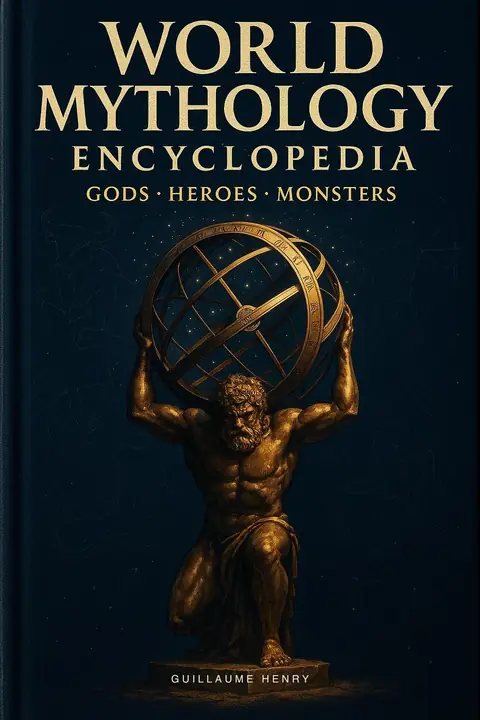
The World Mythology Book: The Gods, Heroes and Myths of Every Culture
The Gods, Heroes and Myths of Every Culture, in One Volume
The whole of world mythology in a single volume: Greek, Norse, Egyptian, Japanese, Hindu, Celtic, Slavic, Mesoamerican and African myths gathered side by side, each drawn from the primary sources.